We were all checked out with Customs and Immigration, provisioned to the max for the week-long passage to the Galápagos, and watching a positive weather window where all the models on PredictWind aligned strongly — always a good sign.
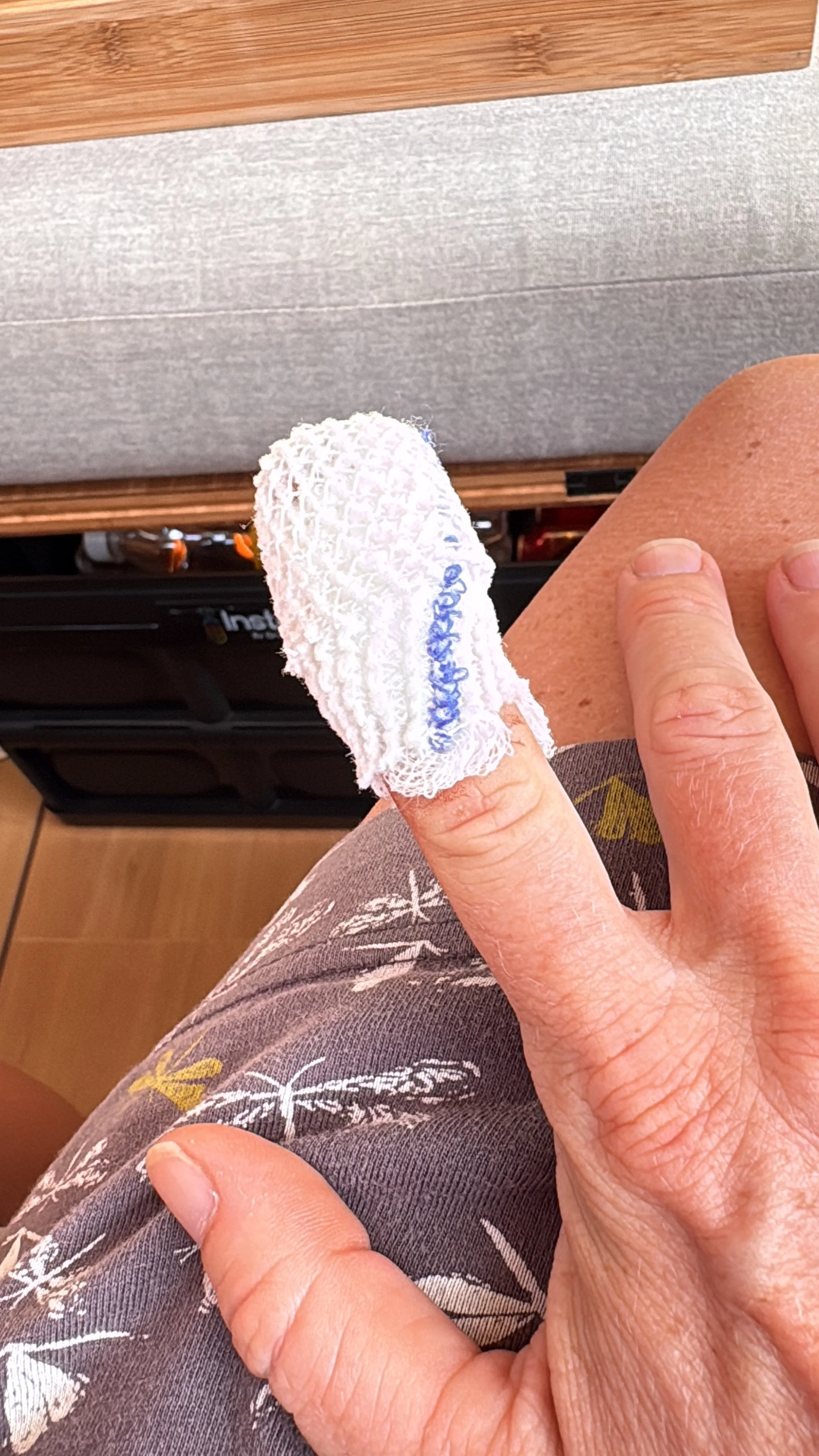
I managed to chop the end of my finger that morning, which caused a slight delay as I ran to urgent care for antibiotics. Meanwhile, the rest of the crew finished filling the diesel and water tanks, stowed everything away, and prepared the boat. After our safety briefing from the captain, we finally departed.
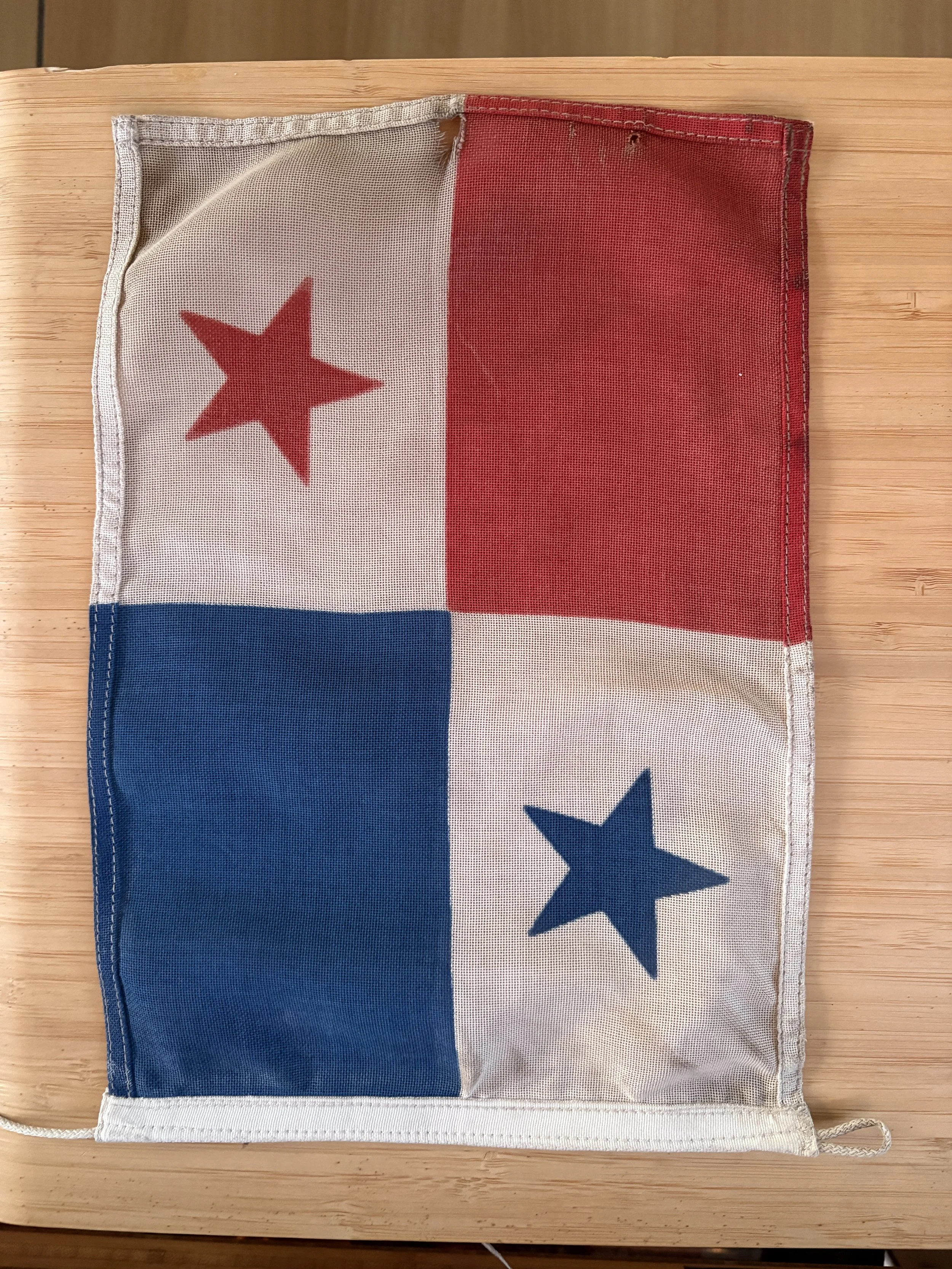
We were very sad to be leaving Panama behind. It has been a wonderful surprise of a country — far more than we expected. From the culture and beauty of the San Blas Islands, to our Panama Canal experience, to the buzz of Panama City, it has all been memorable. We had originally thought of Panama as simply the place where we would prepare to head west. Instead, these five months have become a special and unexpected part of our journey.
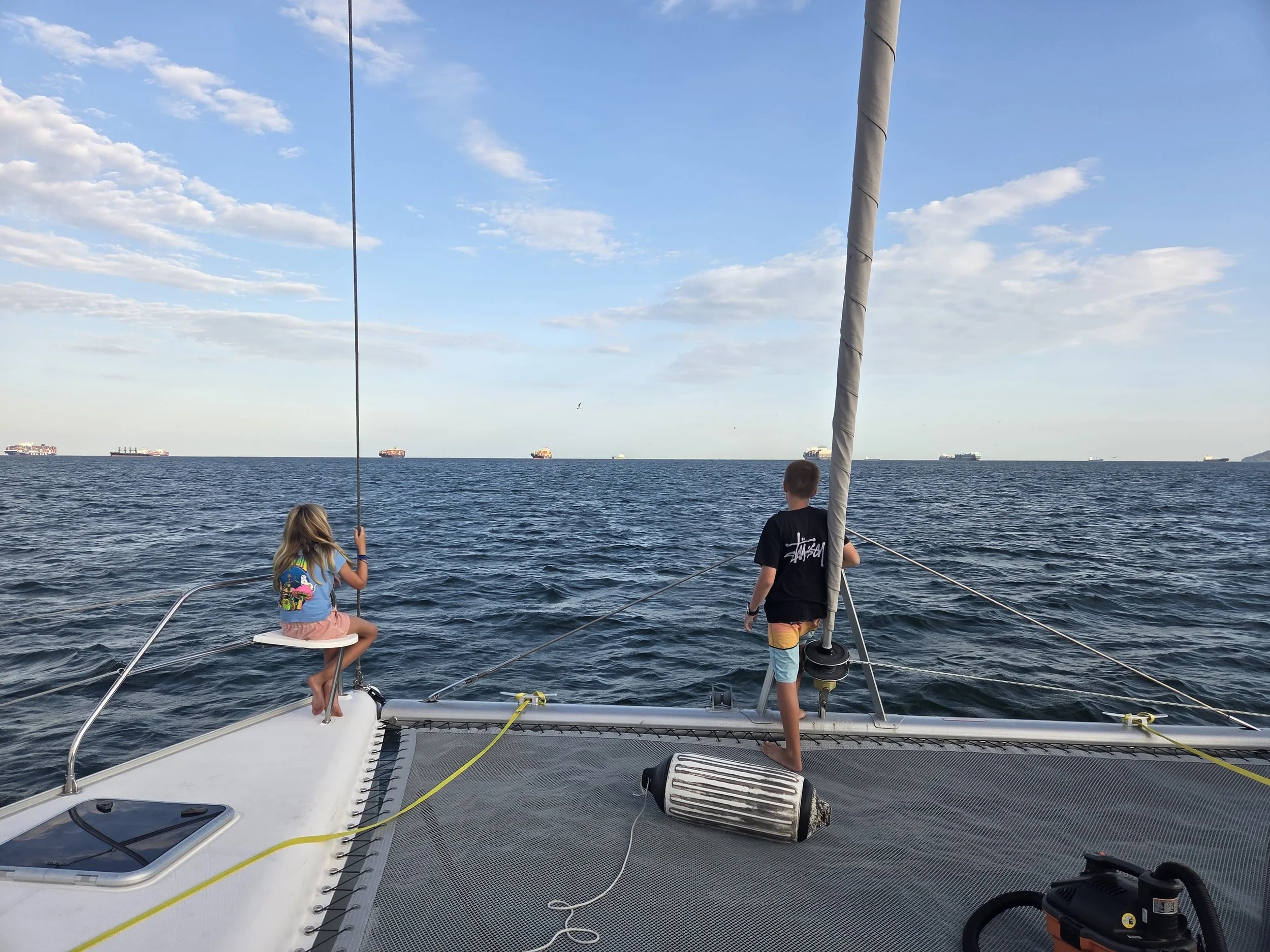
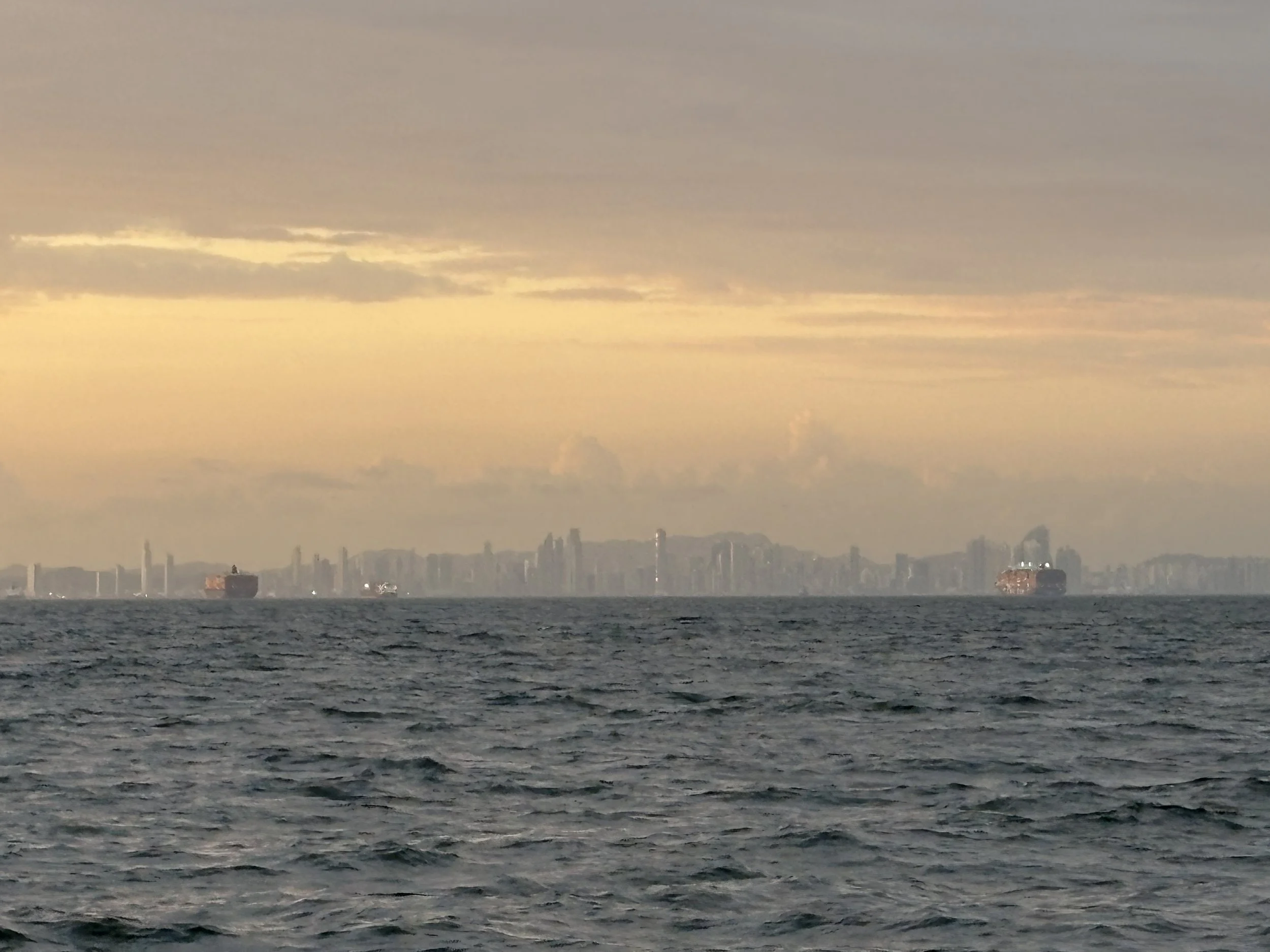
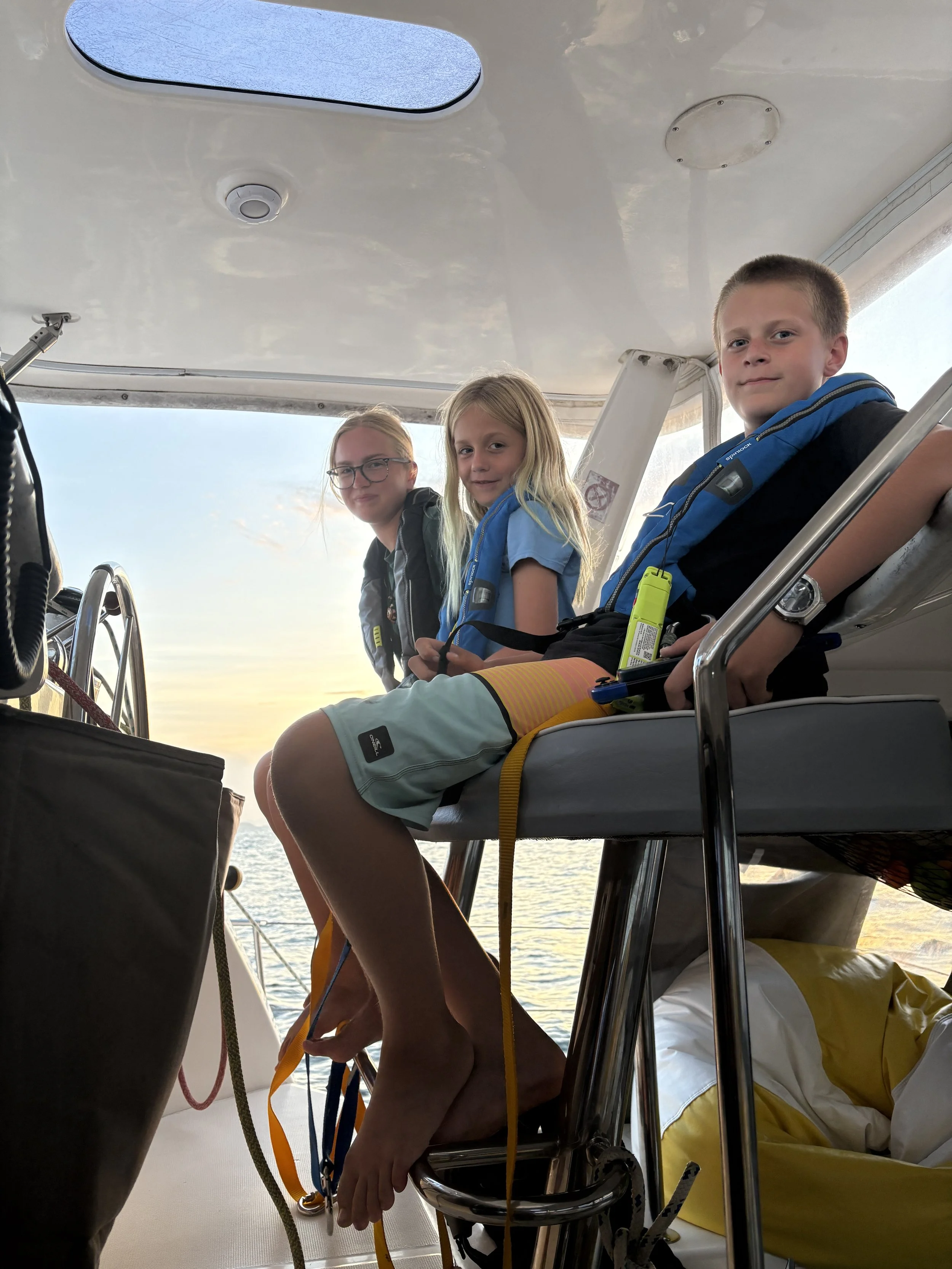
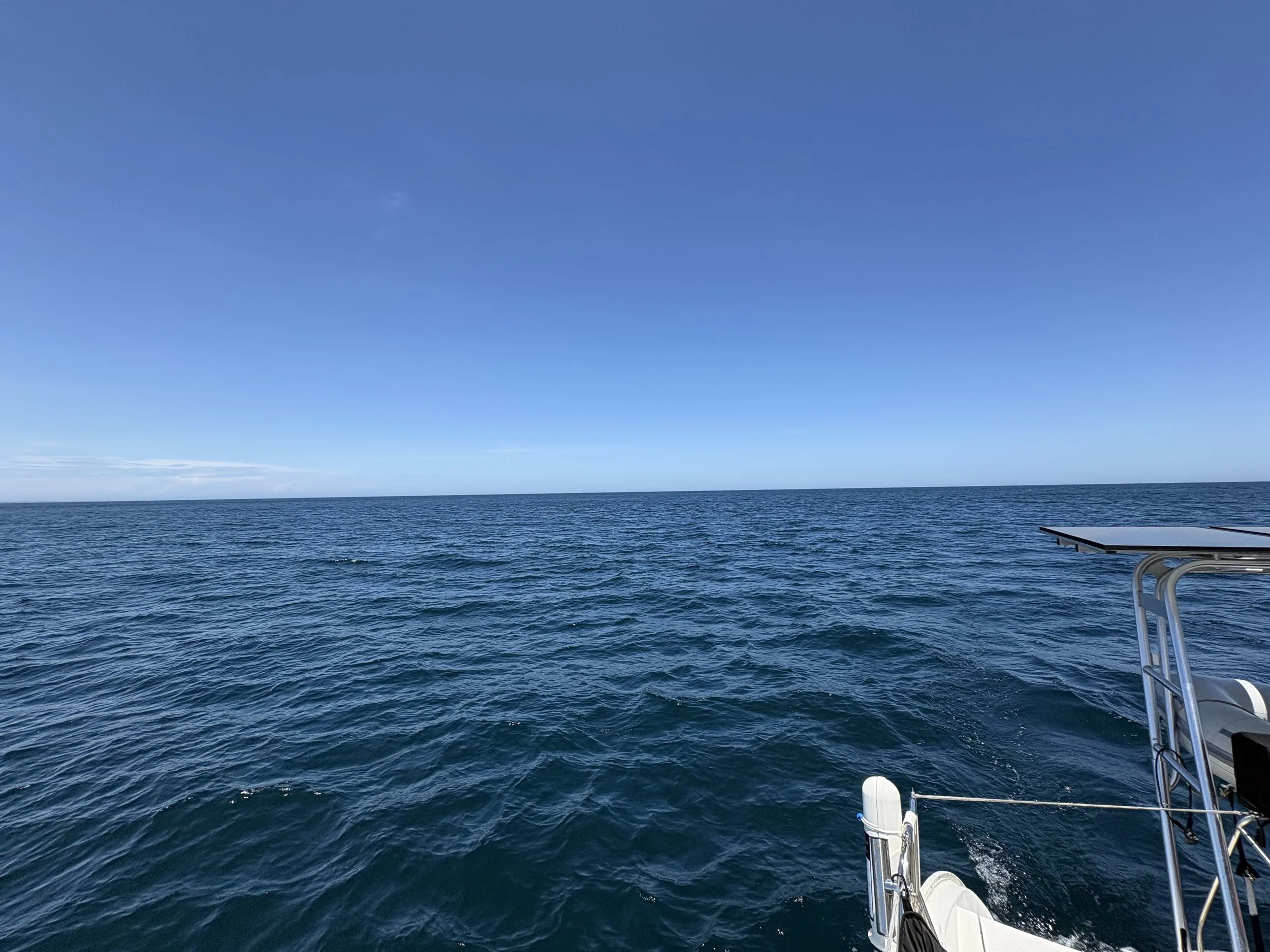
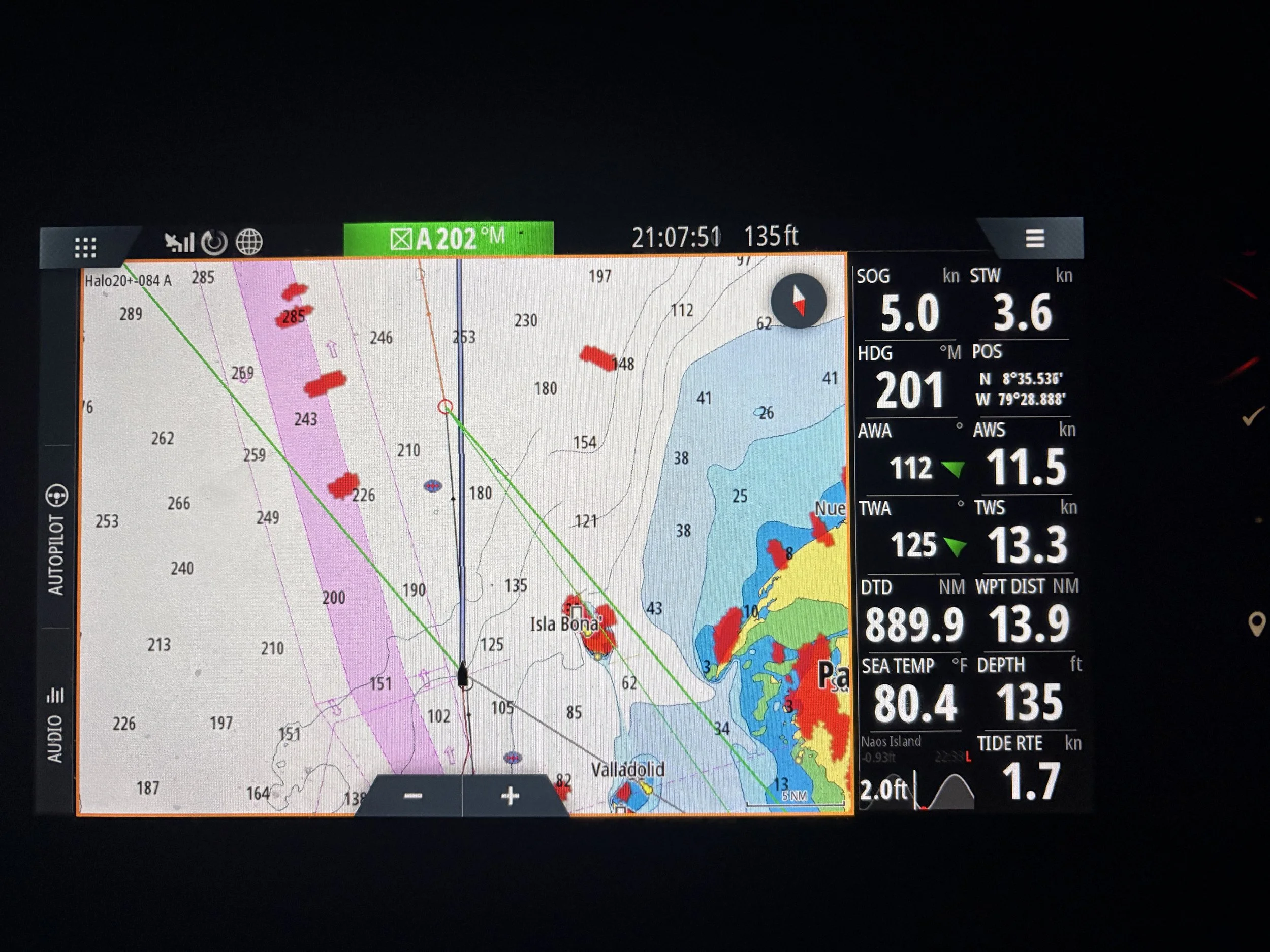
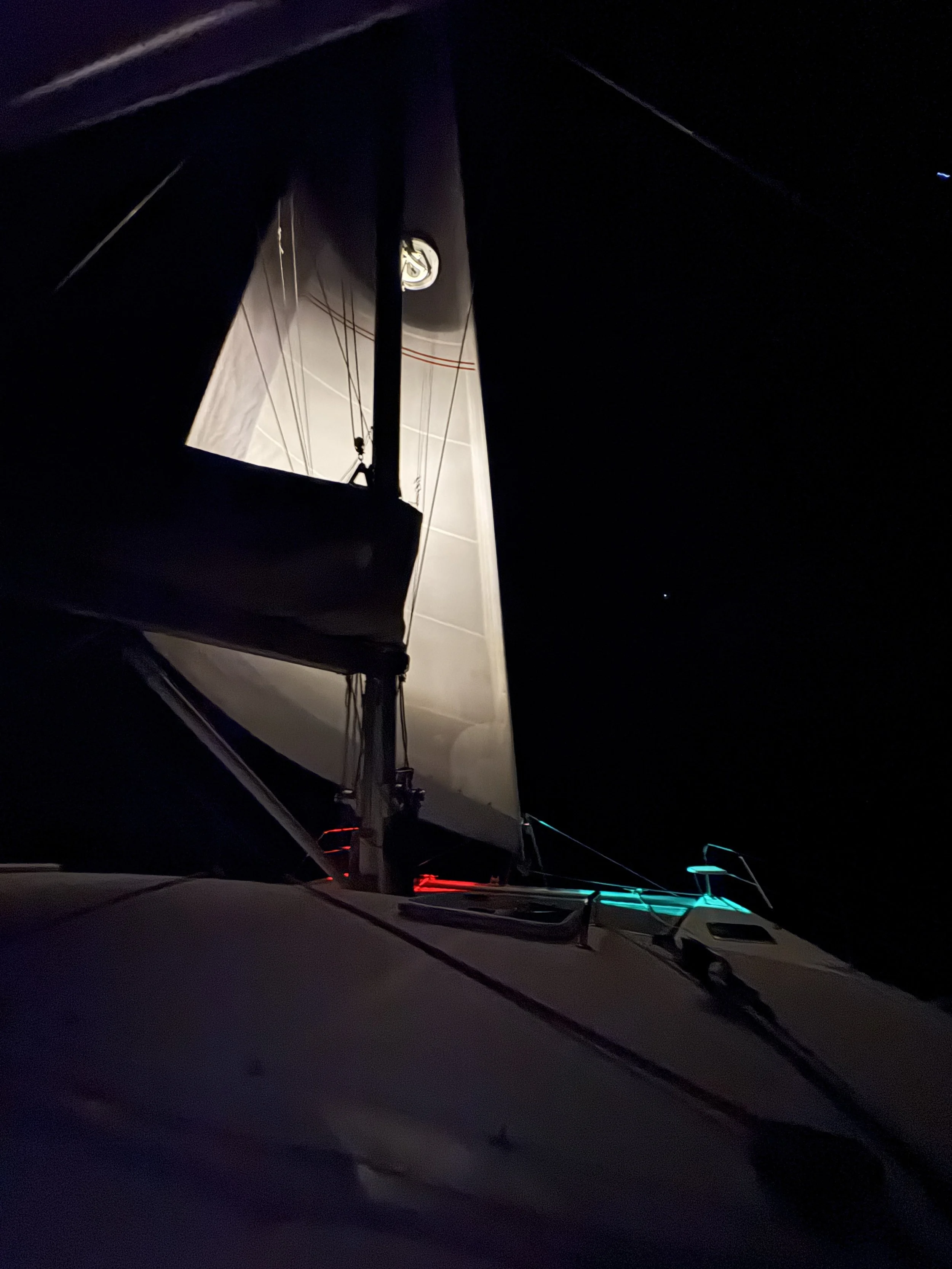
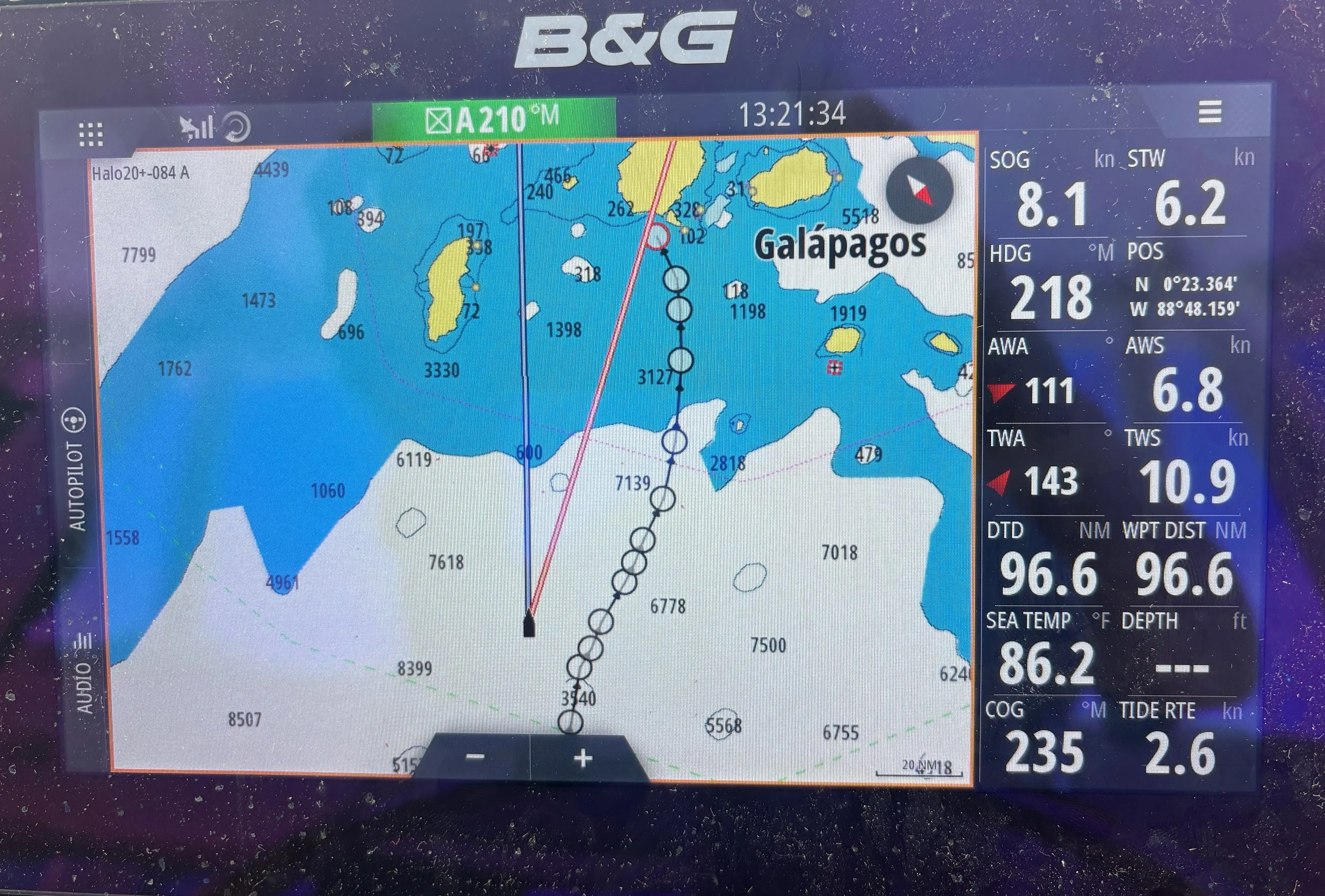
The kids were on the first shift as we headed into evening one, navigating the separation zones at the exit of the Panama Canal (the pink lines on the charts), where ships essentially have to stay in their lanes heading toward or away from the Canal. We were crossing perpendicular to them.
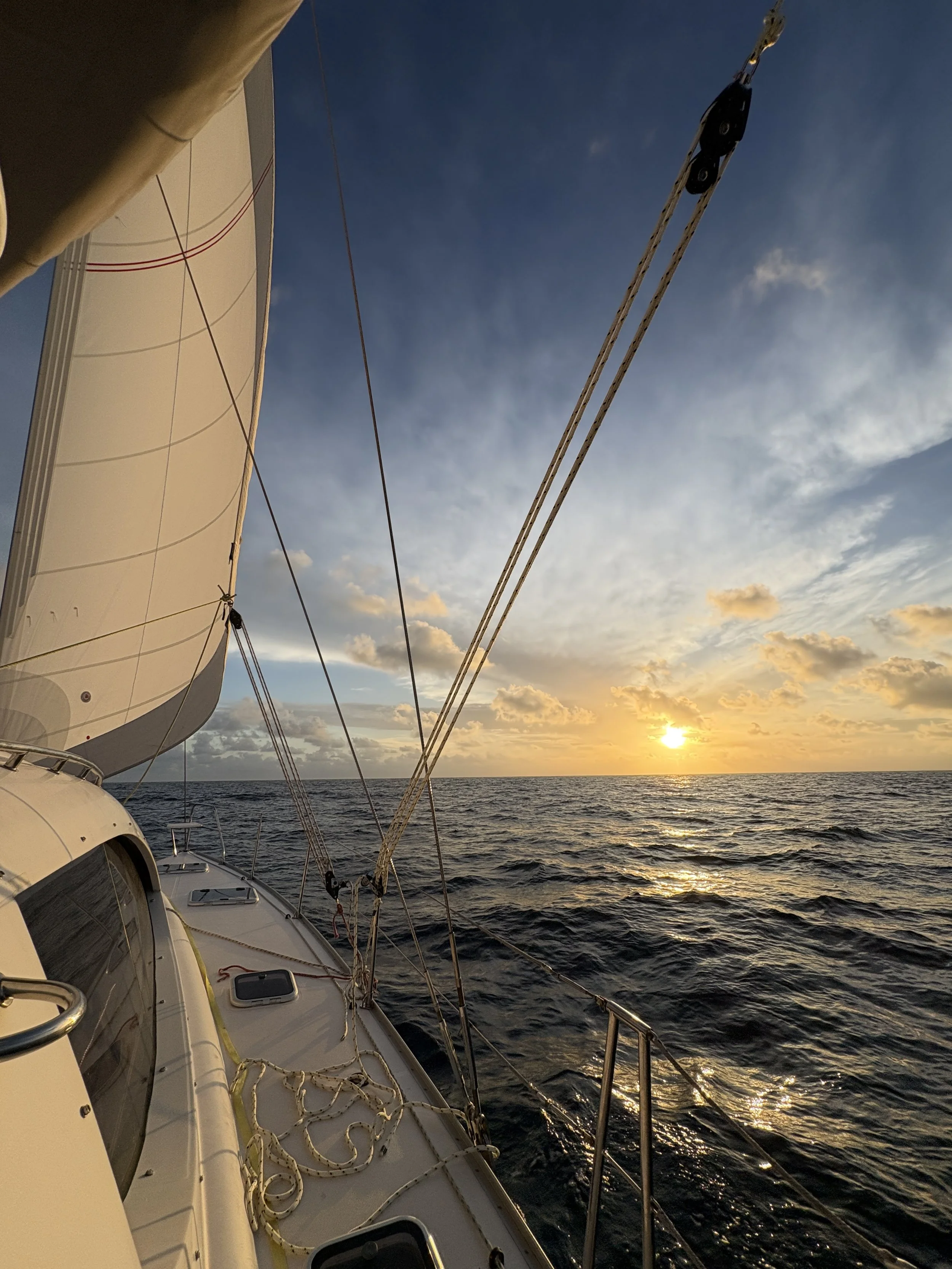
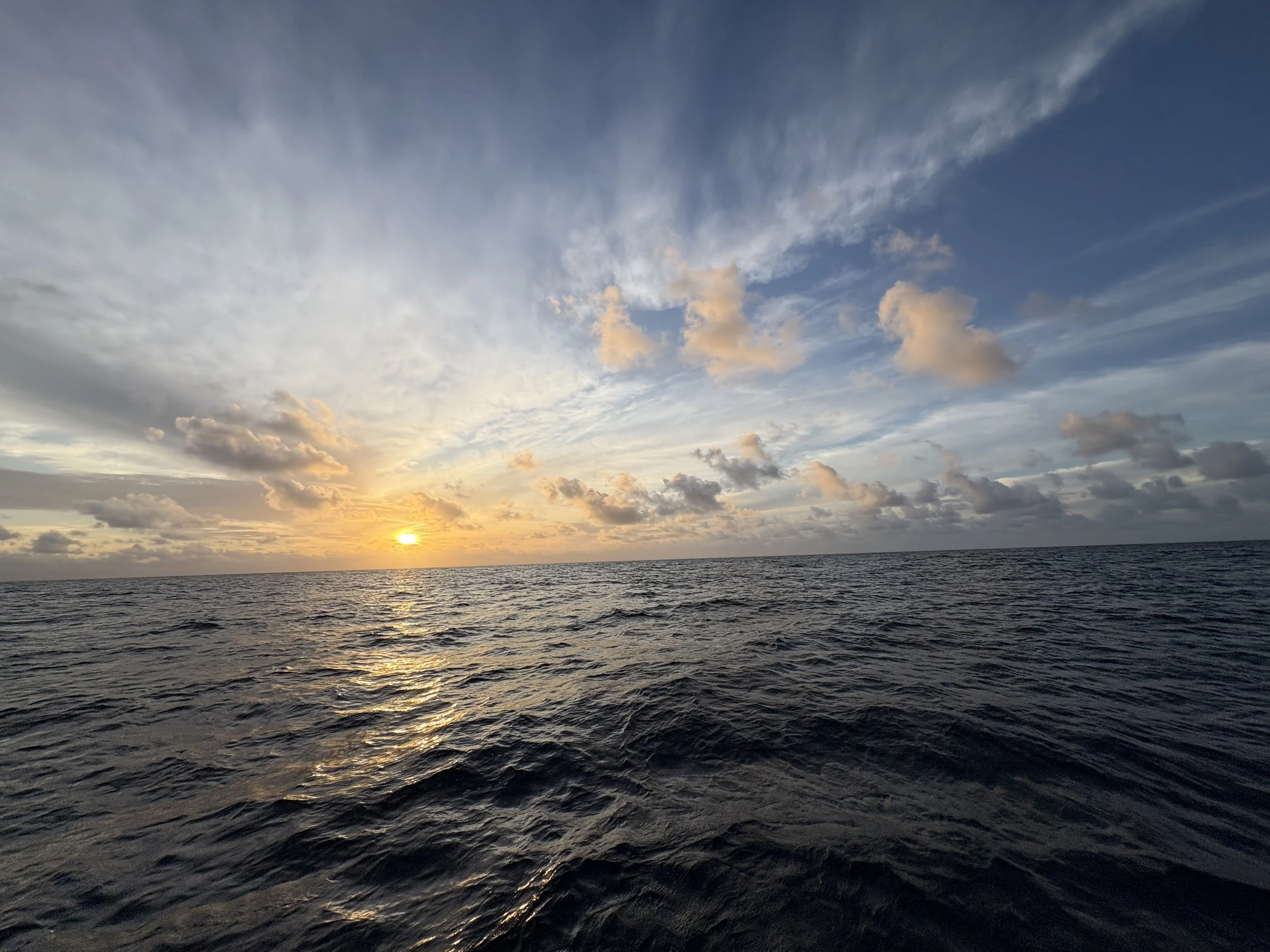
We motor-sailed for the first part of the night to keep clear of the cargo ships. Then, as we moved farther away from land, the winds picked up and we were able to shut off the engine — leaving us with blissful silence for the rest of the night.
Between Annabelle and Oscar, our crew and friend Eric (who joined us for this passage), Pete and me, we ran three-hour watch schedules throughout the day and night. That meant everyone had decent off-time to rest, do work or school, and recover.
We also cracked out our new crew T-shirts, which I had made in Panama City to match the boat’s logo, and settled in for our longest passage yet.
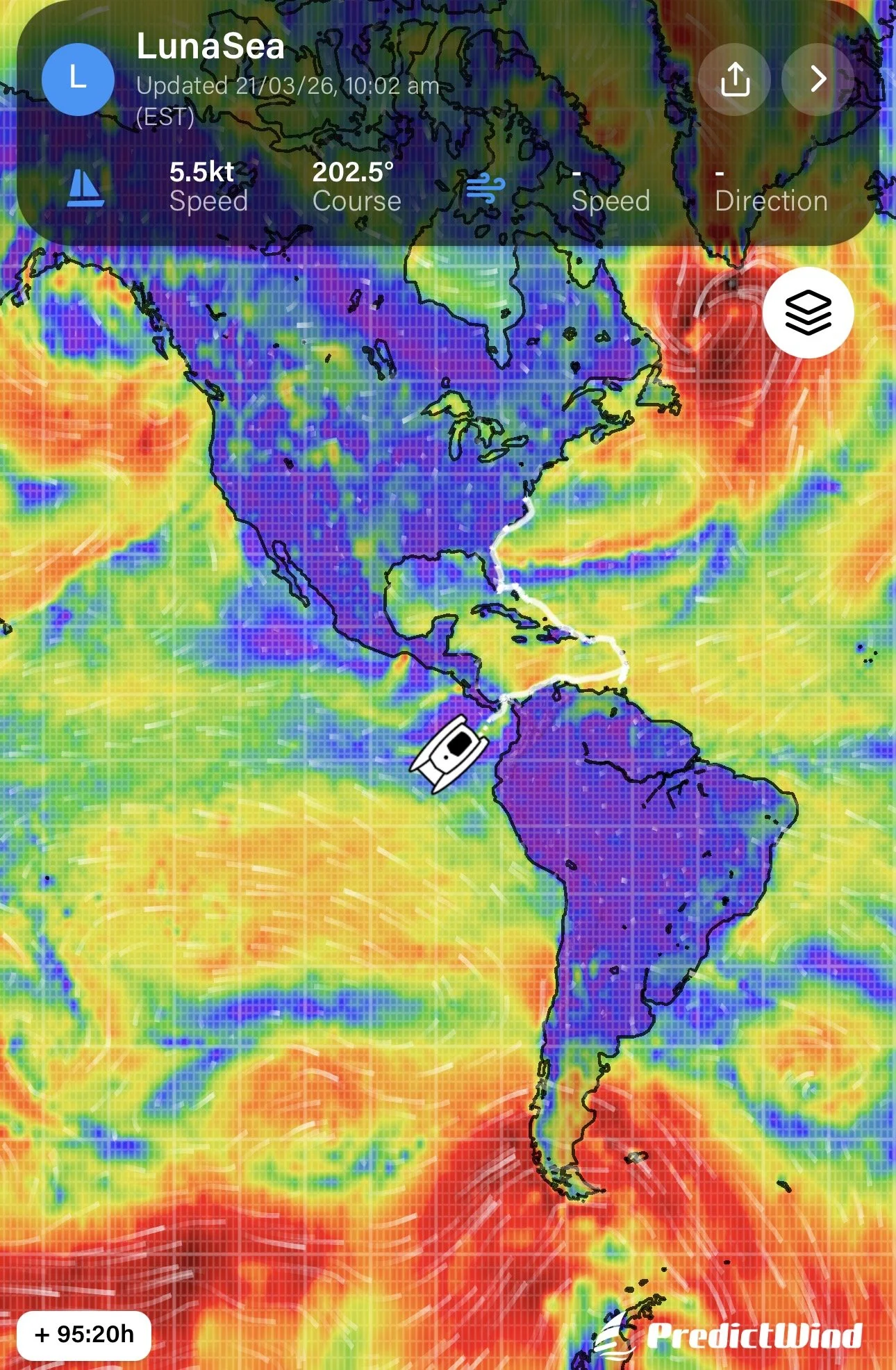
PredictWind has become our go-to resource for everything from departure planning and weather routing to comparing multiple forecast models before a big crossing. Rather than relying on a single prediction, it lets us weigh several models side by side so we can look for consistency and make more confident decisions about when — and whether — to go. It also hosts our live tracking page, showing exactly where LunaSea is and what the weather is doing around us, wherever we happen to be — anchored or underway.
We update the weather models every 12 hours. On this passage in particular, where there are strong currents to contend with, even routing 15 miles one way or the other can make the difference between squalls and heavy current… or champagne sailing. We truly can’t imagine attempting a passage like this the way sailors once did — before weather modeling and modern forecasts. Truly terrifying!
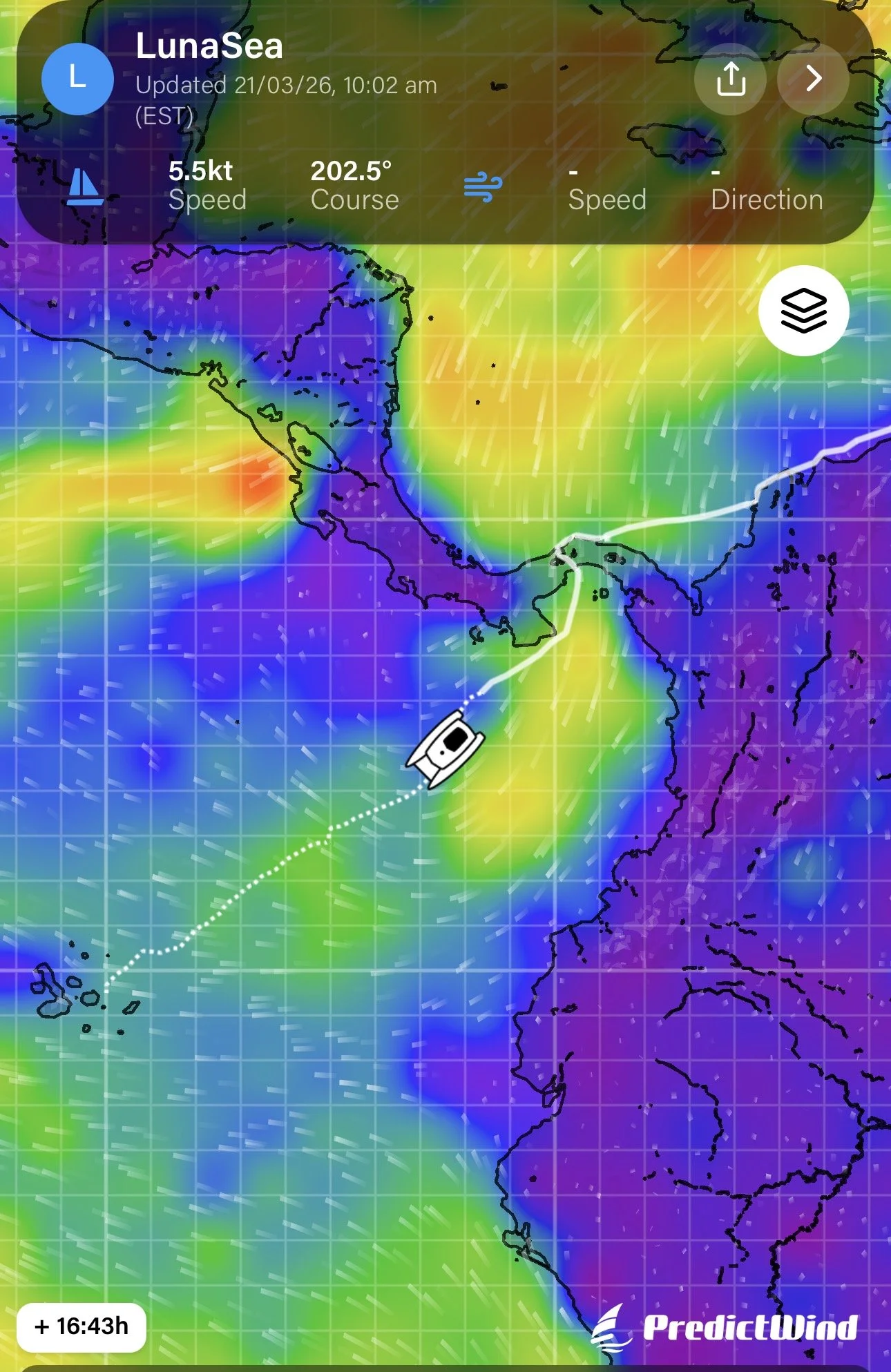
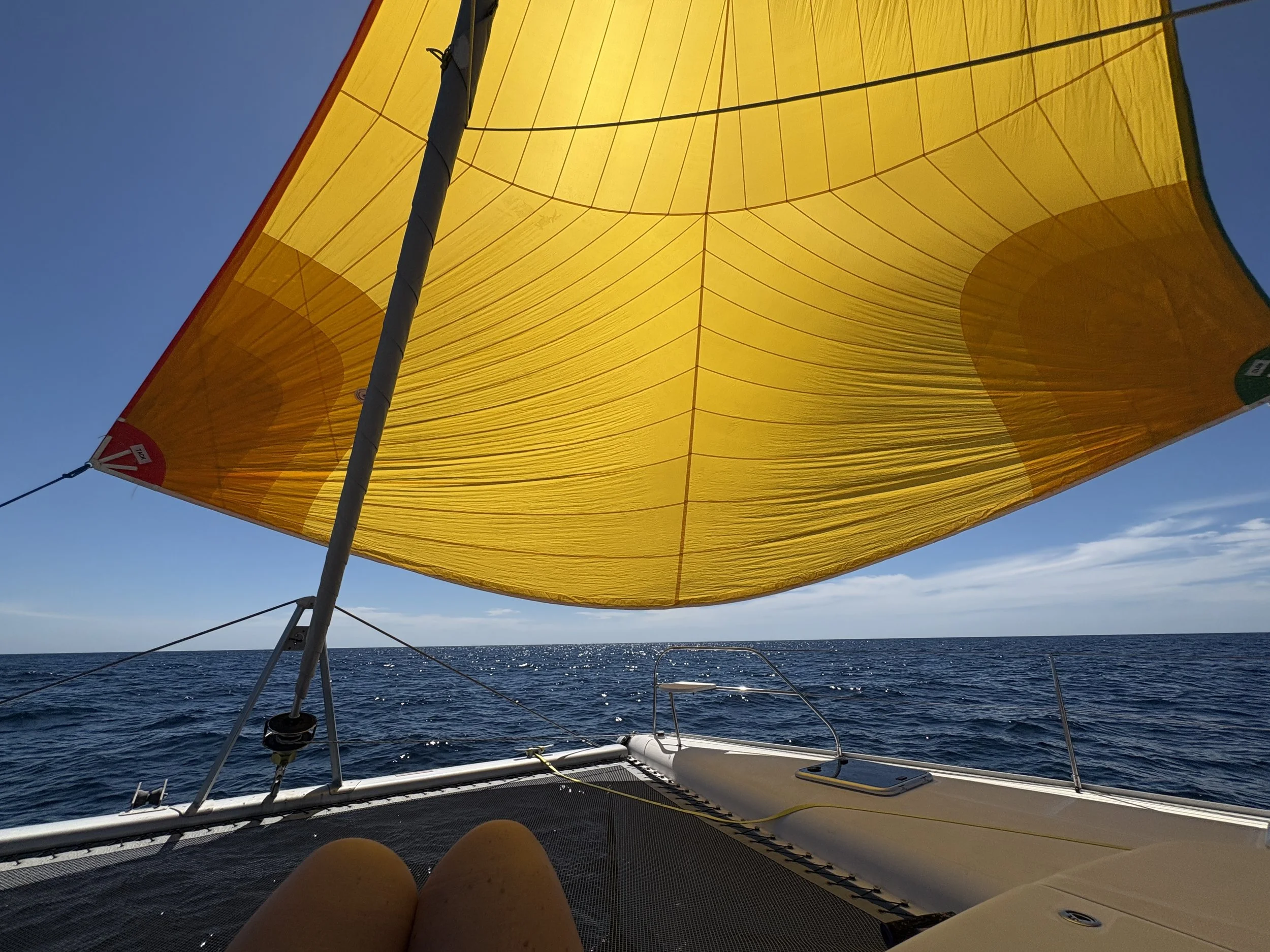
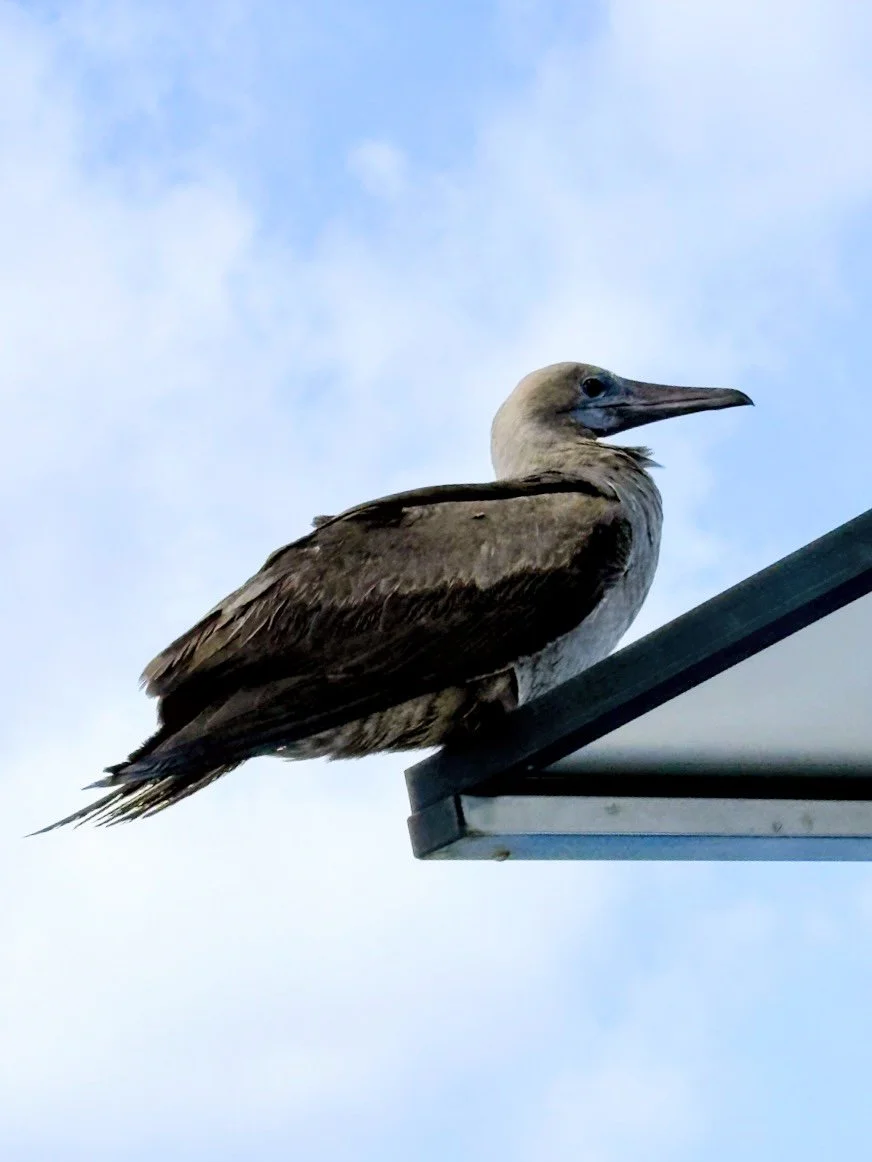
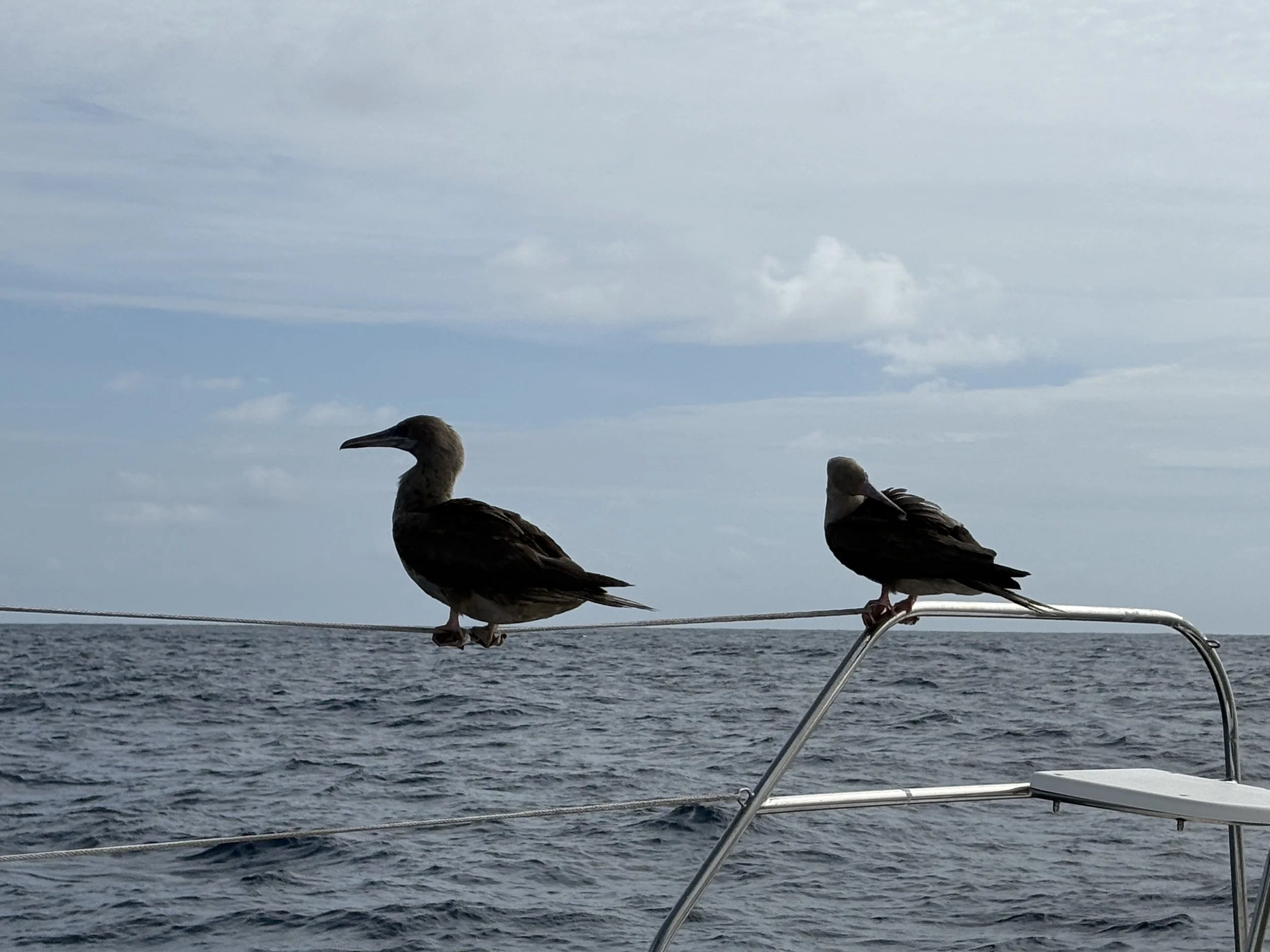
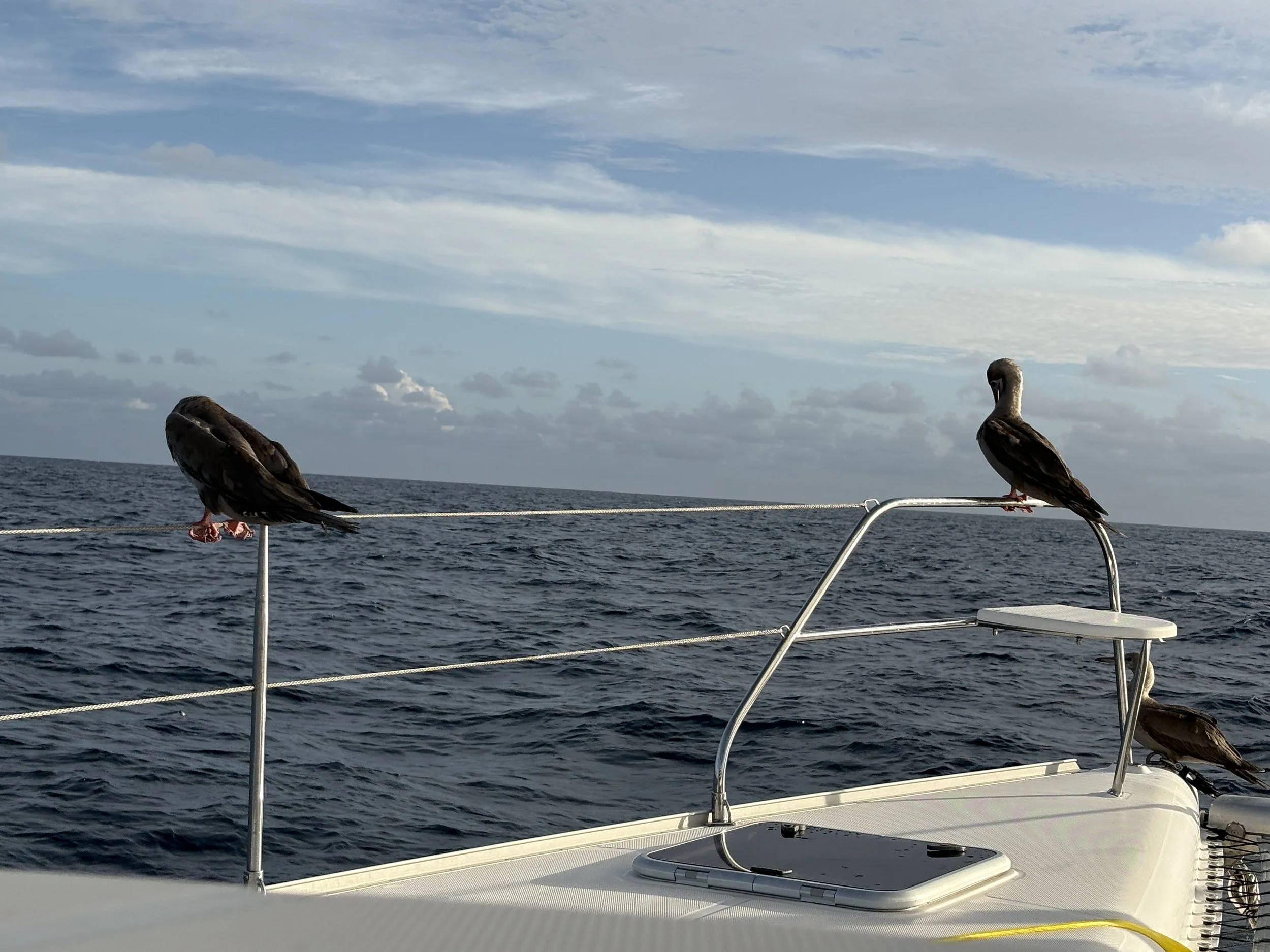
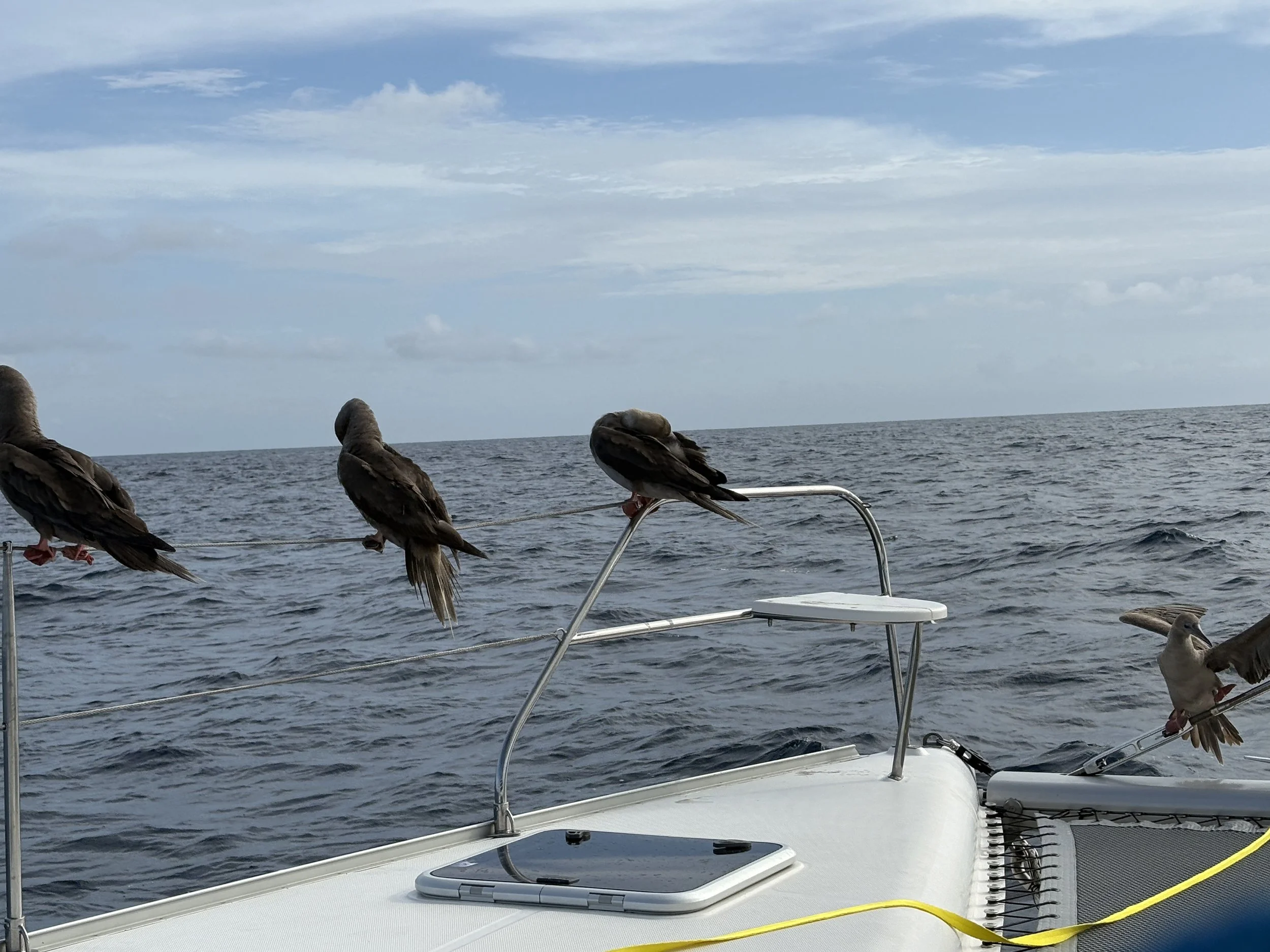
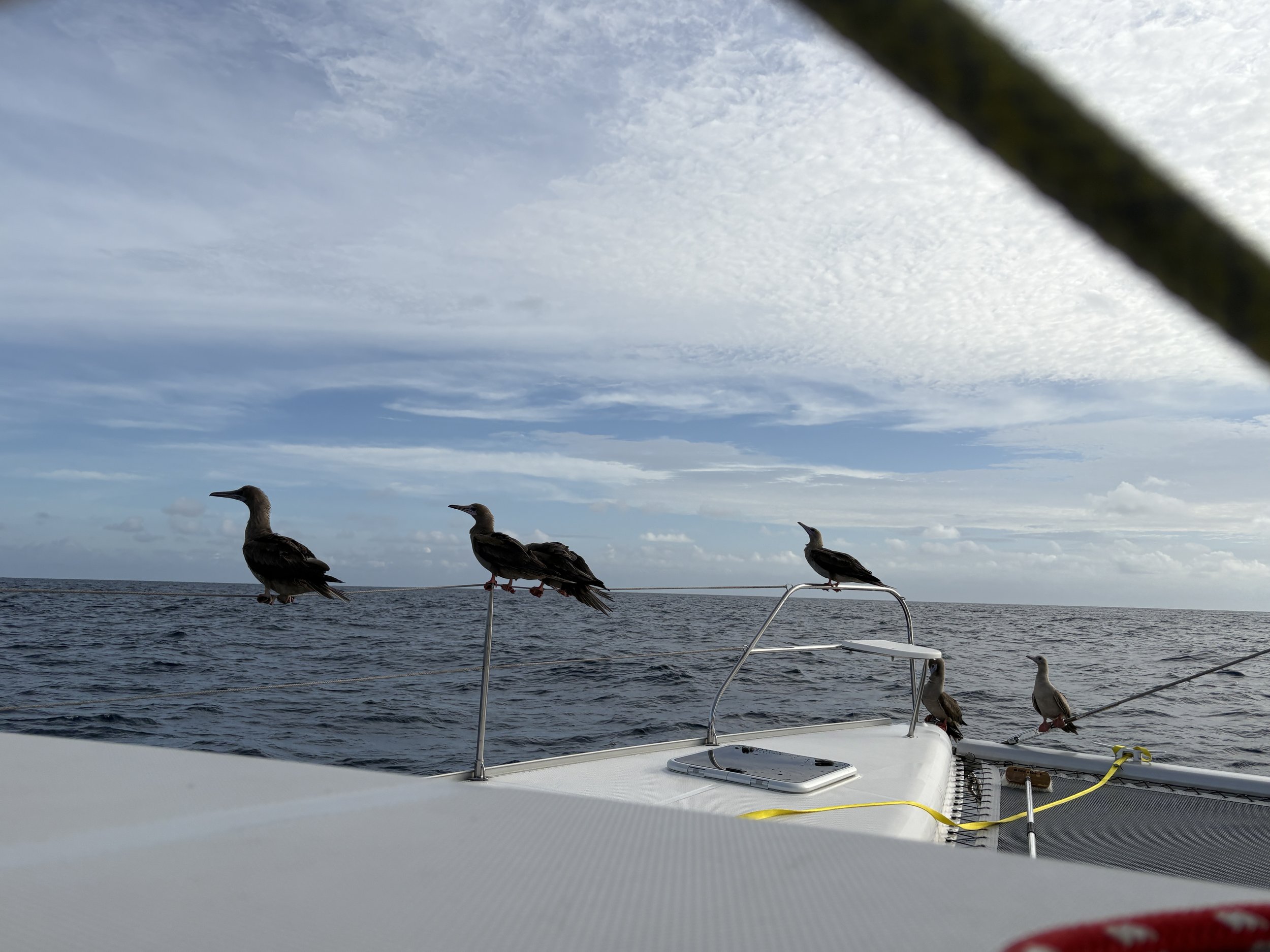
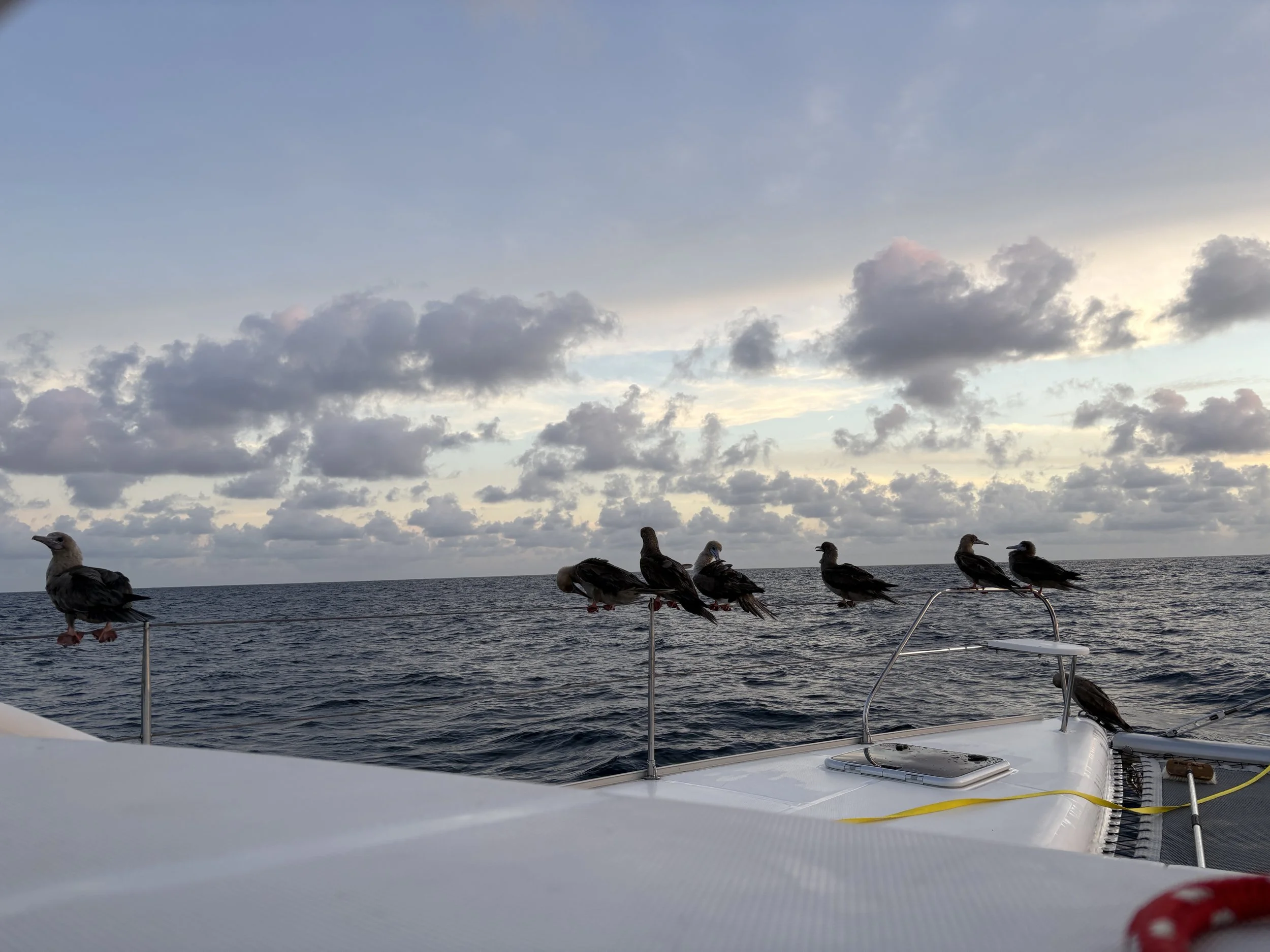
The days began to pass into a bit of a blur! We had our beautiful yellow spinnaker up for a whole day in light winds on day 3, we don’t leave it up at night as its for light winds only, and if a squall came through at night, when they are harder to spot, it could be dangerous for the person on watch as well as potentially damaging the sail. We had red footed boobies join us from about day 4, first one then 7 sitting on the port side, however after seeing the mess they made on the deck after a night, we put out streamers of a trash bag to deter them and scrubbed the deck! We were able to make water as the sea state was calm enough and top our tanks off, so everyone could have showers, and school / work continued unhindered each day.
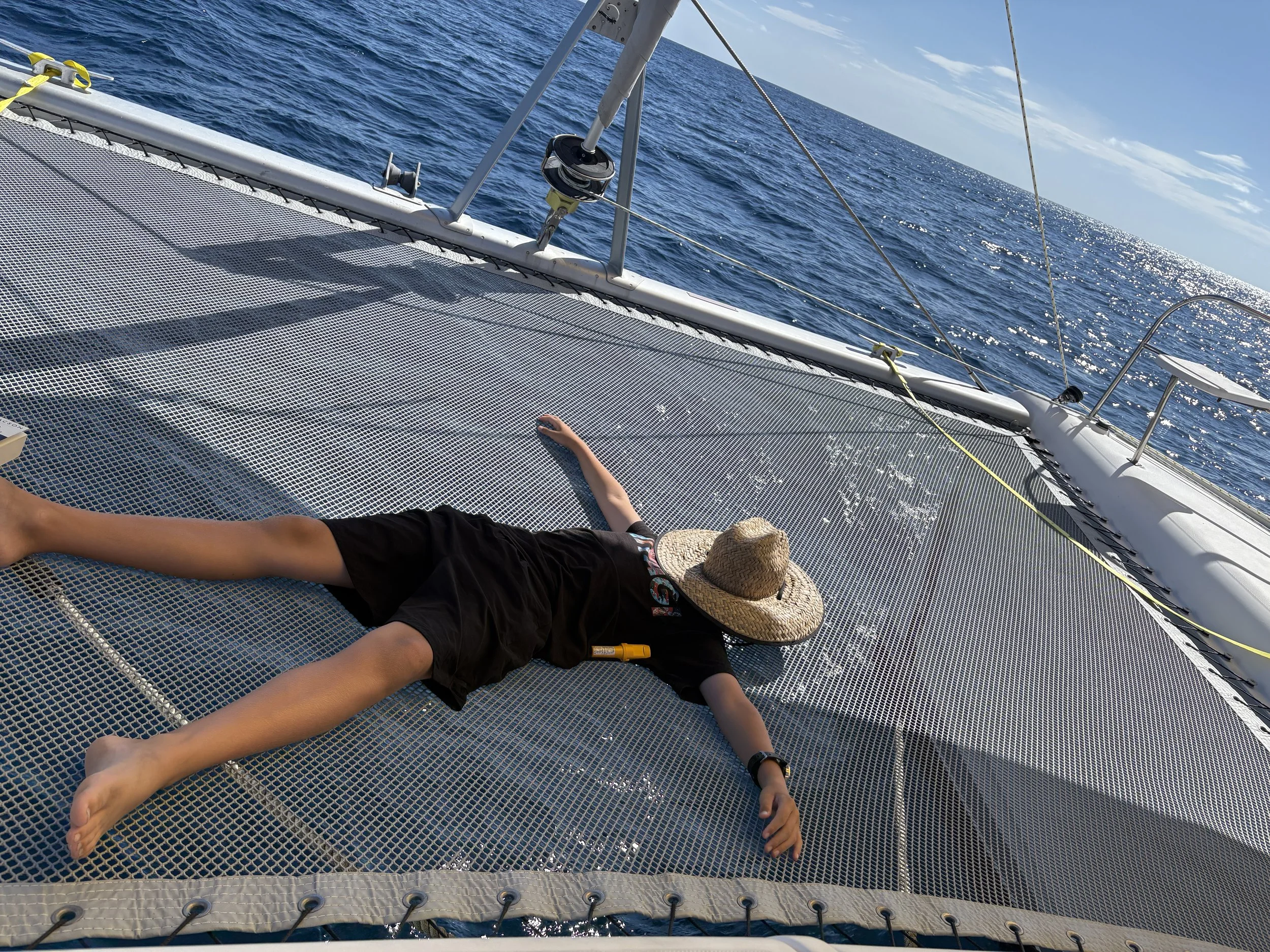
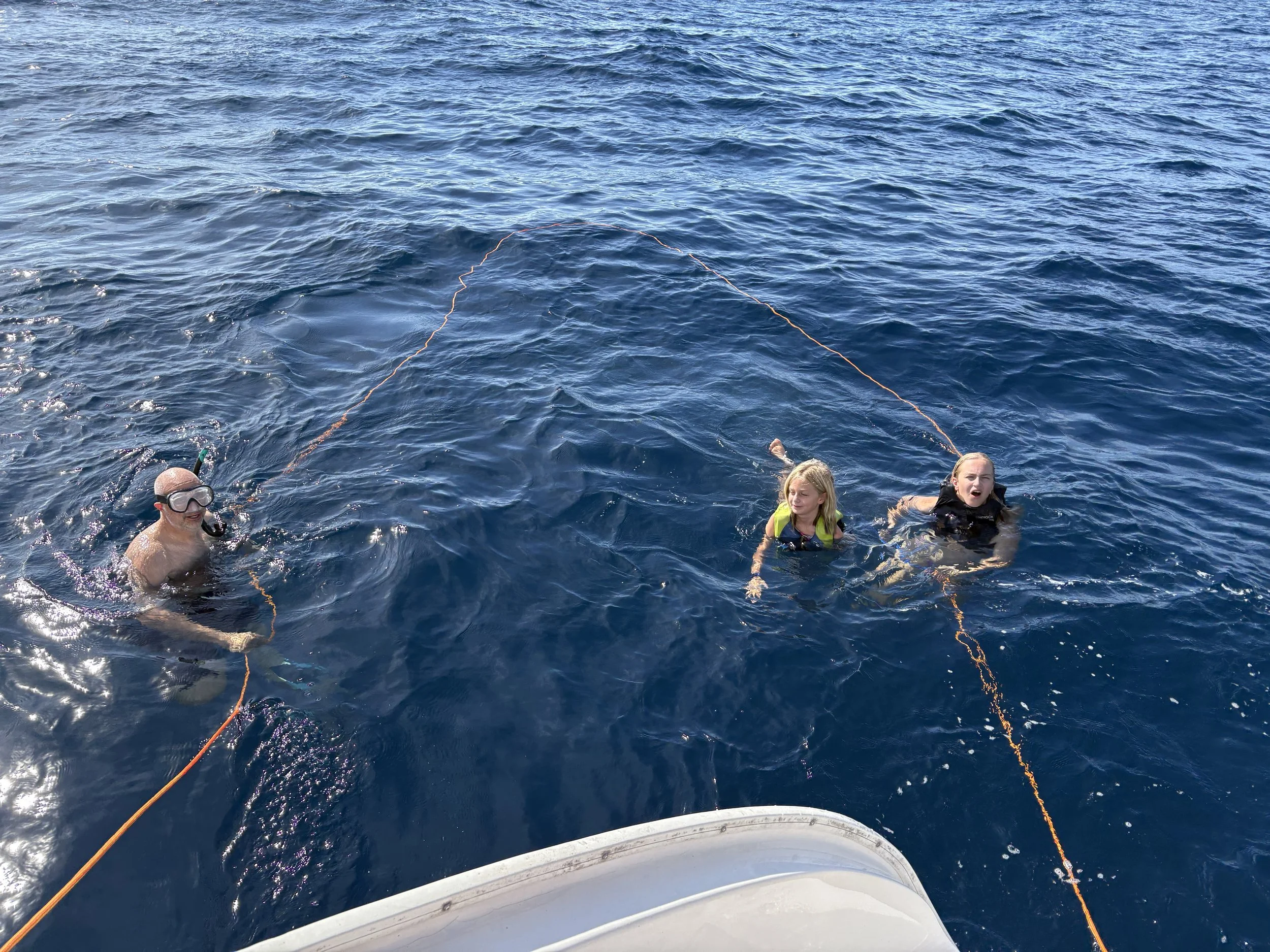
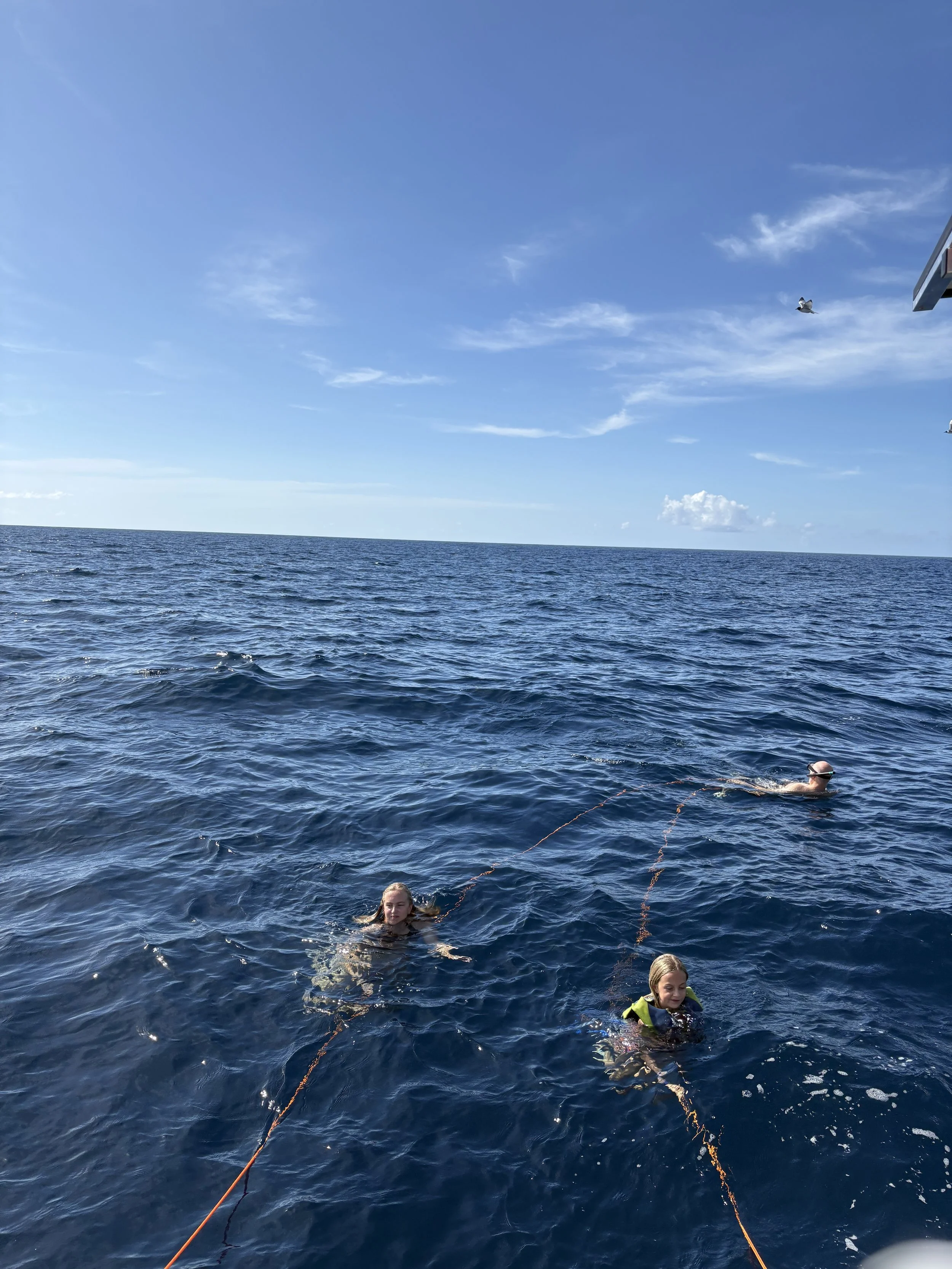
On day 5 we got some fishing net wrapped around one of our propellors in the night, causing it to shudder underway, so Eric offered to jump in and investigate as it was so calm. The girls followed him in and had a glorious 10 minutes cooling off in 9,000ft of water! They had to be tied on however as the current was around 2 kn so would have carried them away pretty quickly.
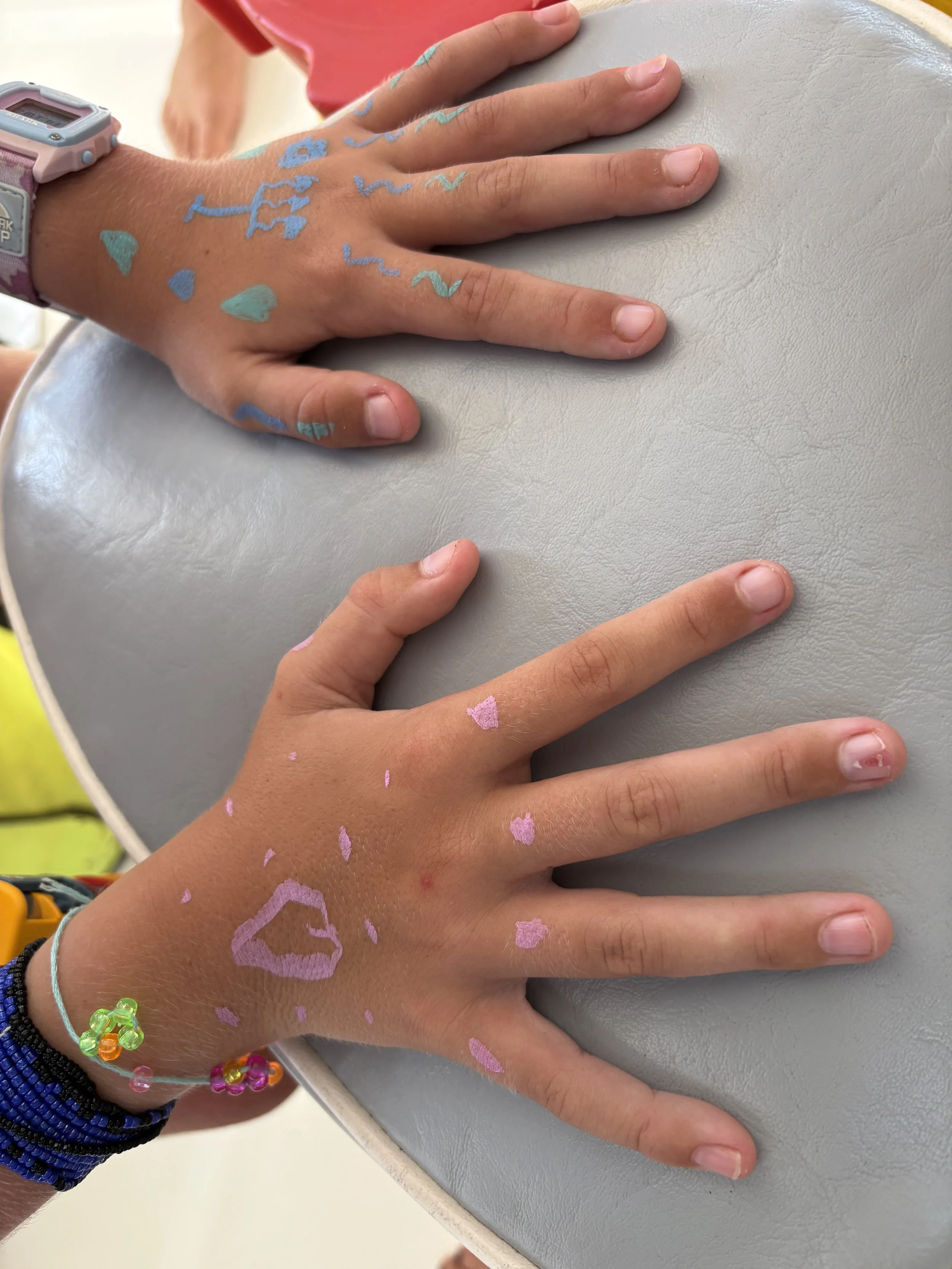
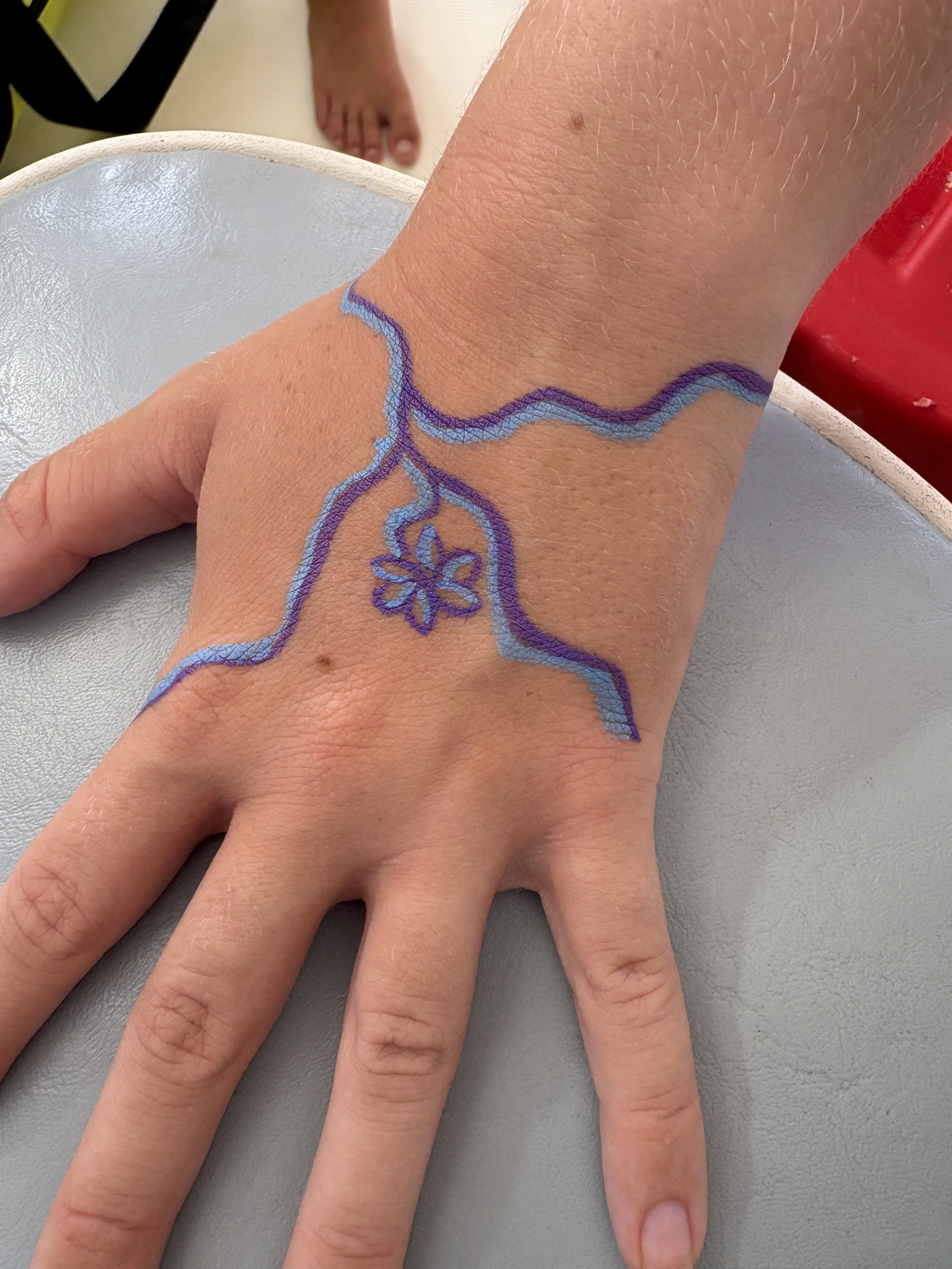
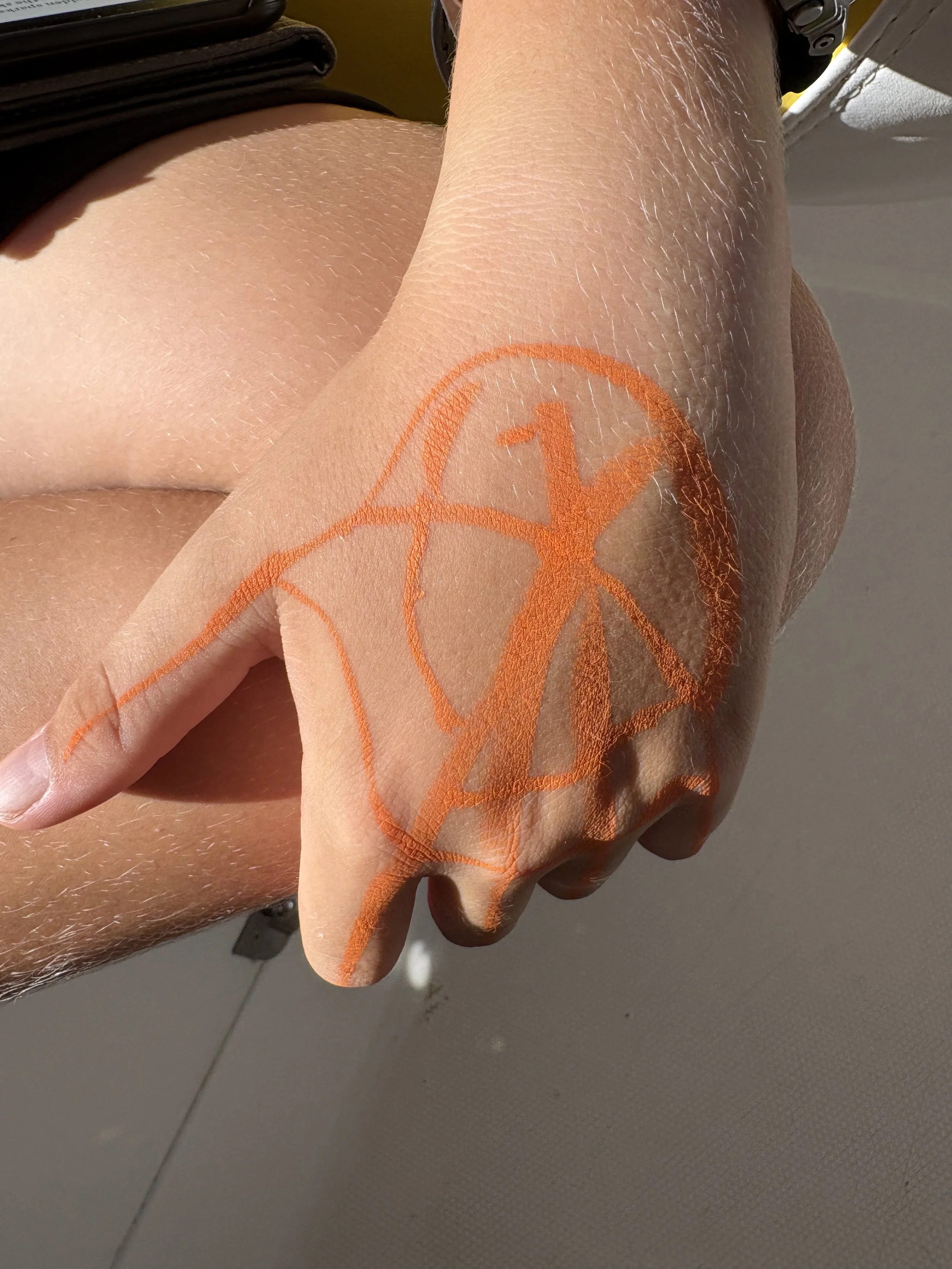
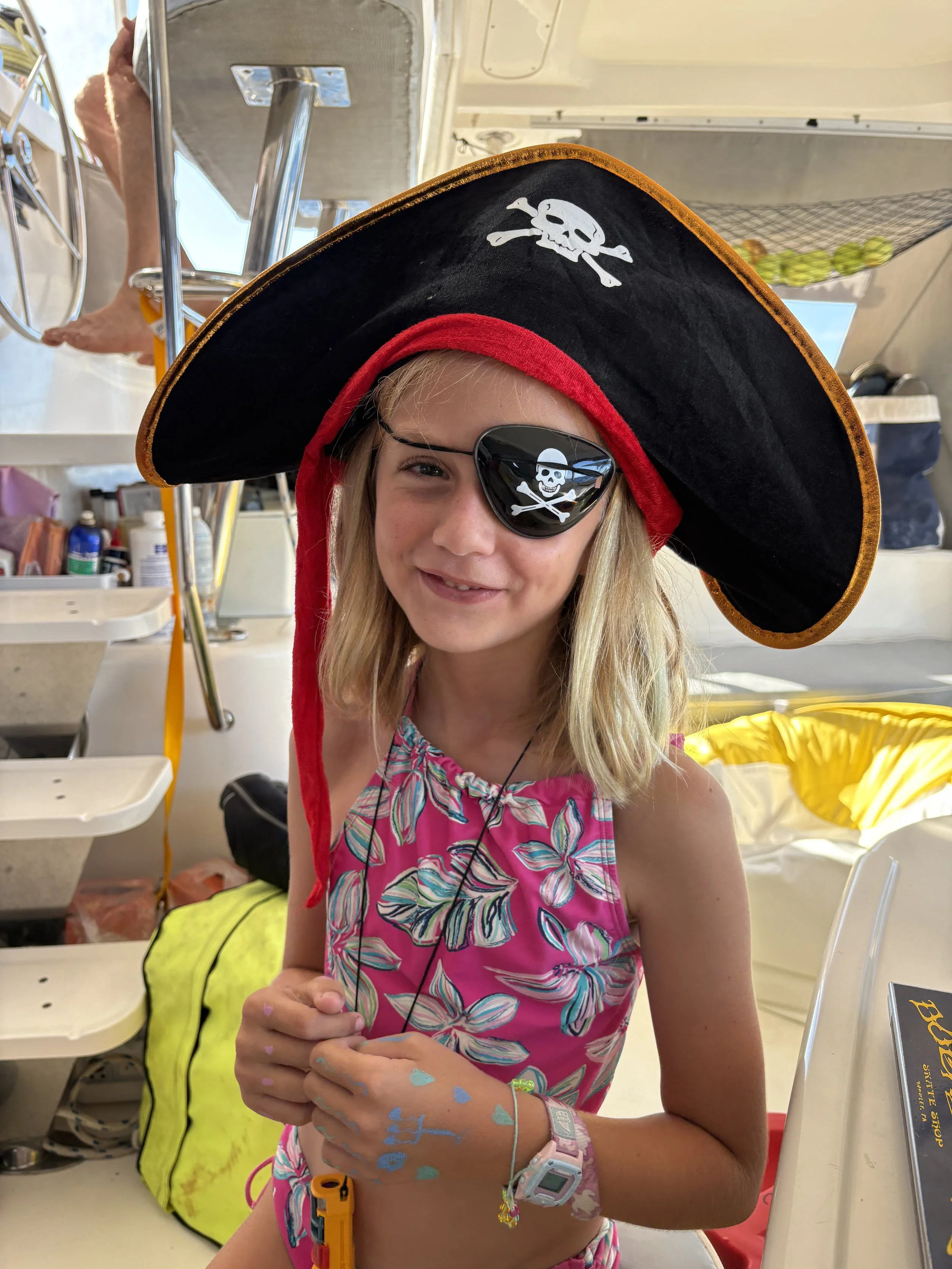
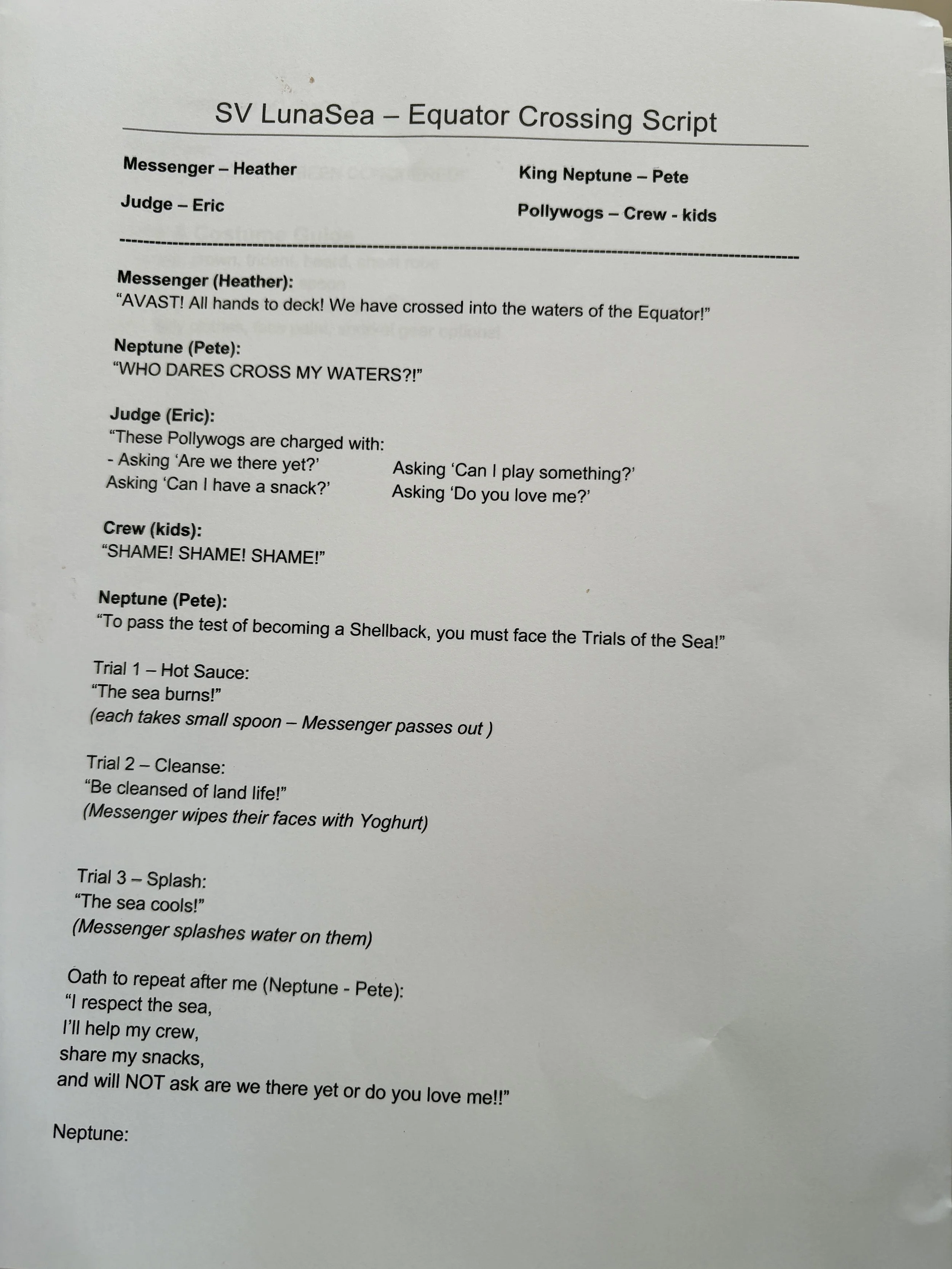
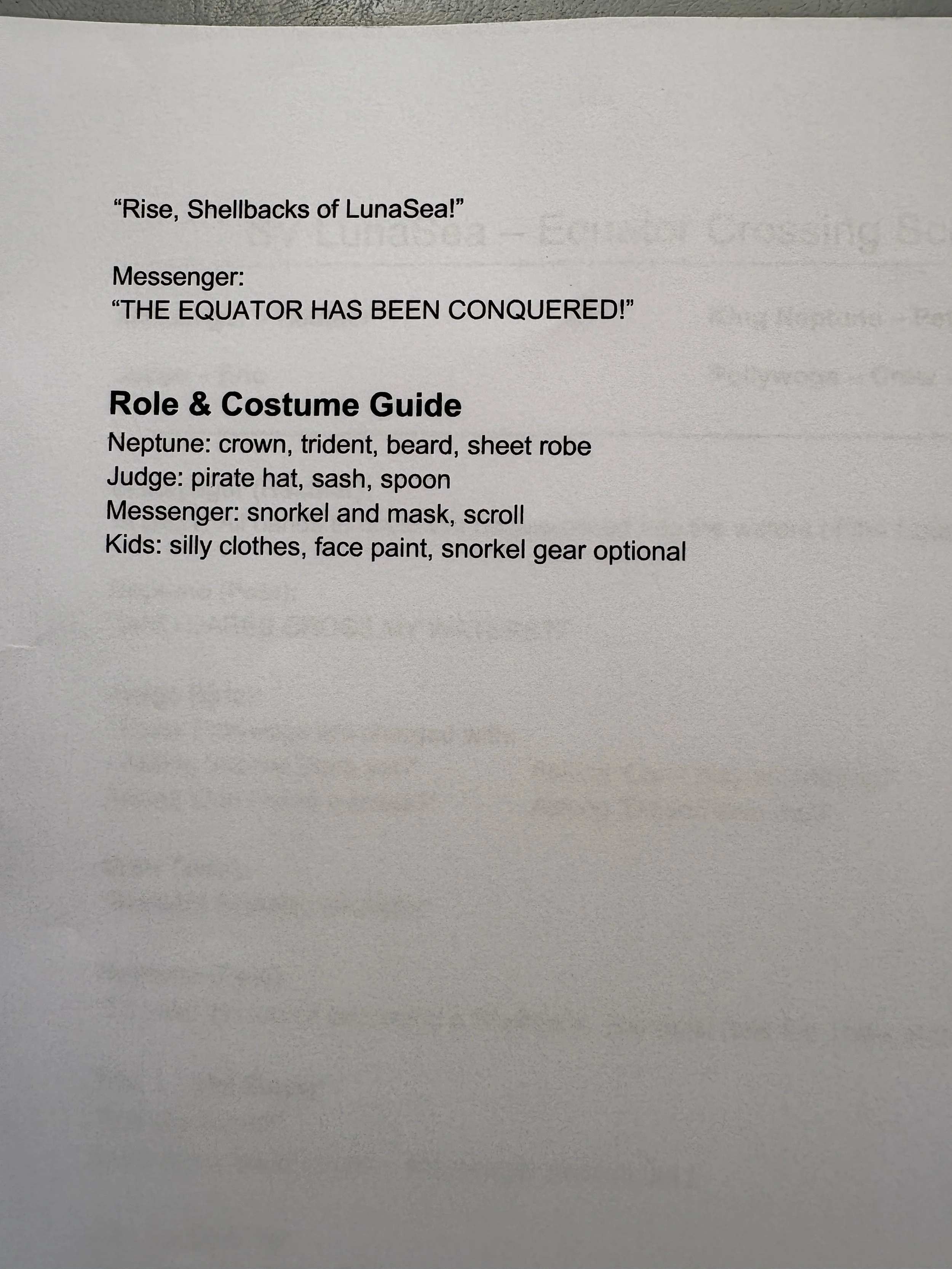
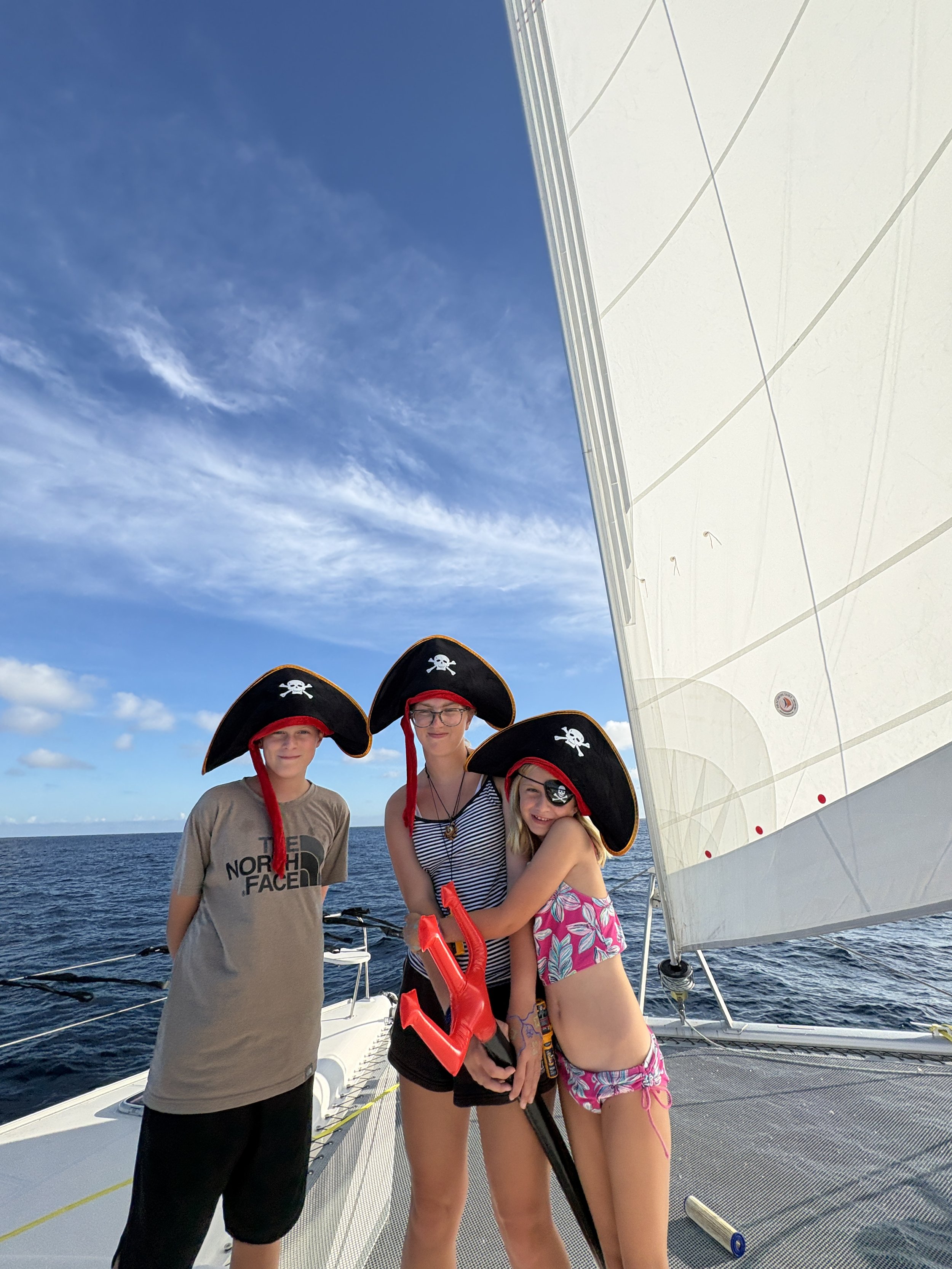
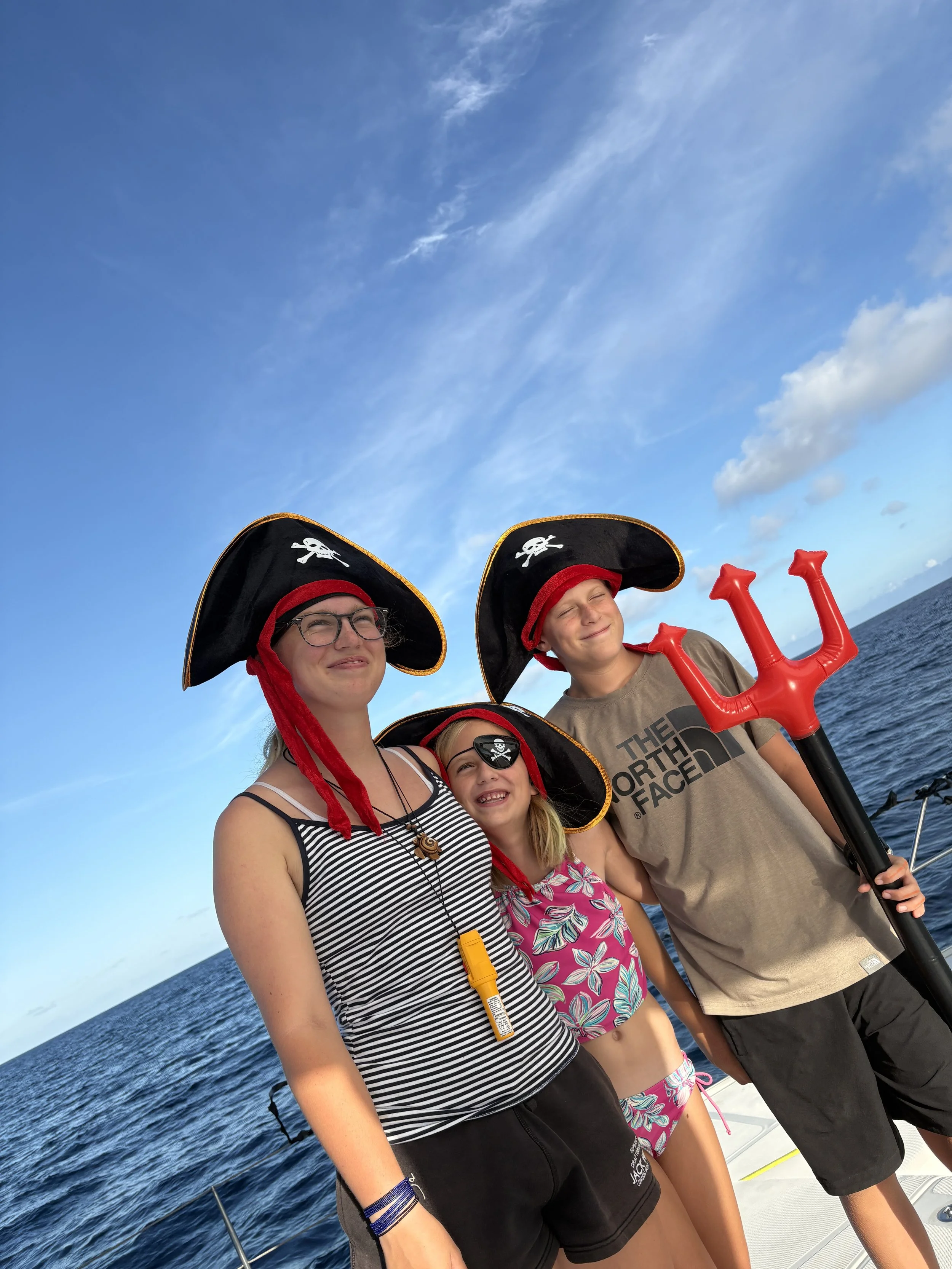
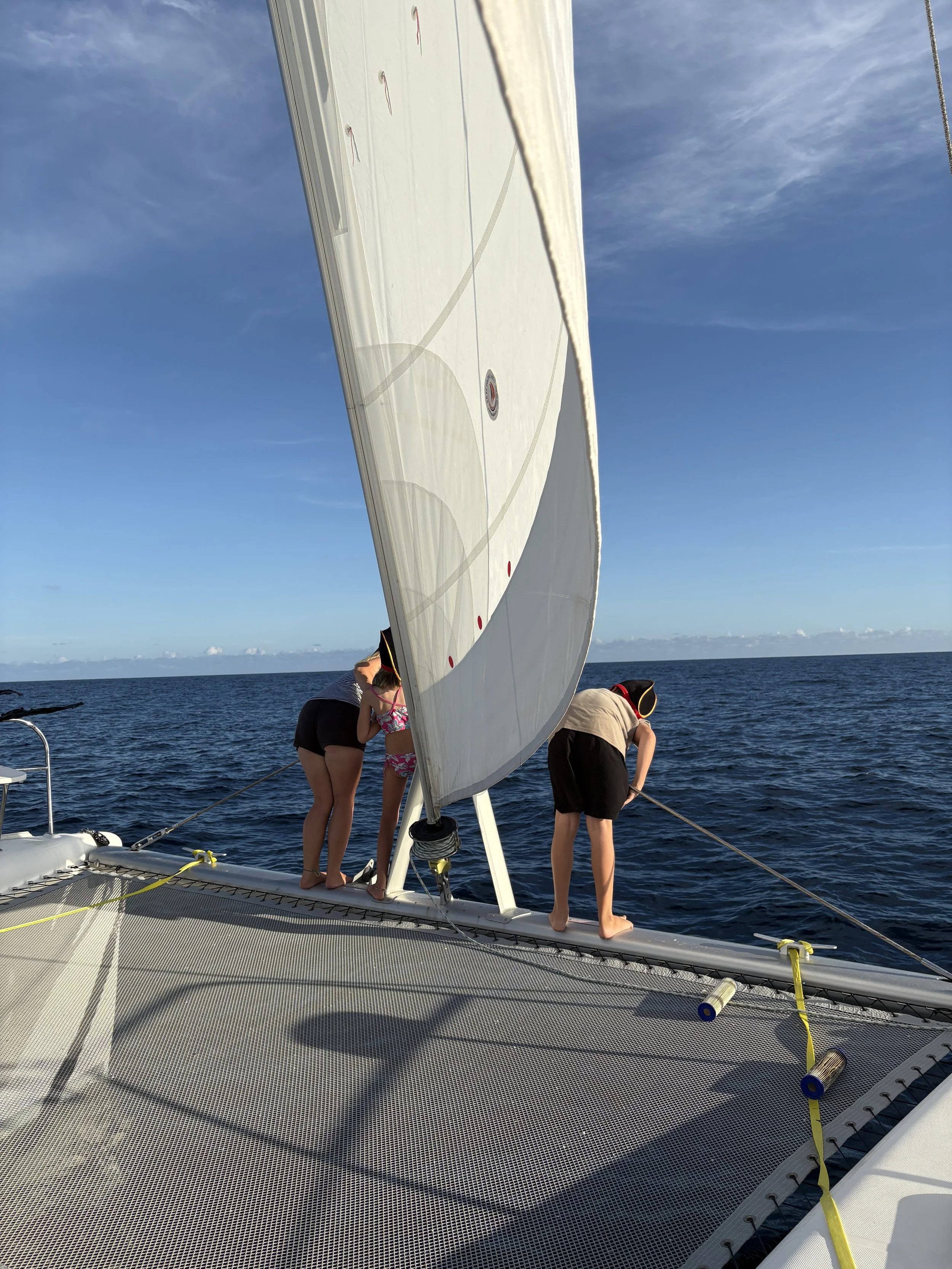
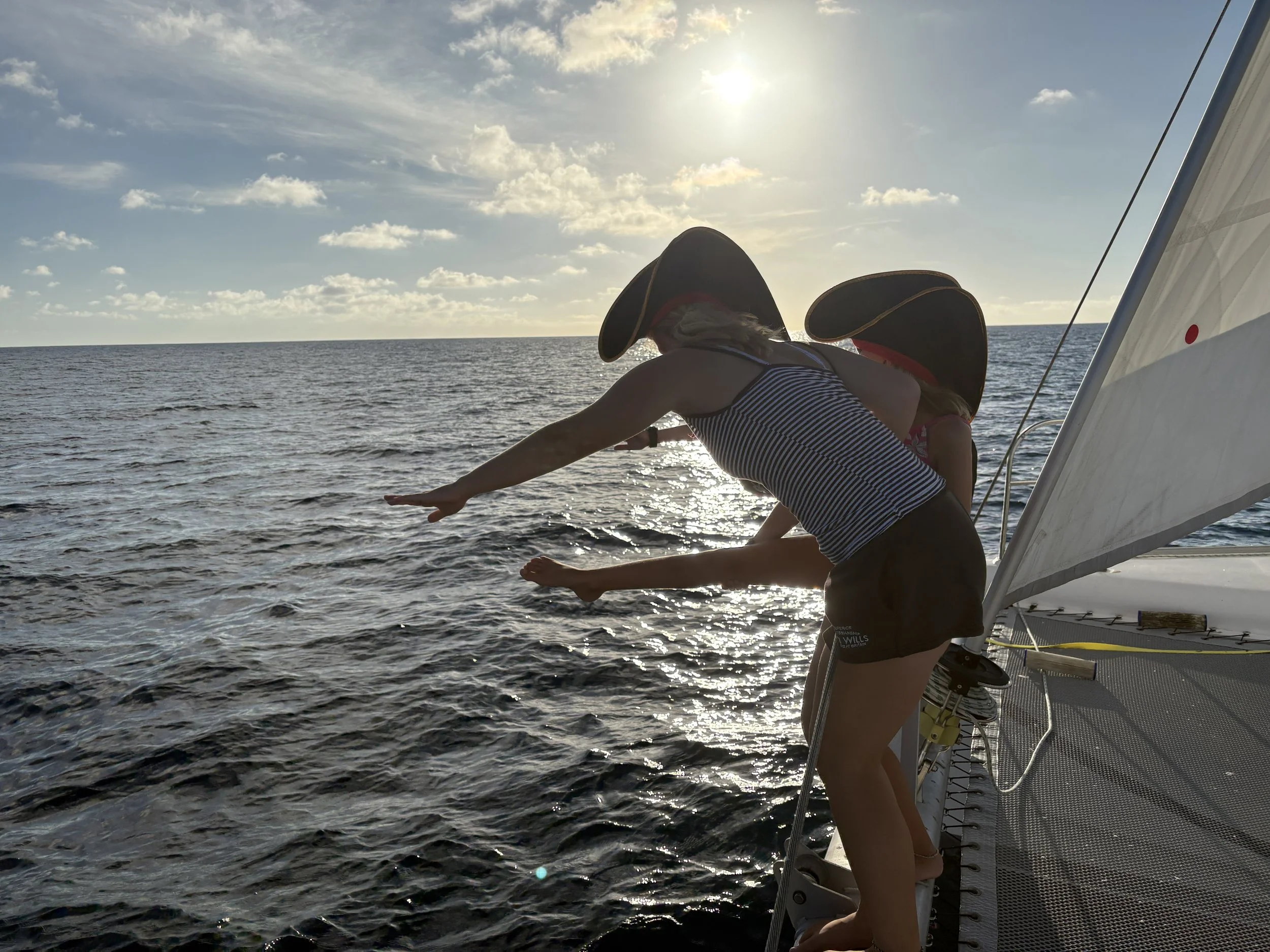
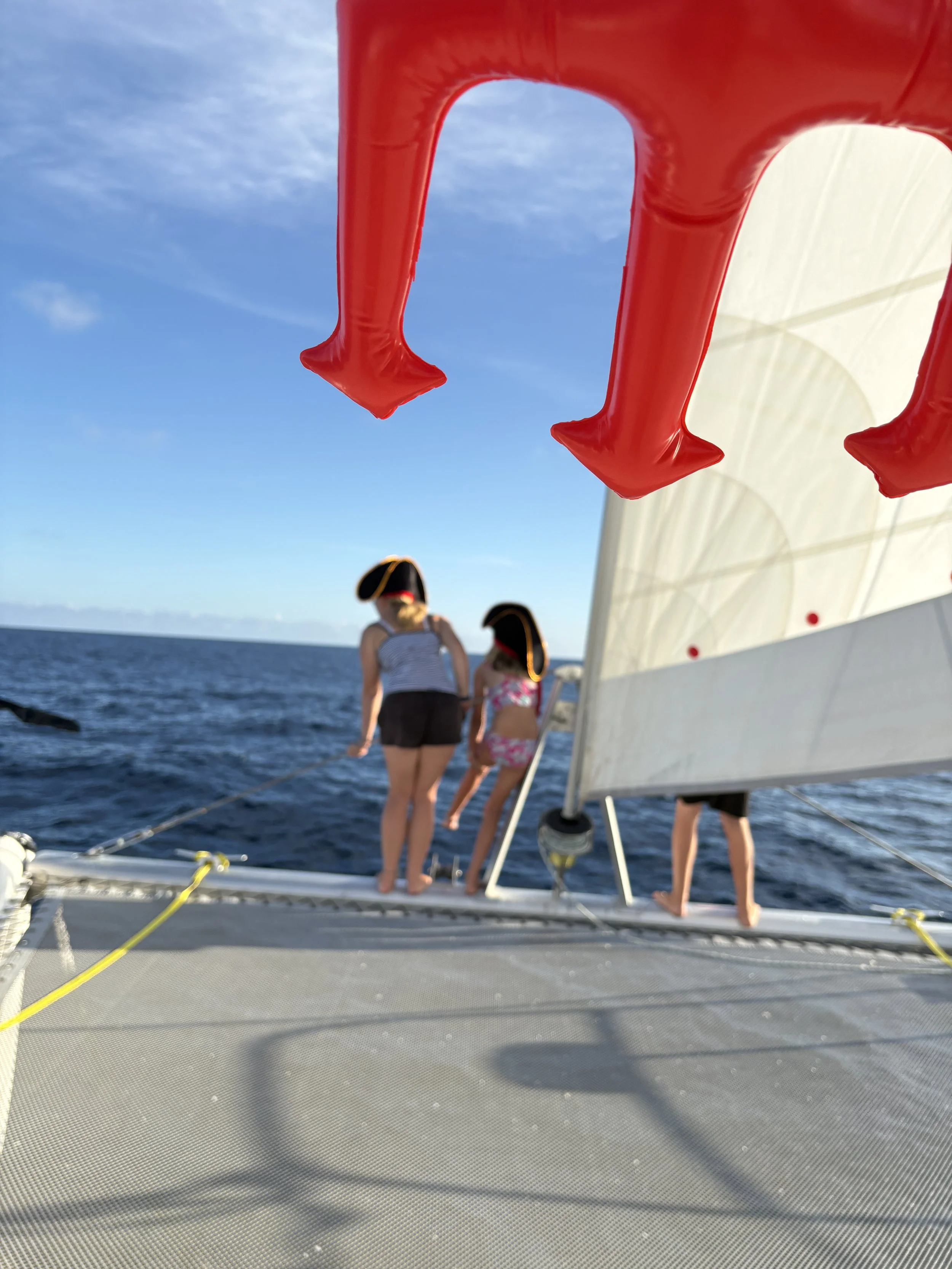
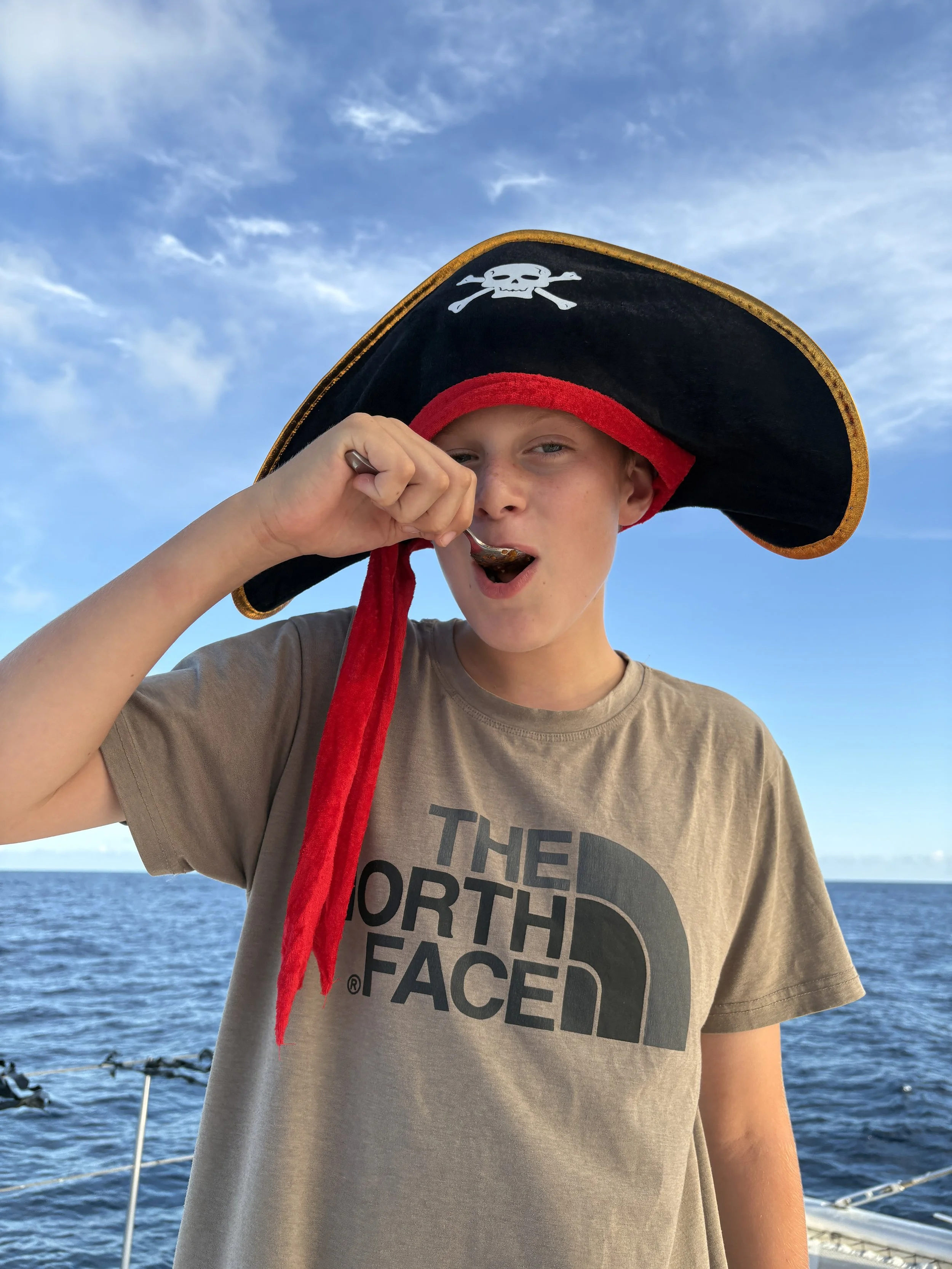
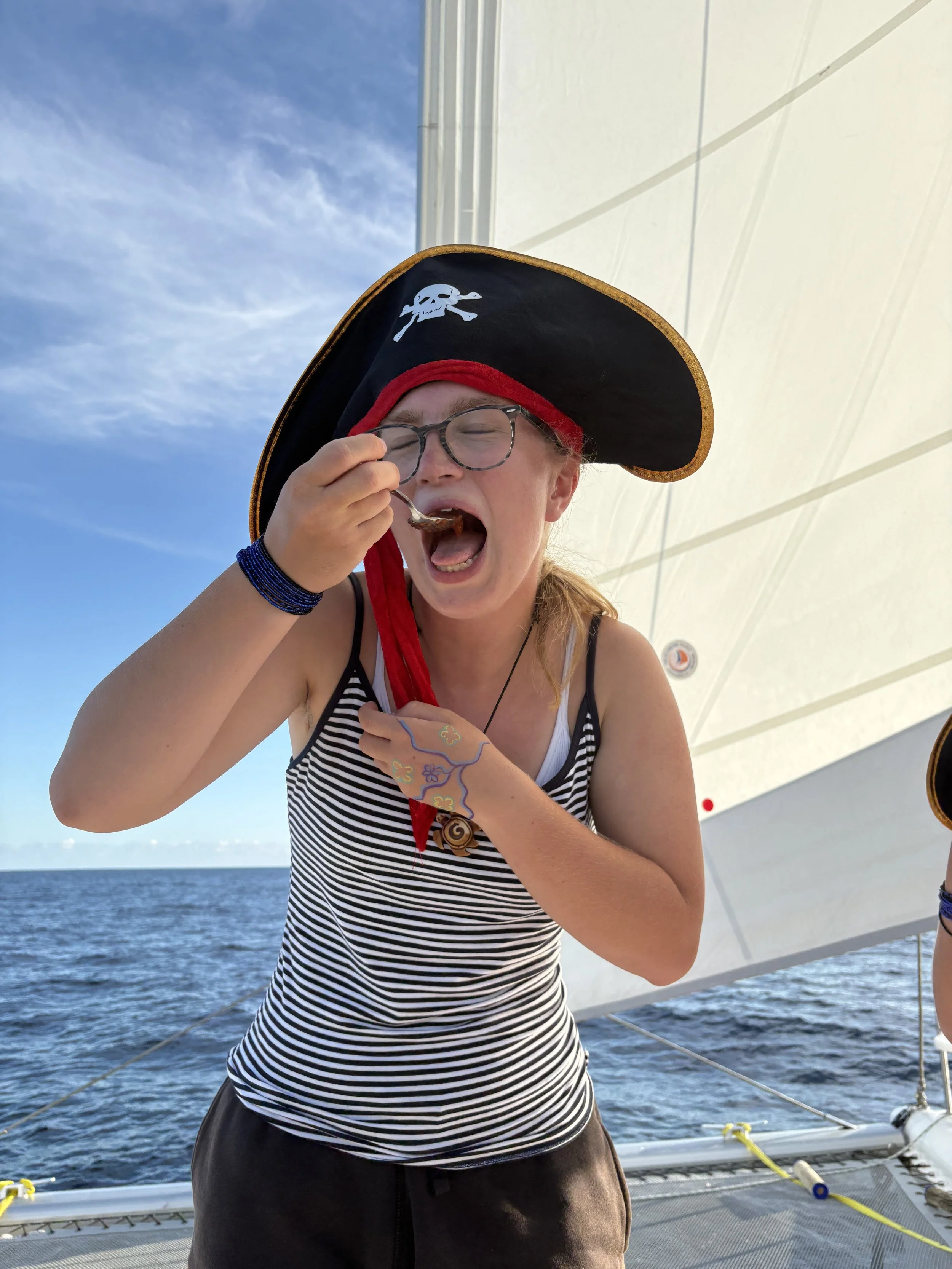
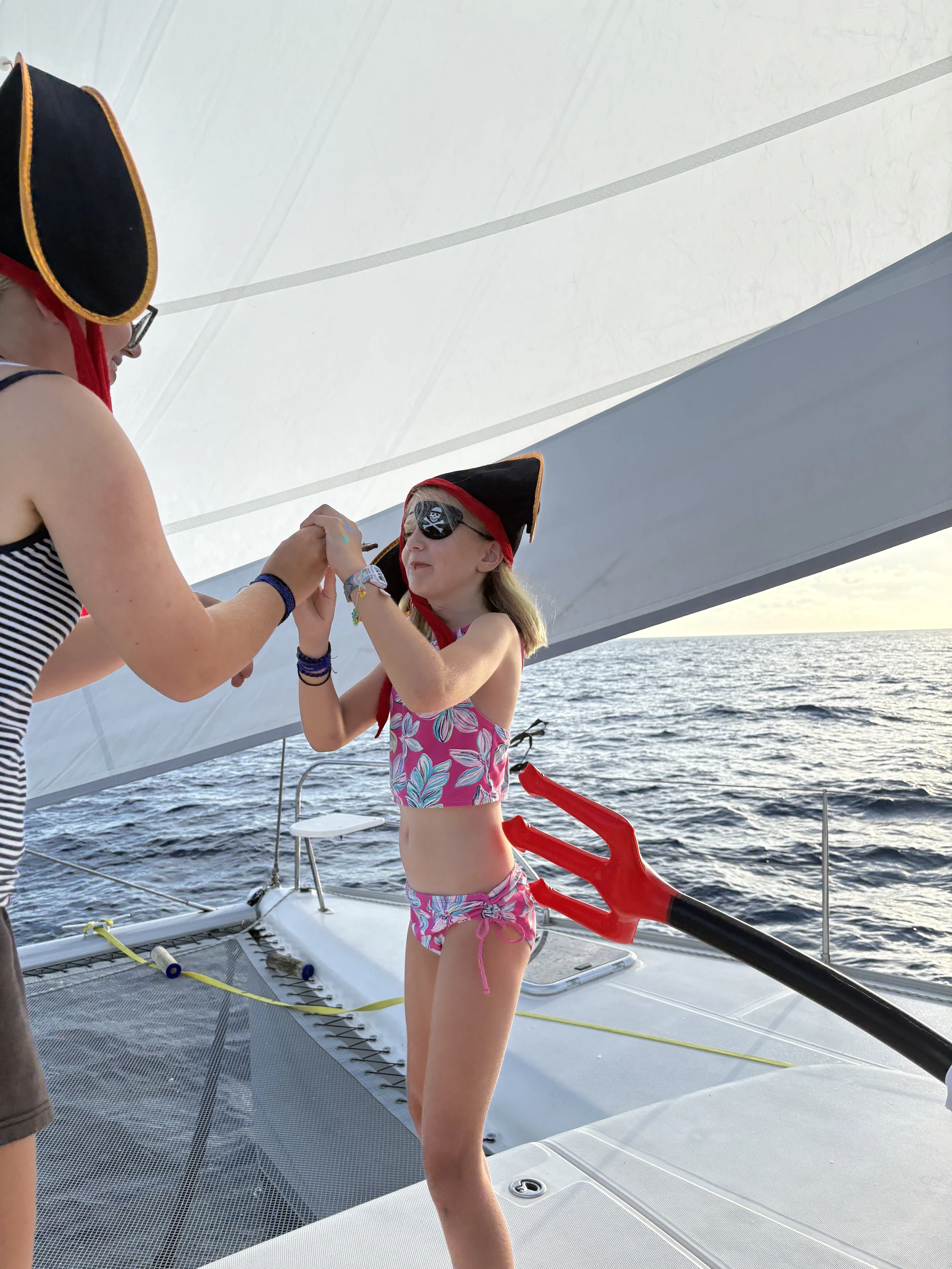
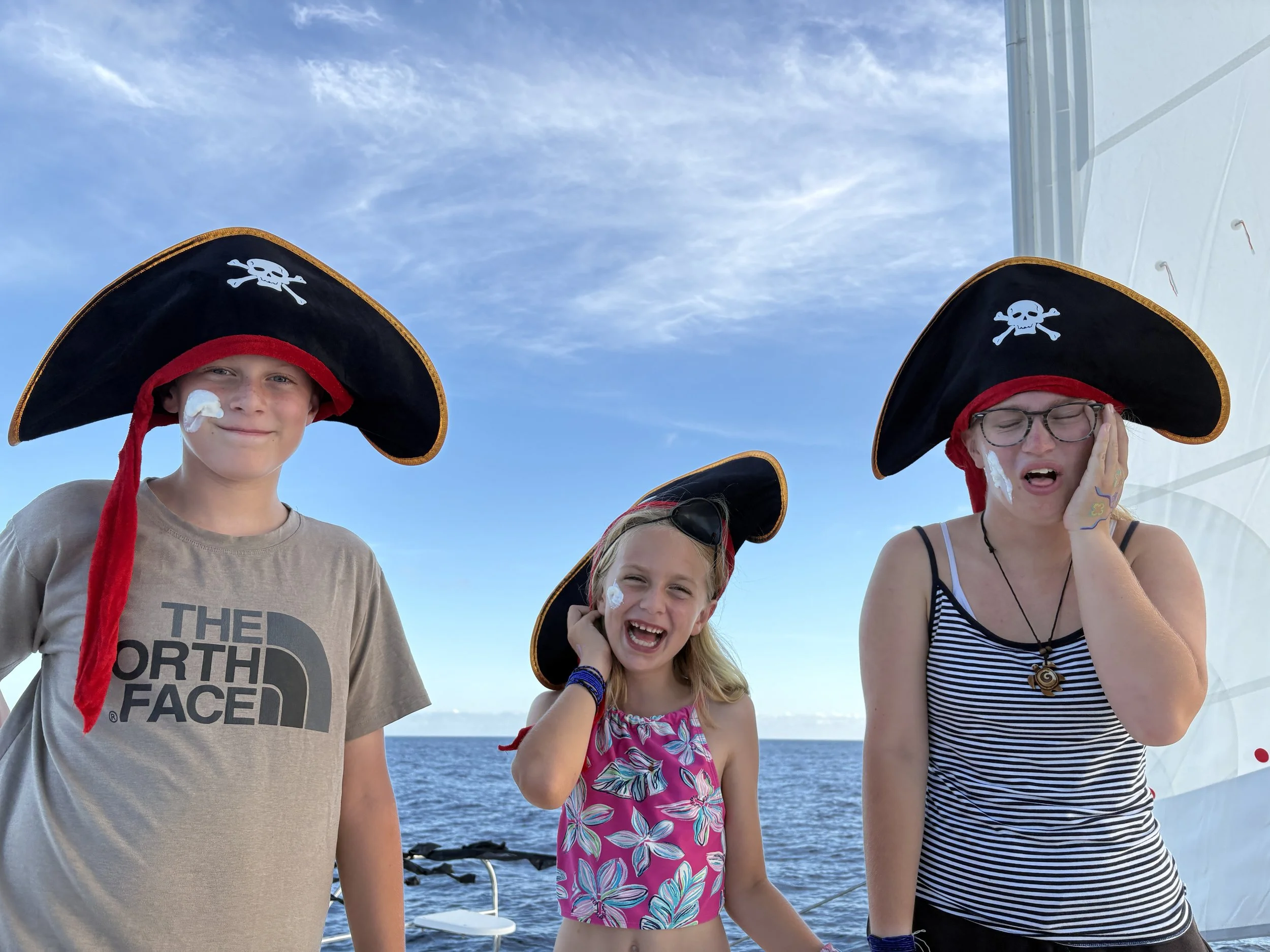
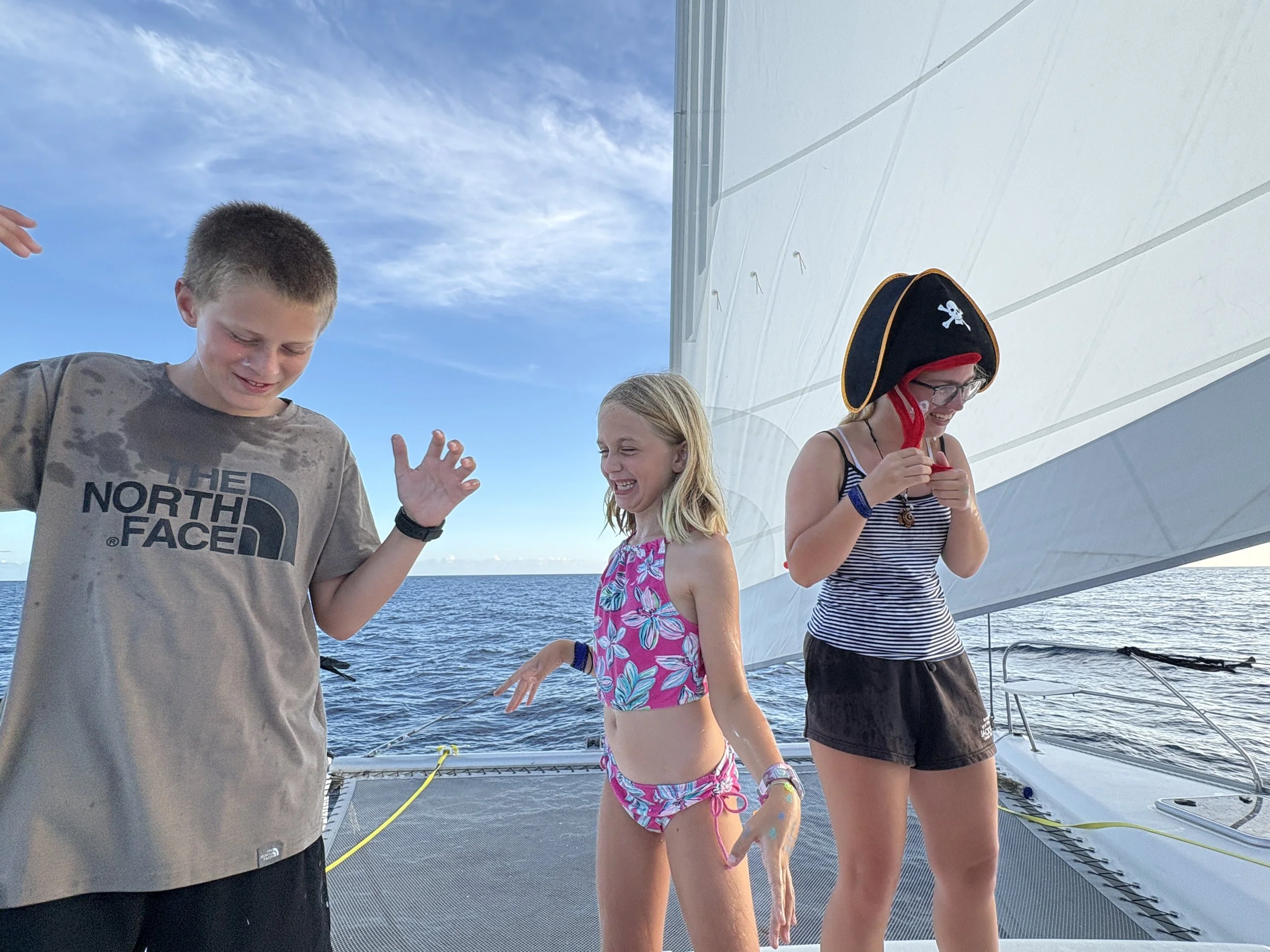
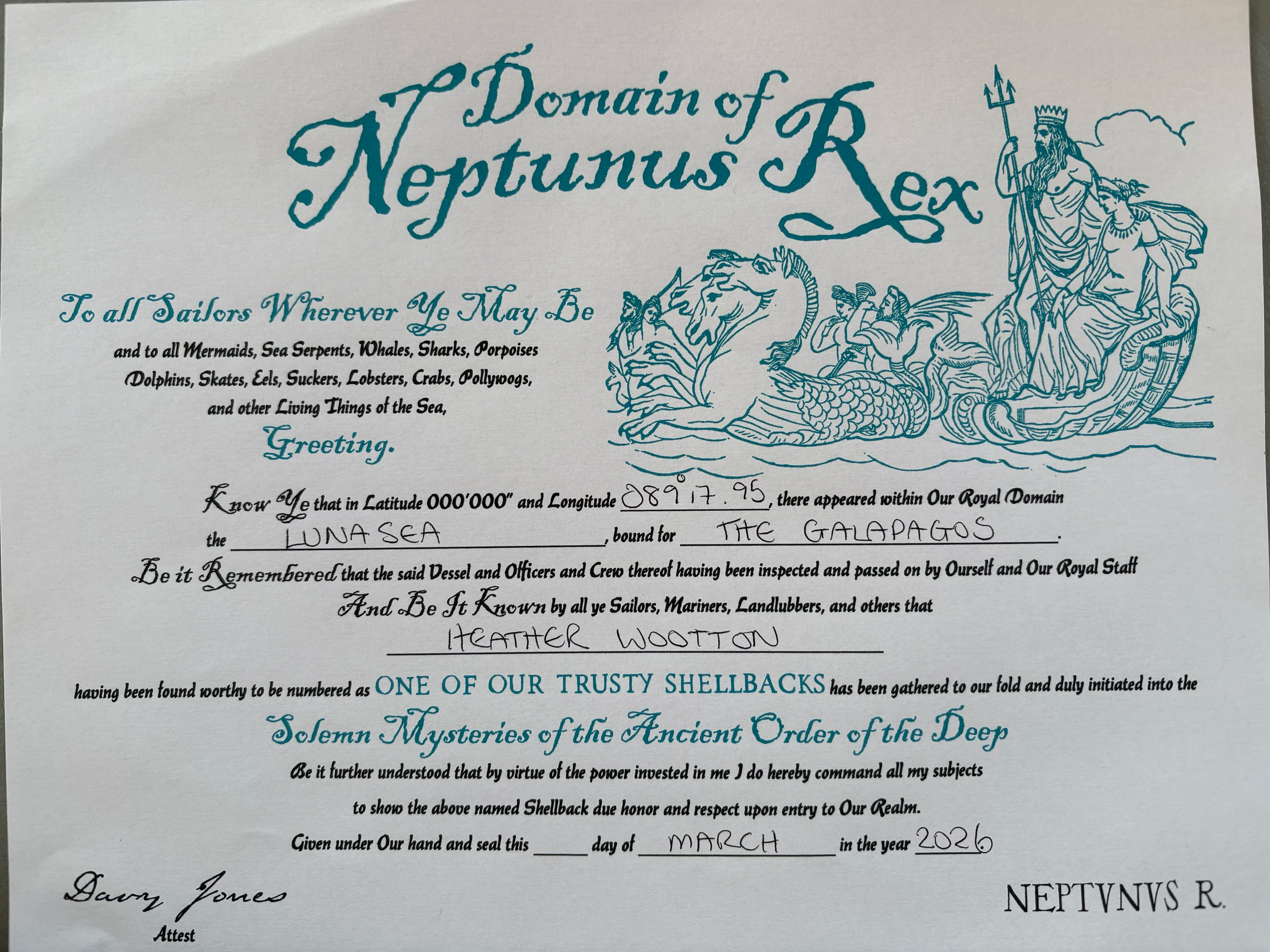
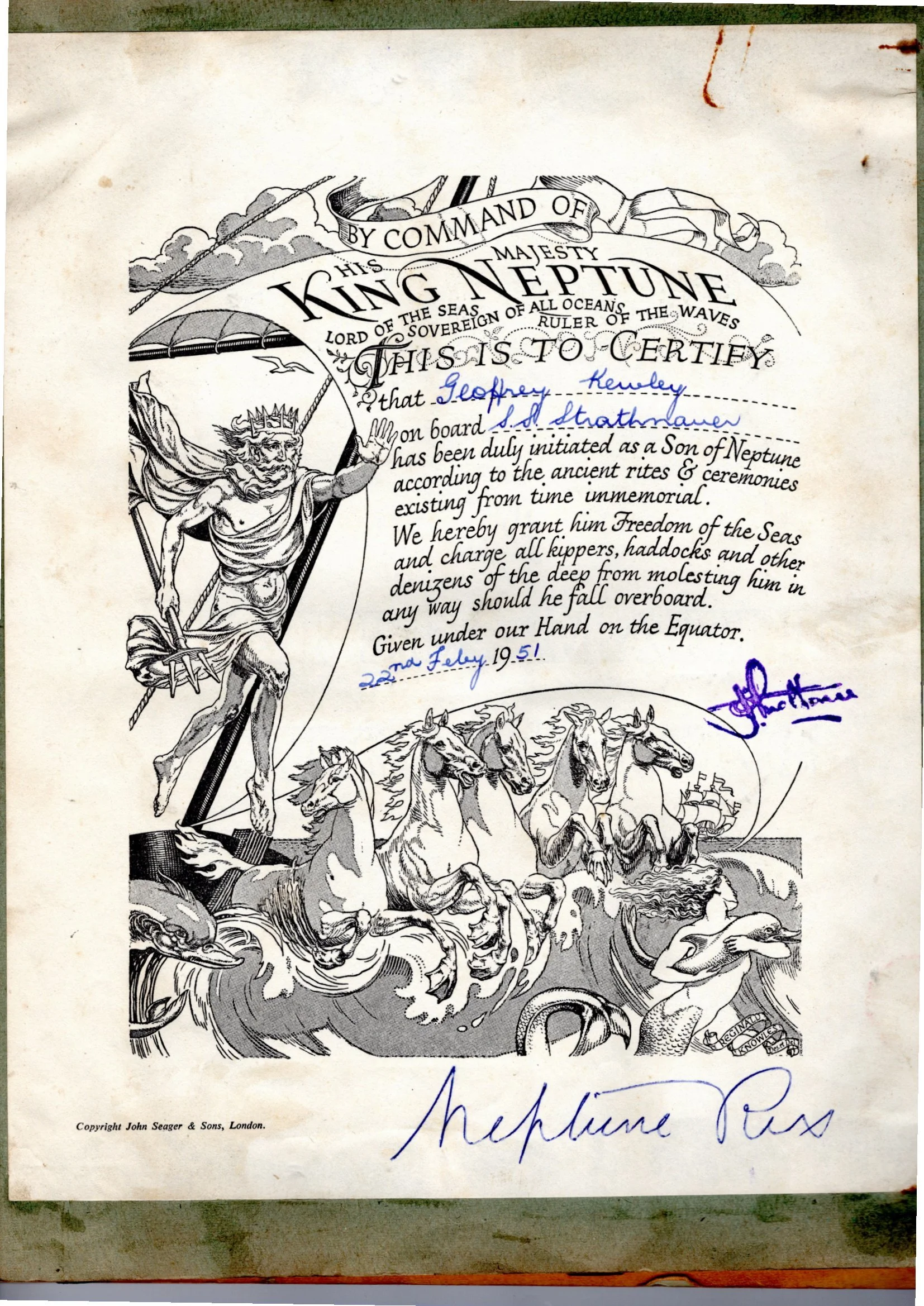
Next came the moment when we would pass into the Southern Hemisphere and cross the Equator! The equator crossing ritual, known as "Crossing the Line," is one of the oldest traditions in maritime history, dating back centuries to when sailors first ventured into unknown waters. When a ship crosses the equator for the first time, those aboard who have never made the crossing — called "Pollywogs" — must undergo an initiation to earn the title of "Shellback," or "Son (or Daughter) of Neptune." The ceremony involves a mock trial presided over by a crew member dressed as King Neptune, the god of the sea, along with his royal court, where the uninitiated are subjected to playful, messy challenges. Originally a serious test of endurance meant to prove a sailor's worthiness for life at sea, it’s observed not only in naval fleets around the world but also on boats like ours. My dad sent me his equator crossing certificate from 1951 (age 7) when he spent a year in the UK. He remembers being dunked in the swimming pool and lots of red dye! I tried to match his certificate, and everyone received one after our ceremony (script attached!). Ours involved the kids eating a spoonful of hot chili sauce, being smeared with yoghurt, and then sprayed with water. The kids leaned way out over the bow to see who could be the first to cross the line! (And they never realized that we were actually all Pollywogs on this boat — so technically we all should have had to do it.). It was great fun!
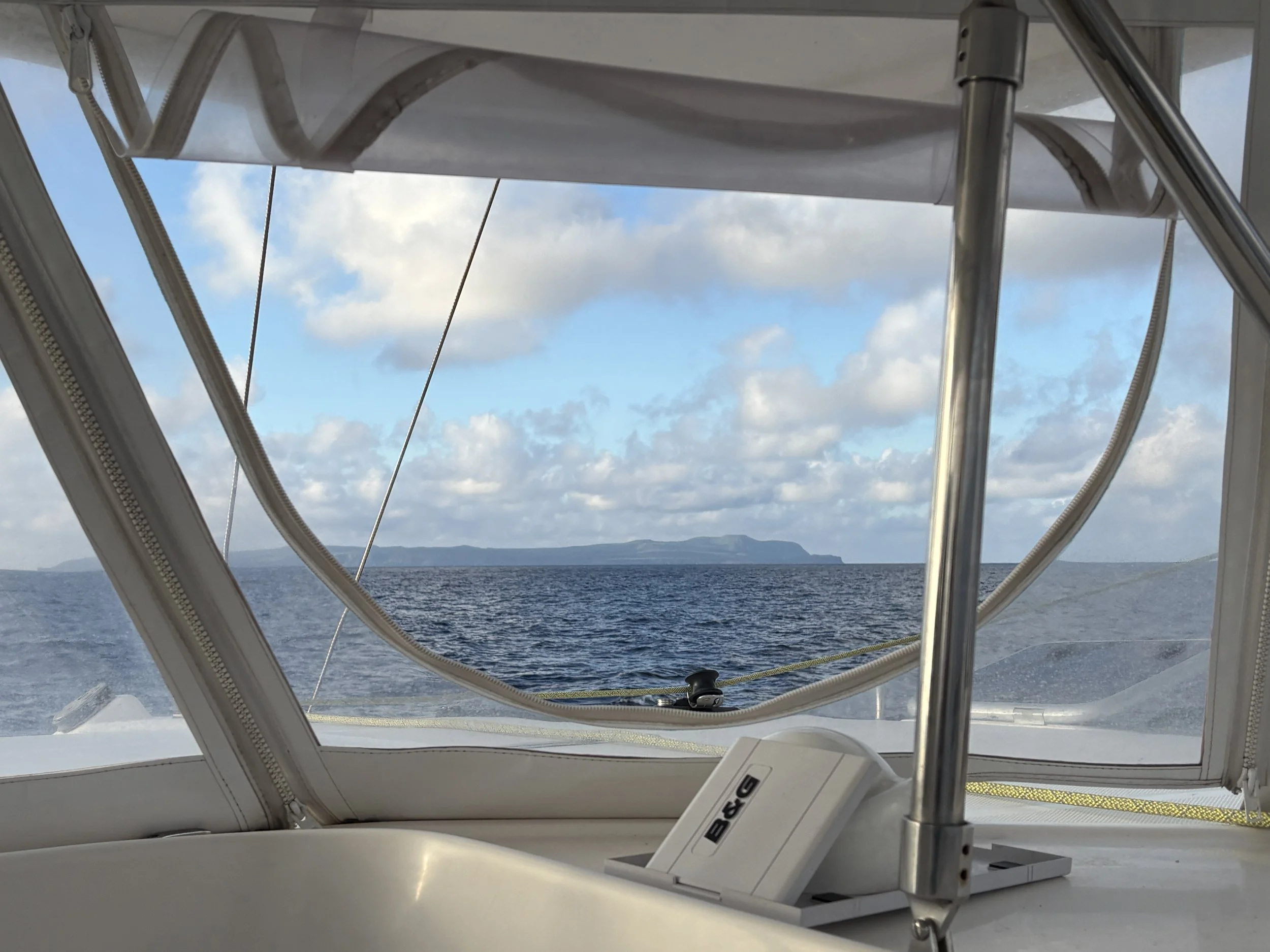
And then, suddenly, we didn’t have much longer left of our passage. On March 26, as the sun rose, we heard Annabelle — who was on watch — cry out, “Land ho!” We had actually slowed the boat down overnight, as we didn’t fancy arriving at a new anchorage in the dark. We sailed in between Santa Cruz and San Cristóbal Islands, in awe that we had actually sailed our boat all the way to the Galápagos.
Being privileged enough to sail our boat here did not come without its challenges. The fees alone were around $4,000 (again!) just to bring the boat into Galápagos waters. We had to have the boat fumigated, the hull cleaned and certified, and submit visas along with a mountain of paperwork.
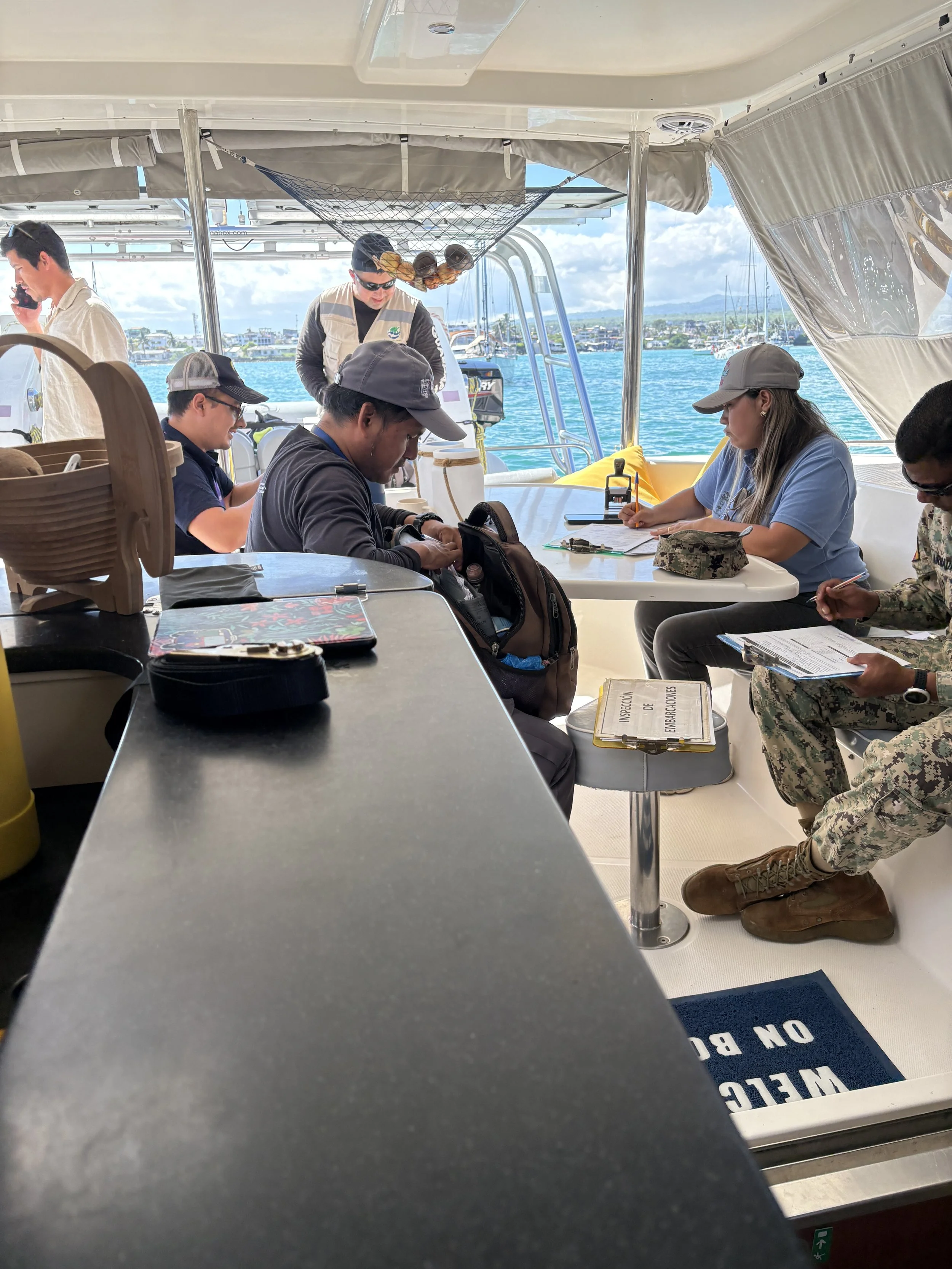
Once we dropped the anchor, we contacted our agent, and a little while later ten officials arrived at the boat. They reviewed our paperwork, had us fill out a few additional forms, checked that the hull was clean enough, and inspected our food stores and fridges for any banned items. In the end, it wasn’t nearly as intimidating as we had feared. The officials were extremely nice, efficient, and very thankful for a cold glass of water (they all wear jeans, boots, and combat gear — and it is SO hot here on the Equator at 2pm!).
Afterwards, we hailed a water taxi on the VHF and headed into town to celebrate our arrival.
We aren’t allowed to use our dinghy here for two reasons:
We have a two-stroke outboard, which isn’t permitted in the Galápagos.
If you leave your dinghy in the water near shore, you’re likely to come back to a few unwanted visitors onboard!
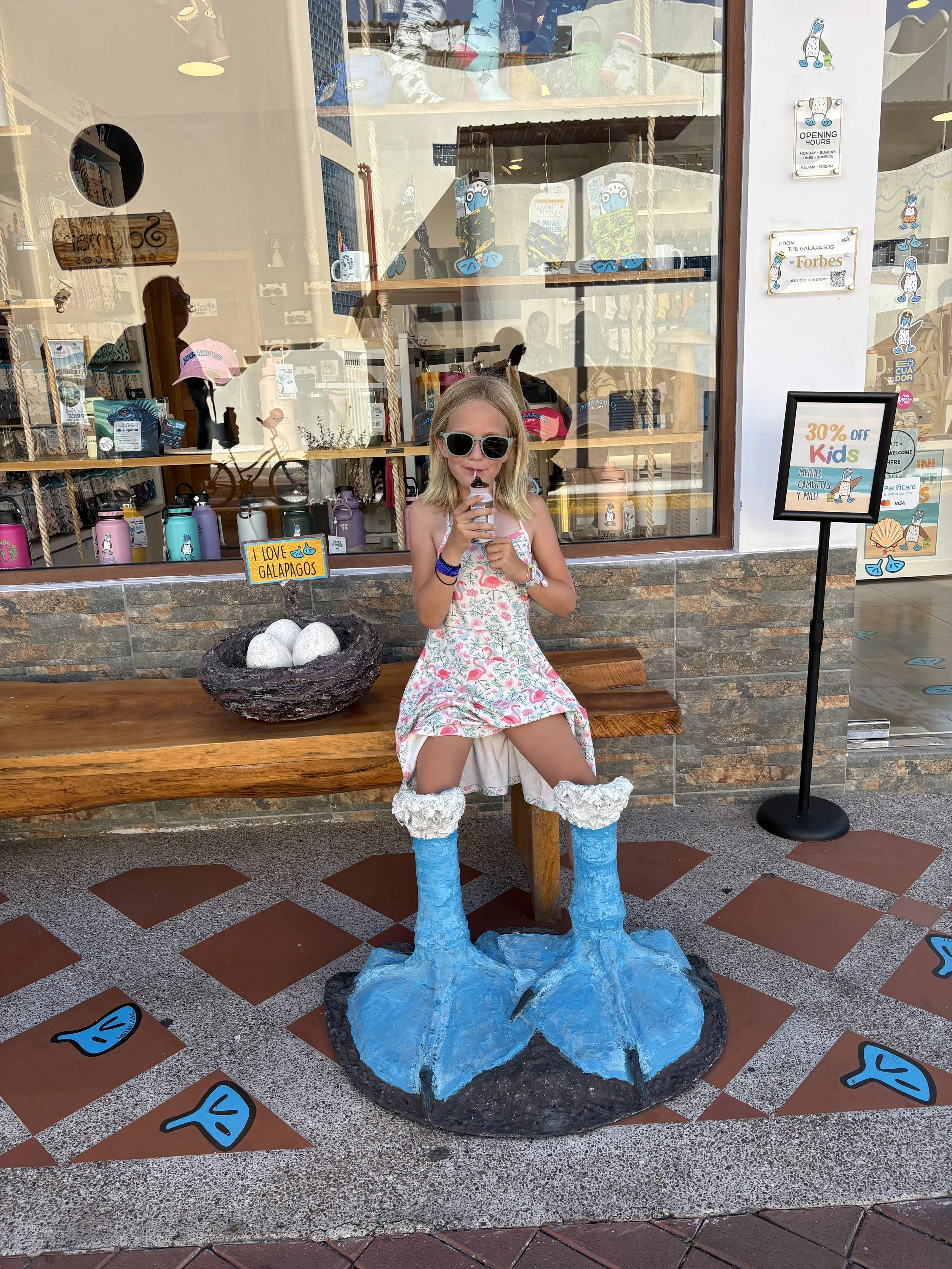
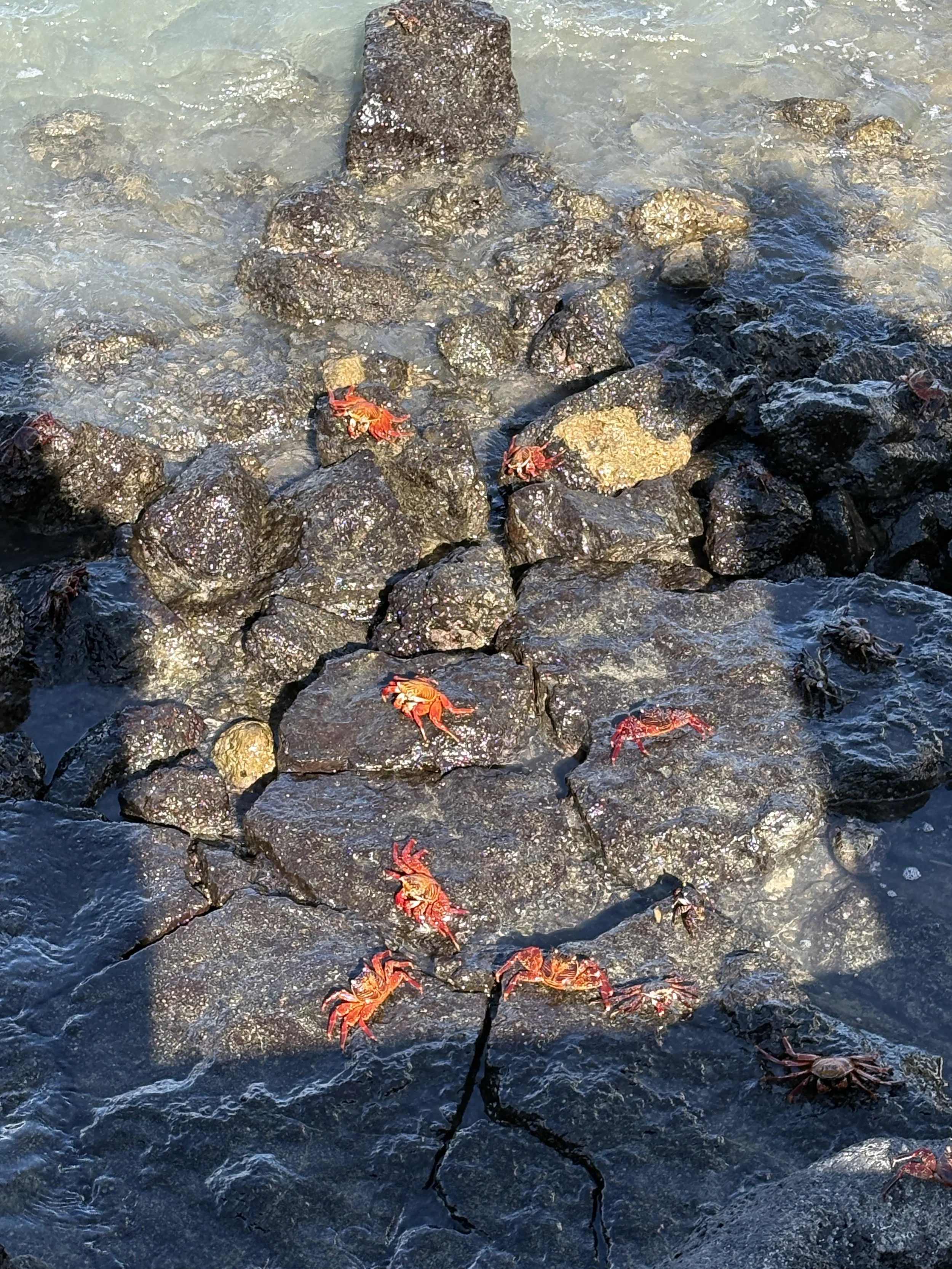
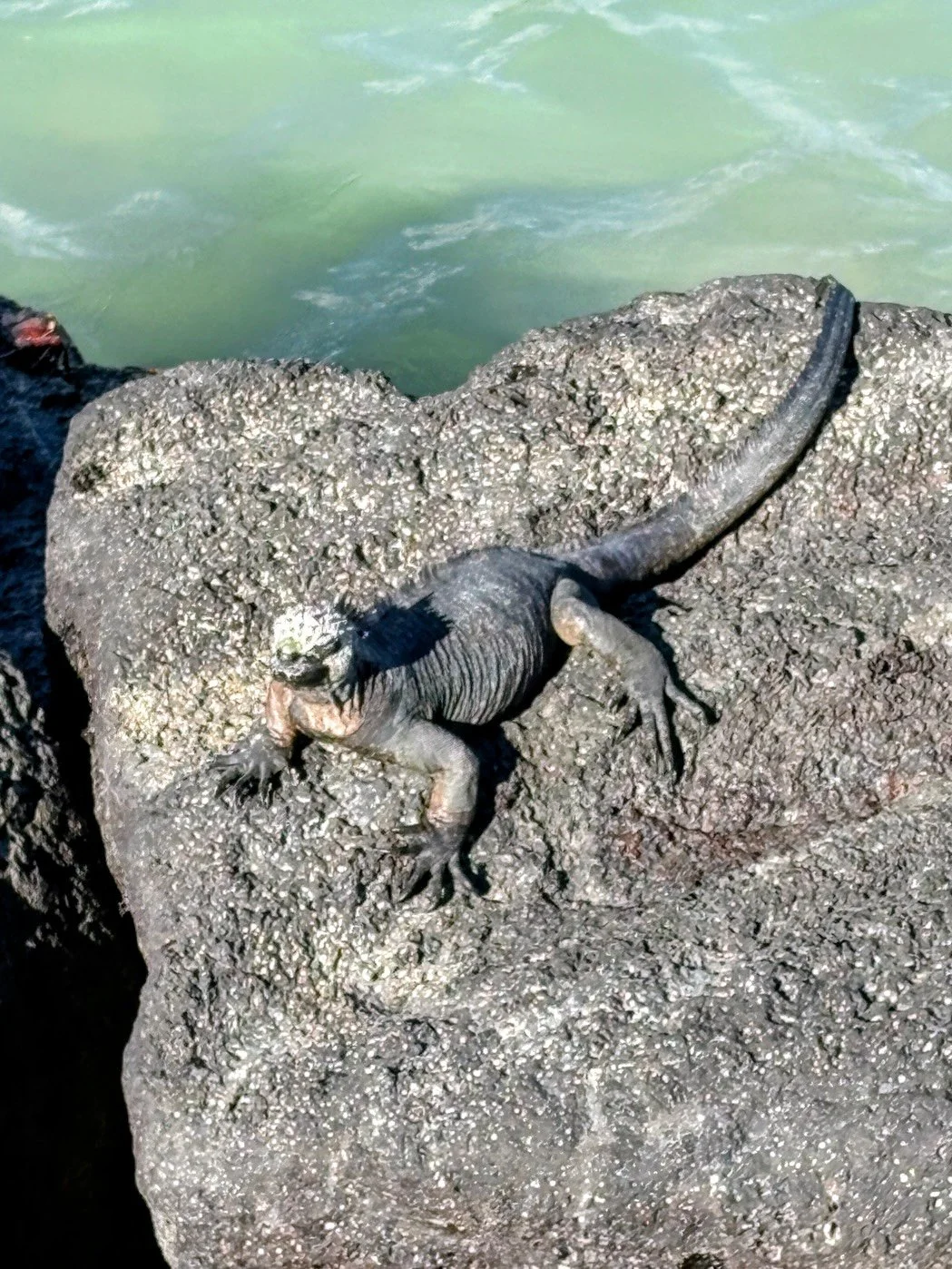
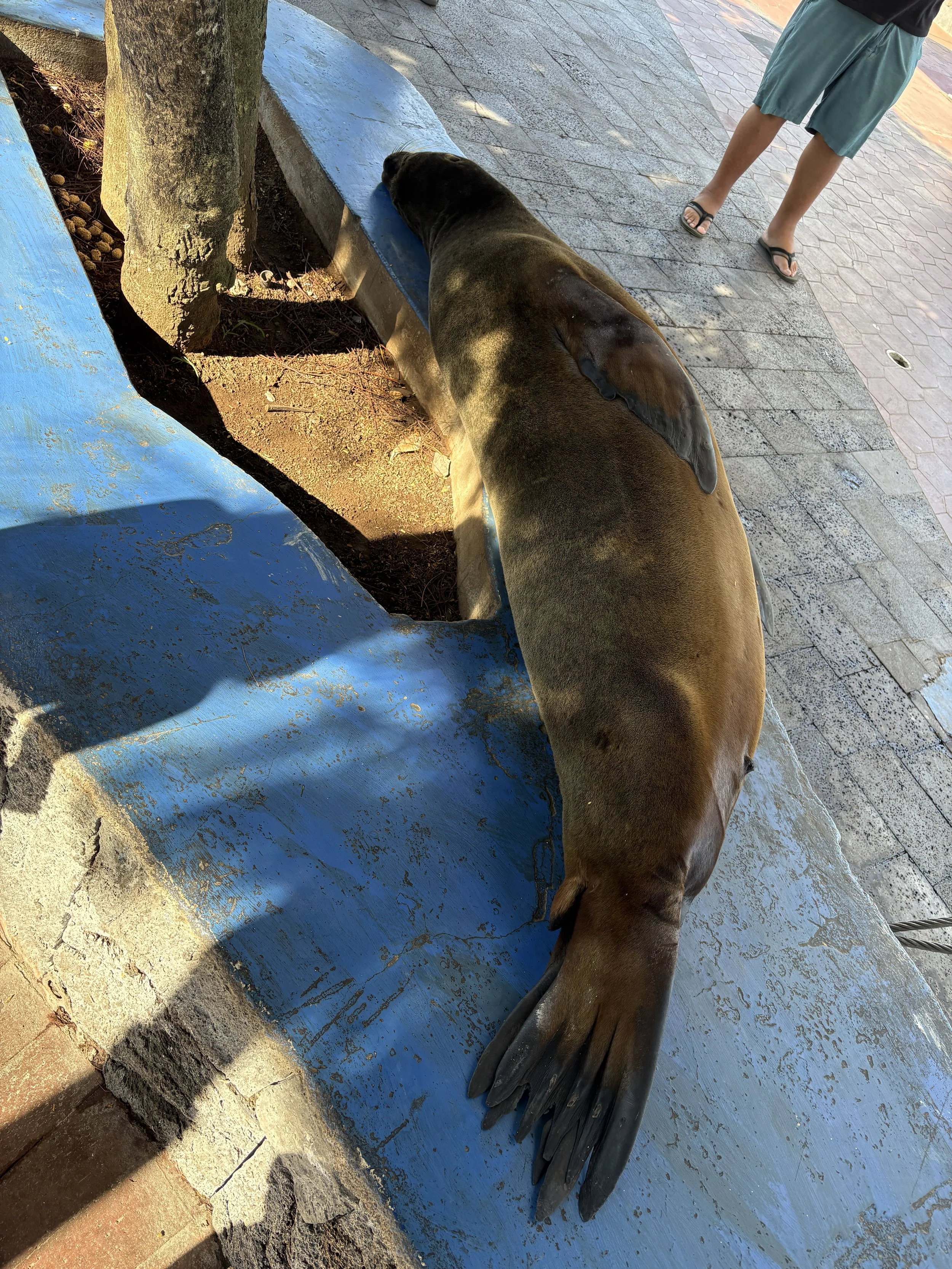
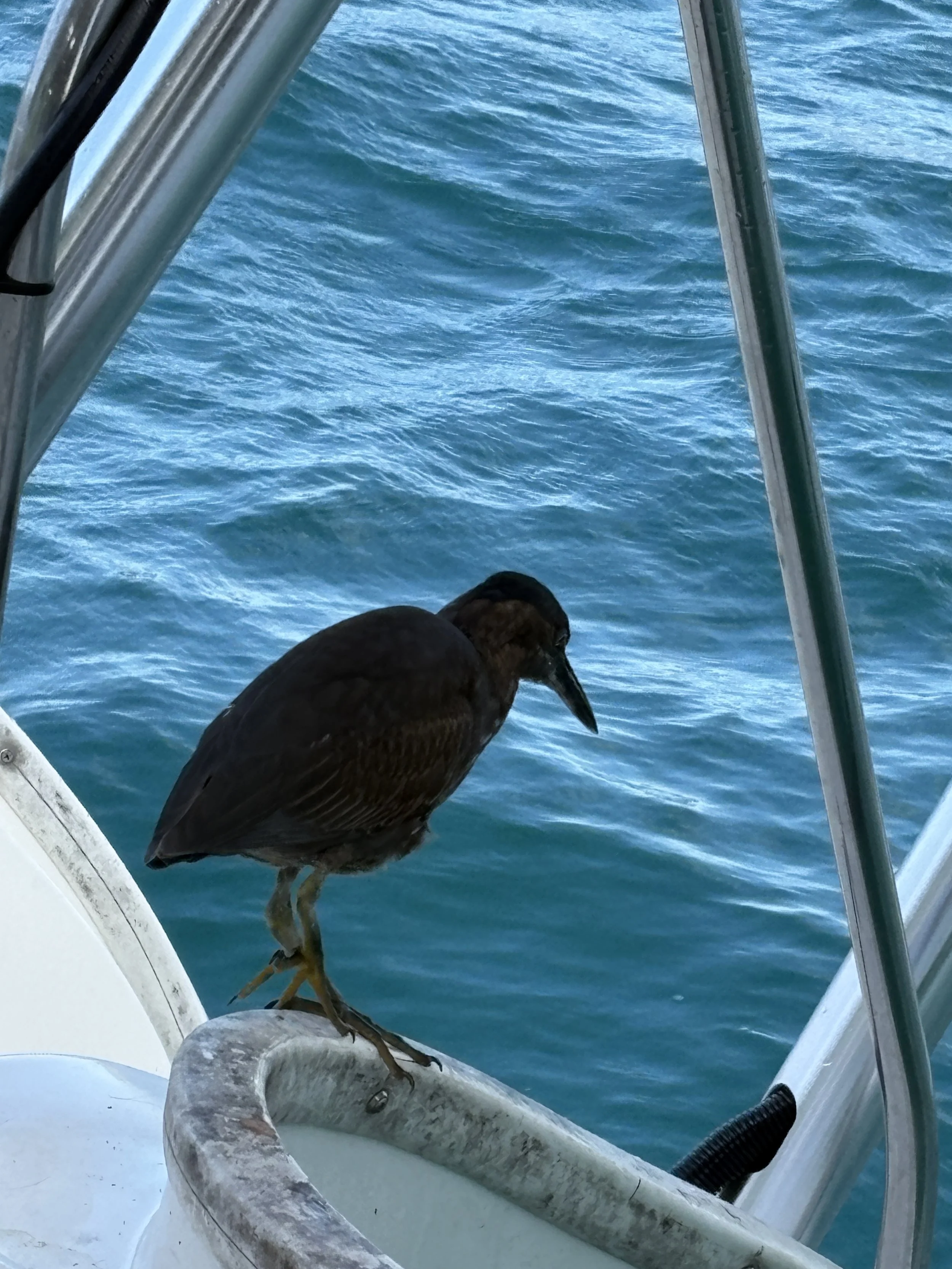
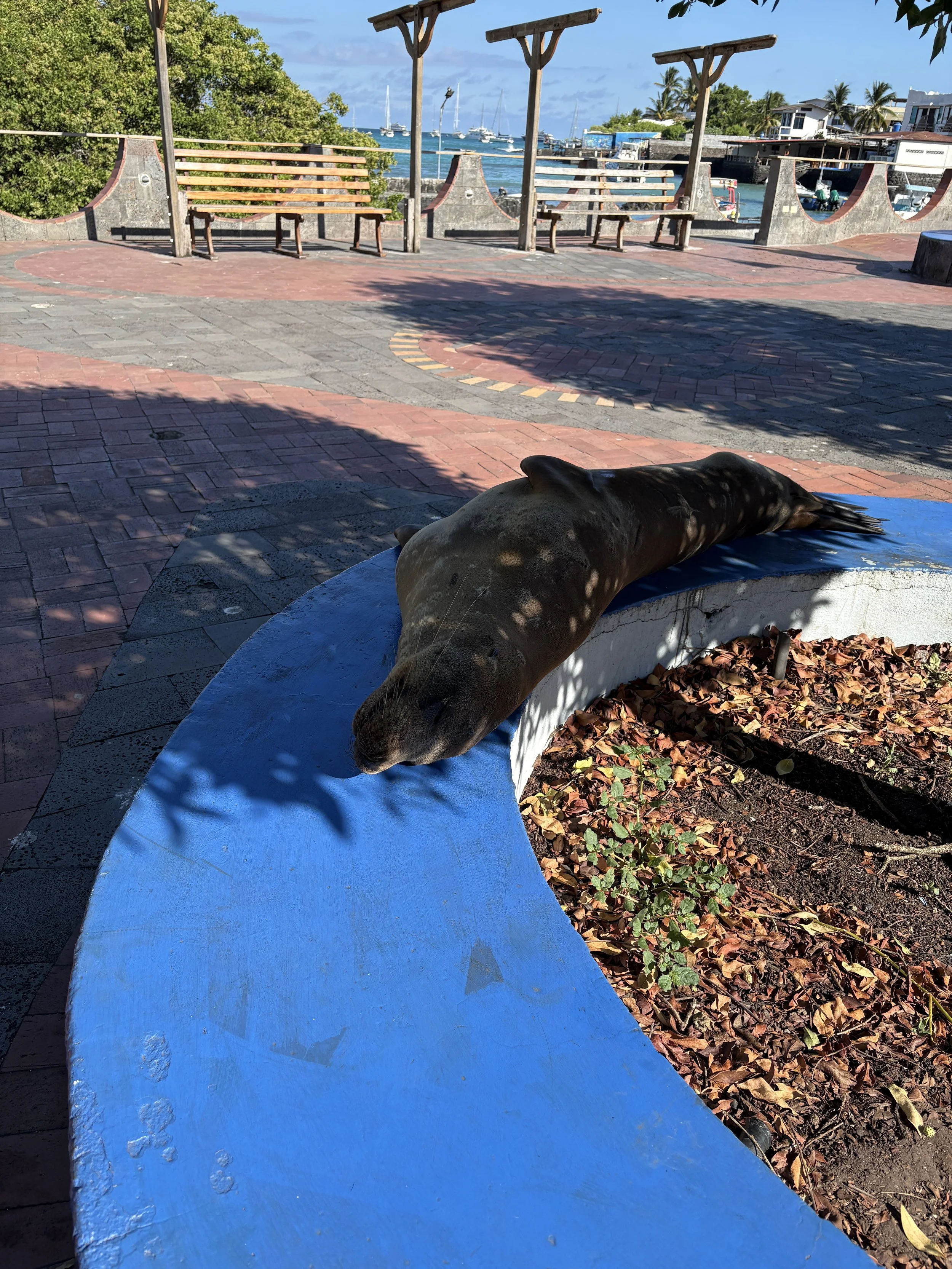
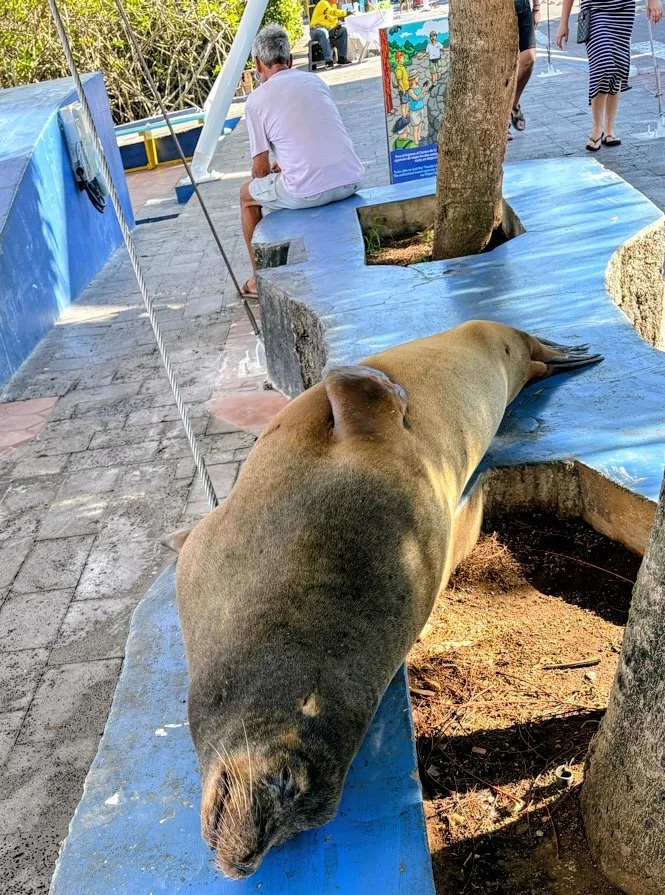
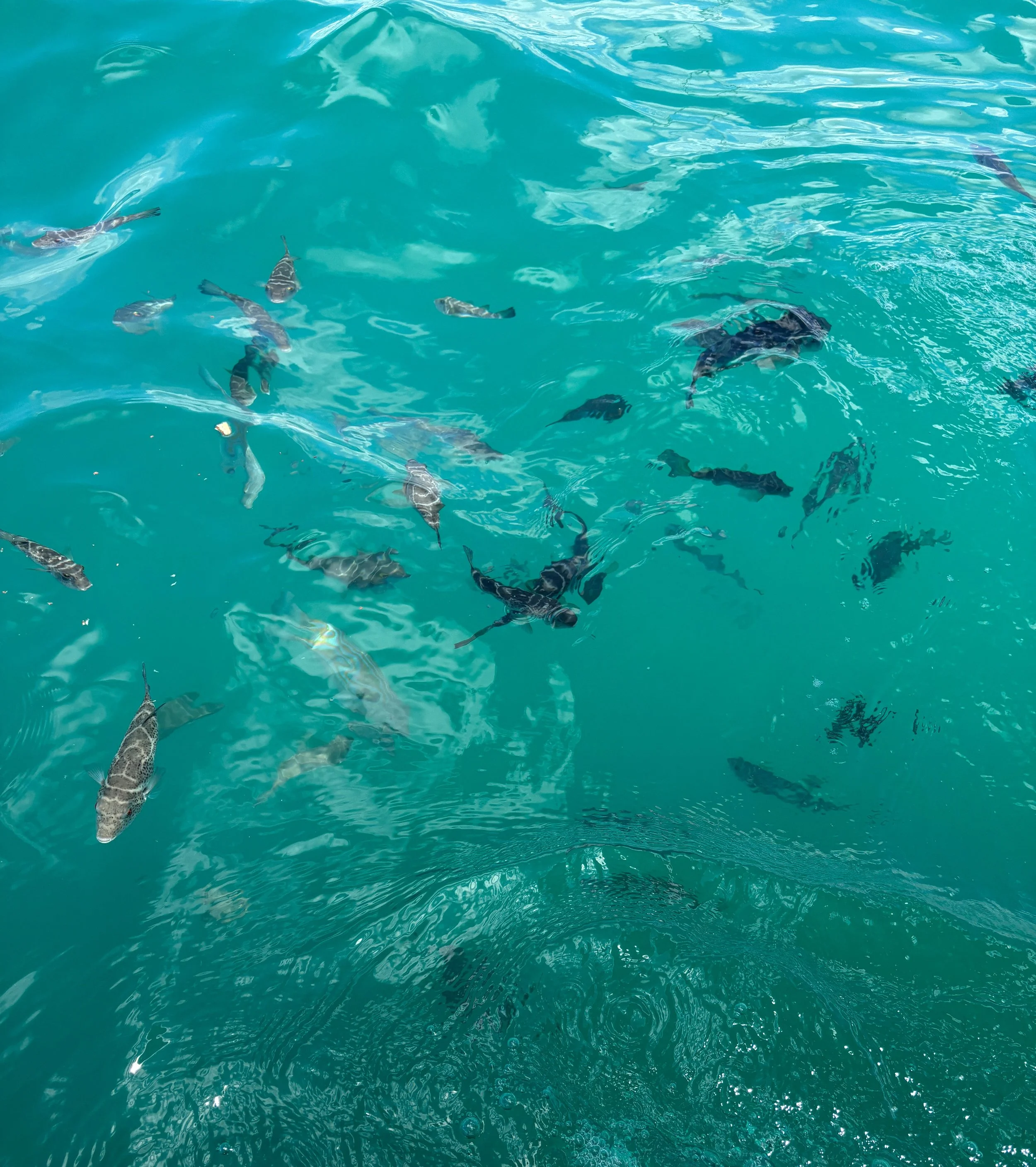
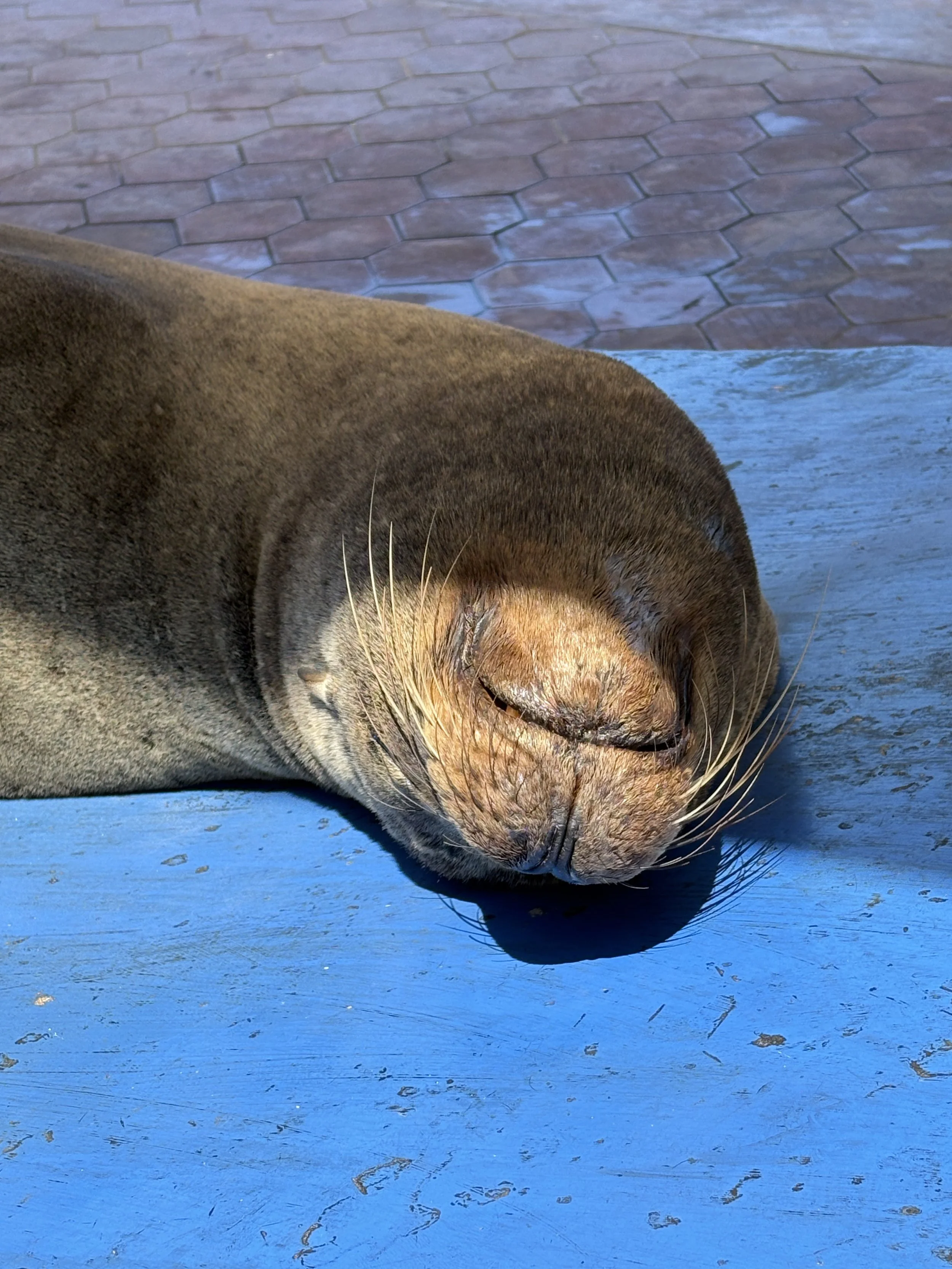
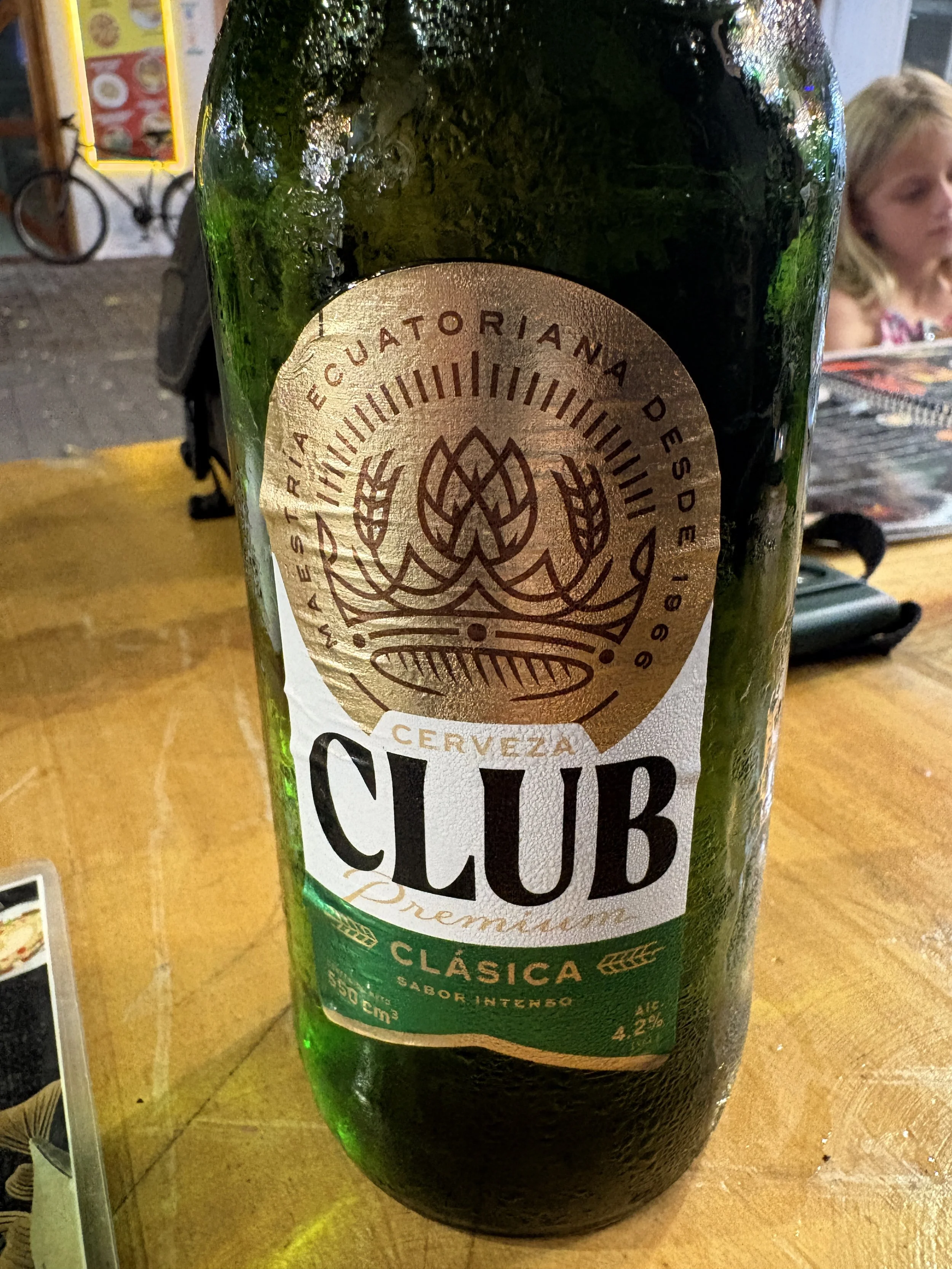
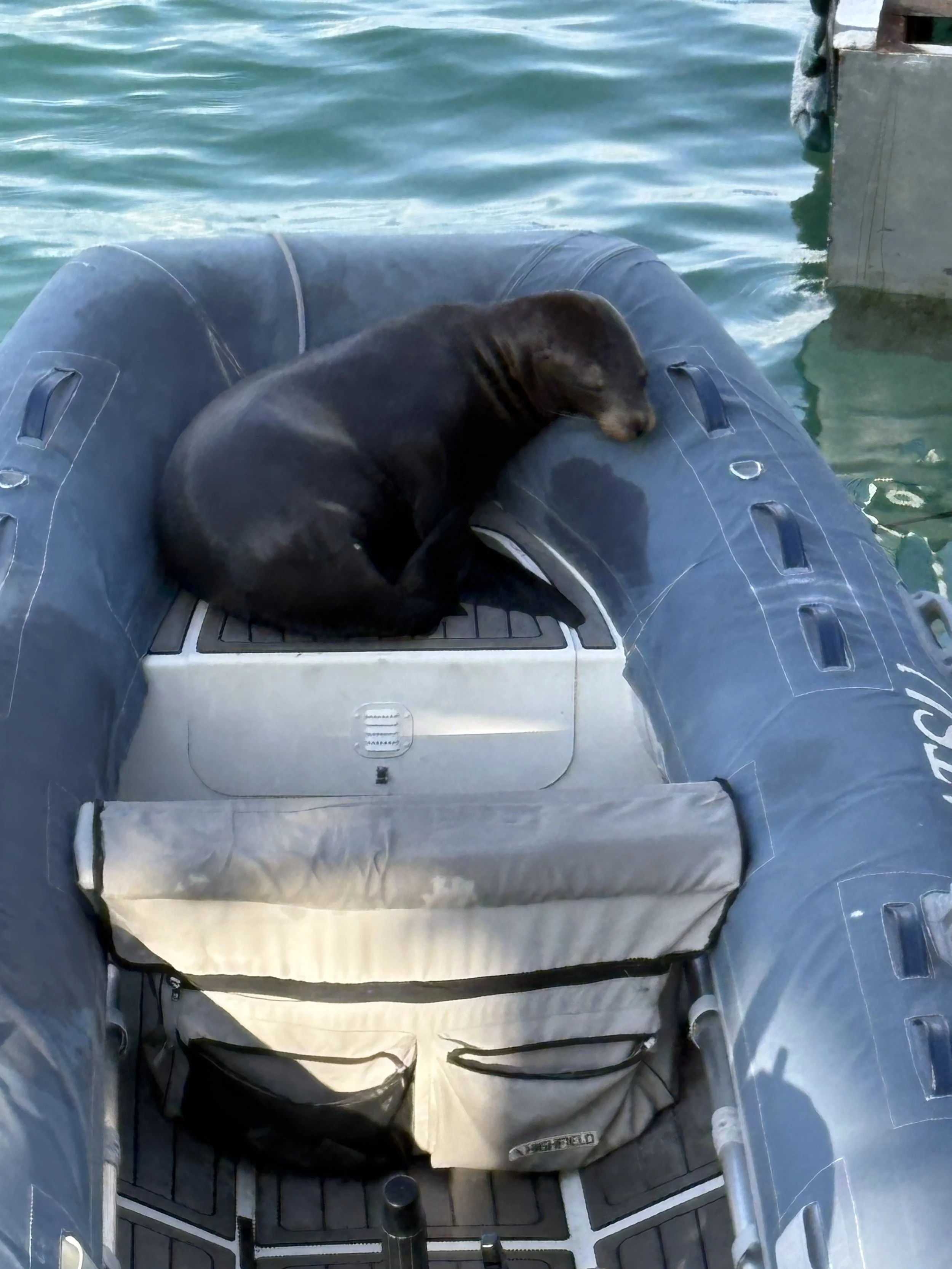
Feeling totally special that we made it here and already loving the sea lions who sleep on a park bench like stray dogs, the black iguanas with their gross flaky skin and other animals totally unique to this place. All this in our first afternoon here, in the pretty touristy little town, of the islands we can visit! So excited to explore more over the next few weeks, and totally worth the admin and fees already…………!