Almost making news headlines as we finally cross the Panama Canal!
March 12 was our big day. After much back and forth with our Canal agent, Stanley, as he worked with the Canal authorities to fit us in amongst the much bigger — and much higher-paying — Canal customers, we finally had our slot. With our rented lines and fenders on board, we left Shelter Bay Marina and headed out into the anchorage bordering the Canal. There we waited for the crossing, along with our two hired hands, Jimmy and Alex, professional line handlers who would help us through the locks.
We pottered around the anchorage for a while, watching the cargo ships lining up and listening to the constant radio traffic as this extraordinary logistical machine monitored and controlled the movement of these enormous vessels. Eventually a pilot boat headed straight for us, and off jumped McLean, our Pilot/Advisor for the first part of our Canal experience.
Every ship that transits the Canal must have one of these pilots on board. There are roughly 300 of them who navigate the Canal waters, guiding the approximately 12,000 ships, boats and tankers that pass through each year.
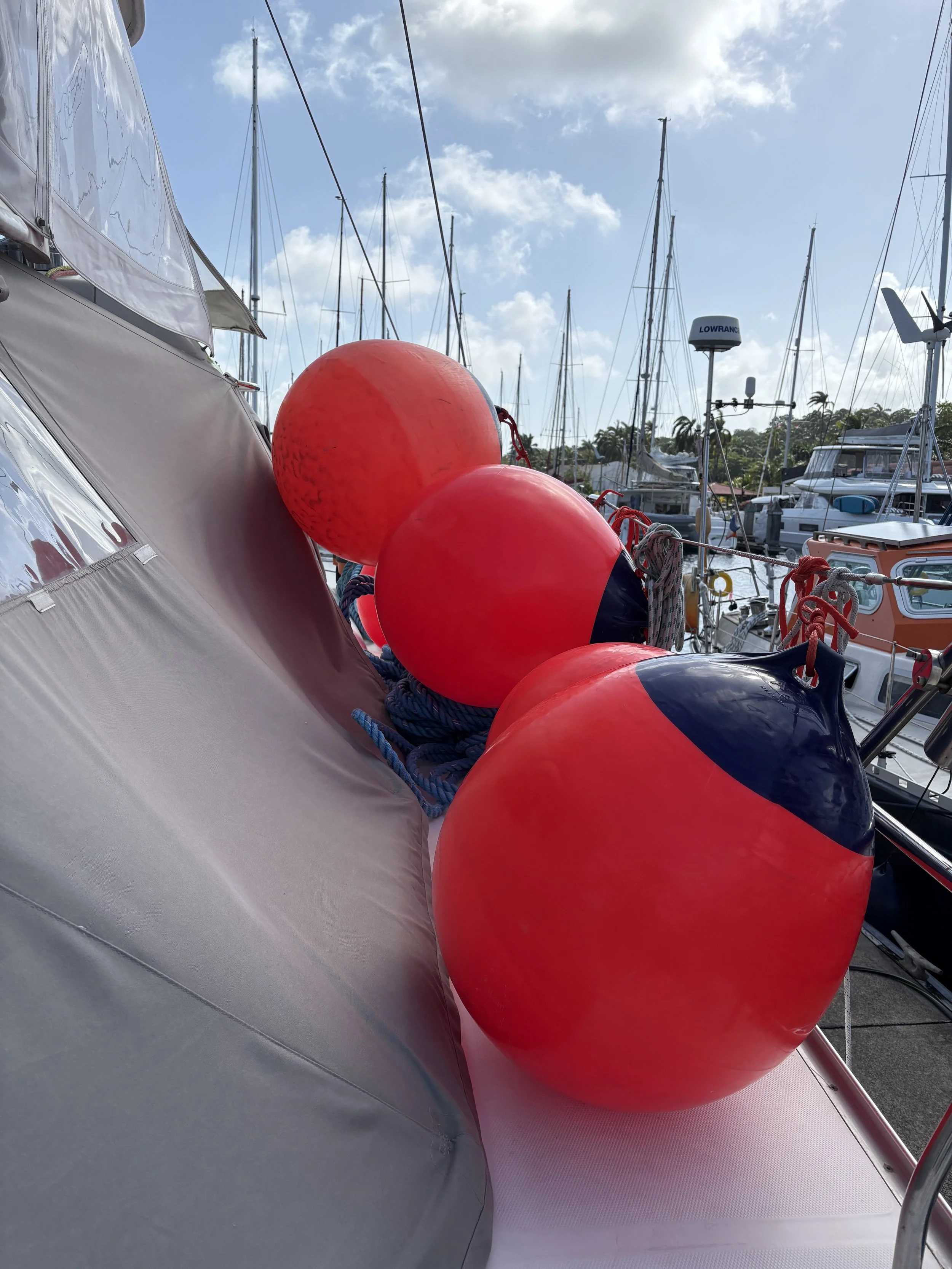
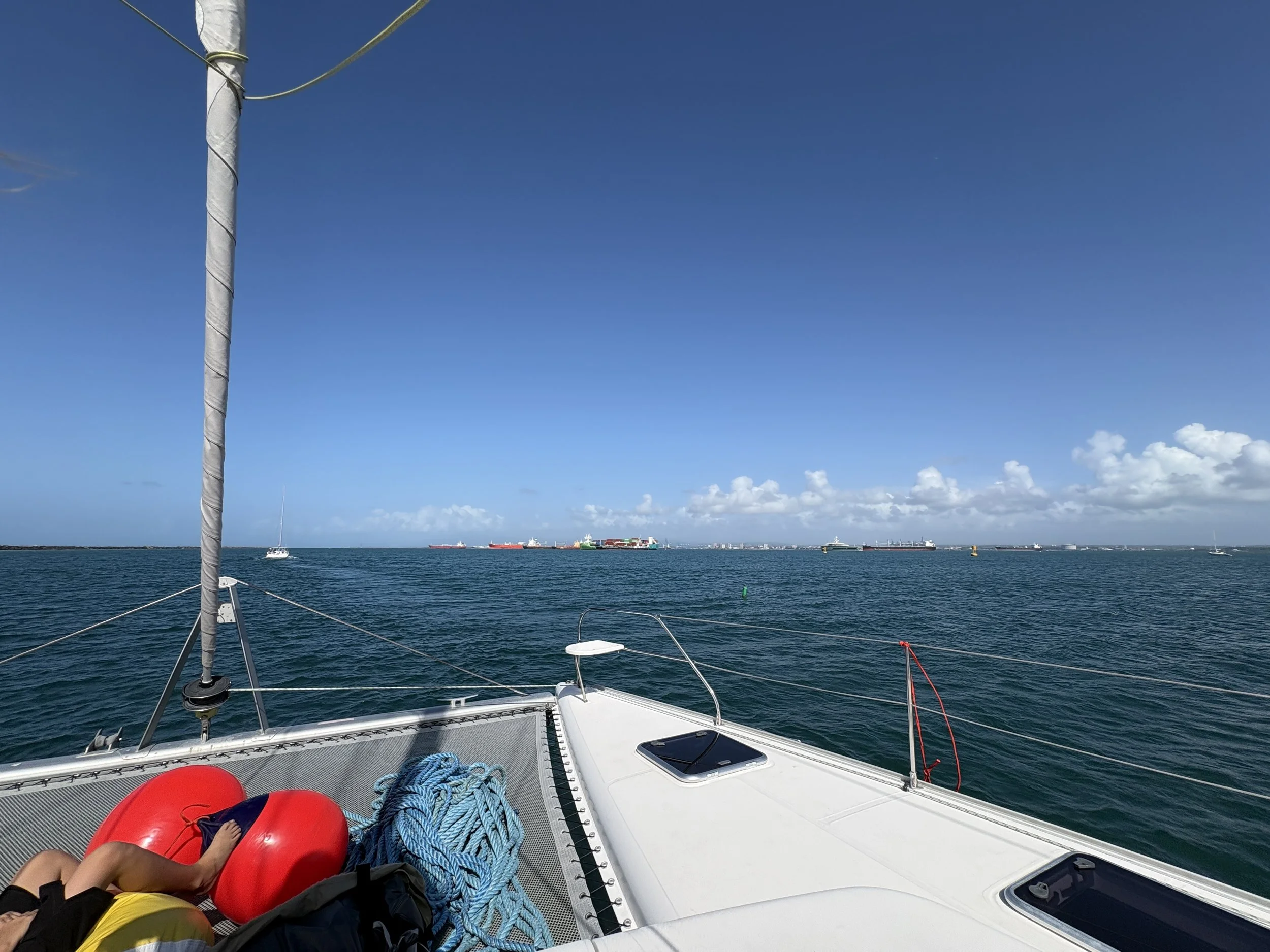
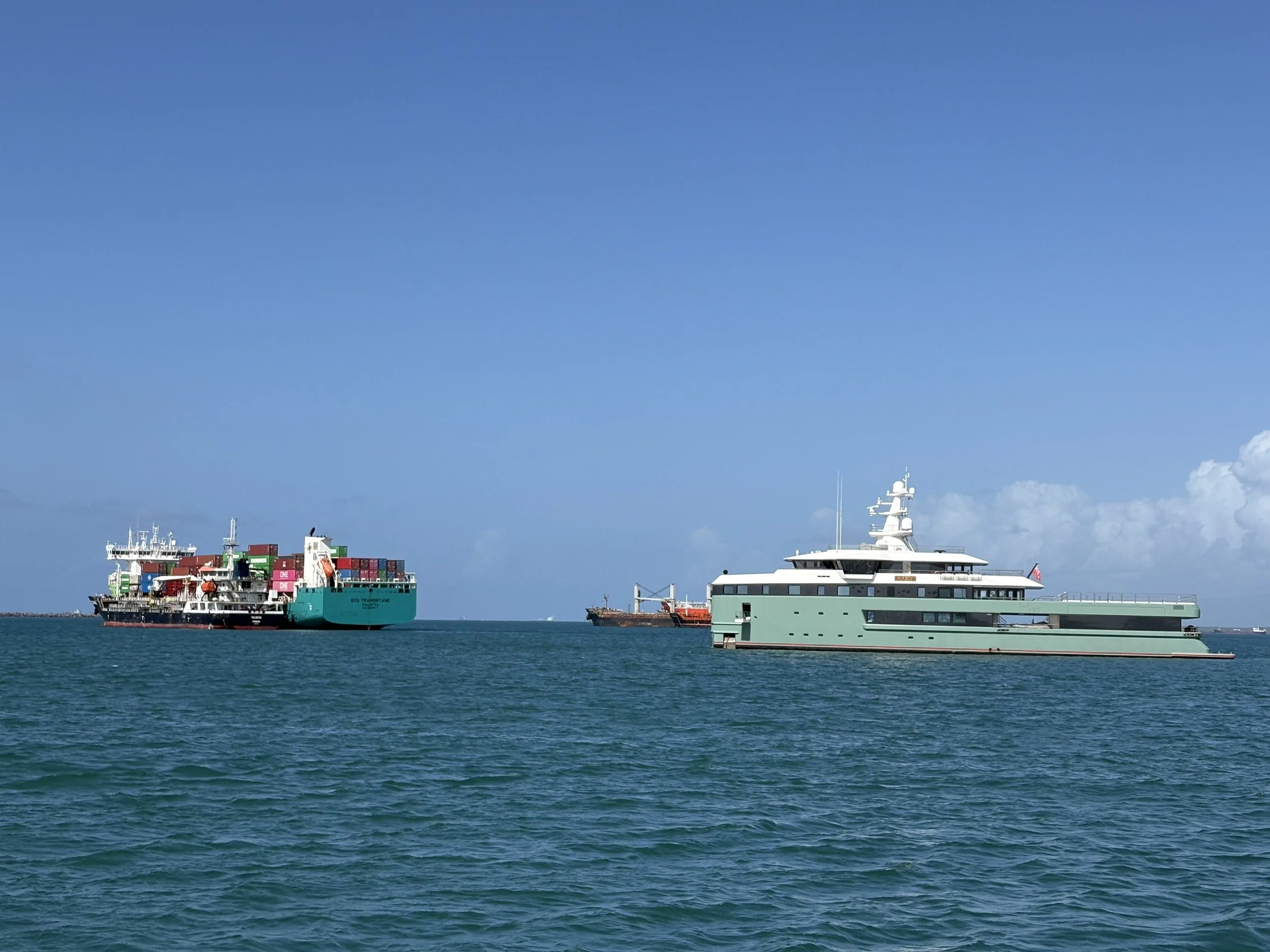
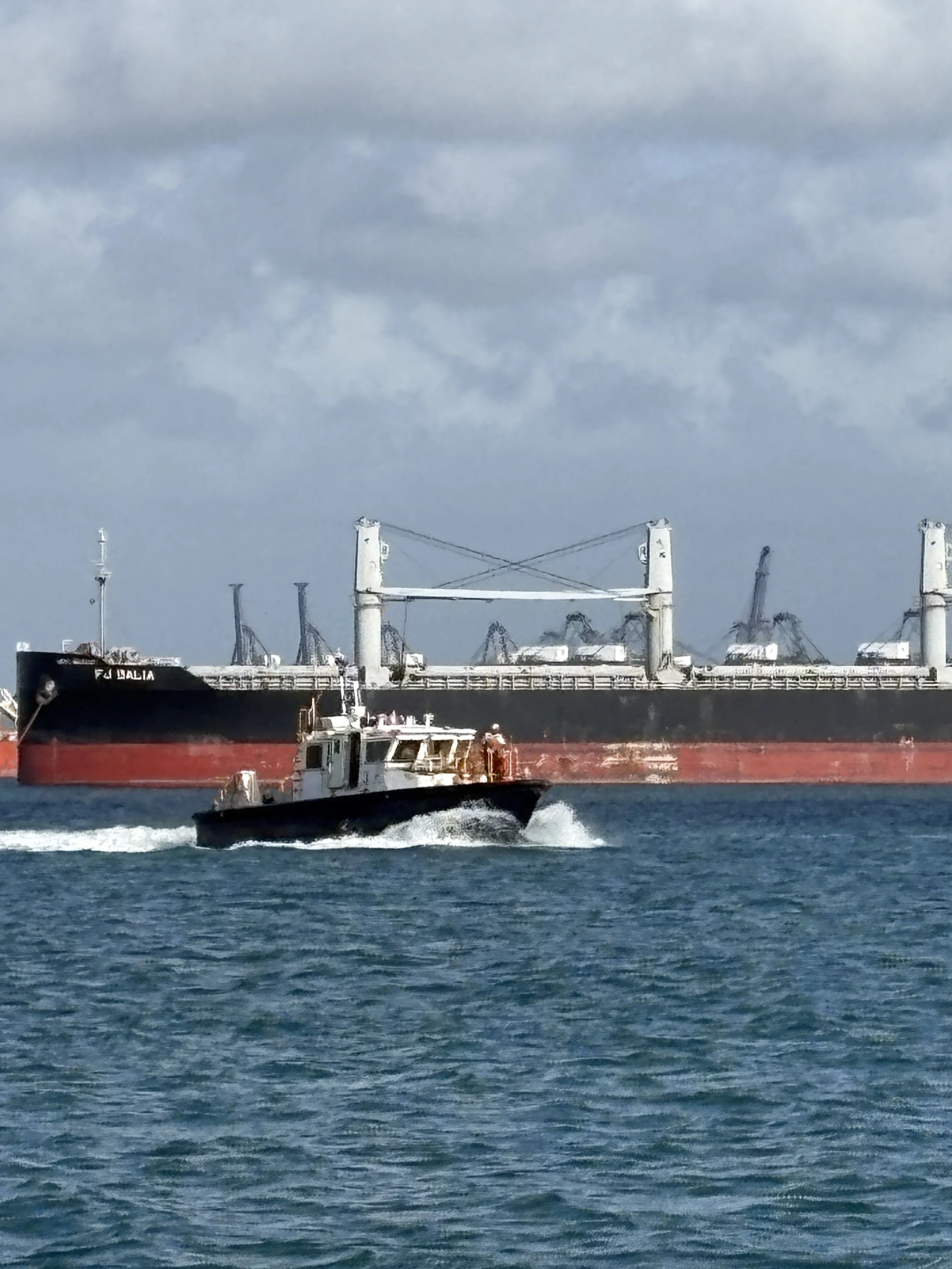
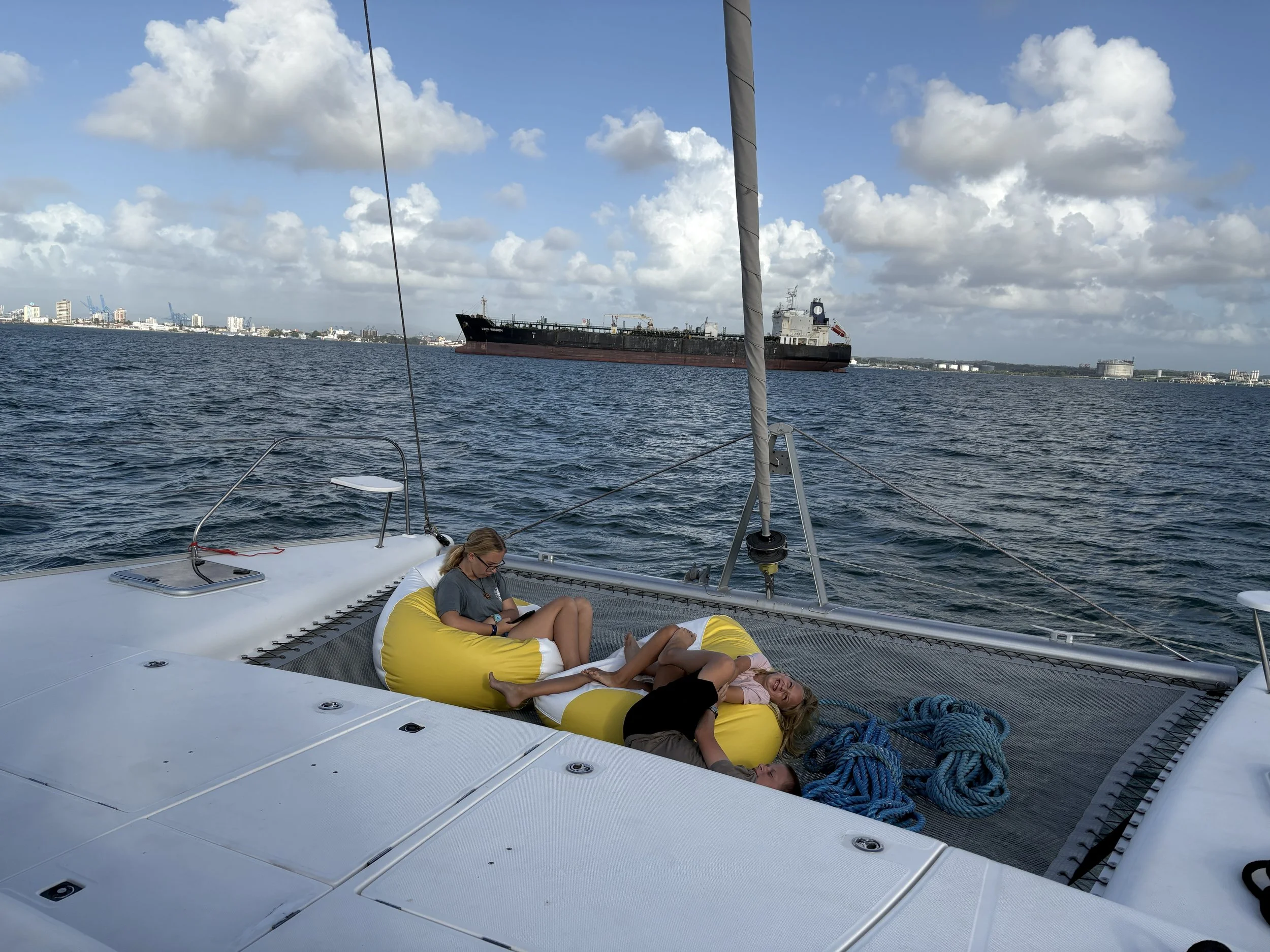
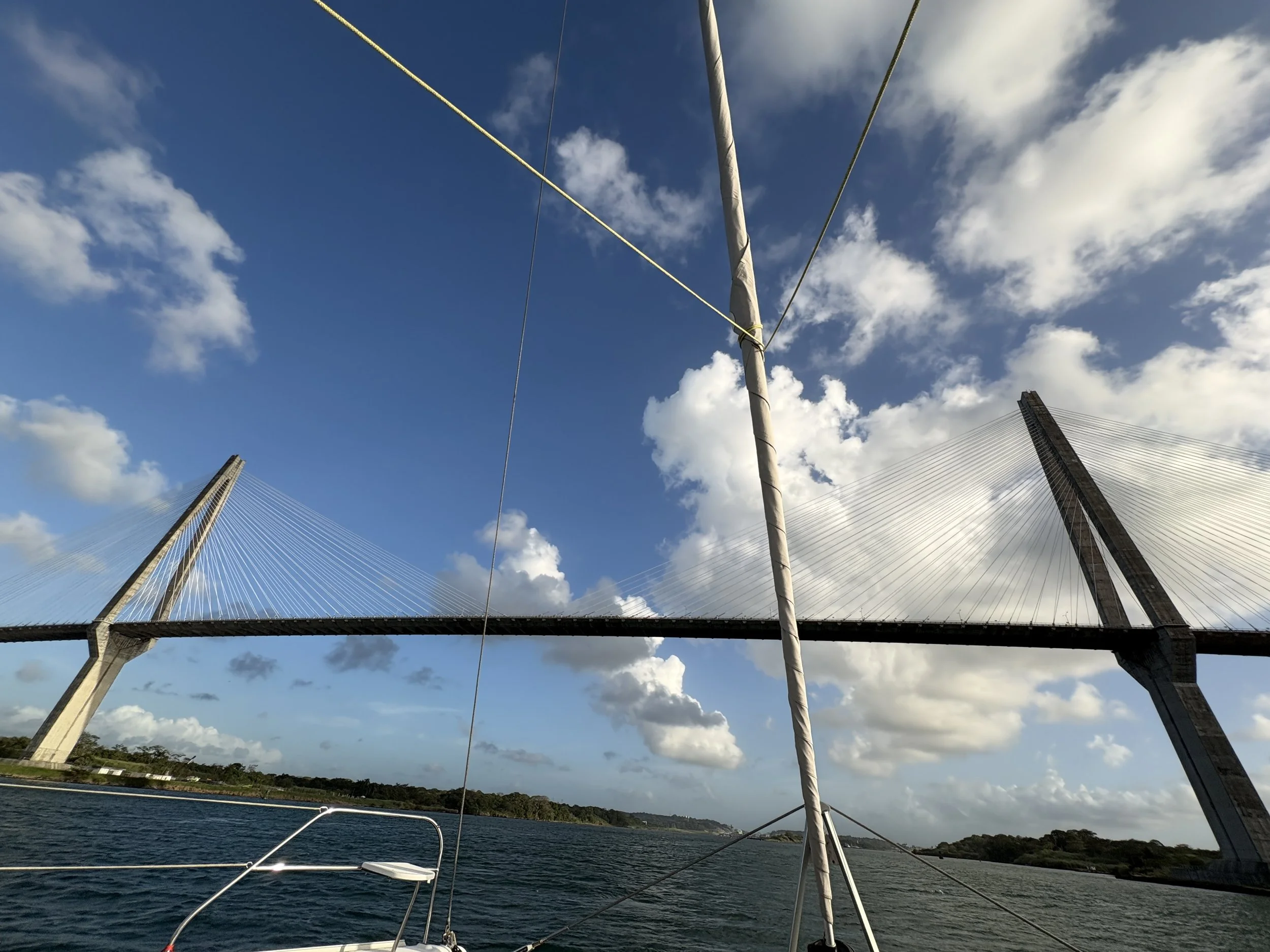
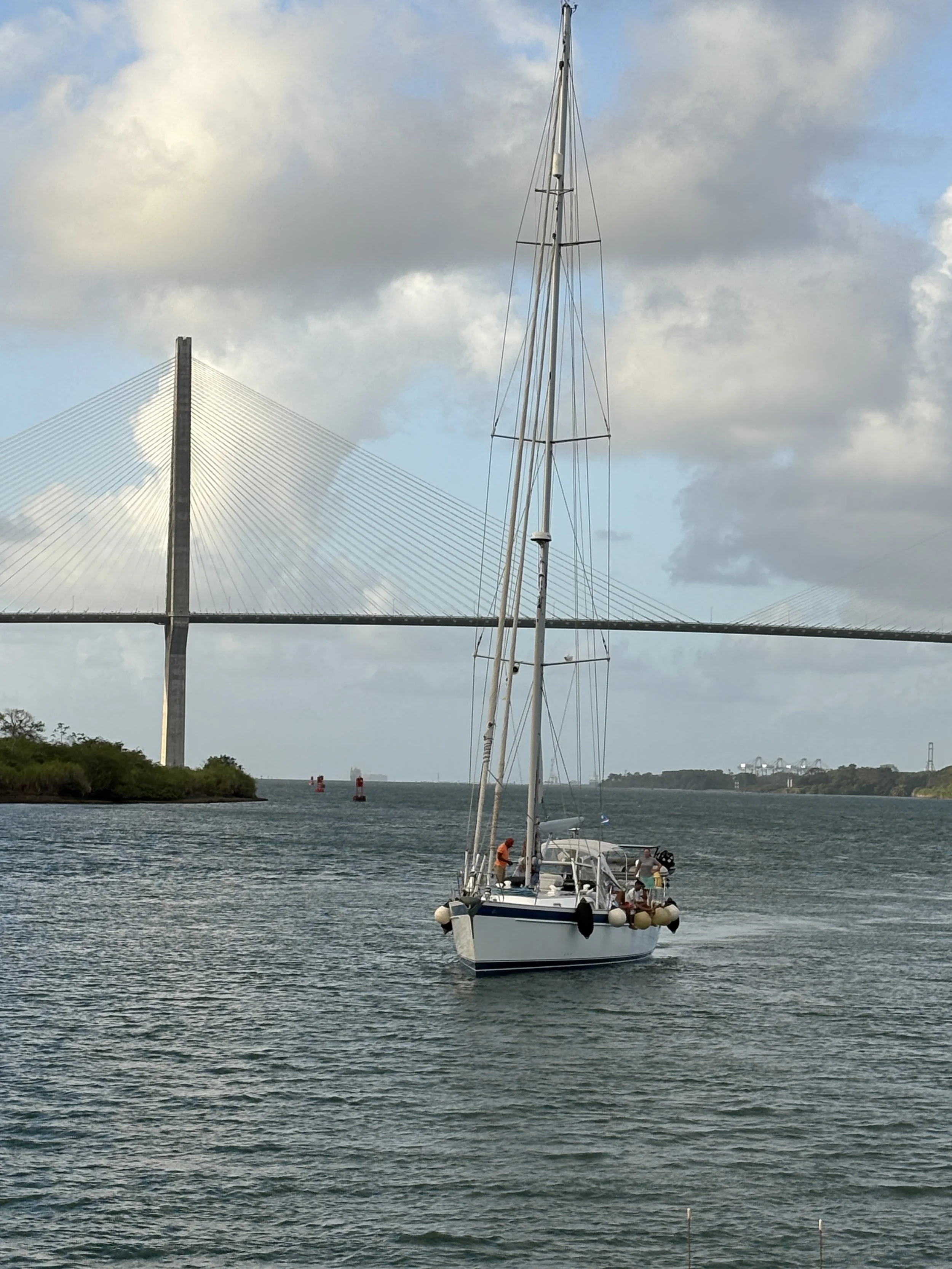
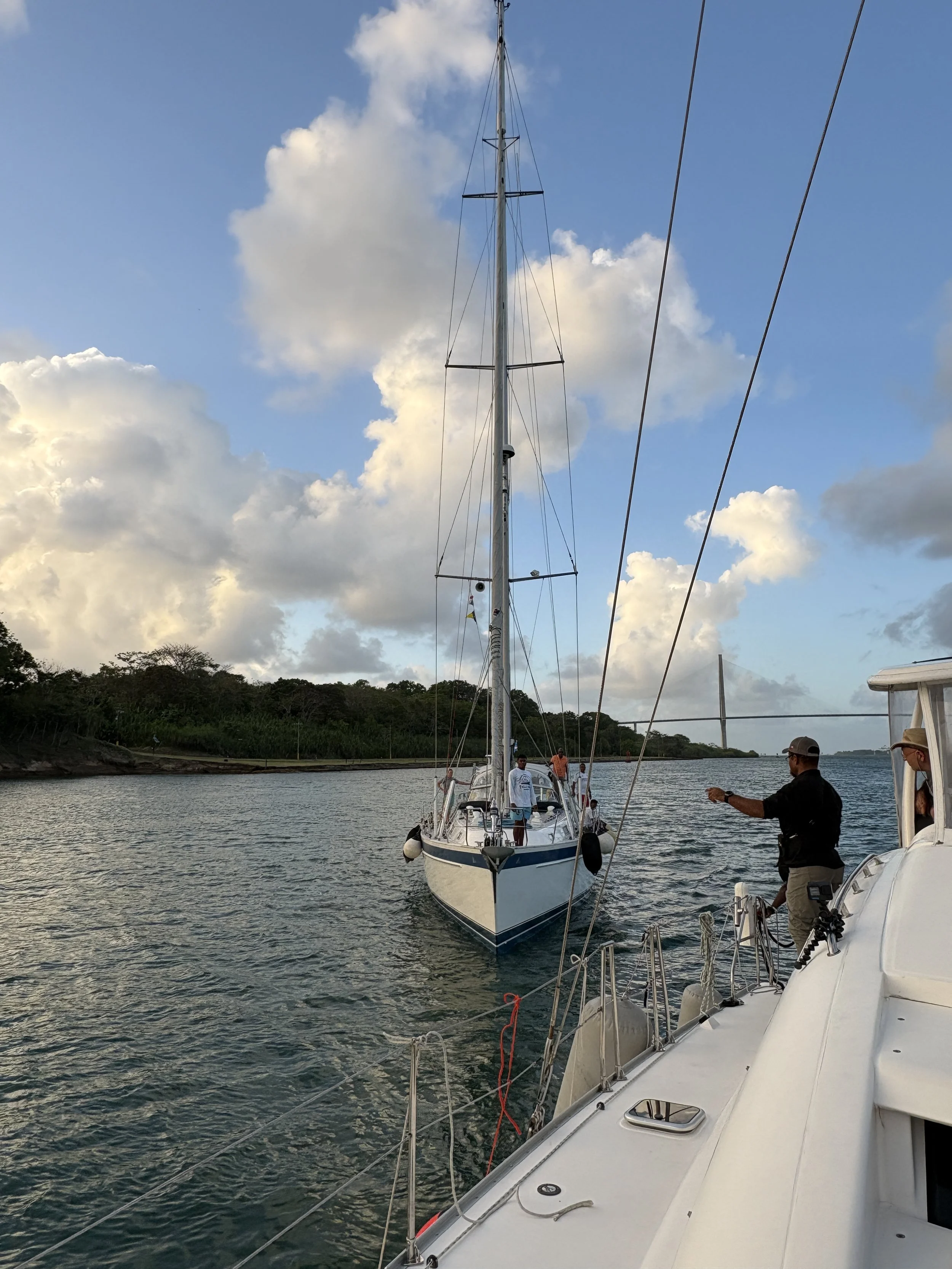
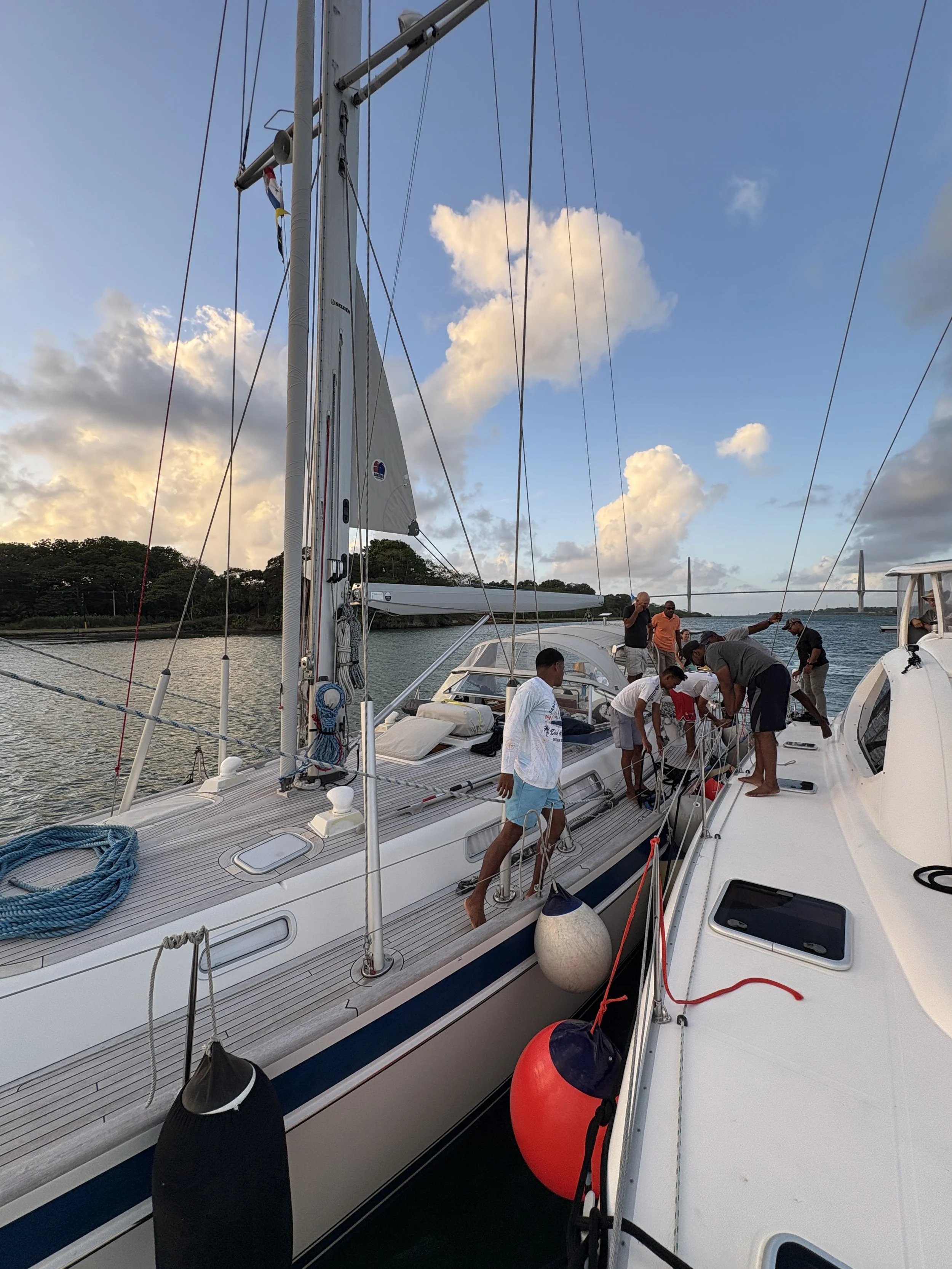
Our Pilot / Advisor McClean coming aboard before we enter the Canal
It cost us, in our 46 ft Catamaran, around $4,000 for the agent/ crossing the Canal (all fees in total), but for comparison, a modern 10,000 container ship can easily pay around $1.1–$1.2 million once you include tolls, booking fees, freshwater surcharges and tug assistance. The actual toll is not just one flat fee. It is made up of:
Base transit toll
Reservation / booking fee
Freshwater surcharge
Tug assistance
Pilot fees
Other operational charges
For example, optional reservation fees alone can range from roughly $10,500 to $85,000 depending on the vessel size and lock type. During the drought restrictions in 2023–2024, some ships paid extraordinary premiums just to secure a transit slot. One ship reportedly paid nearly $4 million in an auction for priority passage.
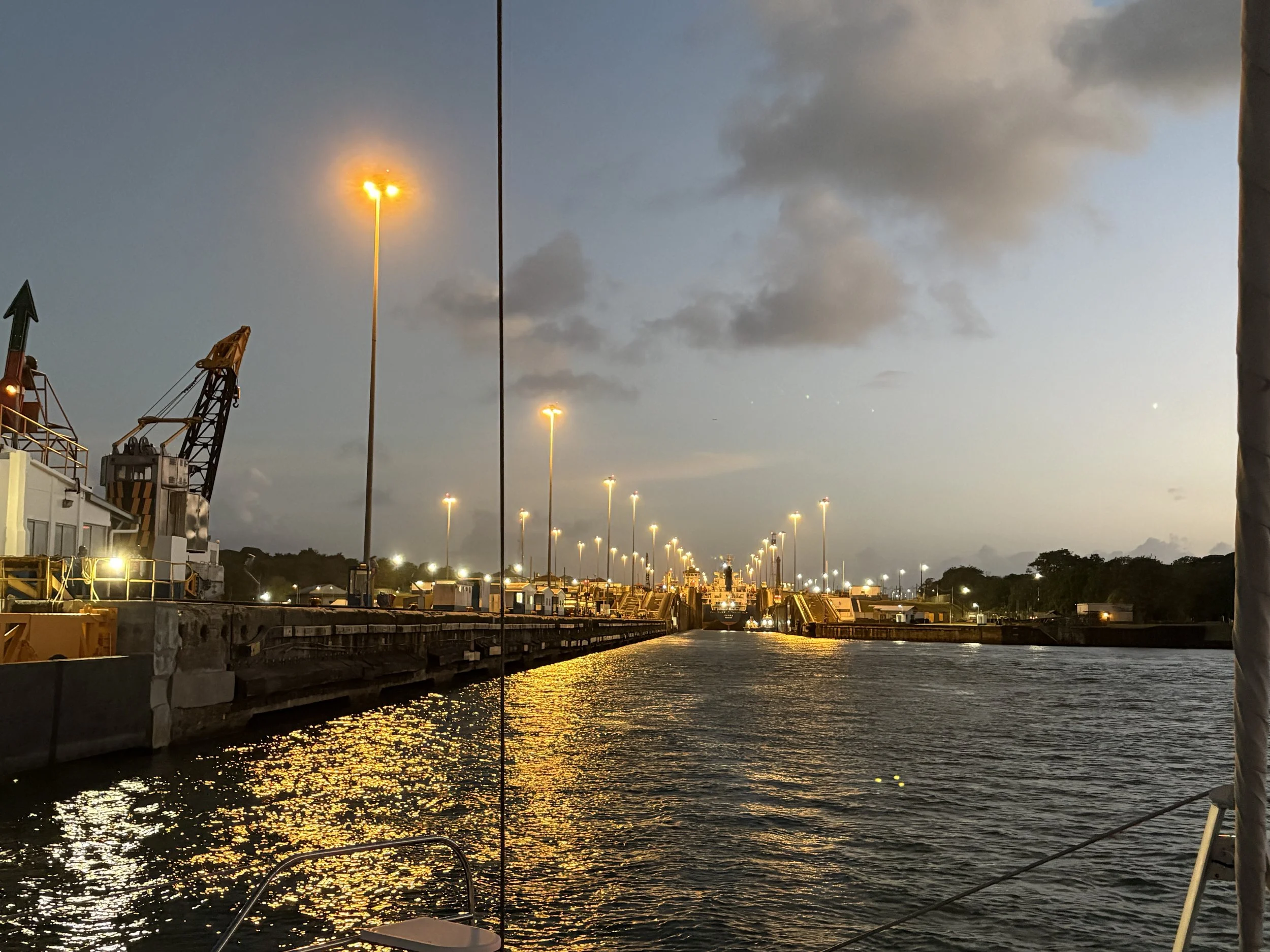
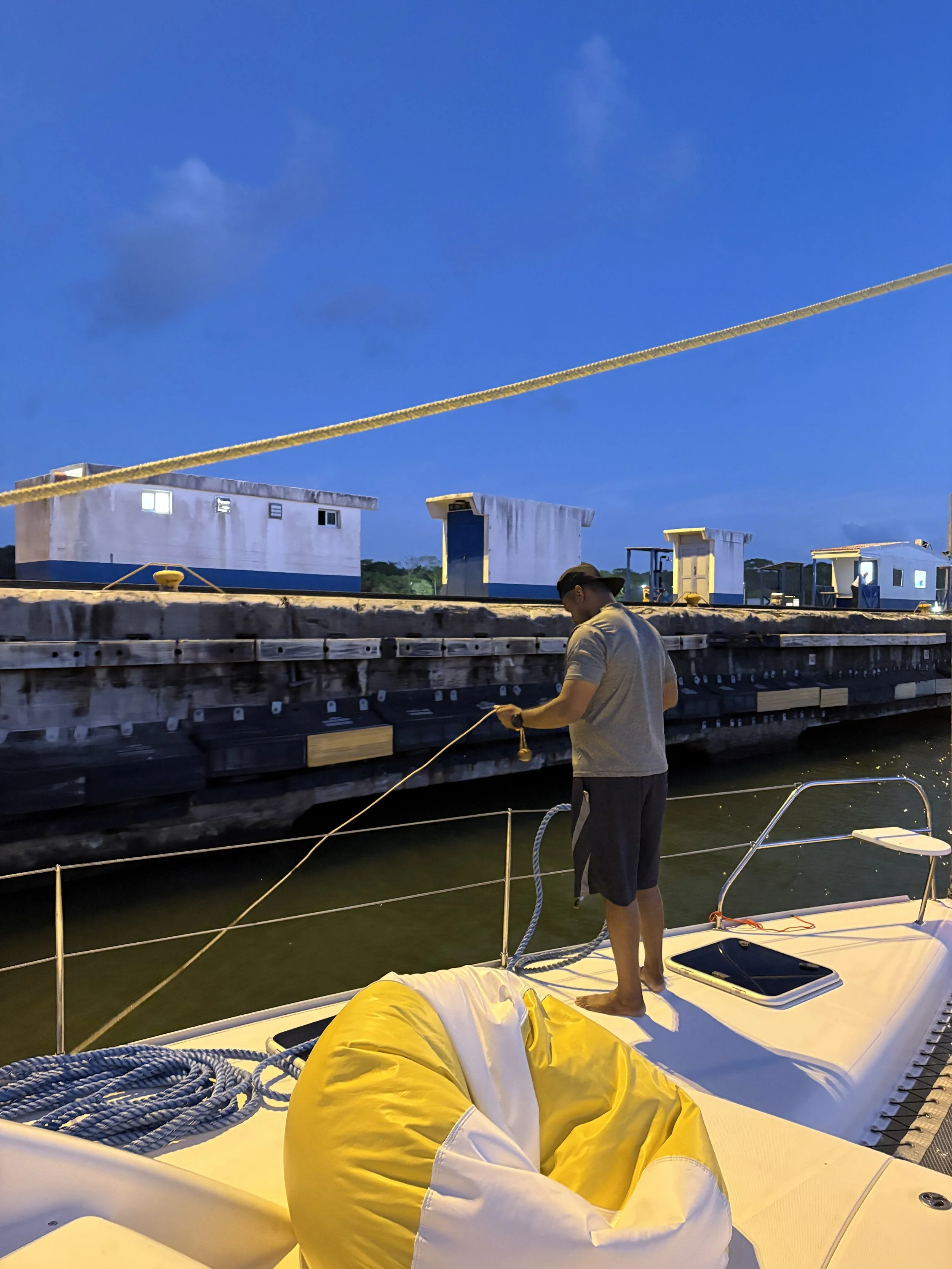
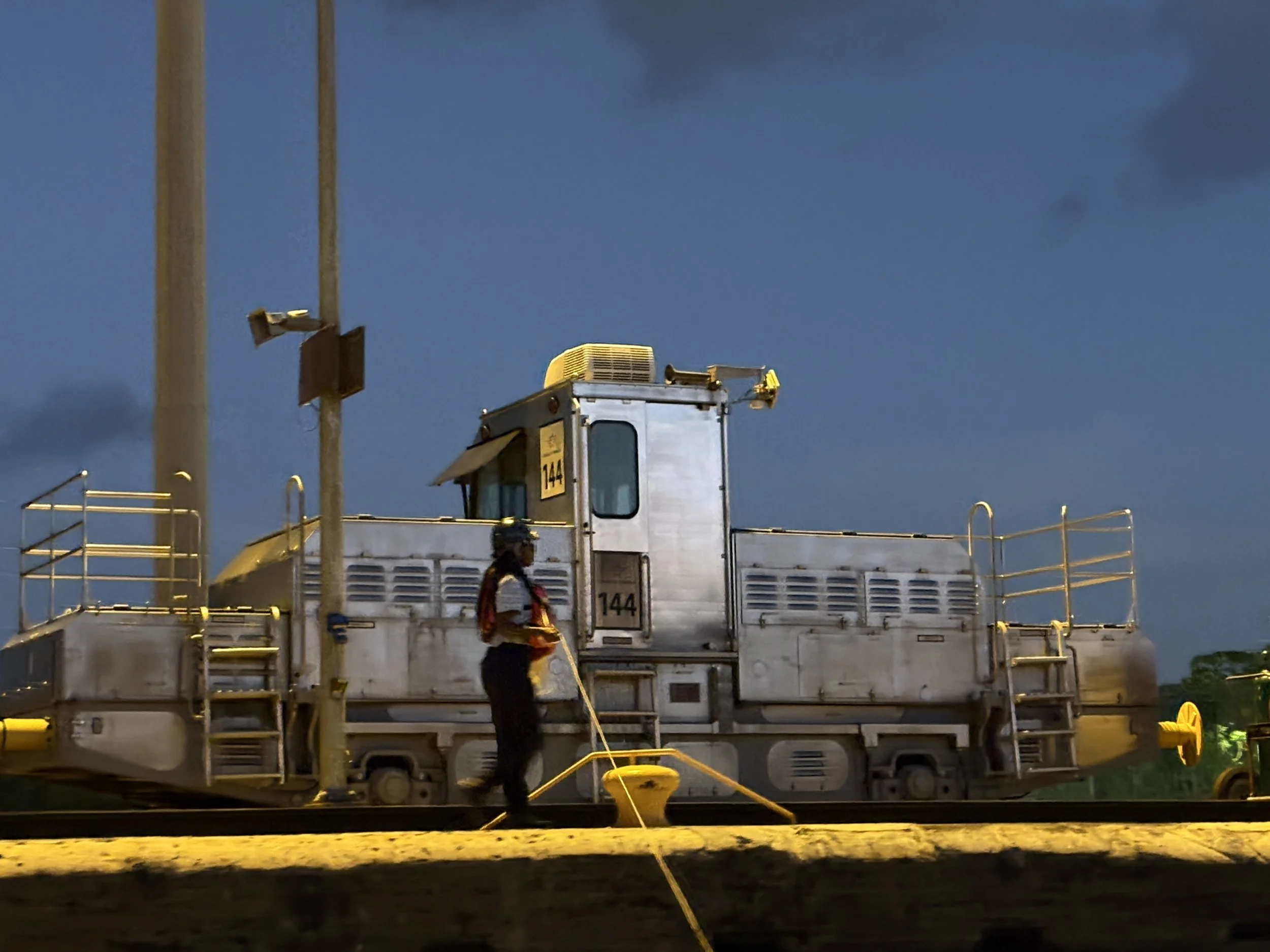
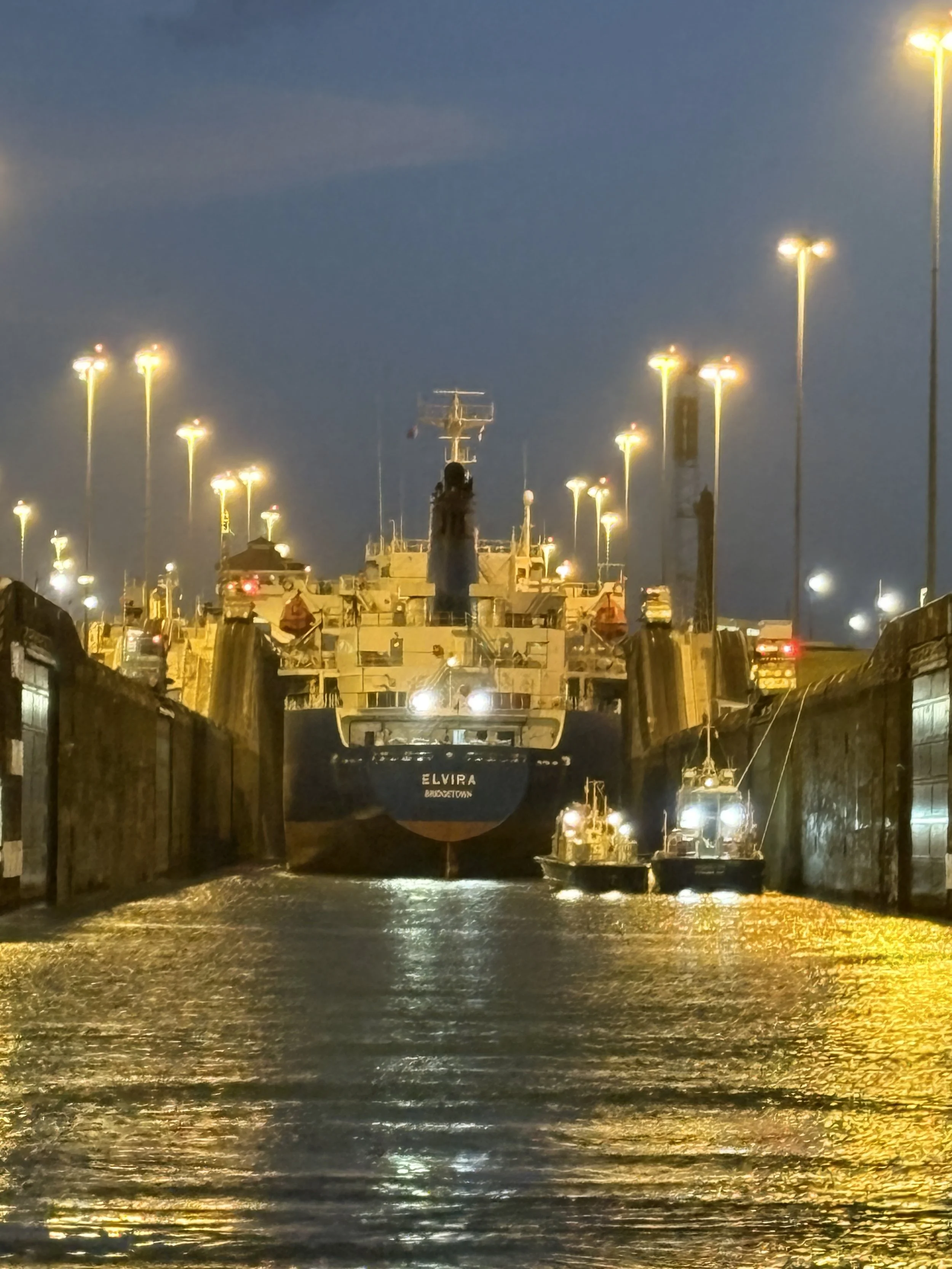
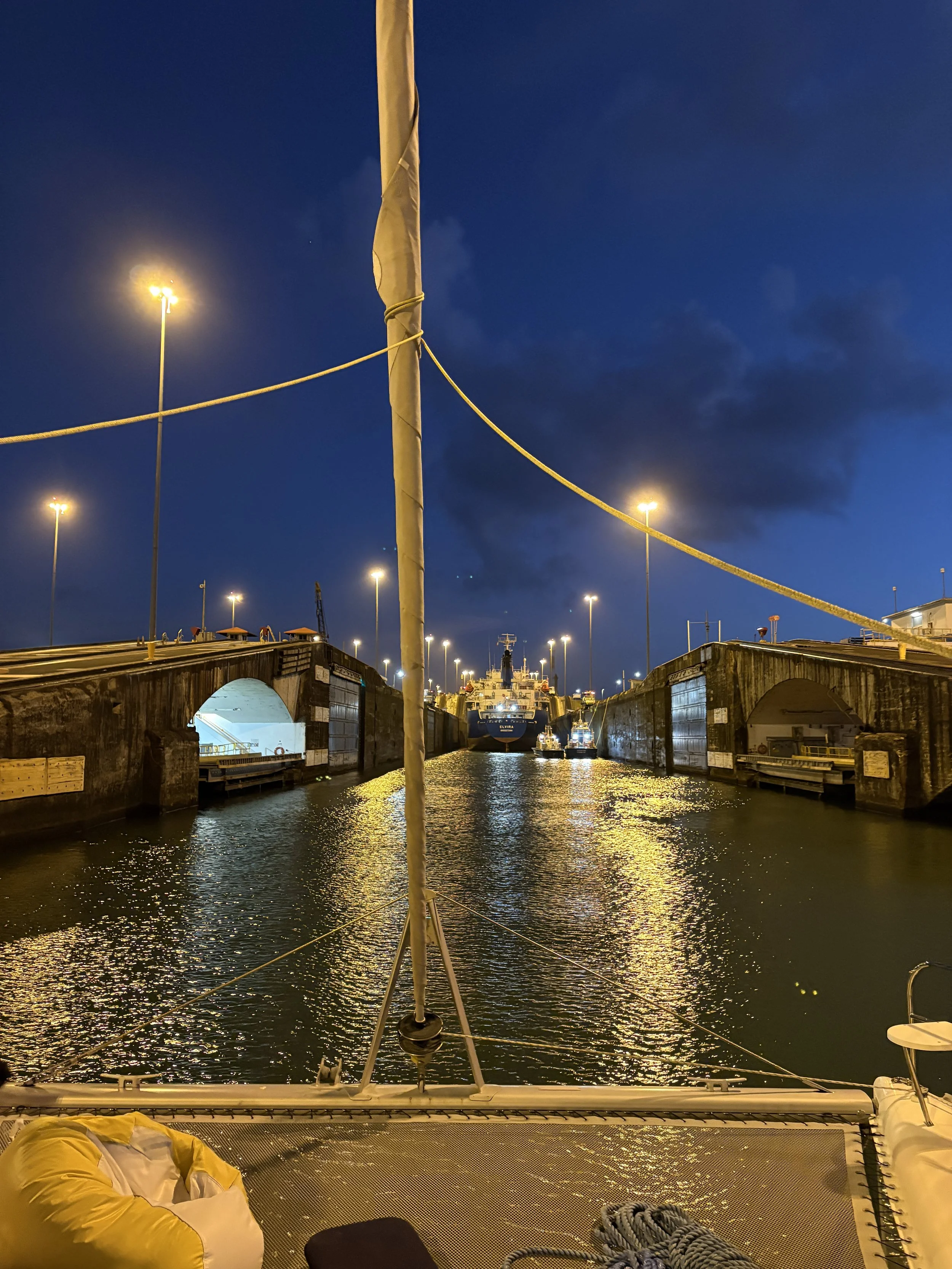
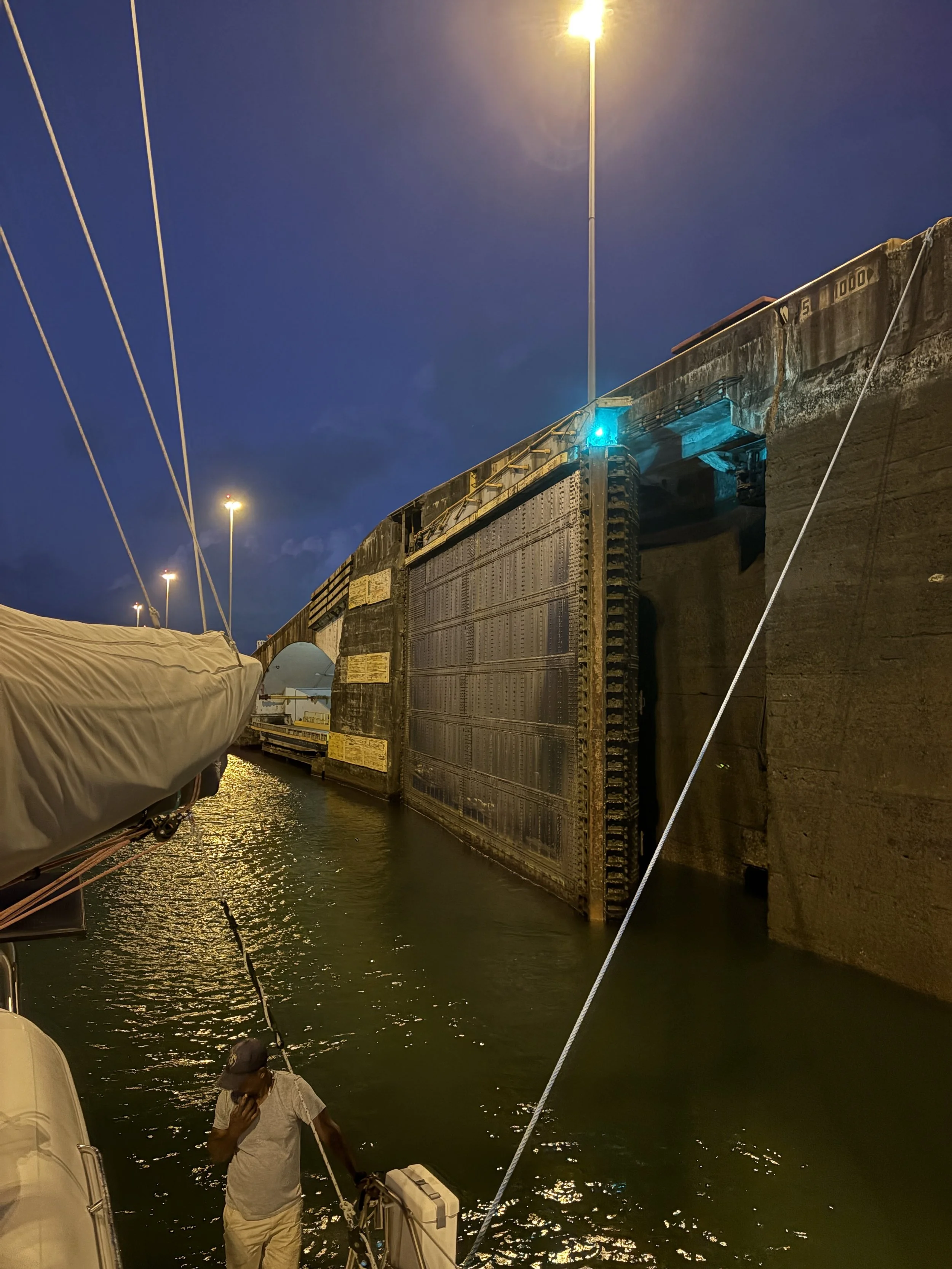
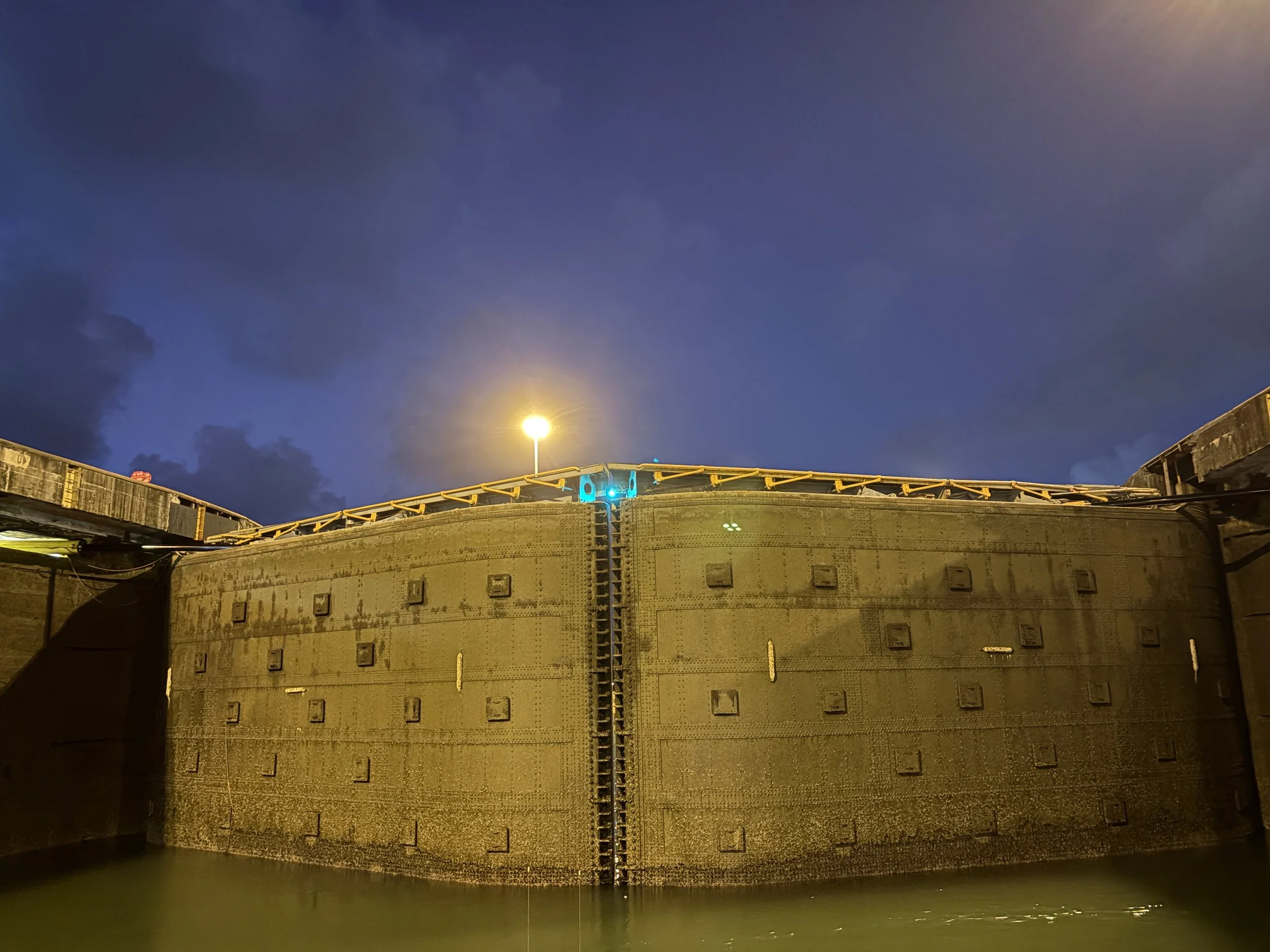
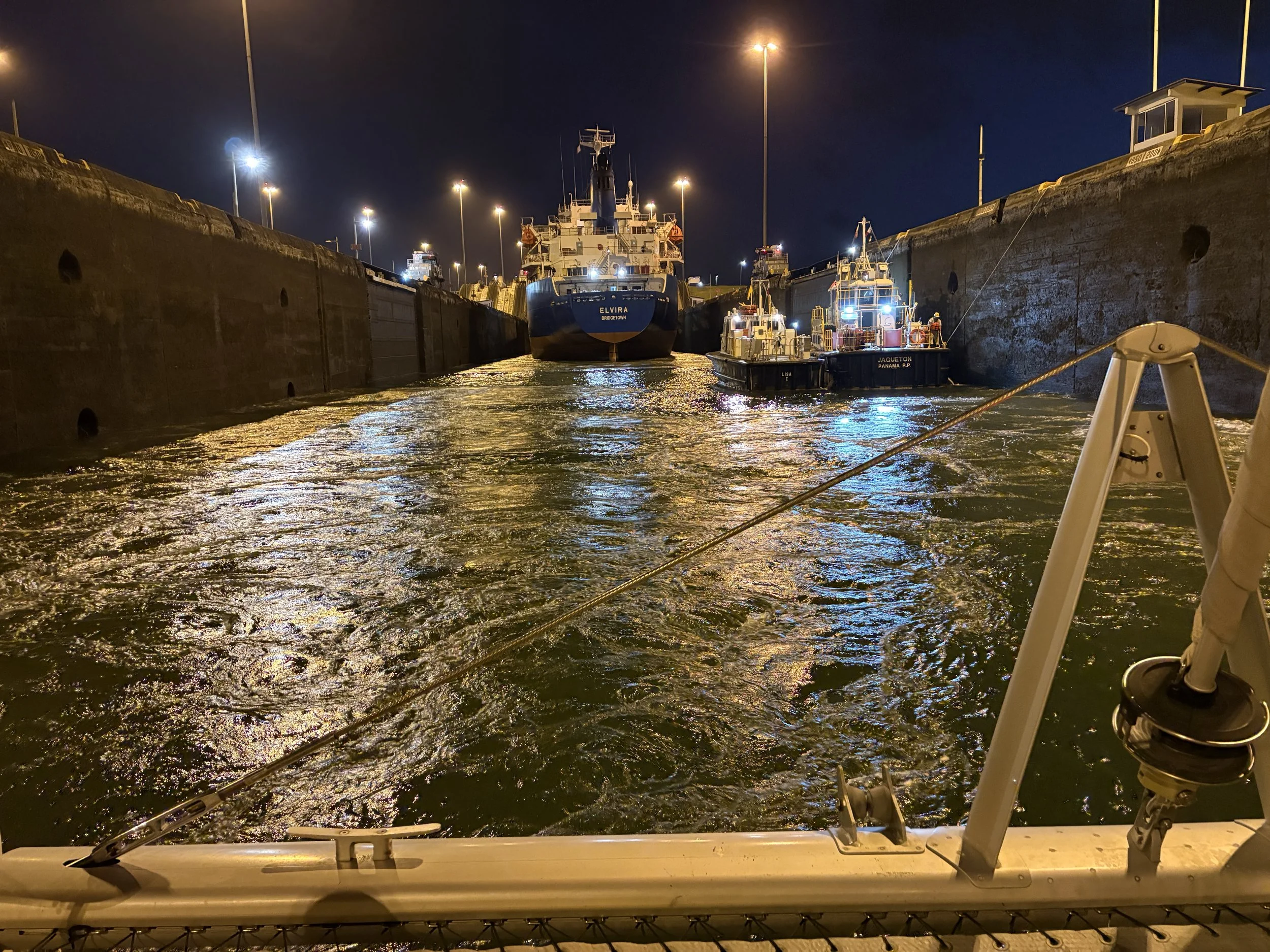
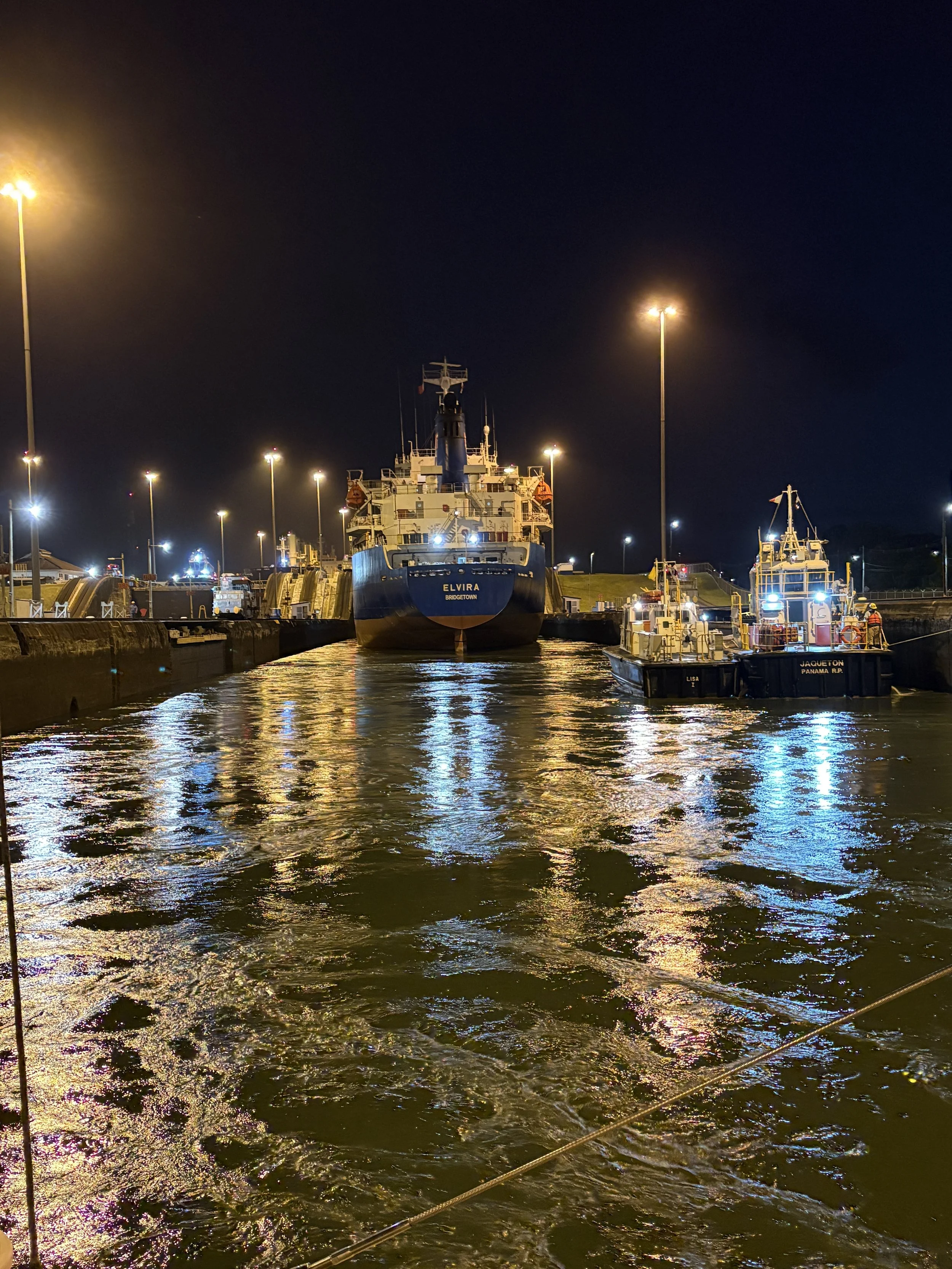
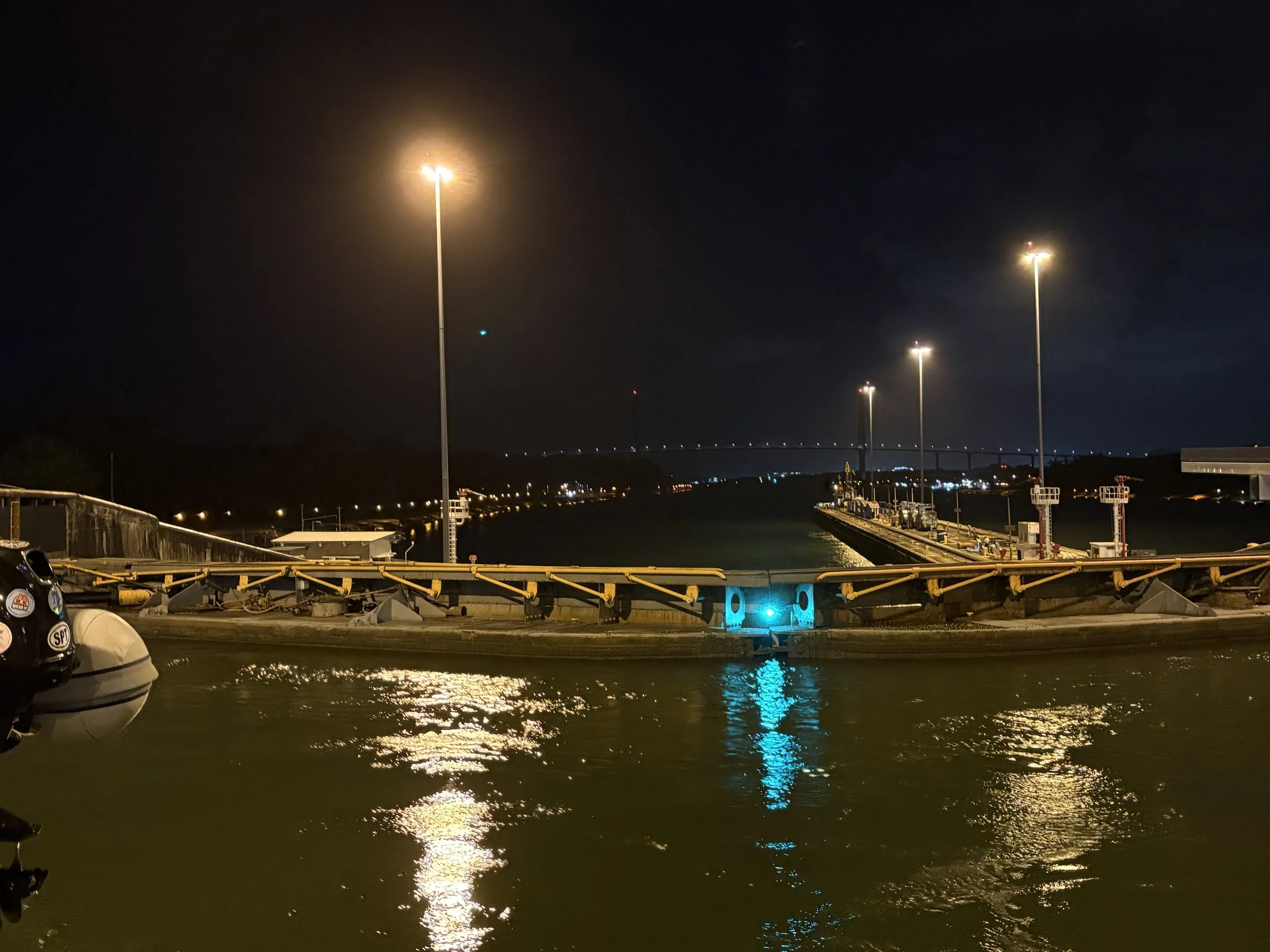
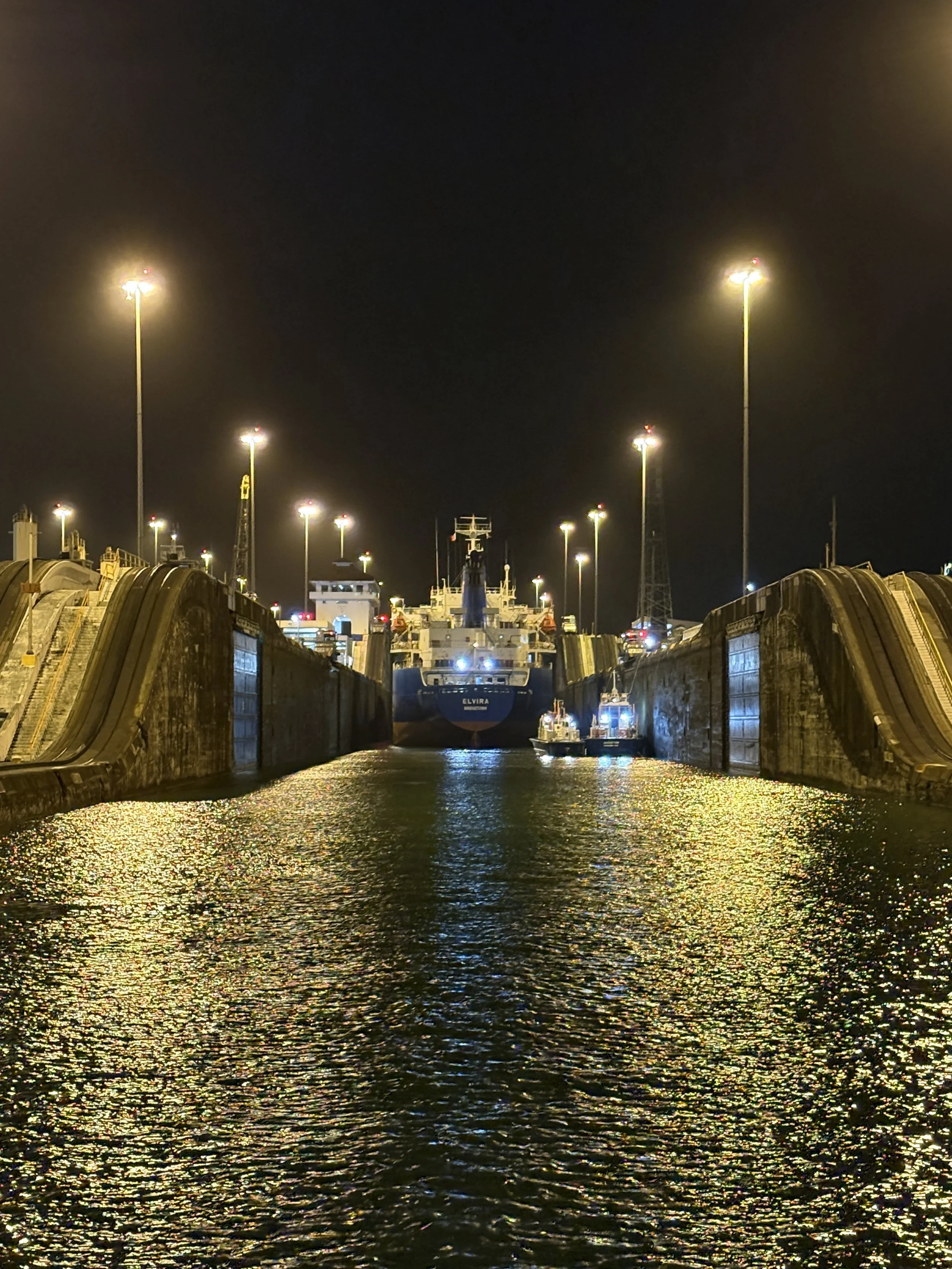
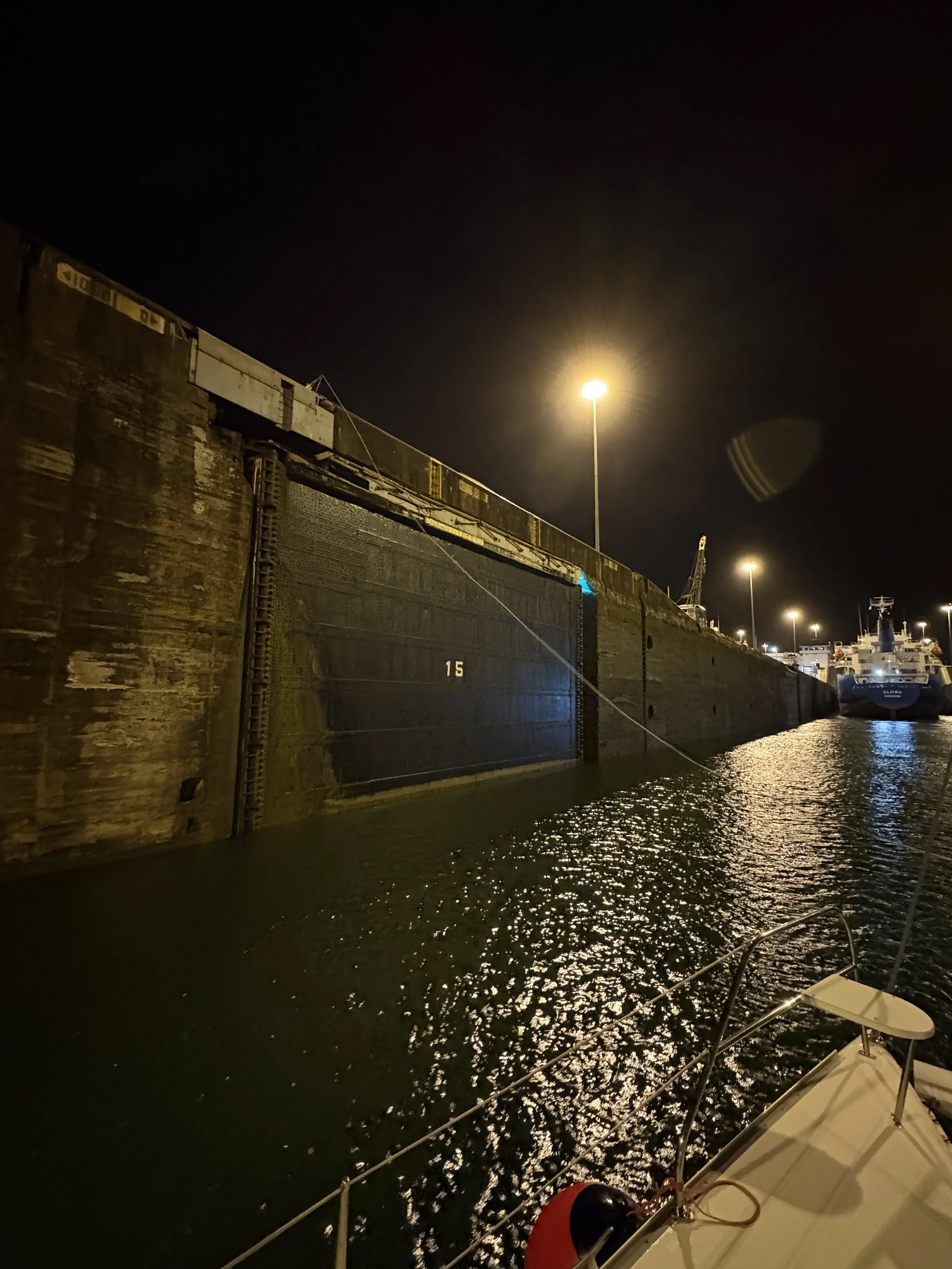
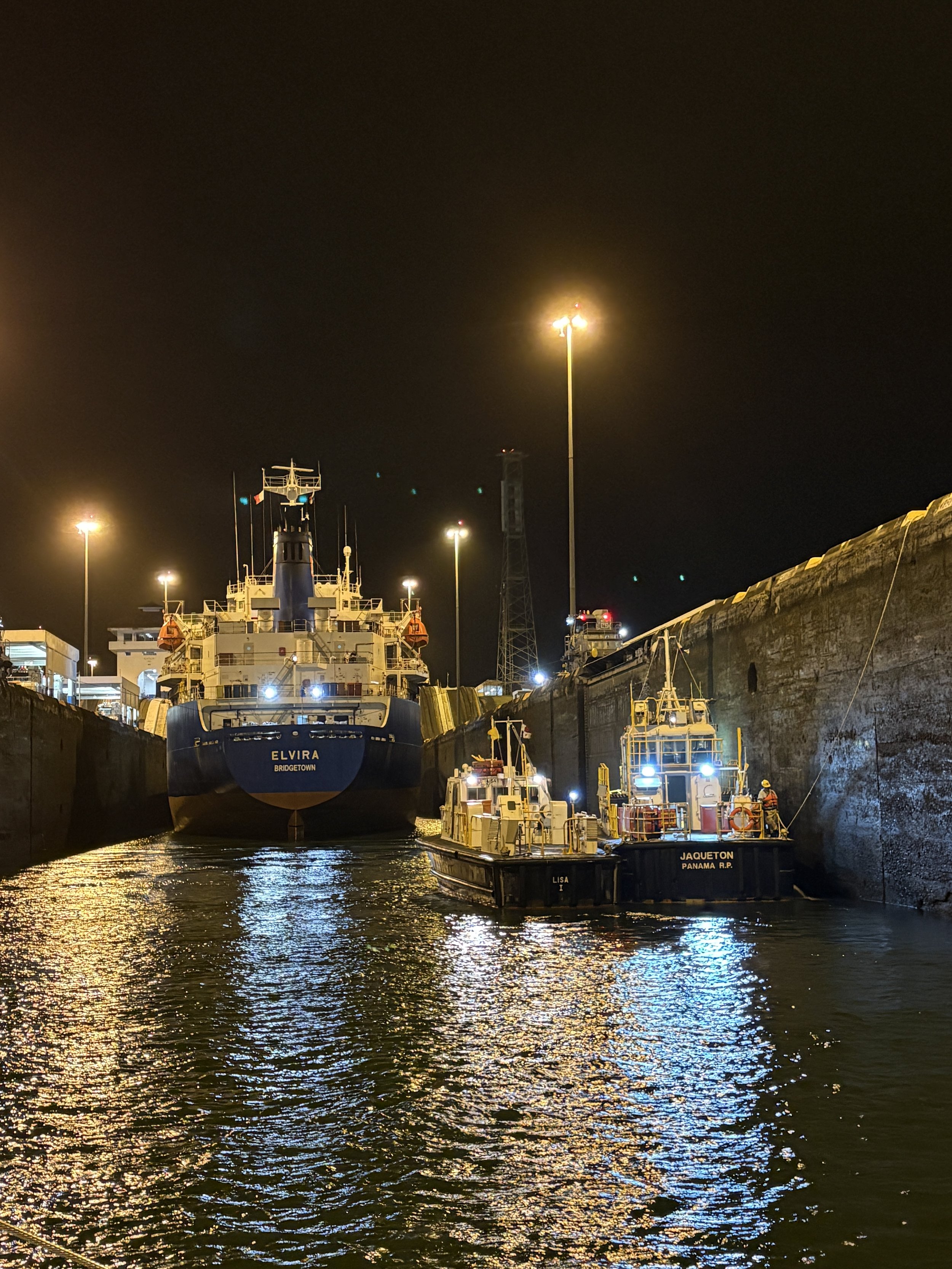
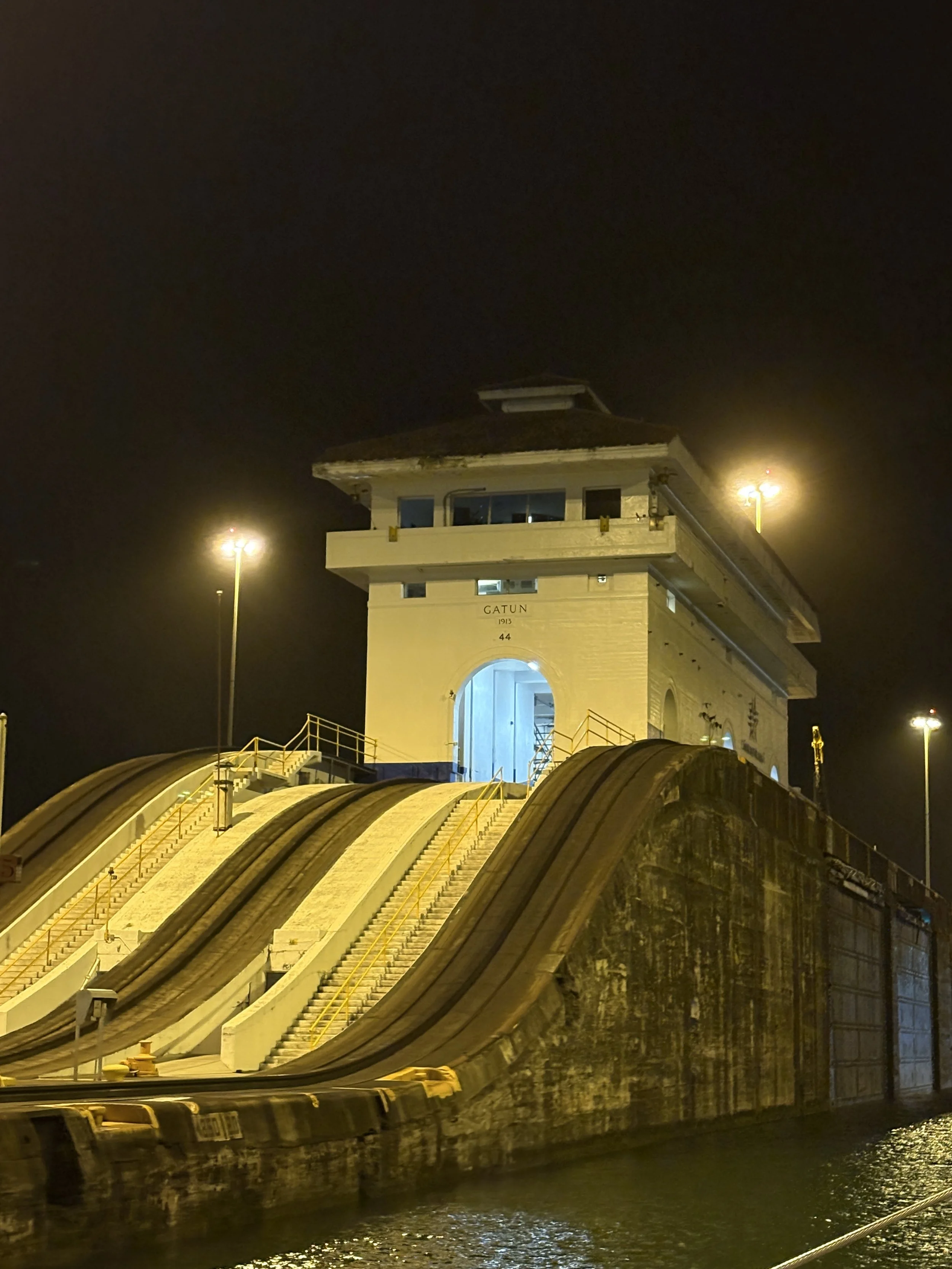
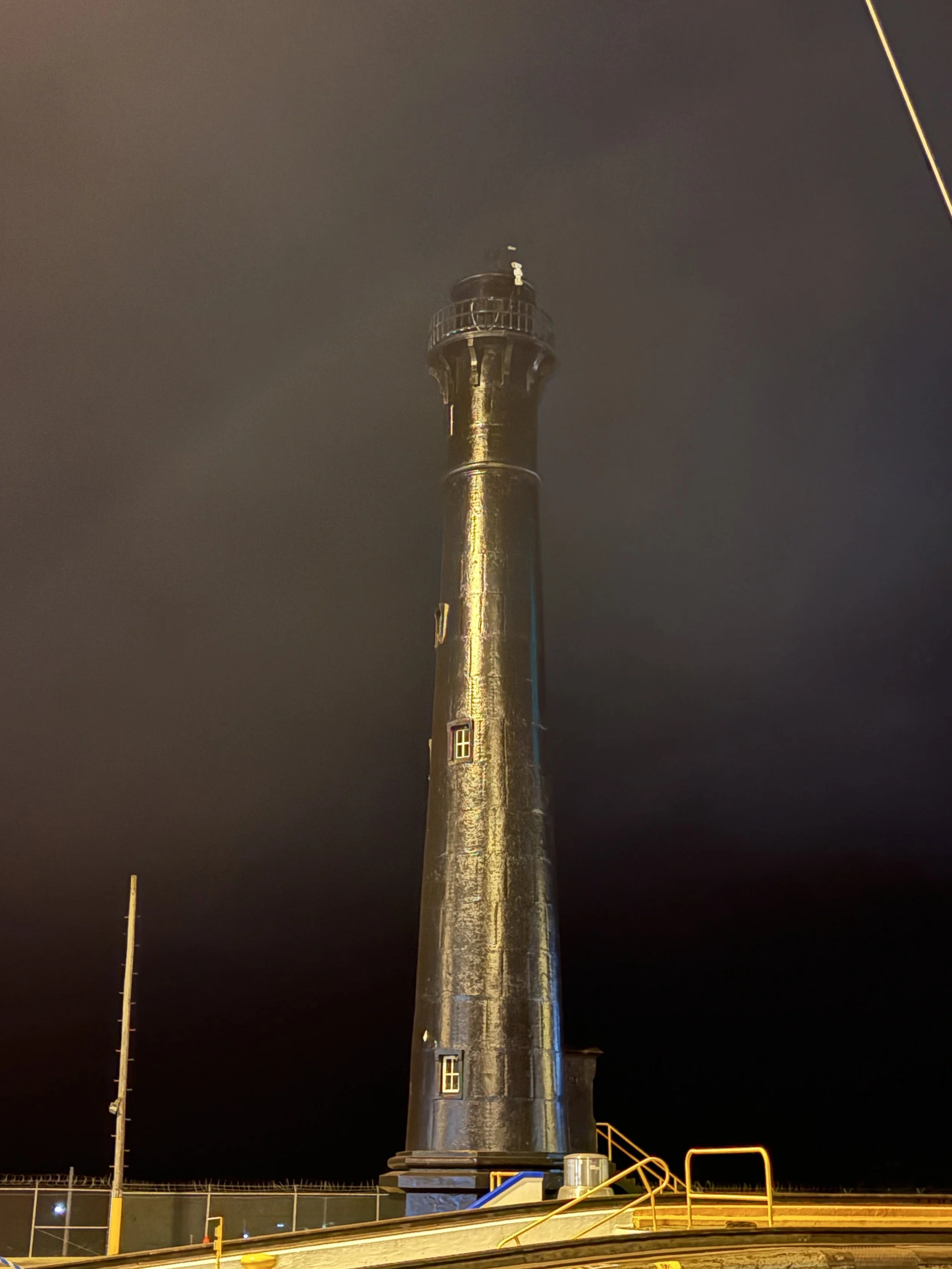
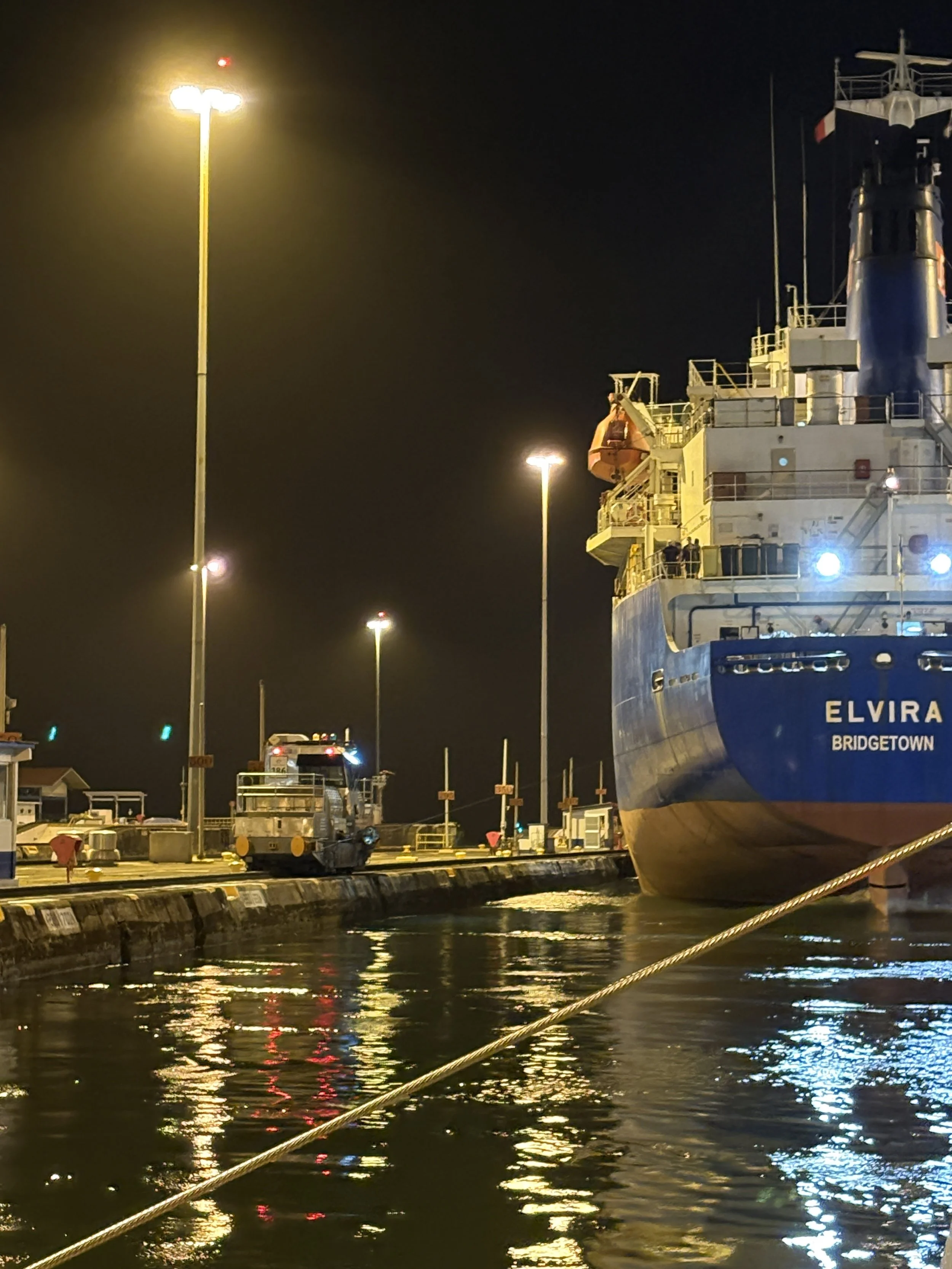
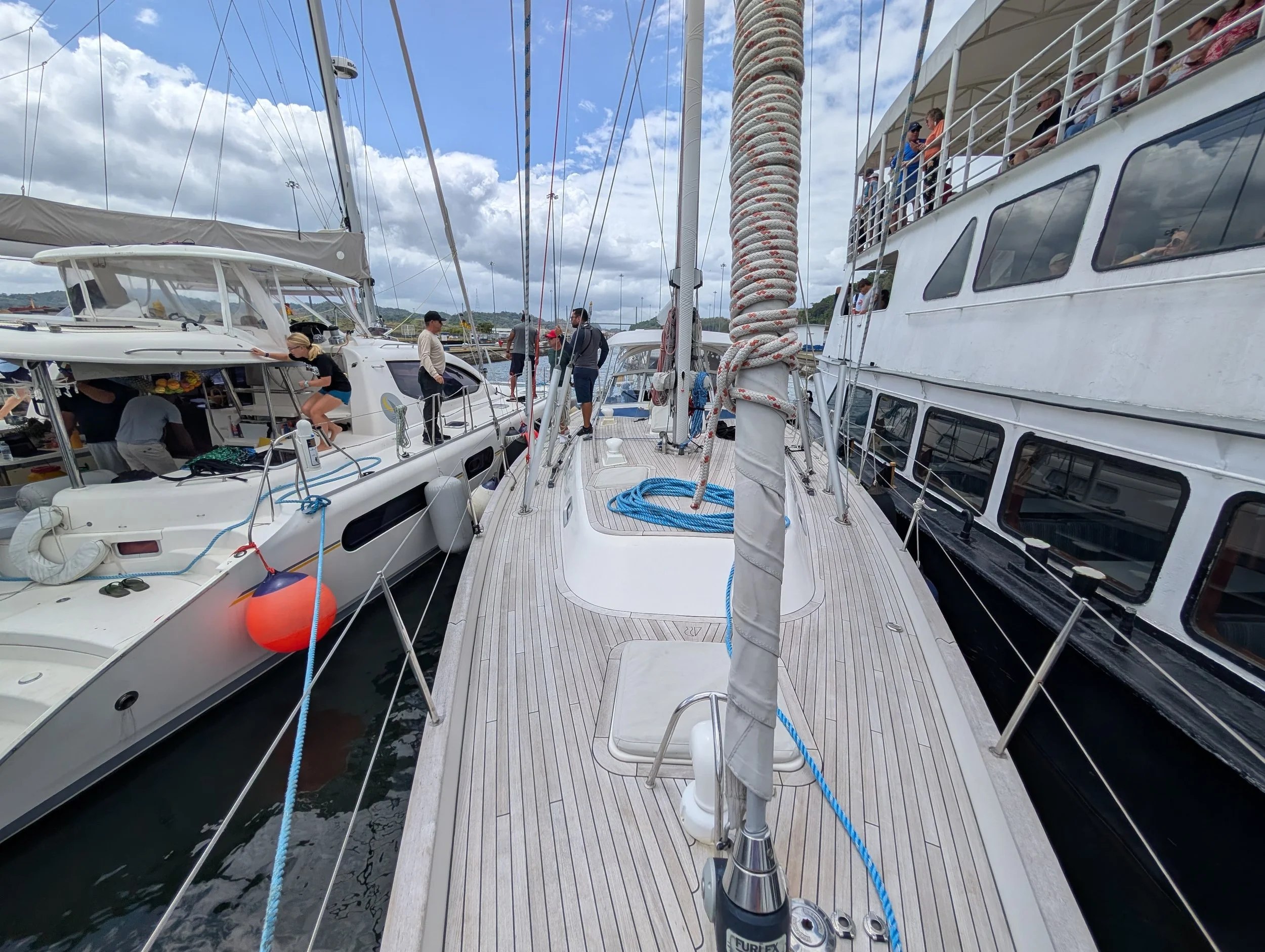
We were very lucky, in our opinion, to have the afternoon crossing slot (the alternative is leaving at 4am!). Once we were rafted up to our buddy boat — a beautiful monohull called Oso — we entered the first set of locks just as dusk was starting to fall, which made the whole experience feel even more atmospheric.
The scale of the locks, completed in 1914, is immense. Each chamber (and there are three on each side of the Canal) holds about 26 million gallons of water and gradually lifted LunaSea up to around 120 feet above sea level.
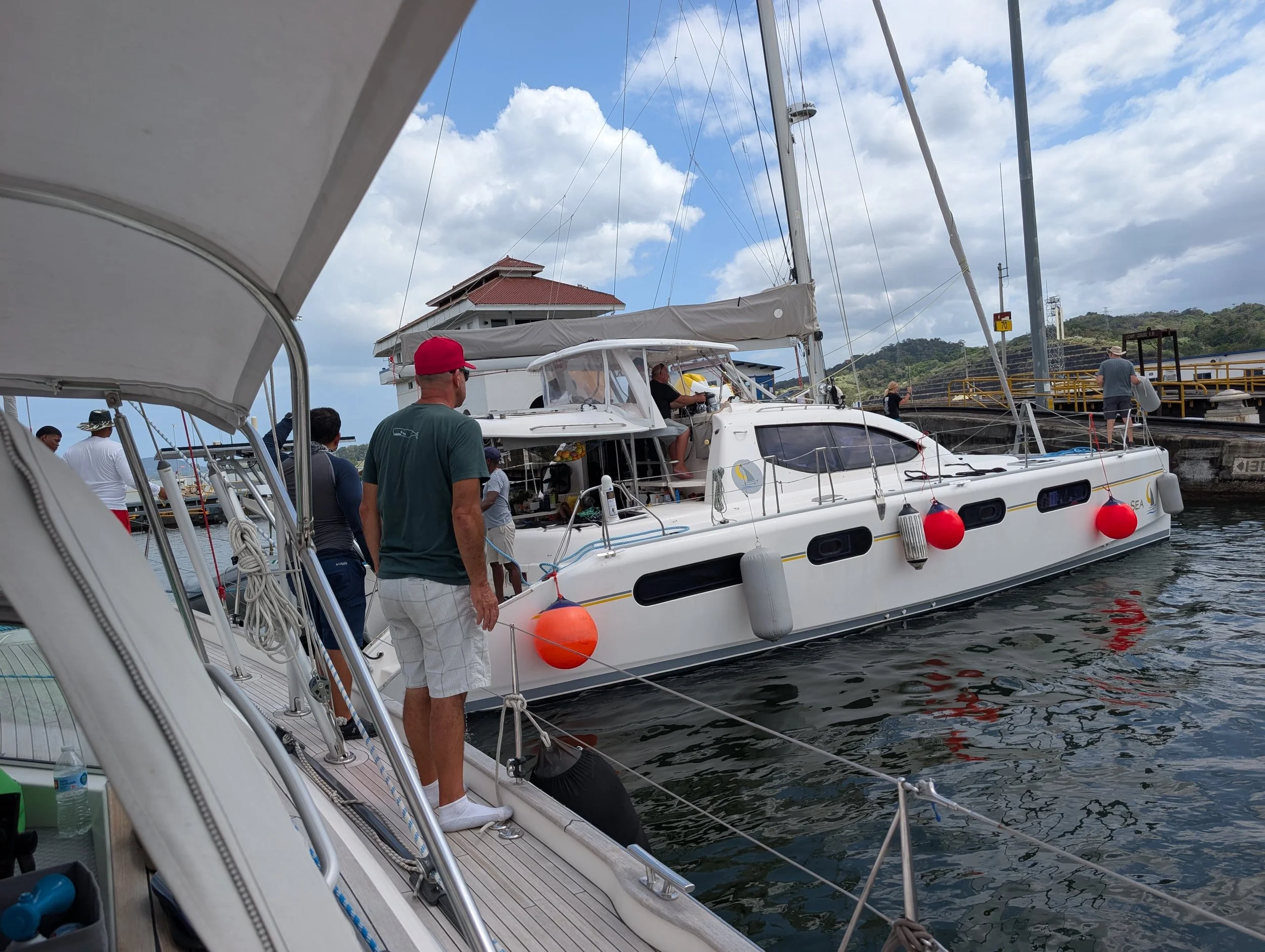
Jimmy and Alex were experts at catching the “monkey balls” — a large weighted knot on the end of a messenger line that the lock workers throw down to the boats below. They attached them to the heavy blue lines we had rented and fed them back up to the line handlers walking along the lock walls.
The huge iron doors (made in Pittsburgh, Pennsylvania!) then closed and water flooded into the lock. Around the boat the water swirled like a whirlpool, putting the lines under a lot of tension. The handlers continually adjusted them as the water rose to the top of the chamber, and once it levelled out we moved forward into the next lock. Then it was rinse and repeat.
As we entered the third lock we fed the crew dinner — massive portions of fried rice and chow mein that we had picked up as an easy Chinese takeaway. Only after we had all finished did the Pilot ask me if it contained shrimp. He then proceeded to rub his lips and sit quietly for a while… as he was allergic to it. Luckily he was fine.
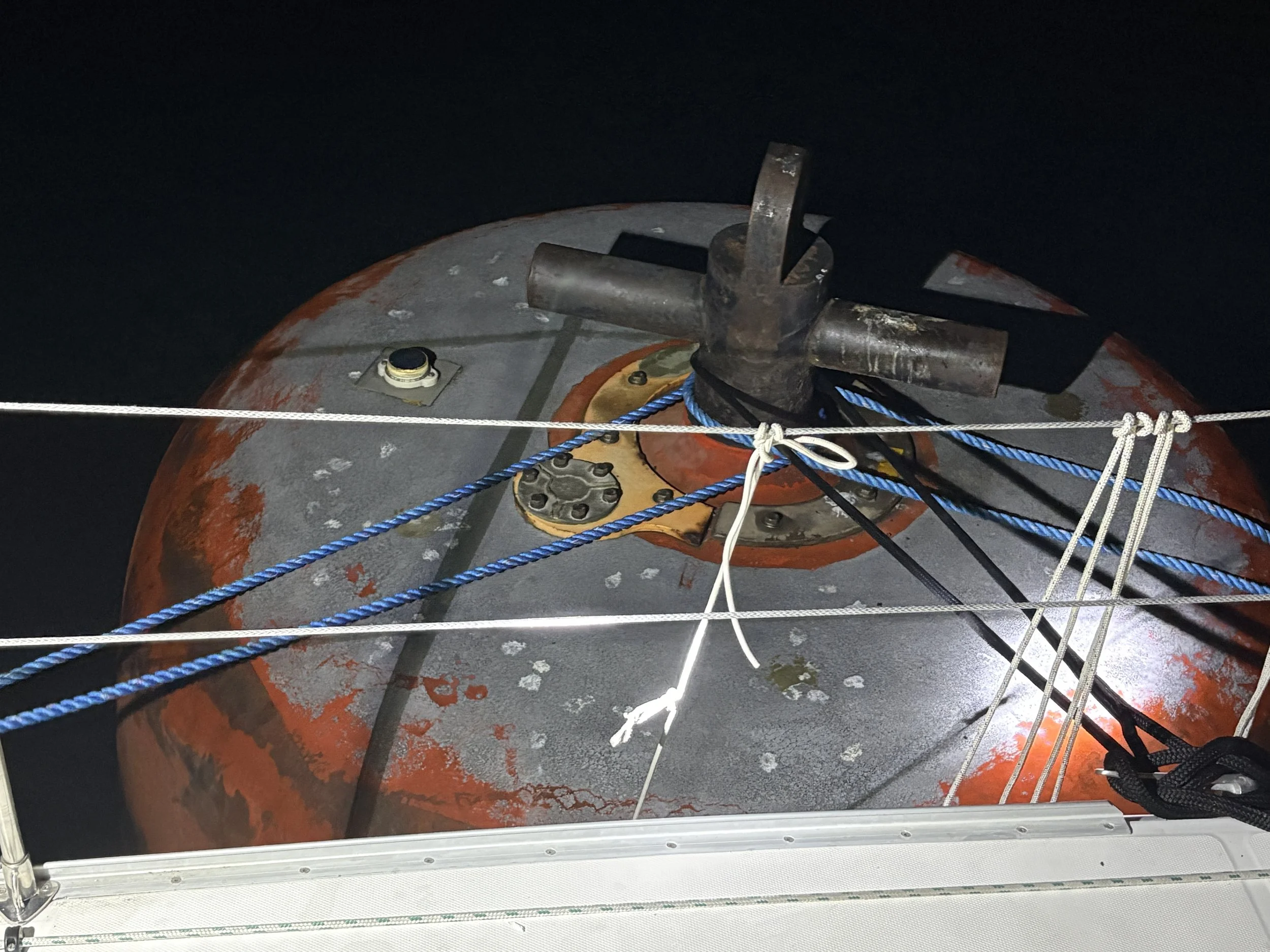
Once we exited the final lock around 7pm, in the dark, we entered Gatun Lake and motored across to a nearby buoy where we tied up for the night. The Pilot was picked up, and the line handlers — who stayed on board overnight — settled onto the sofas to sleep. We sat on the bow with a beer, reflecting on a very unique day. It was surprisingly eerie and quiet, just the sounds of the jungle around us, and there was very little light pollution despite being so close to Colón.
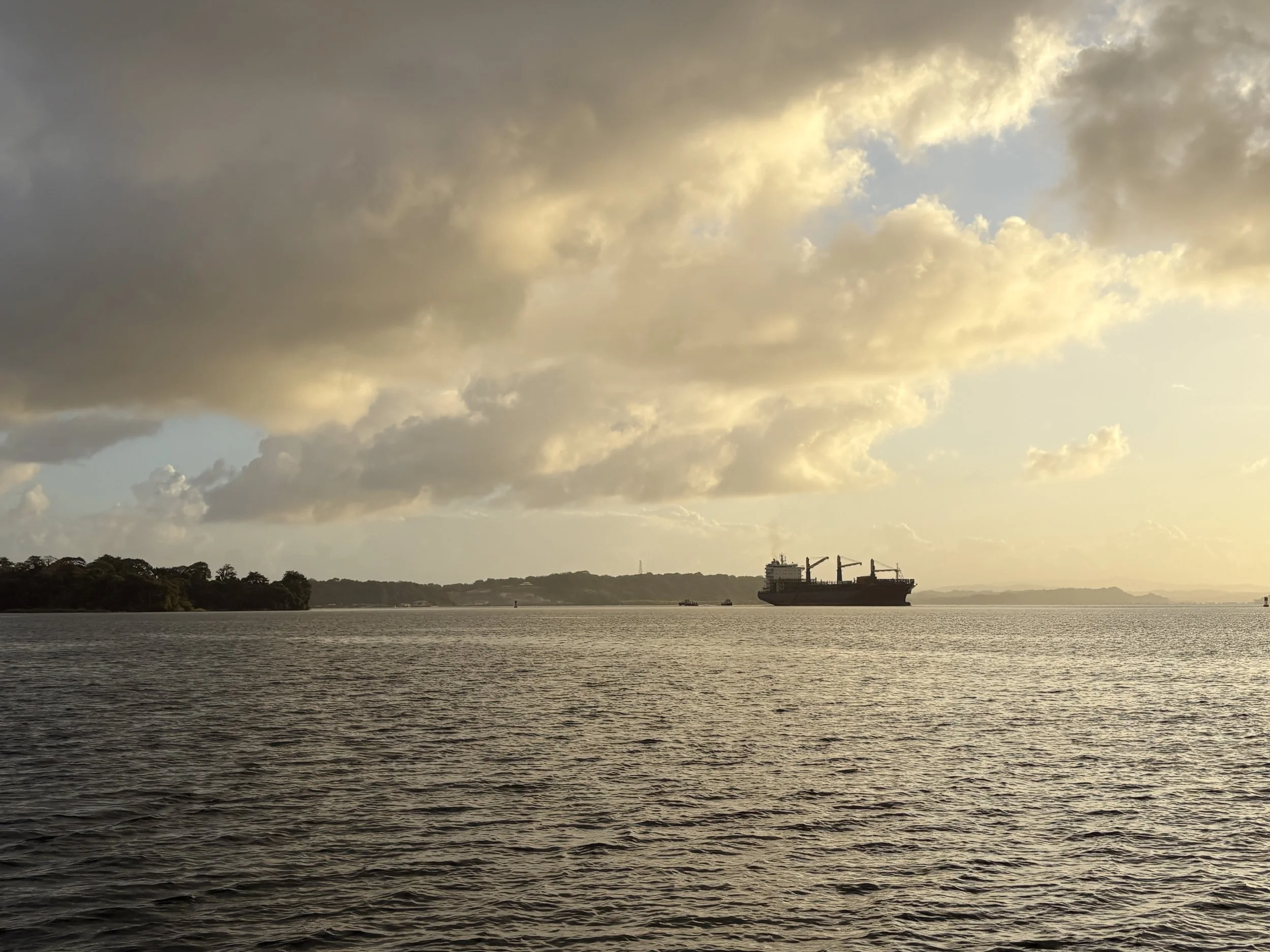
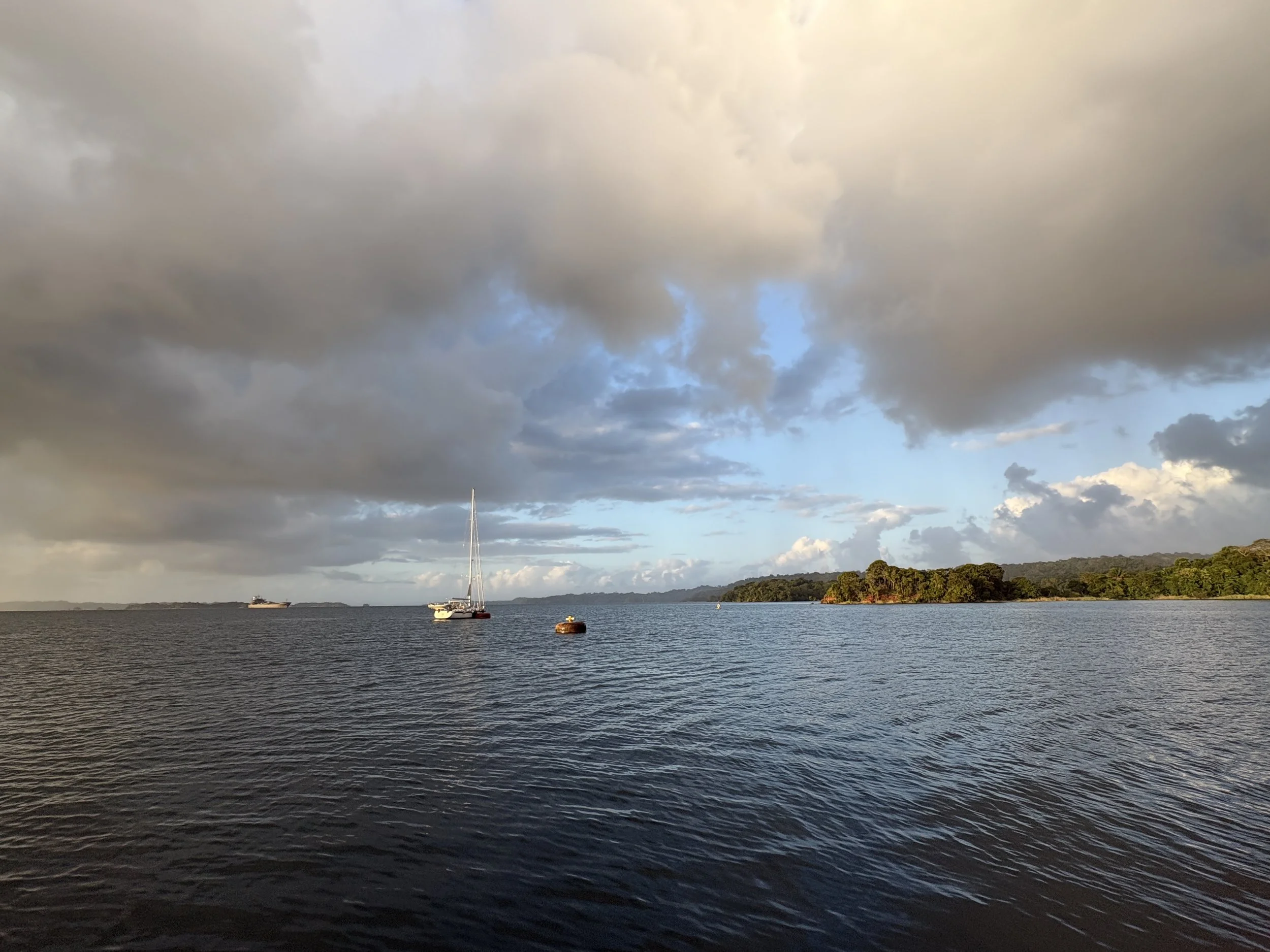
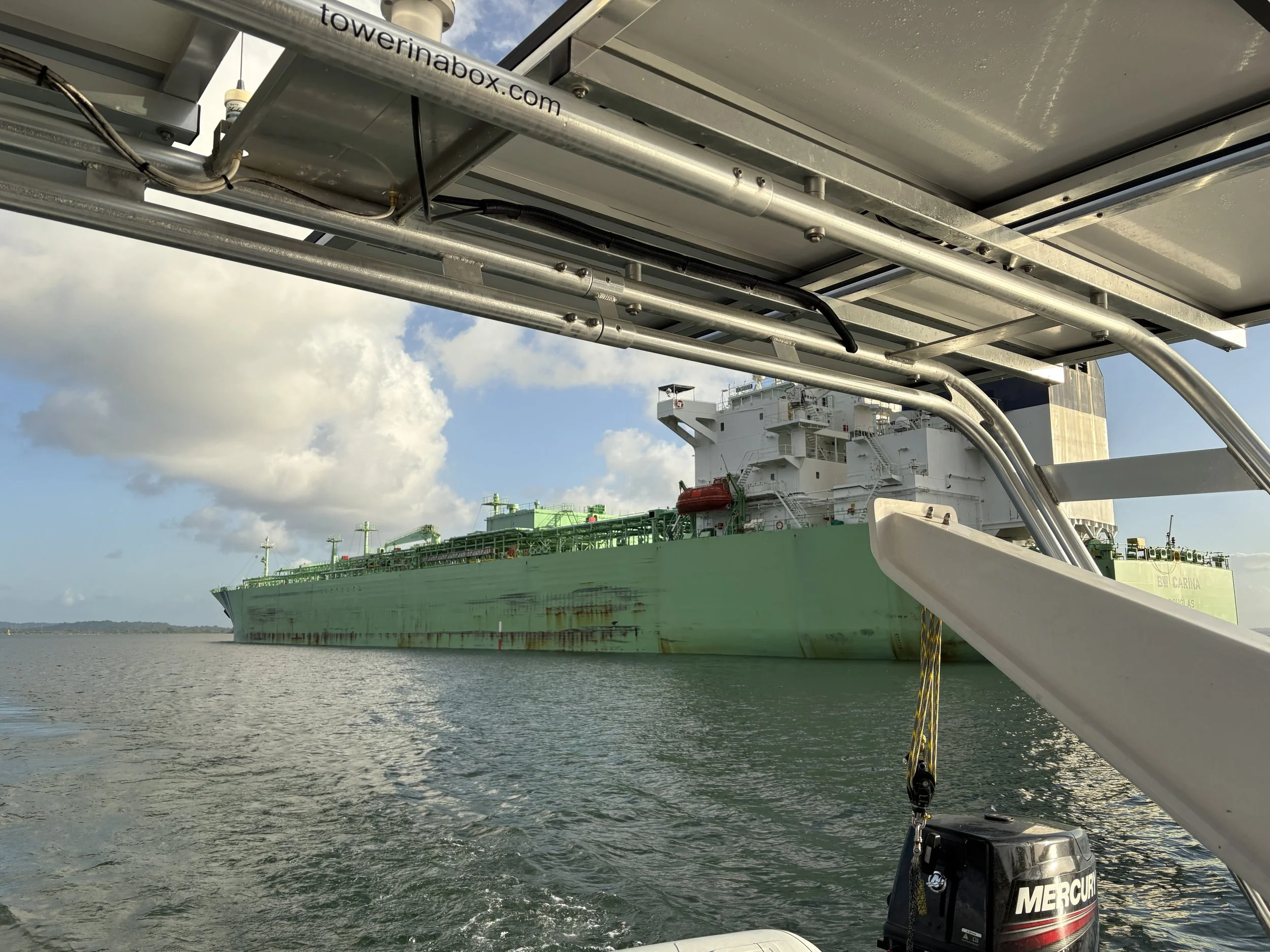
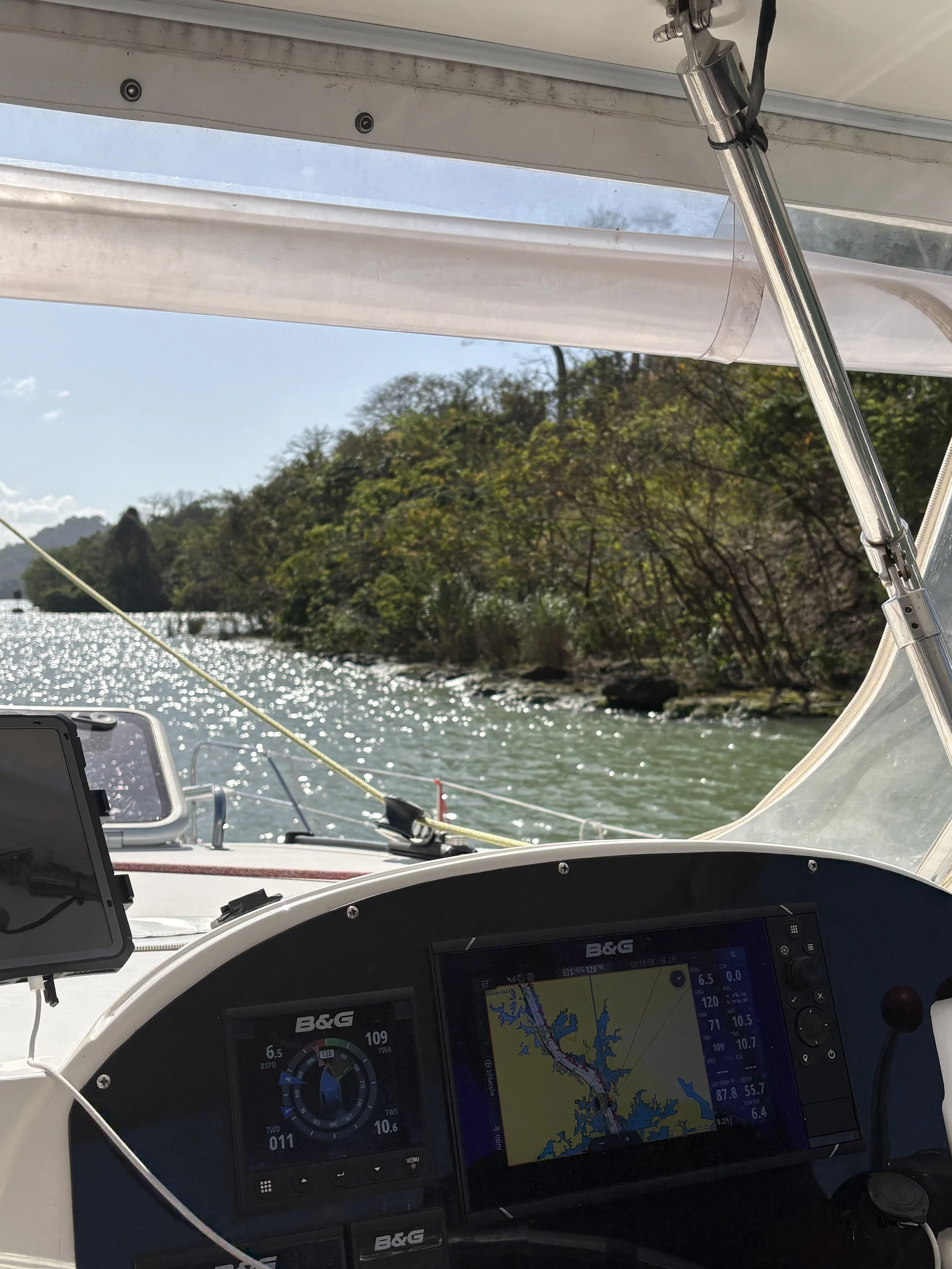
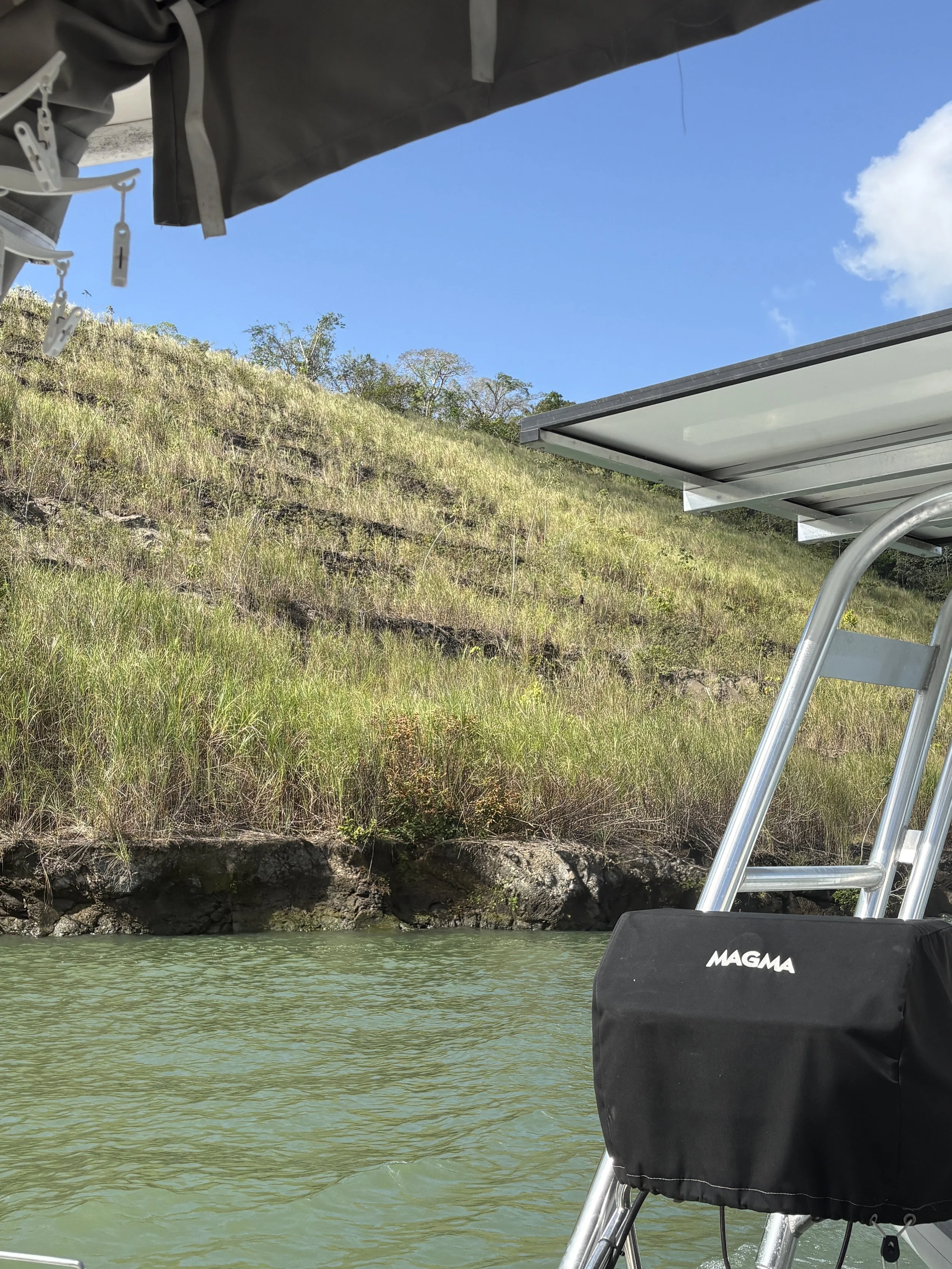
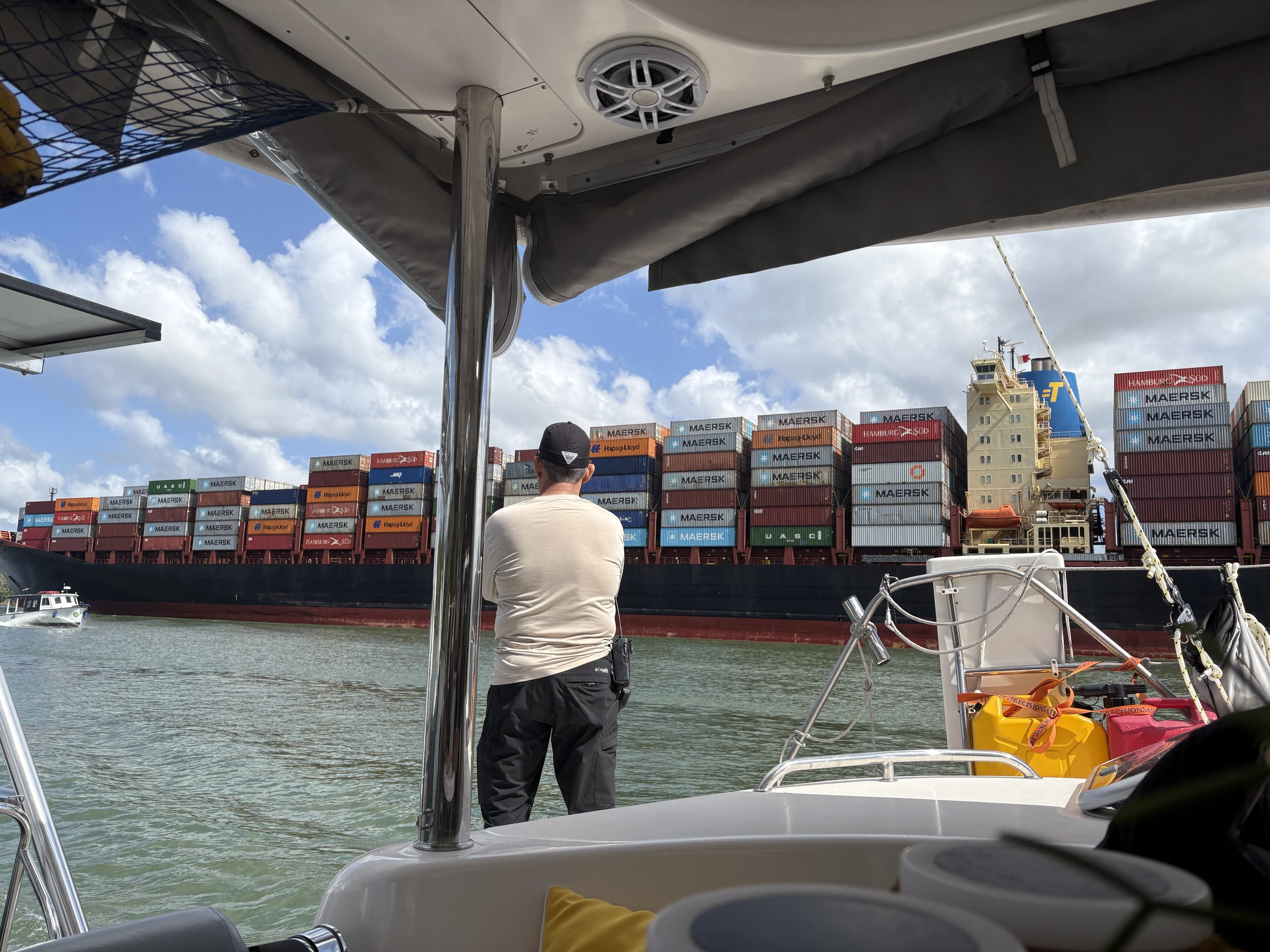
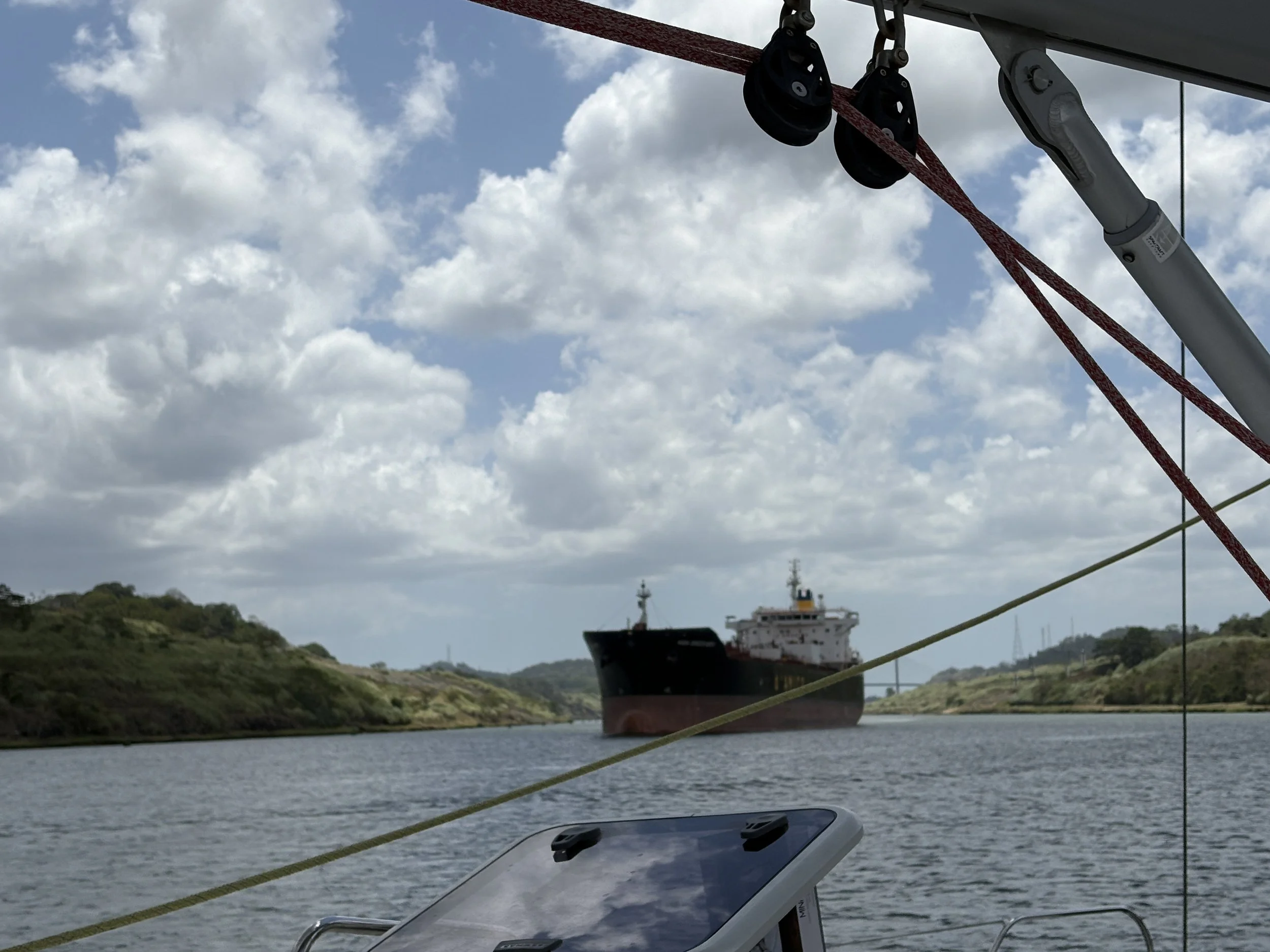
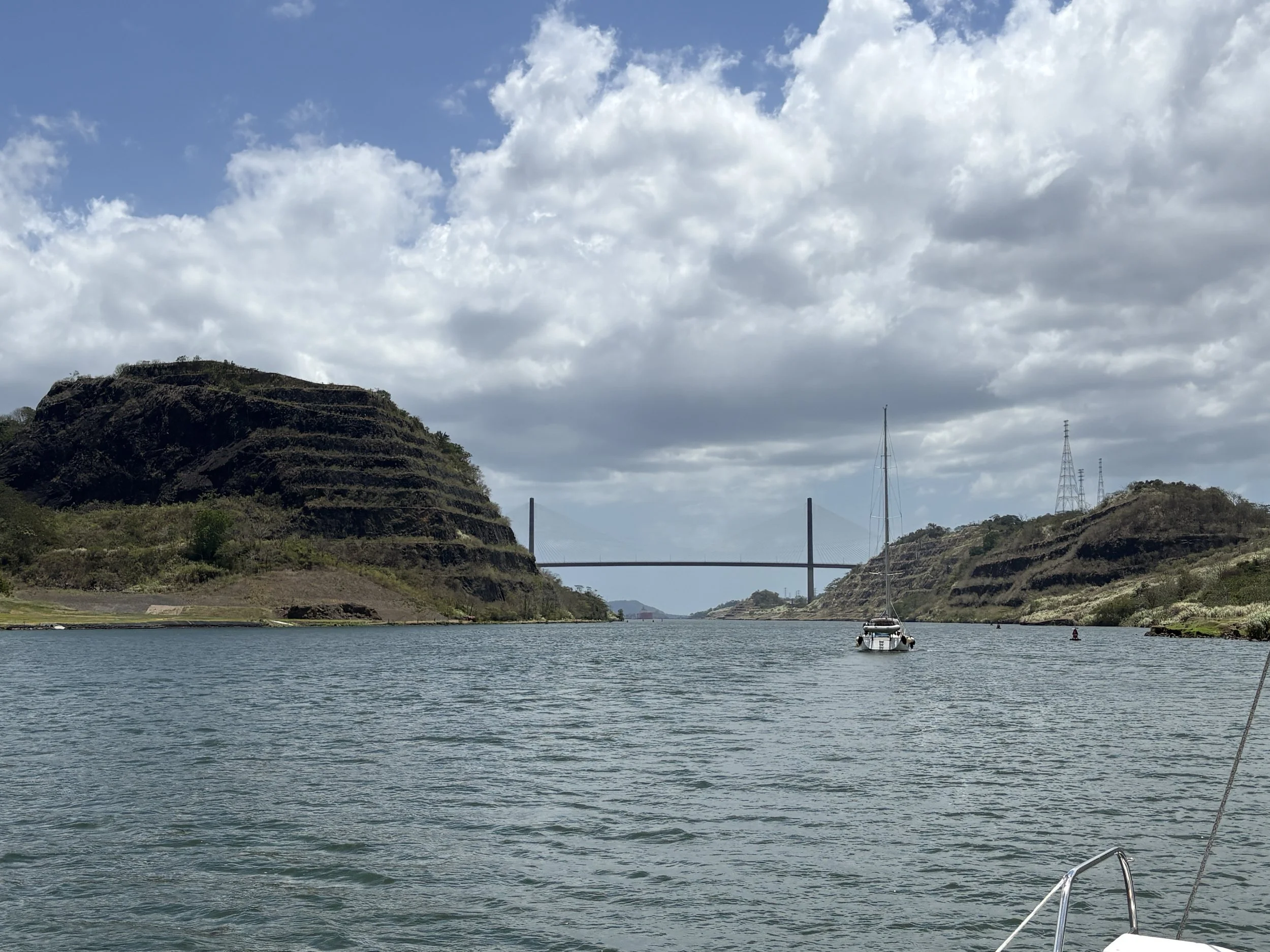
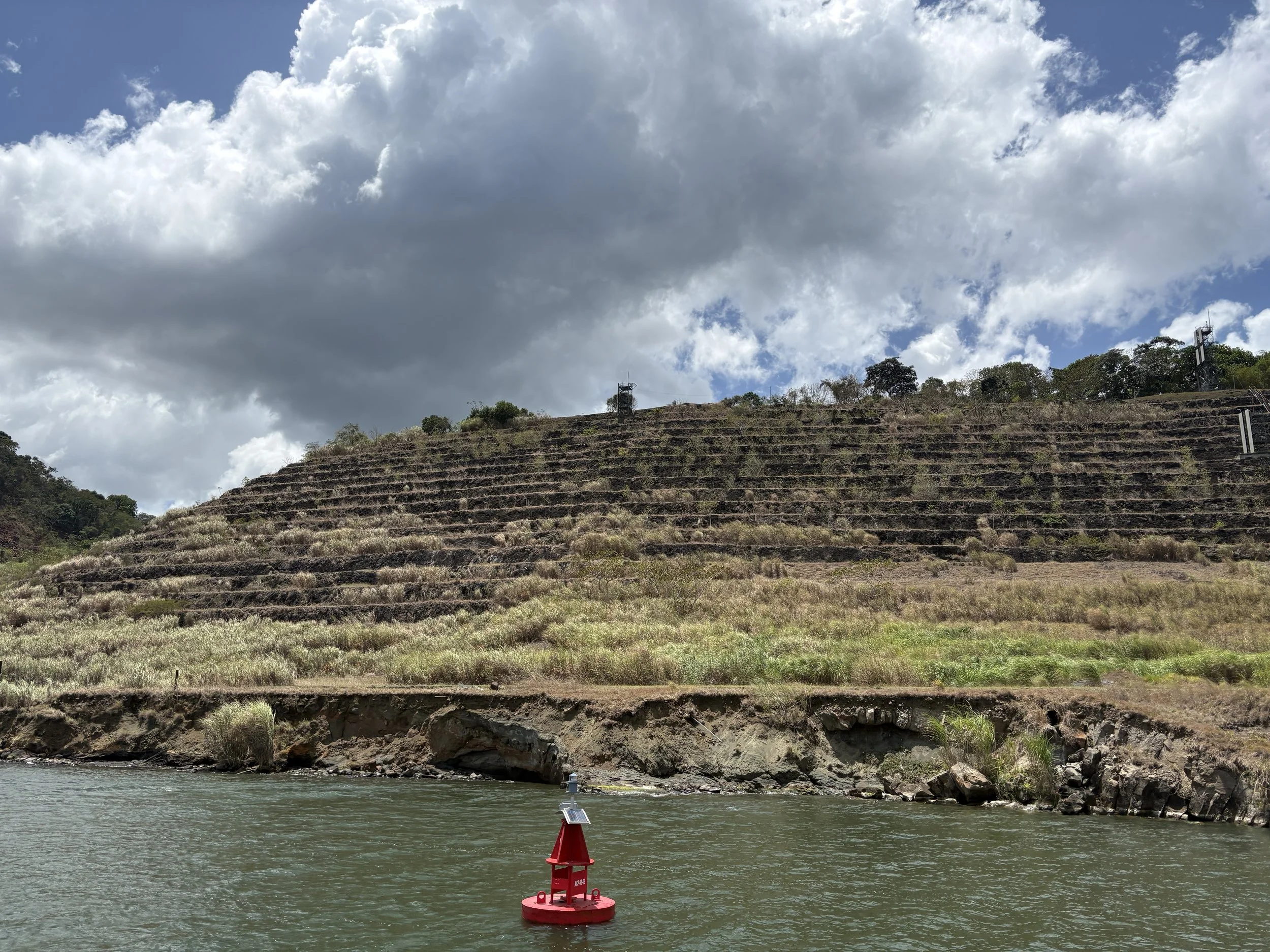
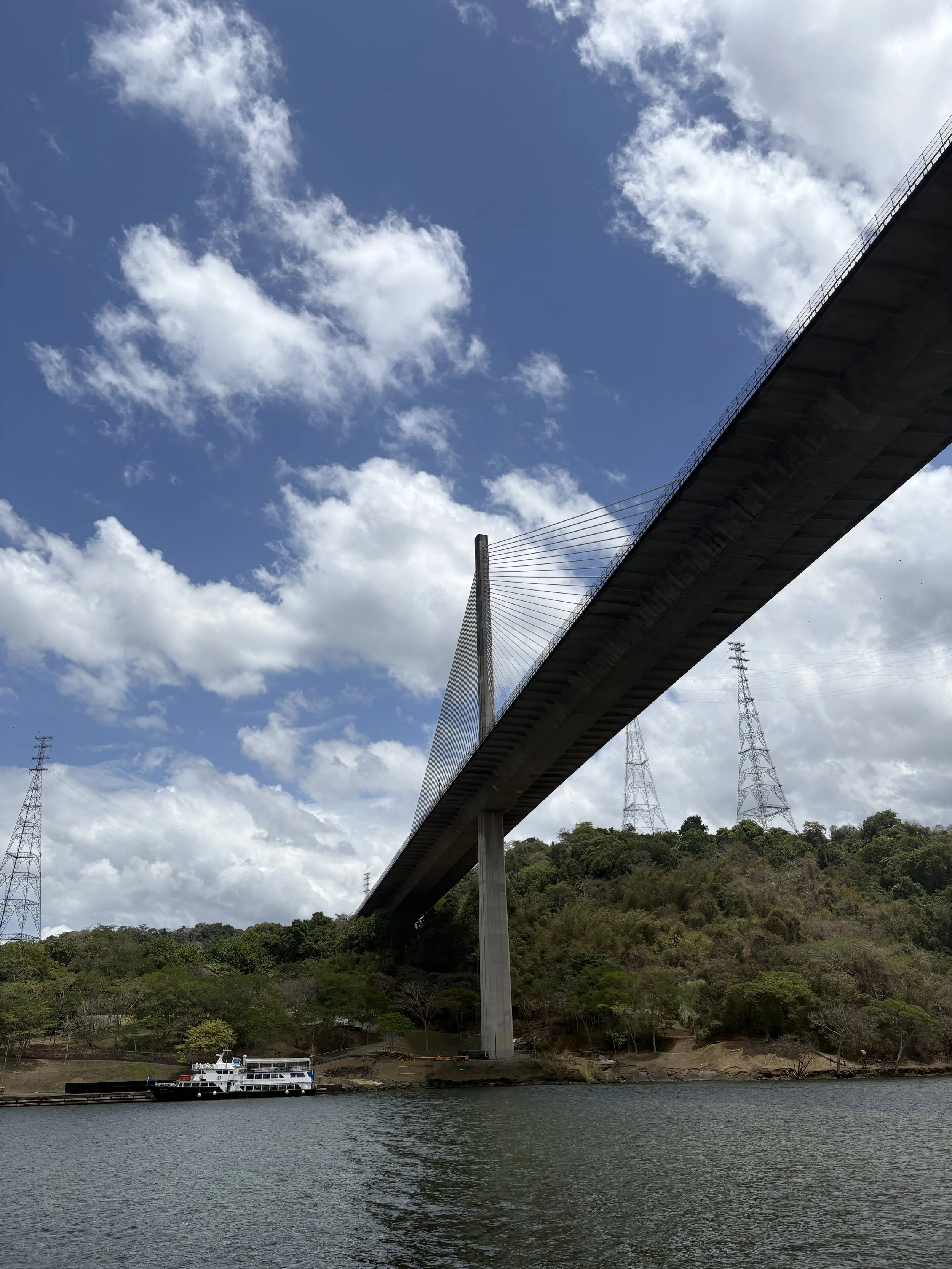
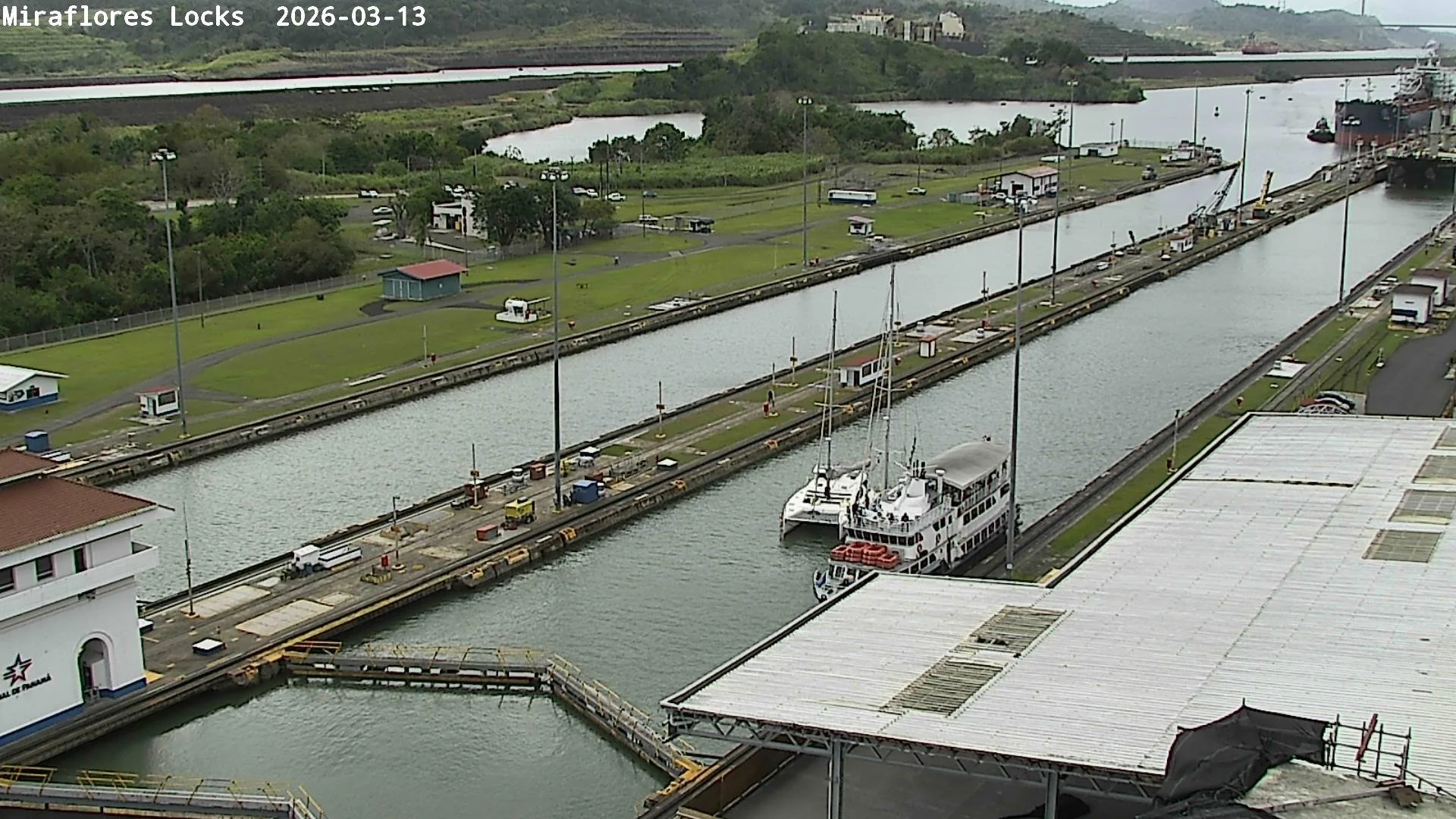
Early the next morning our new Pilot/Advisor was dropped off and we began day two of the Panama Canal crossing. Most of the morning was a peaceful motor through Gatun Lake, keeping well clear of the enormous tankers coming the other way. The total length of the canal from the Atlantic to the Pacific side (including Gatun Lake) is around 50 miles, and eventually we entered the Culebra Cut. This was one of the most memorable parts of the transit for us — it is the narrow channel where engineers literally carved a passage through the mountain ridge running through Panama.
When the canal was being built in the early 1900s, this was by far the most difficult section of the entire project. Workers removed more than 100 million cubic yards of rock and earth, using steam shovels, explosives and railways to haul the debris away. Even then, landslides constantly refilled the channel, making it a seemingly endless battle between the engineers and the jungle-covered hills. The Culebra Cut was also the most dangerous part of the entire canal project. Thousands of workers lost their lives building the Panama Canal, many to disease, but the Cut itself was notorious for landslides and blasting accidents as engineers battled unstable hillsides to carve a path through the continental divide. The Cut stretches for about eight miles, forming the dramatic canyon-like section of the canal. When you look up at the steep hillsides on either side, it’s easy to imagine just how monumental the task must have been. For us, motoring through this narrow corridor of jungle with enormous cargo ships appearing around the bends was one of the moments when the scale of the canal really hit home.
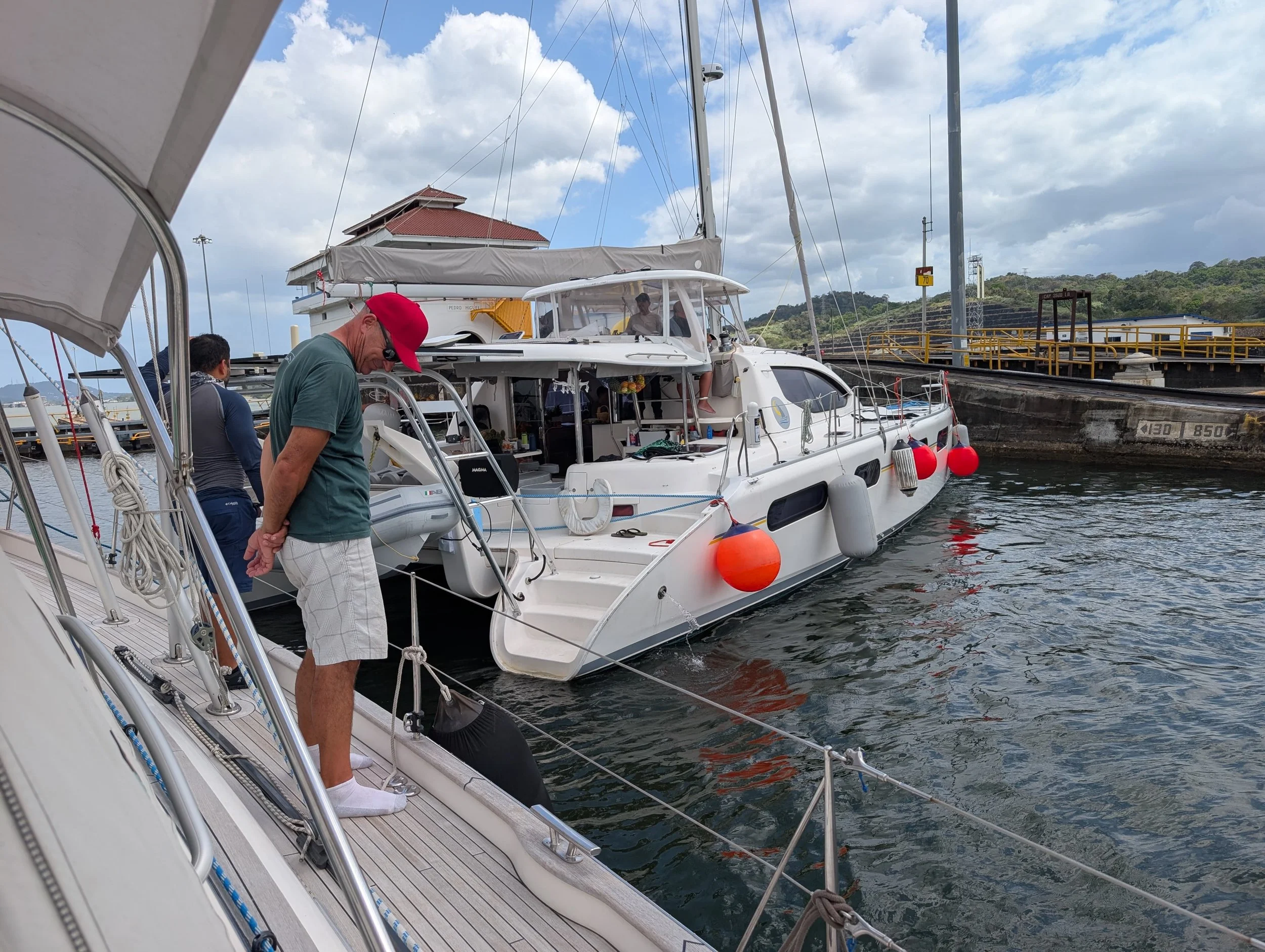
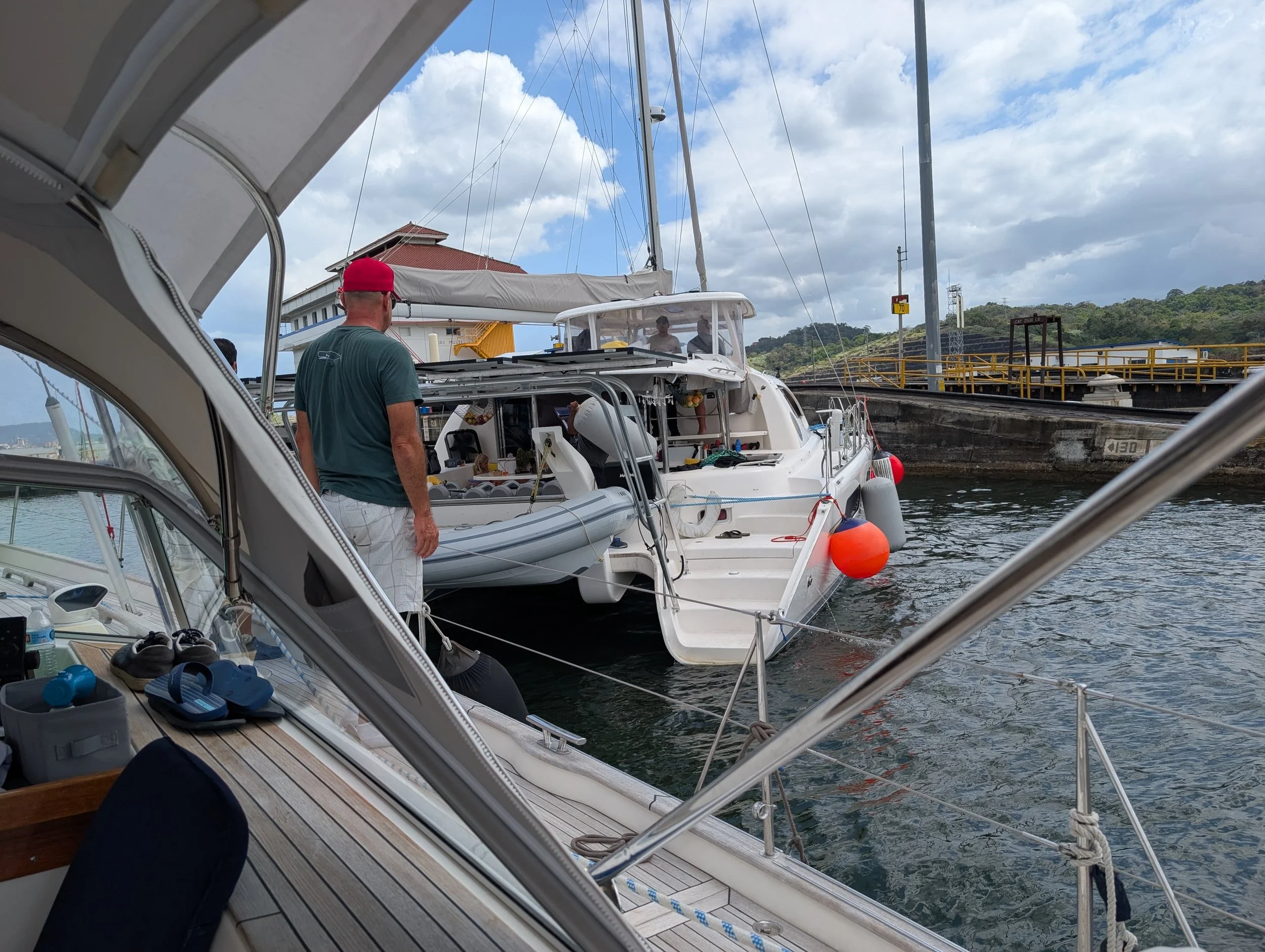
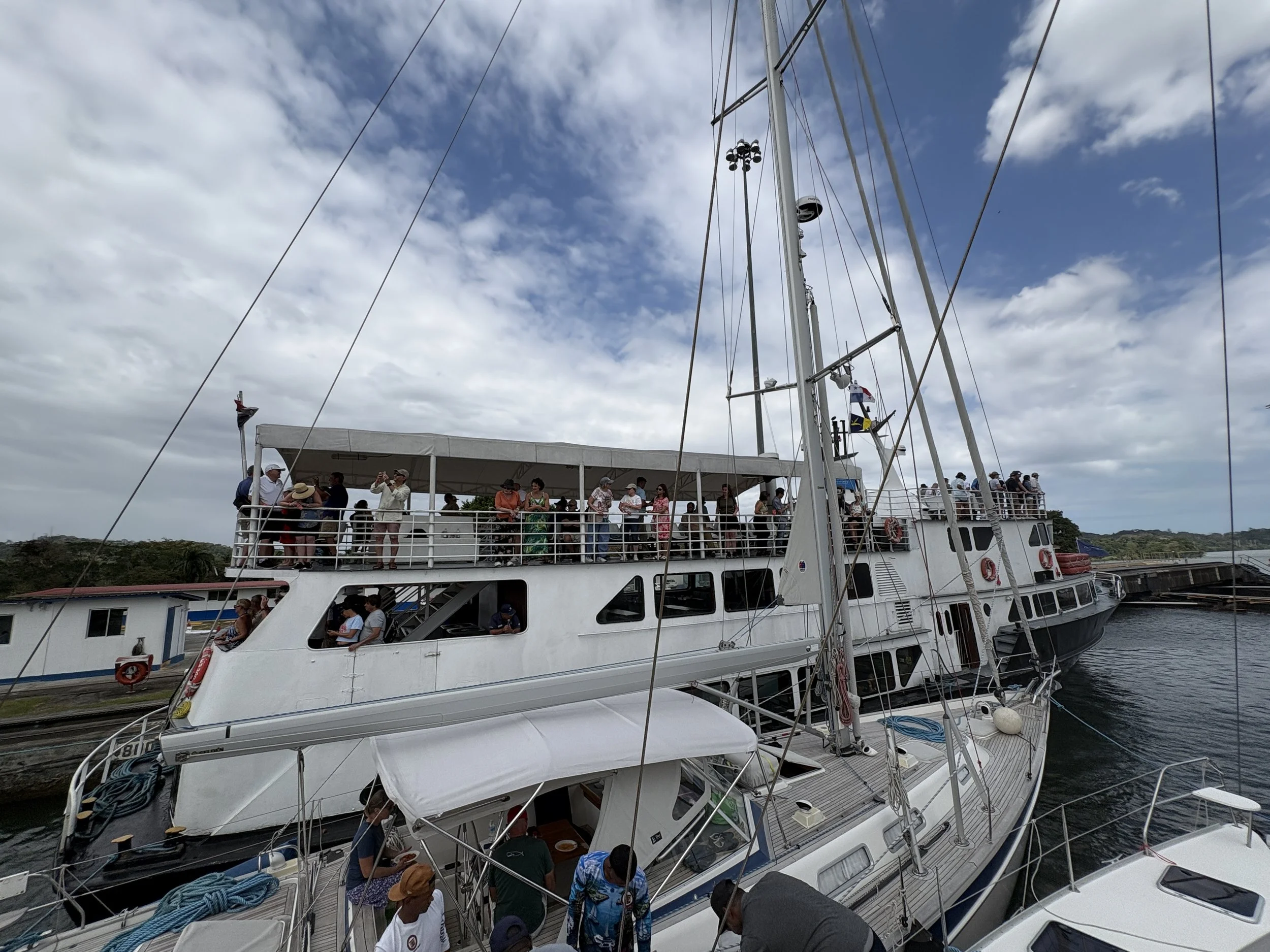
Eventually we got to the Pacific side set of locks mid afternoon. It was here that we had a really scary part to the crossing. For some reason our advisor/ Pilot did not want us to tie up to the other boats we were entering the locks with before we entered, as we had done the previous day. Instead, we were to tie up once inside the Lock. As this point something went wrong with our starboard engine and although he was motoring forward, the engine kicked into reverse and we started spinning around in the middle of the lock, with no control for what felt like ages. Our line handlers did a great job of jumping into solution mode as we all grabbed fenders and prepared to hold LunaSea off the walls of the lock as she spun. Pete stayed amazingly cool under pressure; there was a tourist boat also in the lock with us and Oso who were commentating on the spin; the Pilot was yelling at him not to turn around in the lock (he seemed to think it was being done on purpose) he managed to stop it moving backwards, and somehow we kept the boat off the walls, and stopped her spinning. We ended up being tied backwards to our monohull buddies, a first for the Canal, our Pilot suggested!
It doesn’t bear thinking about what could have happened if we had hit the wall and damaged the boat - we could genuinely have caused news headlines by stopping one of the busiest shipping areas in the world!
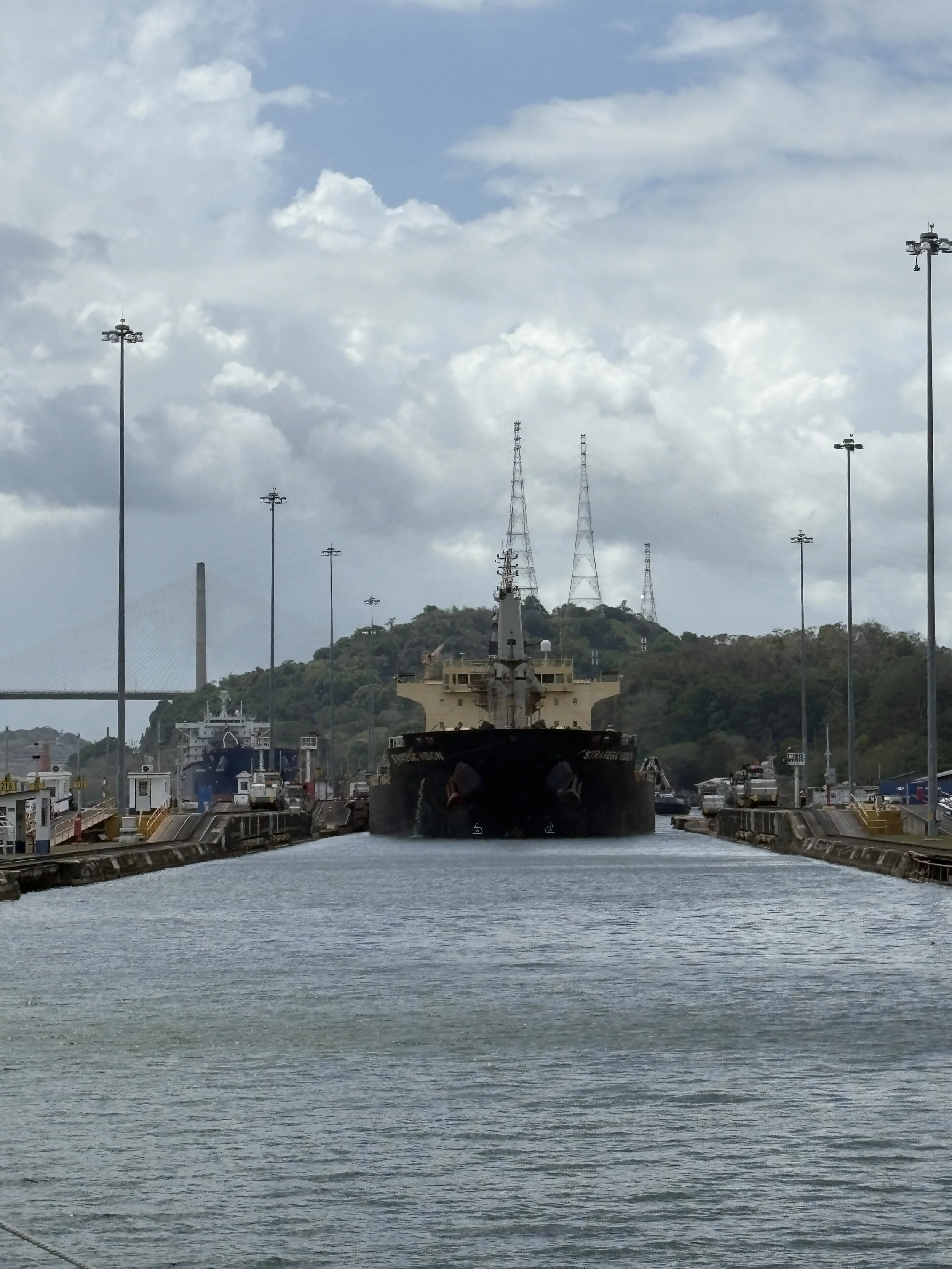
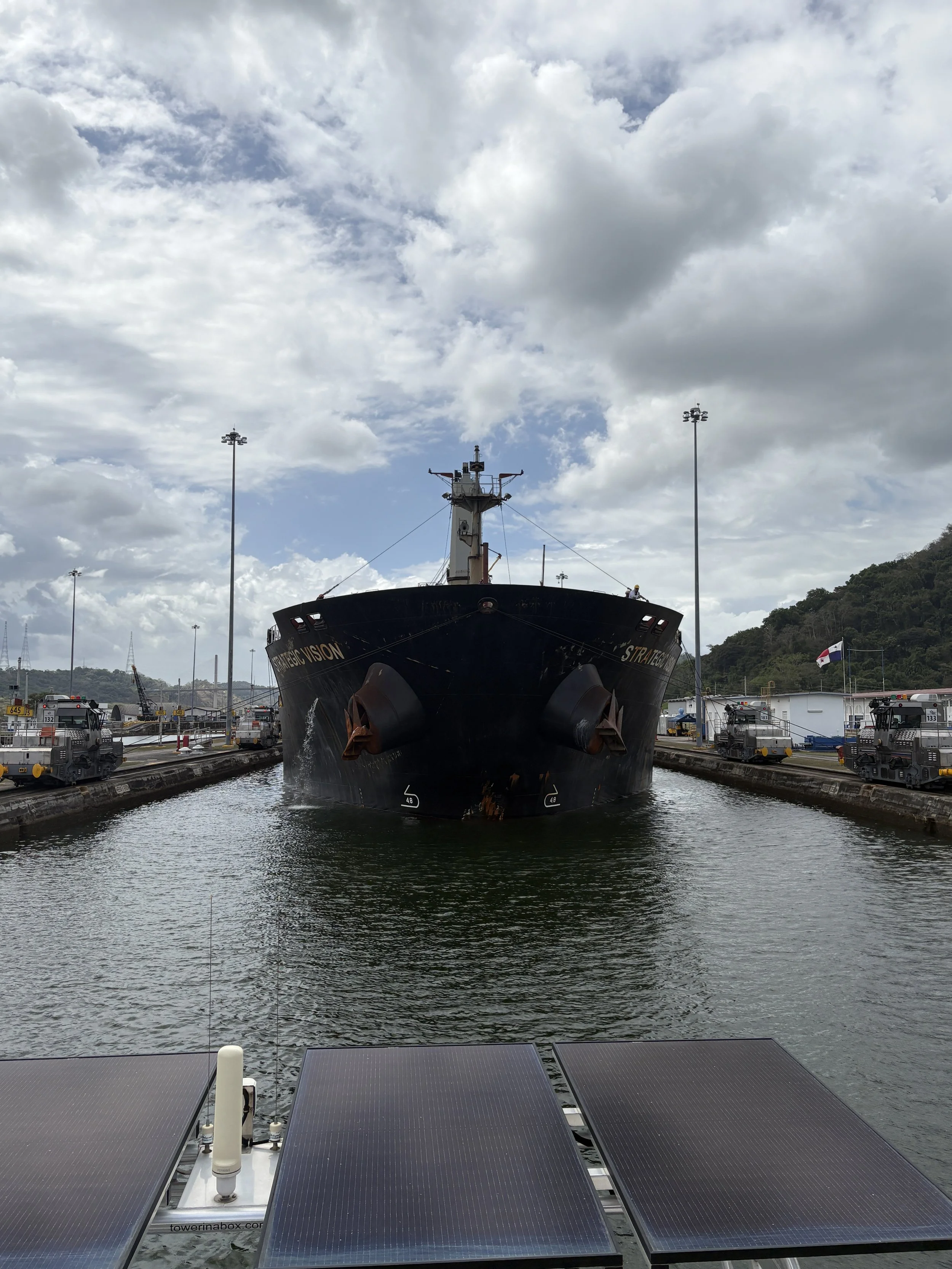
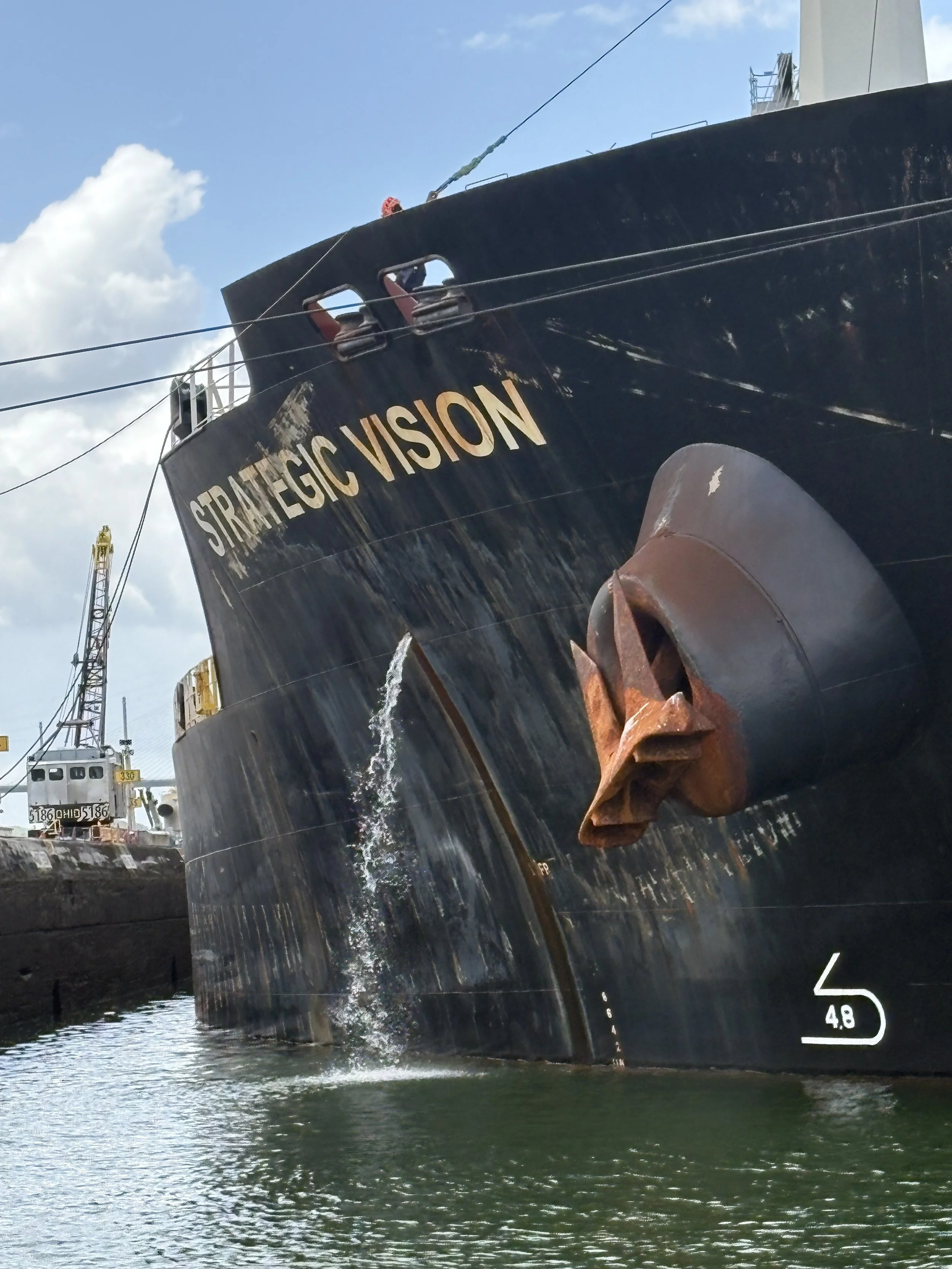
The tanker ‘Strategic Vision’ then entered the lock to come in behind us - at that point our pilot decided we needed to do another 180 and face the correct way, so with it bearing down on us, we span again! Luckily the boat behaved itself, there didn’t seem to be anything around the propellor, so a little bit of a mystery as to what happened…..
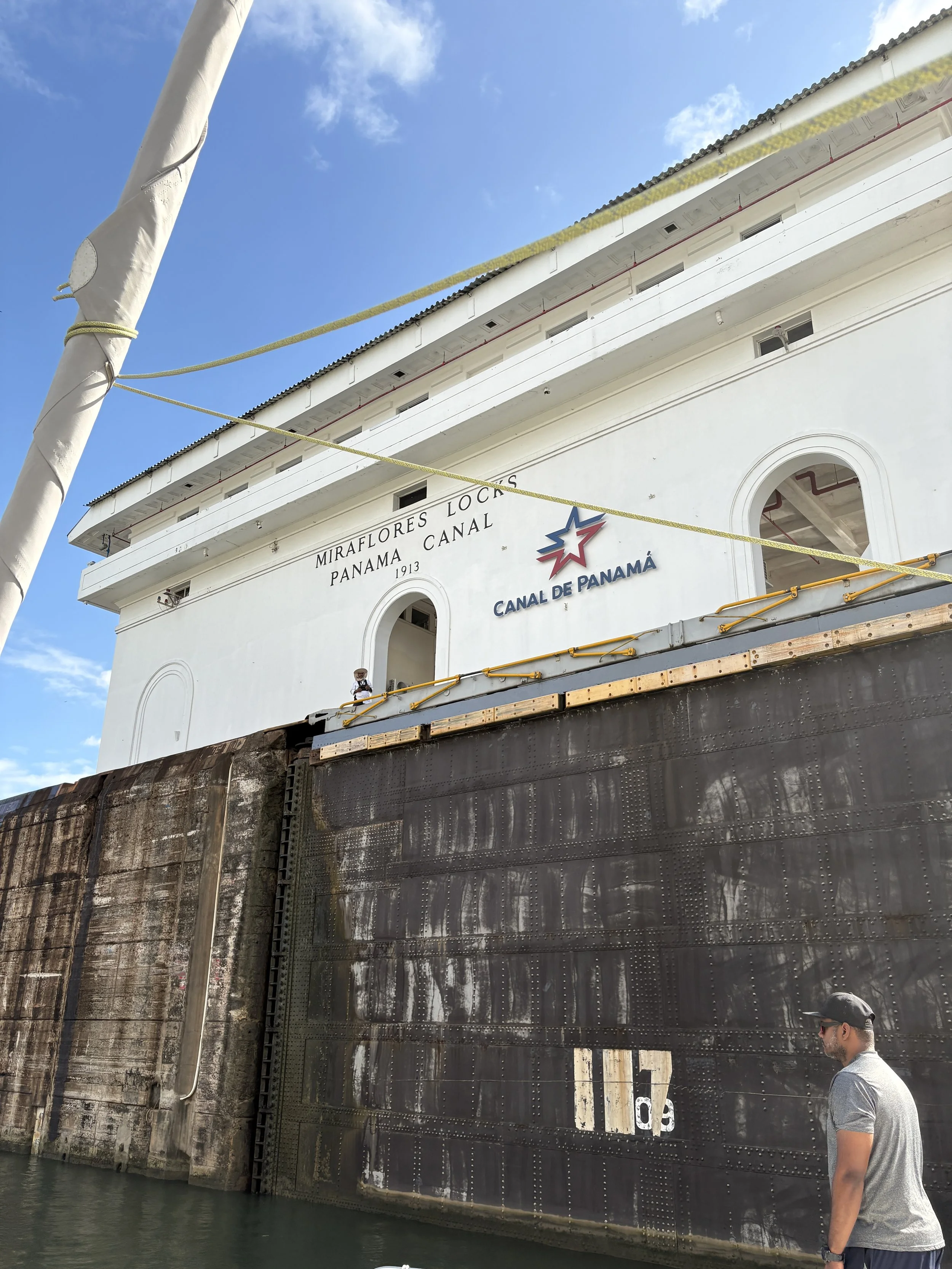
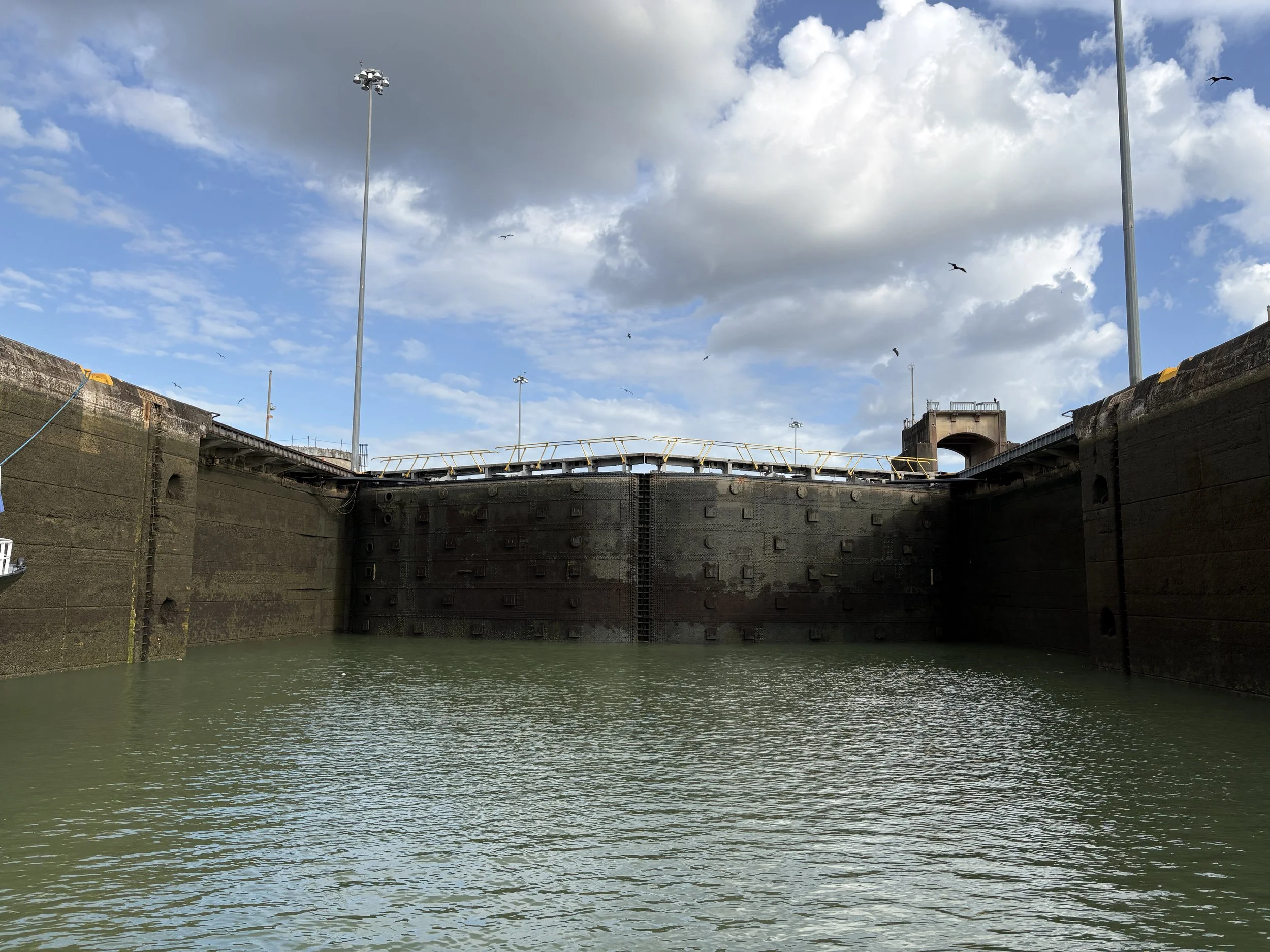
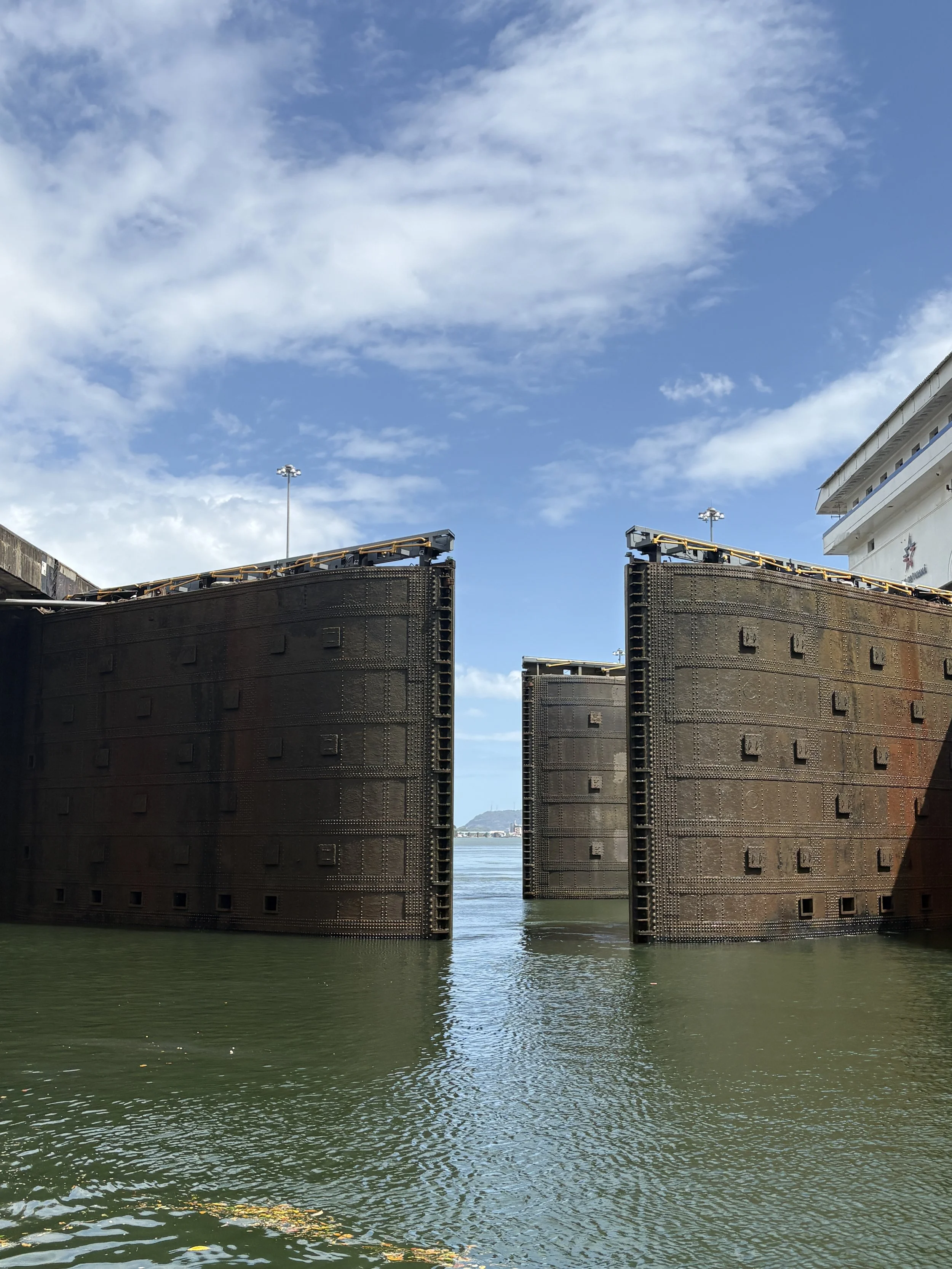
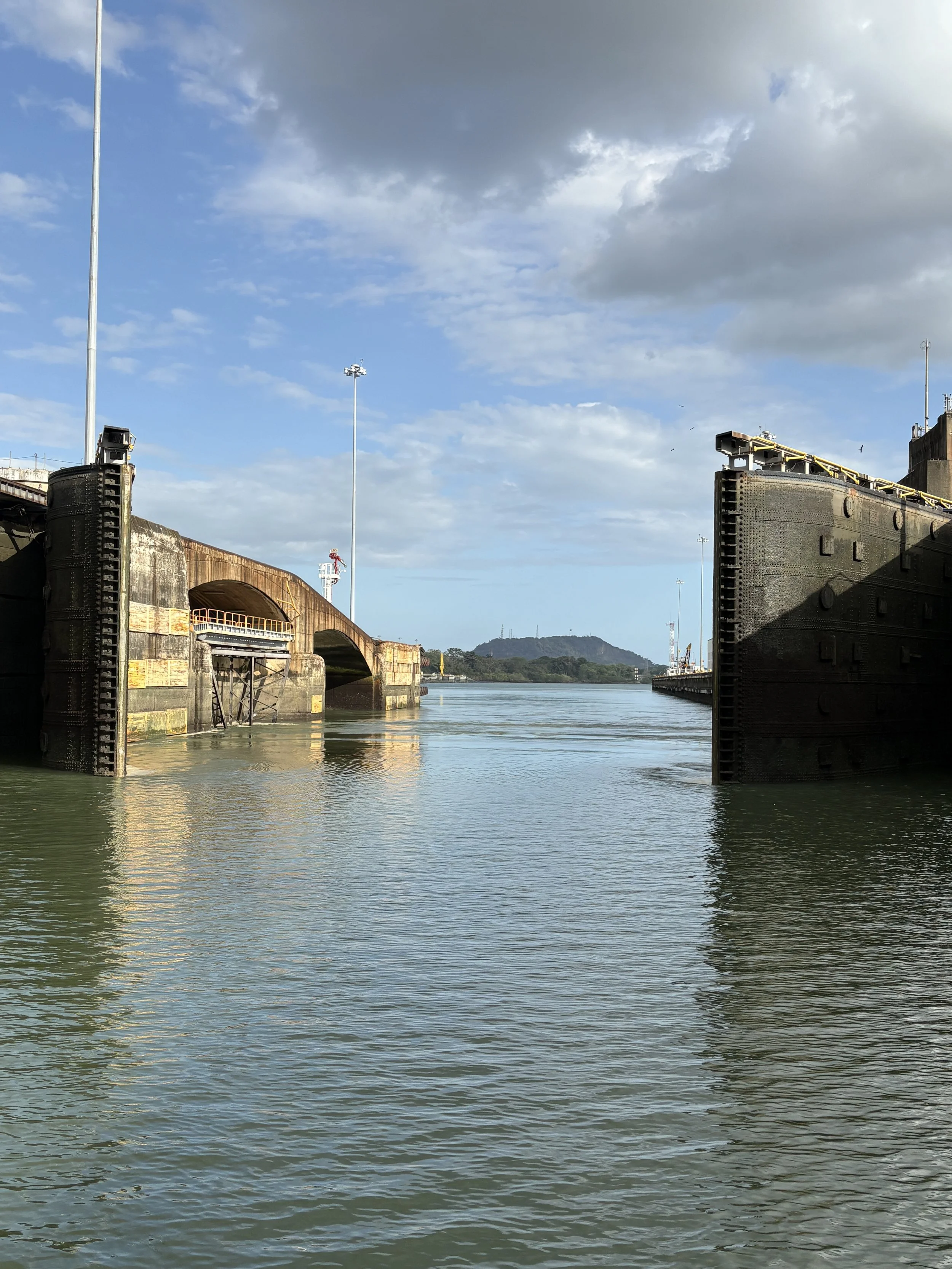
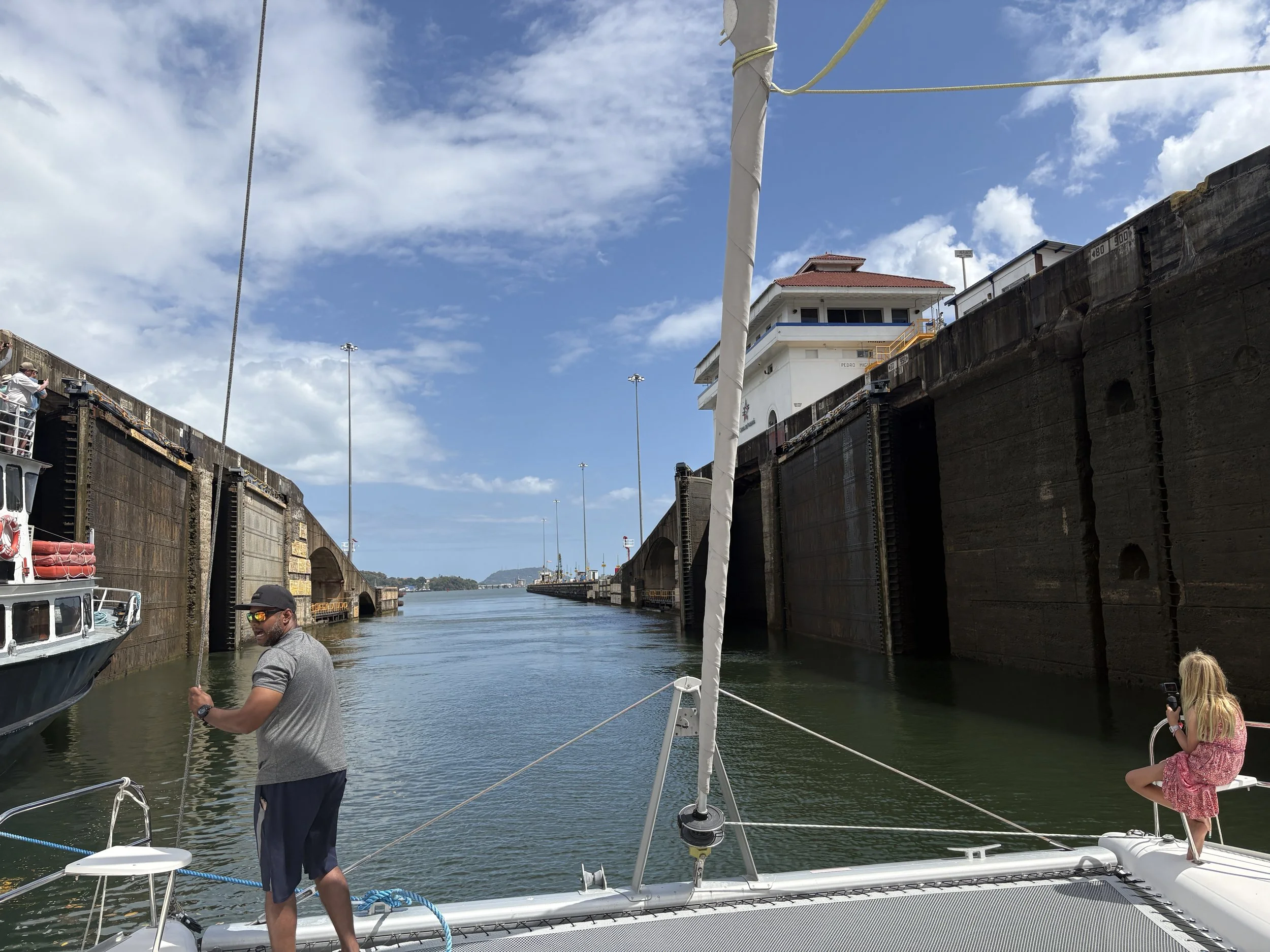
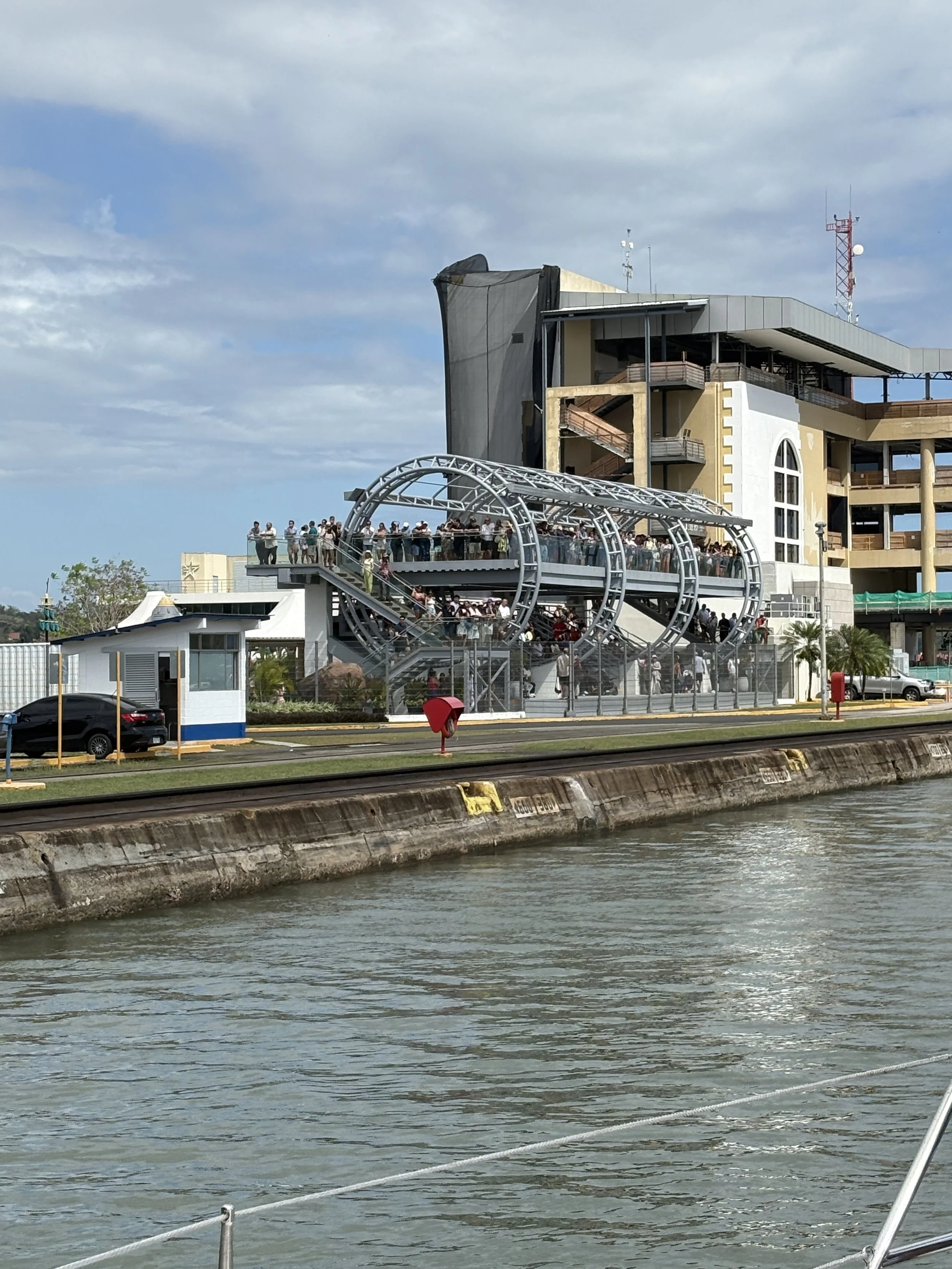
We then entered the final set of locks — the Miraflores Locks — where a grandstand of people were watching the boats come in and out of the chambers. Thankfully our boat behaved this time, so from their perspective there wasn’t much of a show. With that, the final lock gates opened onto the Pacific Ocean. It was a pretty emotional moment for us, not going to lie. Another huge milestone — making it through to this side of the continent.
We anchored in the horrendously rolly La Playita Anchorage, just outside Panama City, where the pilot boats race in and out at speed all night. After anchoring, we headed ashore for a celebratory pizza. It felt pretty surreal to think that just two days earlier we were in the Caribbean, and now we were sitting in Panama City looking out at the Pacific.
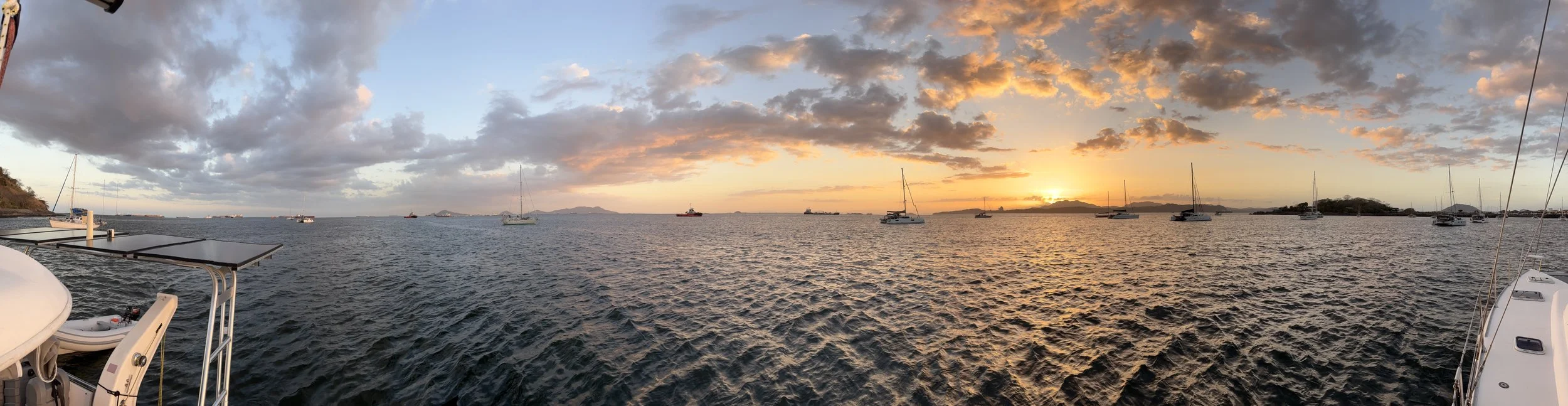
La Playita Anchorage
And a reflection from our smallest crew member about what went on……
“Hi, this is Bethan! I wanted to write a bit of our blog about the Panama canal! At first we were waiting for our pilot to arrive. Finally he did and we set off. We went under the bridge and out the other side. By now it was probably 5:00 and we were only entering our first lock. We waited there for about 20 minutes for us to go up and toss back the lines. This was the cool bit where you looked very high up and you could see all the ships and marina as you kept going. As we entered our 2nd lock we could see the other side of Gatun lake and the process continued. When we got to Gatun lake we found our buoy and went to bed. The cool thing I thought was that you could hear the wildlife on the island next to us. The next day we started again and motored on to lock 1 on the Pacific side. It took us about 2 hours to get to lock 2. At lock 1 we had a bit of a problem. Our starboard motor refused to go in forward and we almost crashed the boat and had to reverse in. We had a new pilot and when we got to lock 3 it was about 3:00 so we were on time. Finally we made our way out of it. We went under the big bridge and made it to the anchorage! We made it across the Panama canal!!! “