Stunning waters of the Tuamotus
The Tuamotus had been on our minds for months before we ever got close to them. Every book we referenced about French Polynesia had the stunning photos, and the stories we heard were about low lying atolls, no lights, strong currents through narrow passes, and reefs and bombies (coral heads) that don't show up until you're basically on top of them. It's part of why sailors used to call this whole archipelago the Dangerous Archipelago. Seventy odd atolls scattered across an area of ocean roughly the size of Western Europe, most of them barely poking above the waterline, and for centuries ships simply didn't come back from some of them.
The first atoll on our list was Raroia, and it felt like the right place to start, both for the sailing and for the history. People had been living on these atolls for a very long time before anyone in Europe knew they existed. The Paumotu, as the local people are known, settled the islands generations ago and built a whole way of life around something that looks, from a distance, like it shouldn't support one. Europeans didn't find Raroia until 1606, when a Spanish expedition sailed through and logged it.
For most of its history since, Raroia's story has been the same as the rest of the Tuamotus: pearl shell and pearl diving, and copra from the coconut palms that seem to grow out of pure coral rubble. Free divers used to go down for mother of pearl shell long before anyone farmed pearls commercially, and that trade, along with copra, is still what keeps a lot of these atolls going today.
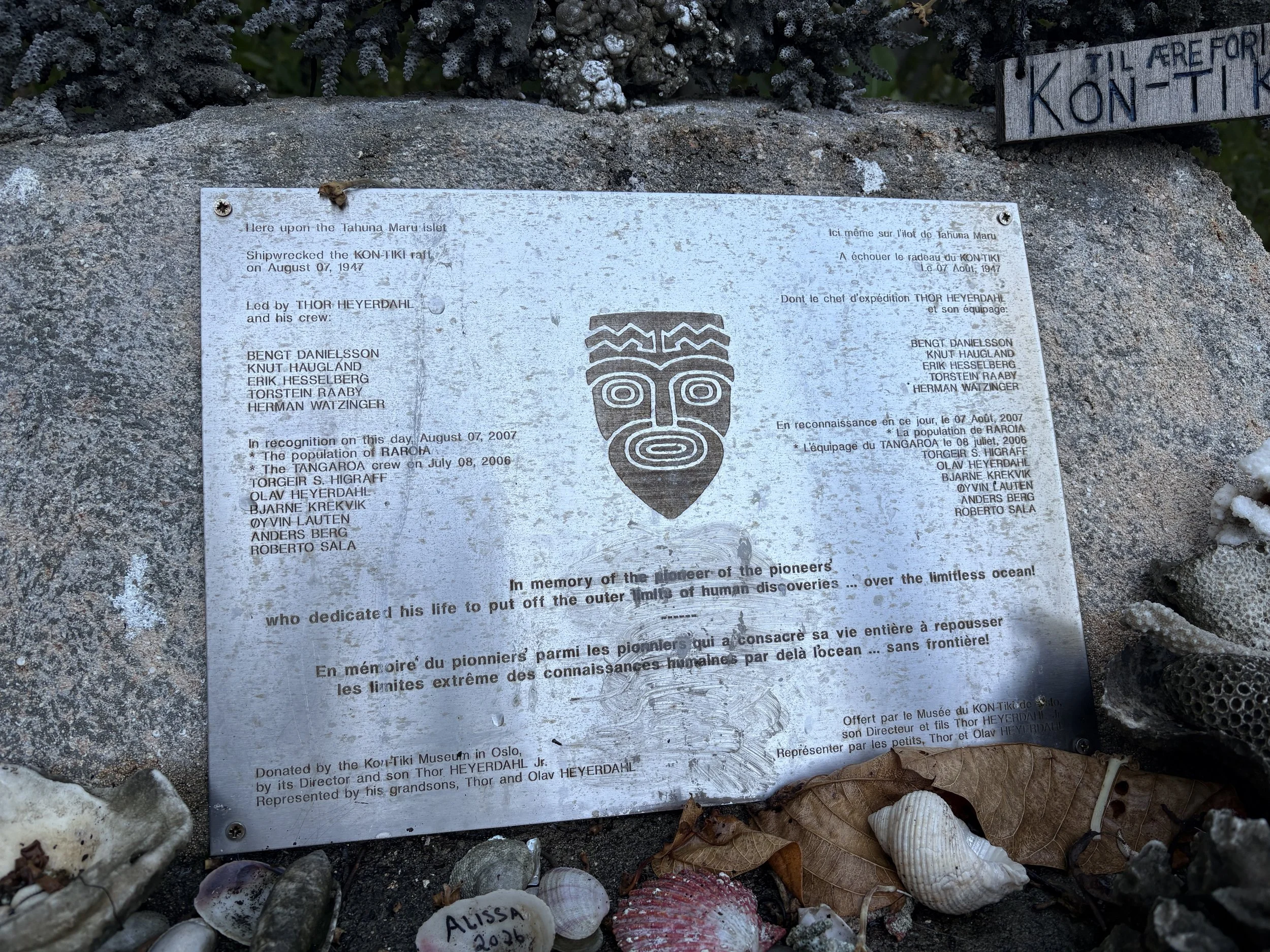
However Raroia has one claim to fame that puts it on the map for reasons that have nothing to do with pearls. In 1947, Thor Heyerdahl's balsa wood raft Kon-Tiki fetched up on Raroia's reef after 101 days adrift from Peru, proving his theory that Polynesia could have been settled from South America. One of his crew, Bengt Danielsson, liked the place enough to come back and live there, and he ended up writing a couple of books about life on the island. We were lucky enough to visit the site on the atoll where the raft ‘crash-landed’ and there is a stone to commemorate the amazing achievement.
These days Raroia has an airstrip, a population of a couple of hundred people centred around the village on the western side near the pass, and an economy still built on pearls and copra, much as it always has been. It's a small, quiet place with an outsized amount of history for its size, which more or less sums up the whole Tuamotu chain. This is also the archipelago that carries a much heavier, more recent history too. France ran its nuclear testing programme out of Moruroa and Fangataufa, two atolls further south, for three decades, and it's not something you can sail through this part of the Pacific and simply skip over.
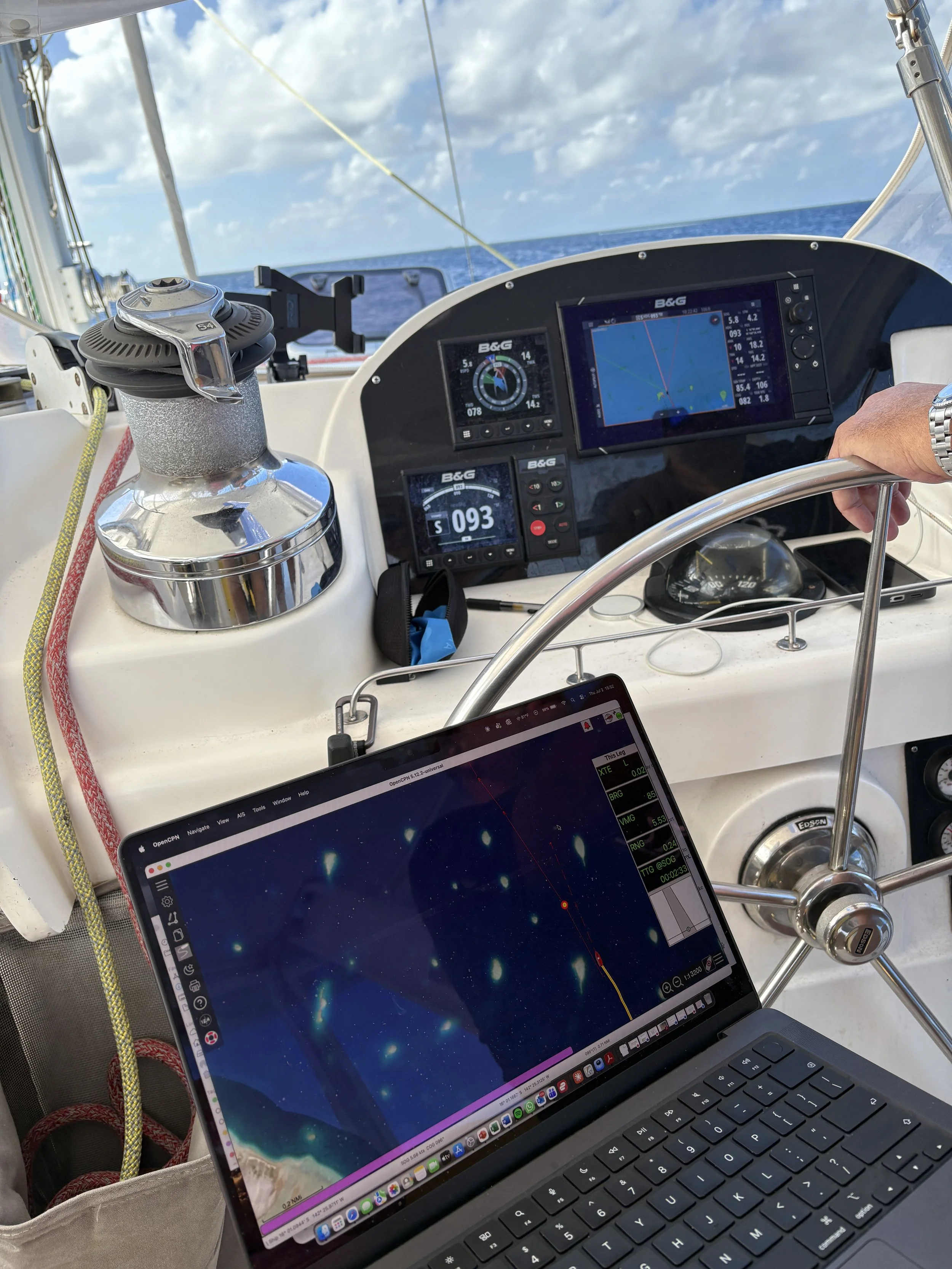
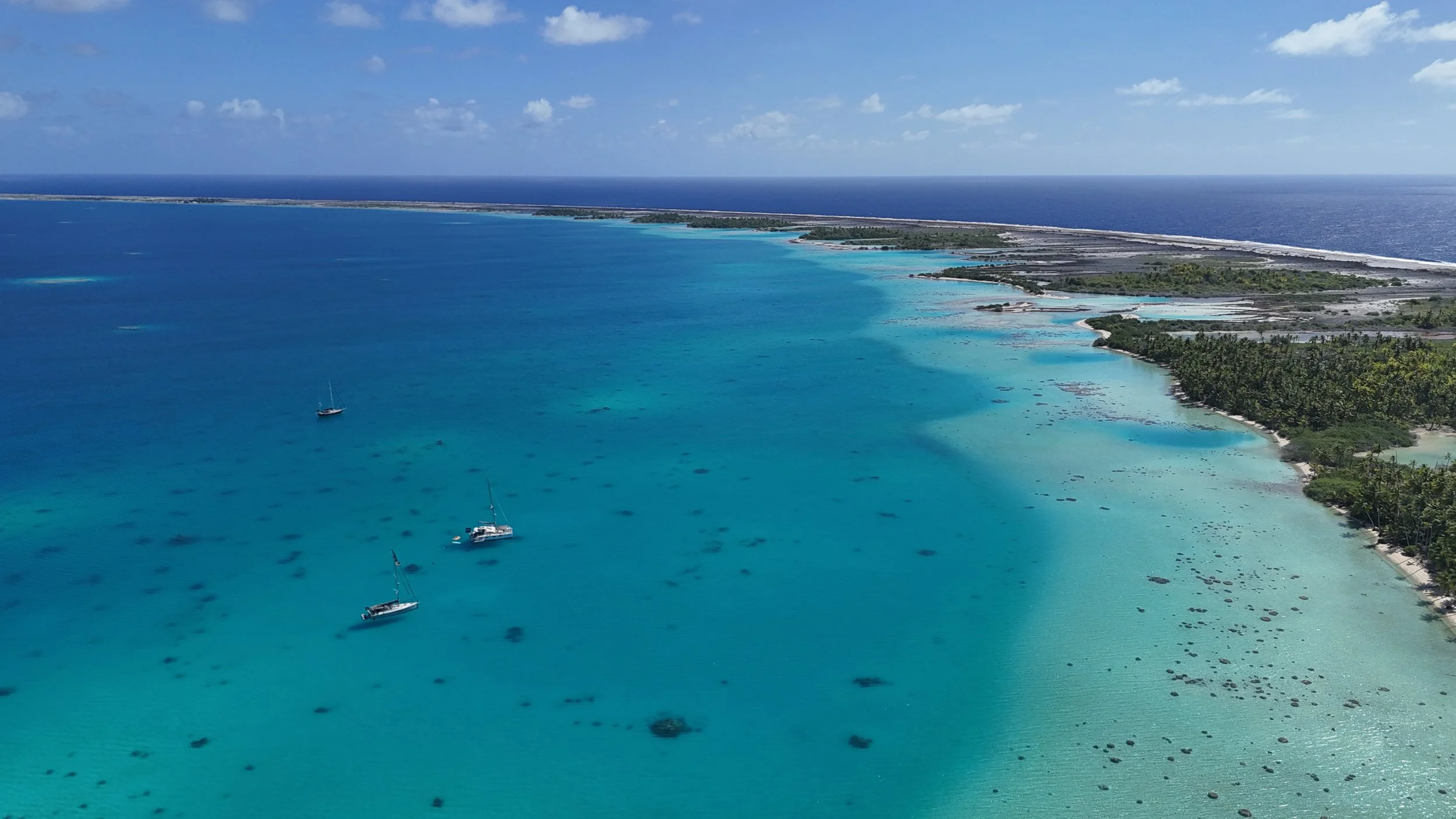
We sat outside the pass after our 3 day passage from Daniel’s Bay in Nuka Hiva to get there, as these passes are all about timing for the current and making sure you don’t get standing waves against you. We arrived several hours early, and motored up and down outside the pass for a while, eventually watching a few boats leaving the pass as dawn broke. Eventually one of the buddy boats (a monohull) we were with gave it a go - a little early we thought still, but if you don’t try sometimes, you don’t know. They made it in - slowing right down in the strongest part of the pass as the current was still flowing out, but they were in. So we braved it. The advantage of a catamaran is that you have 2 engines, so they were on full throttle, slowed at one point to 3 knots of speed but slowly, slowly we pushed through and out speed increased as the current wavered eventually. For the next hour, to get to the anchorage, it was navigating by photo - nagivation charts are pretty useless here, so with combination of Google Maps satelitte images and some other equivalents, we plotted our way through the minefield of bombies, setting a track out for when we would exit a week or so later.
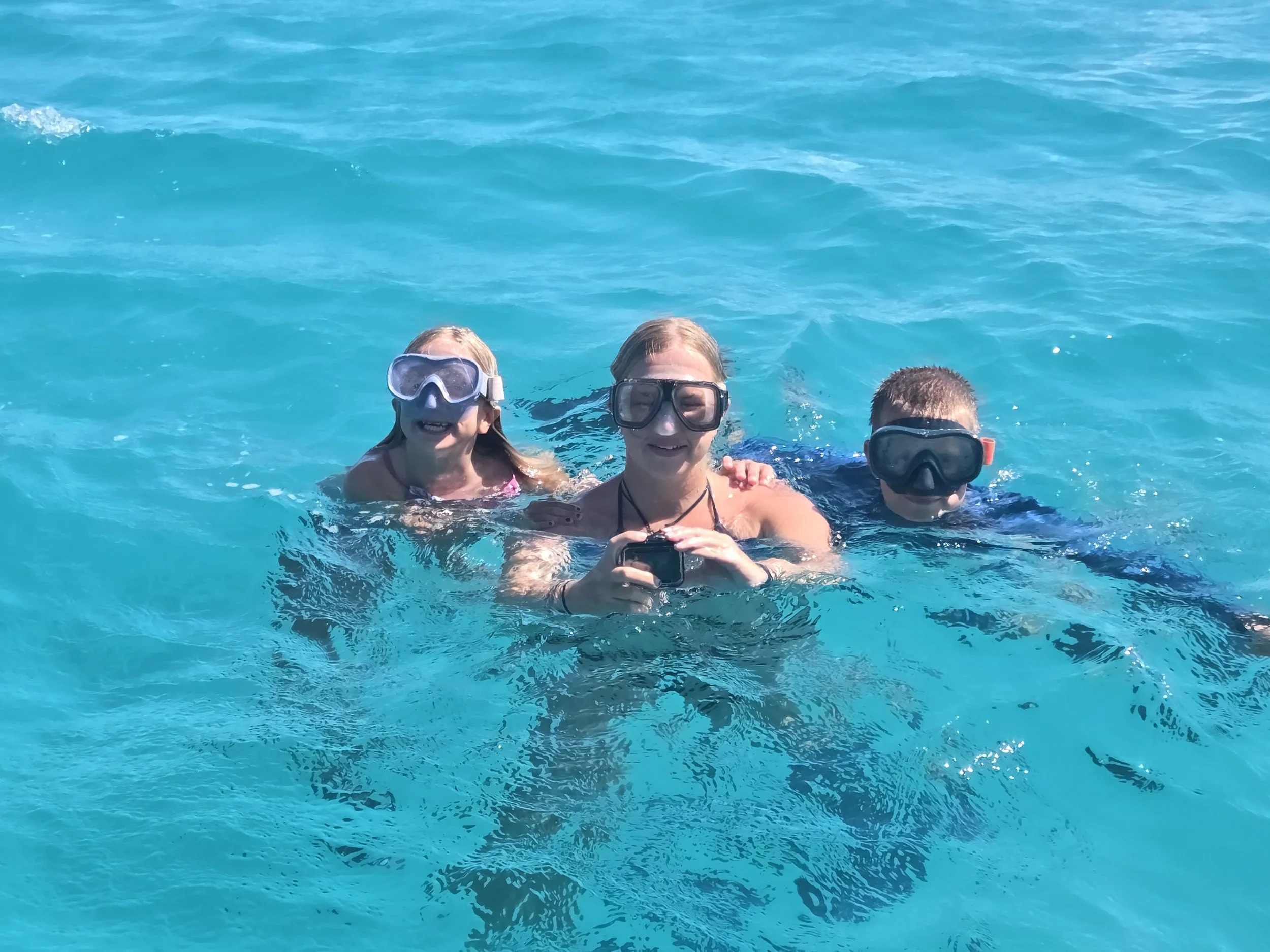
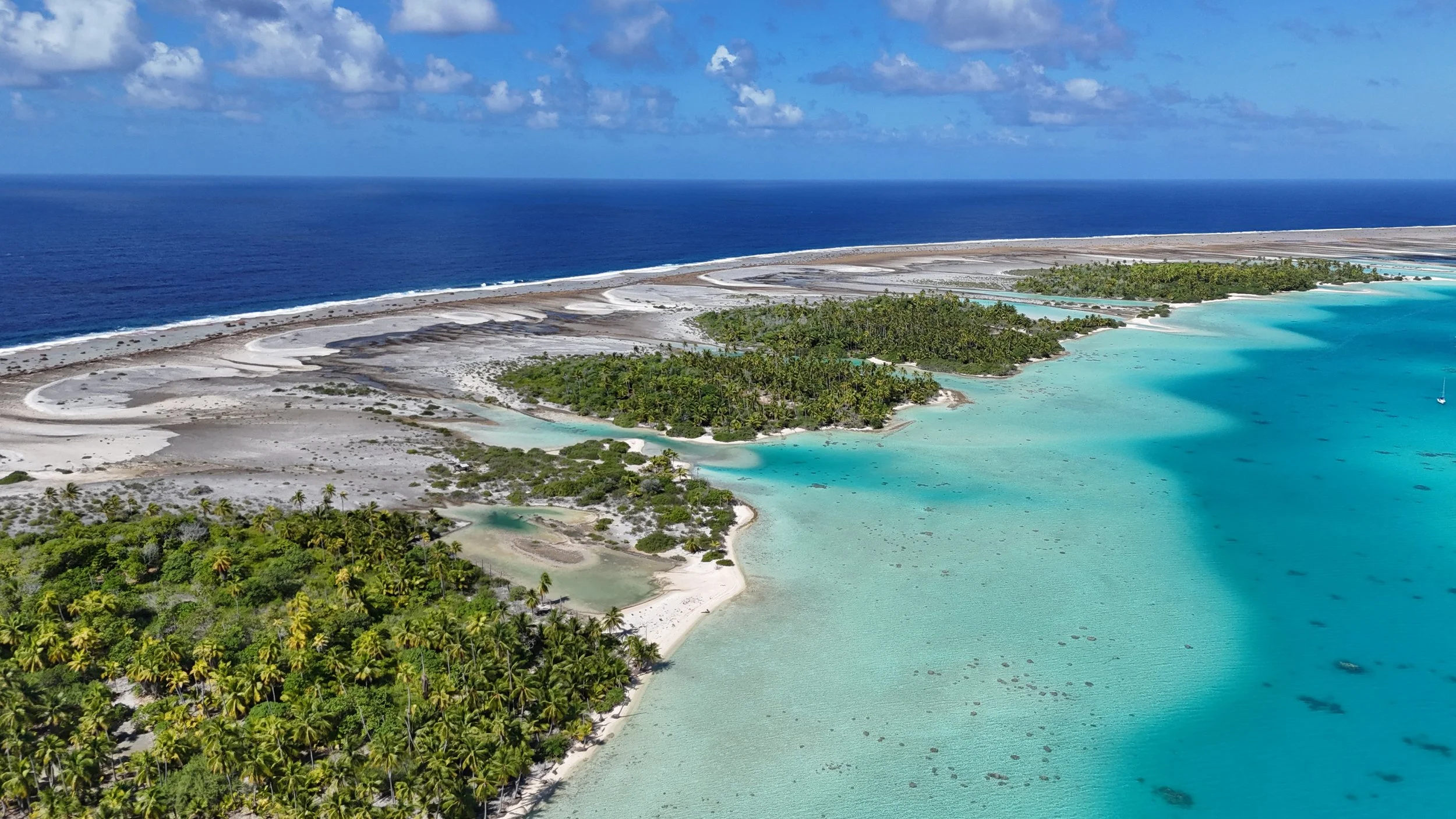
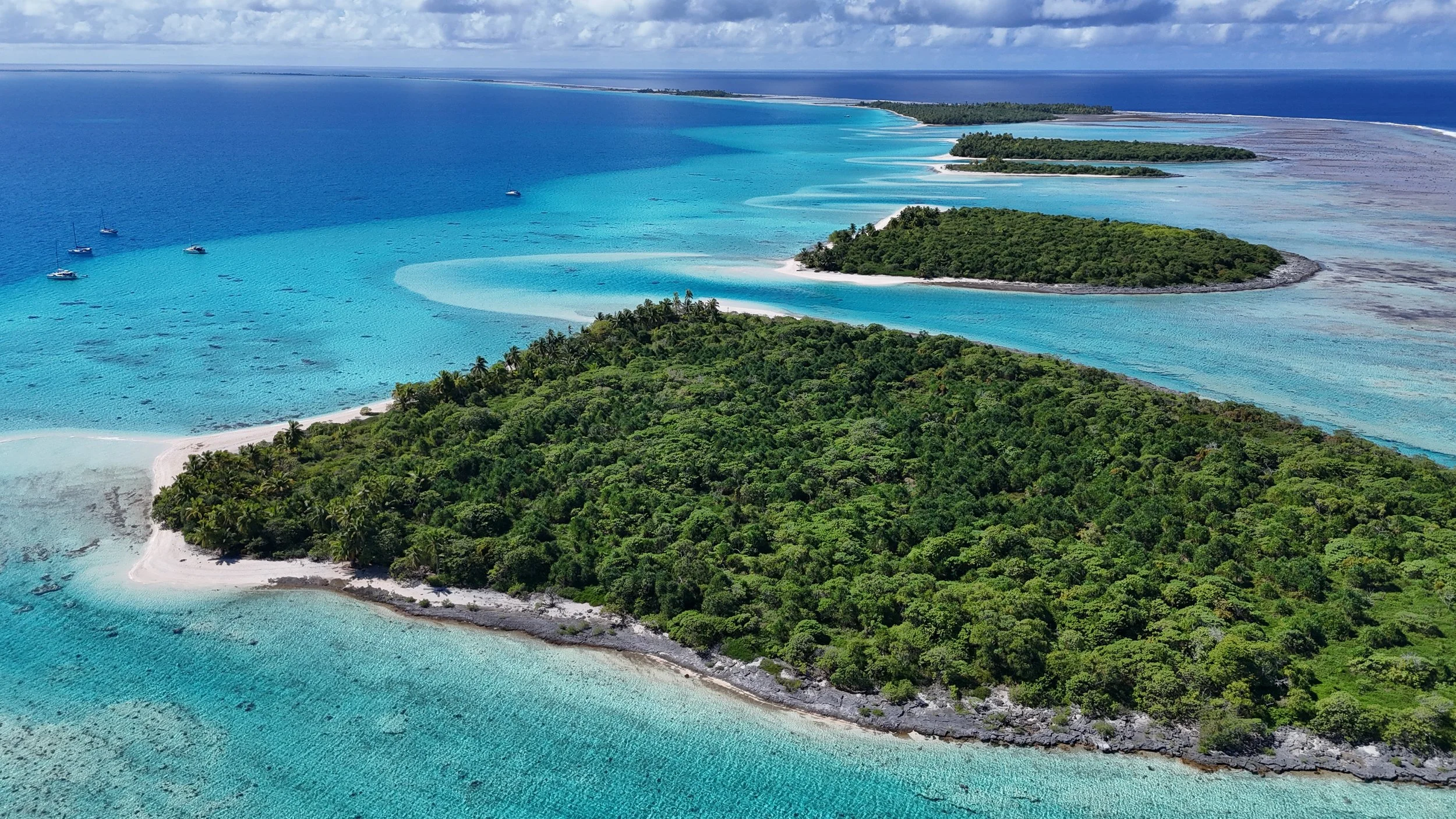
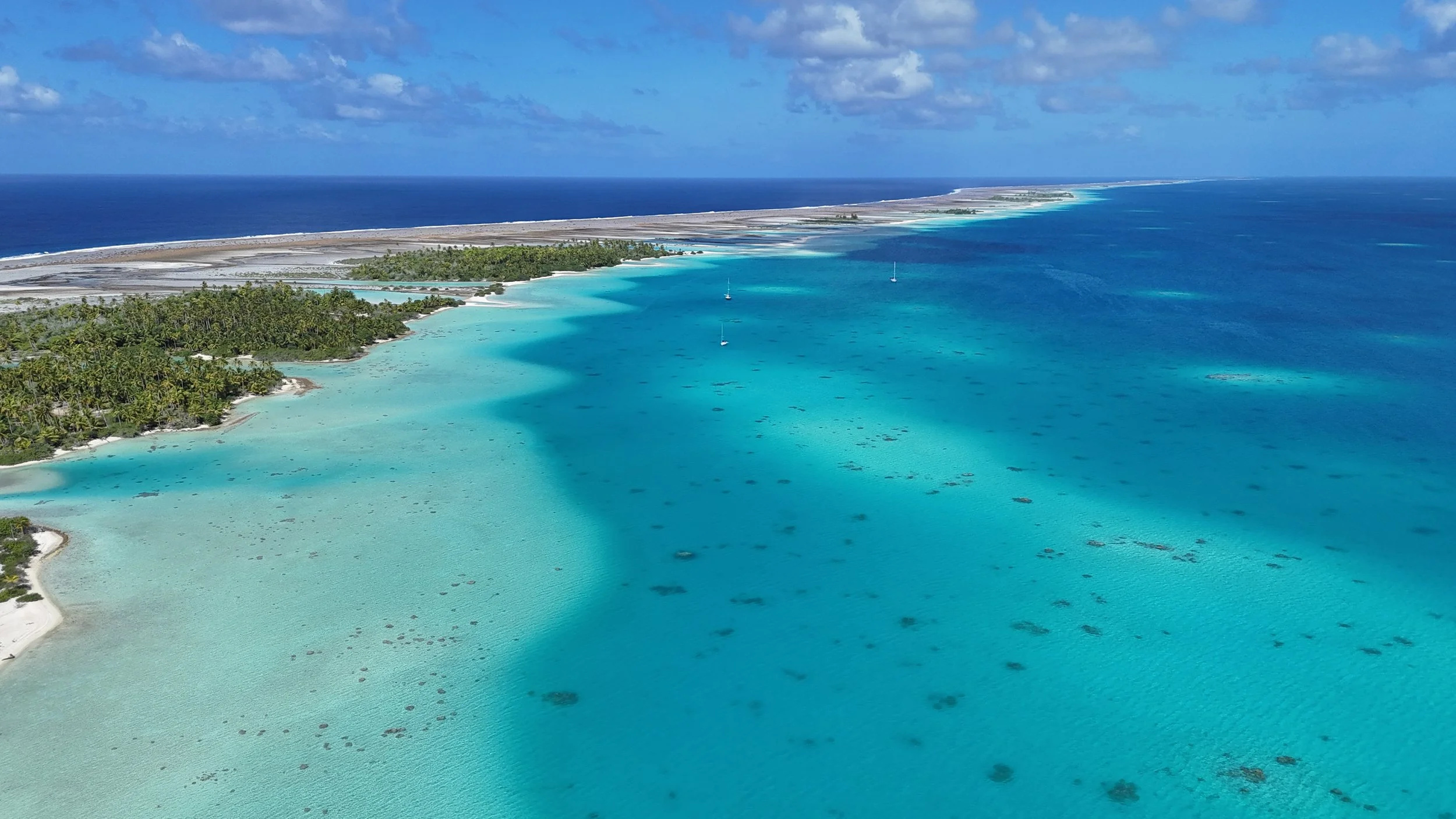
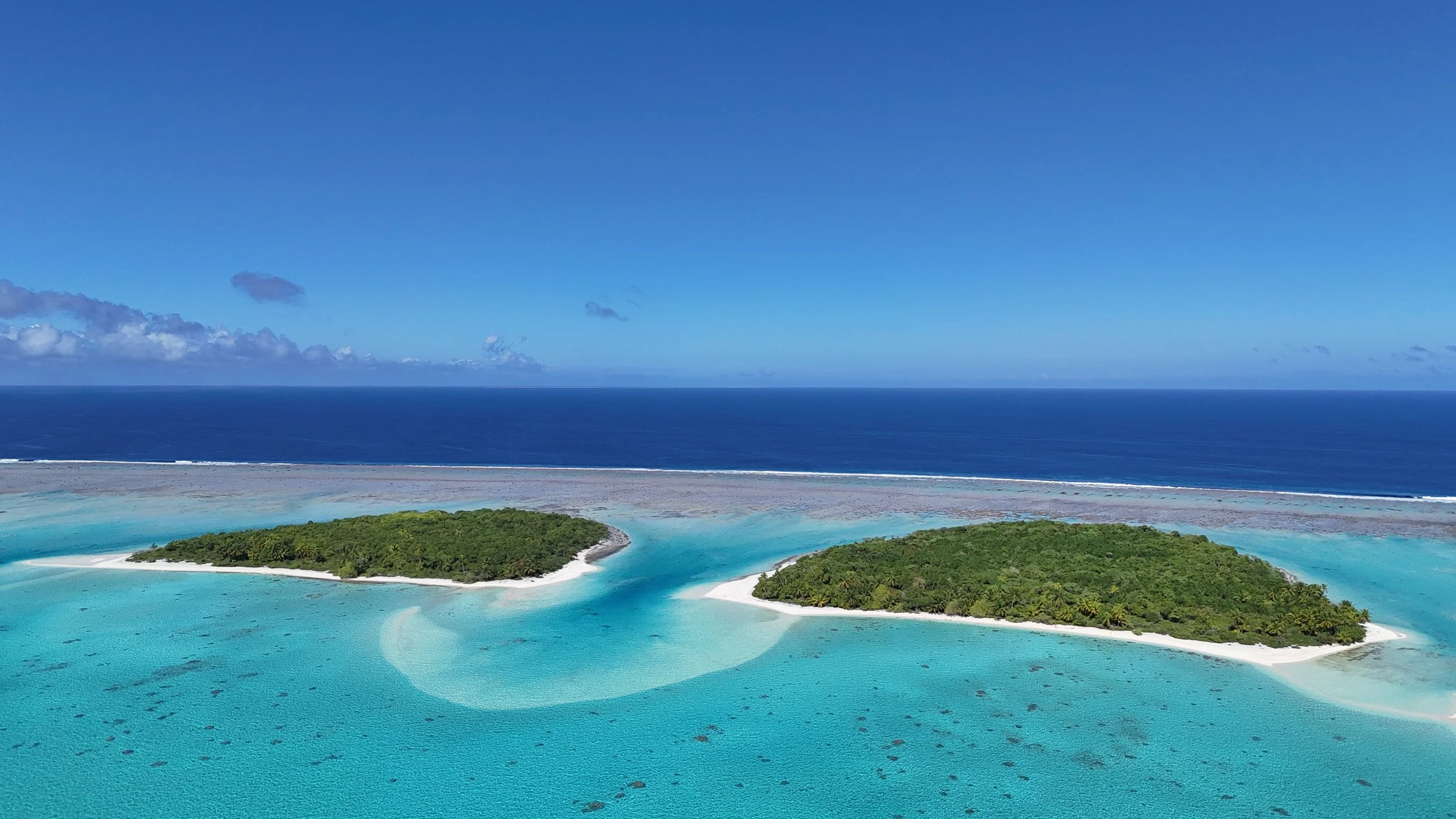
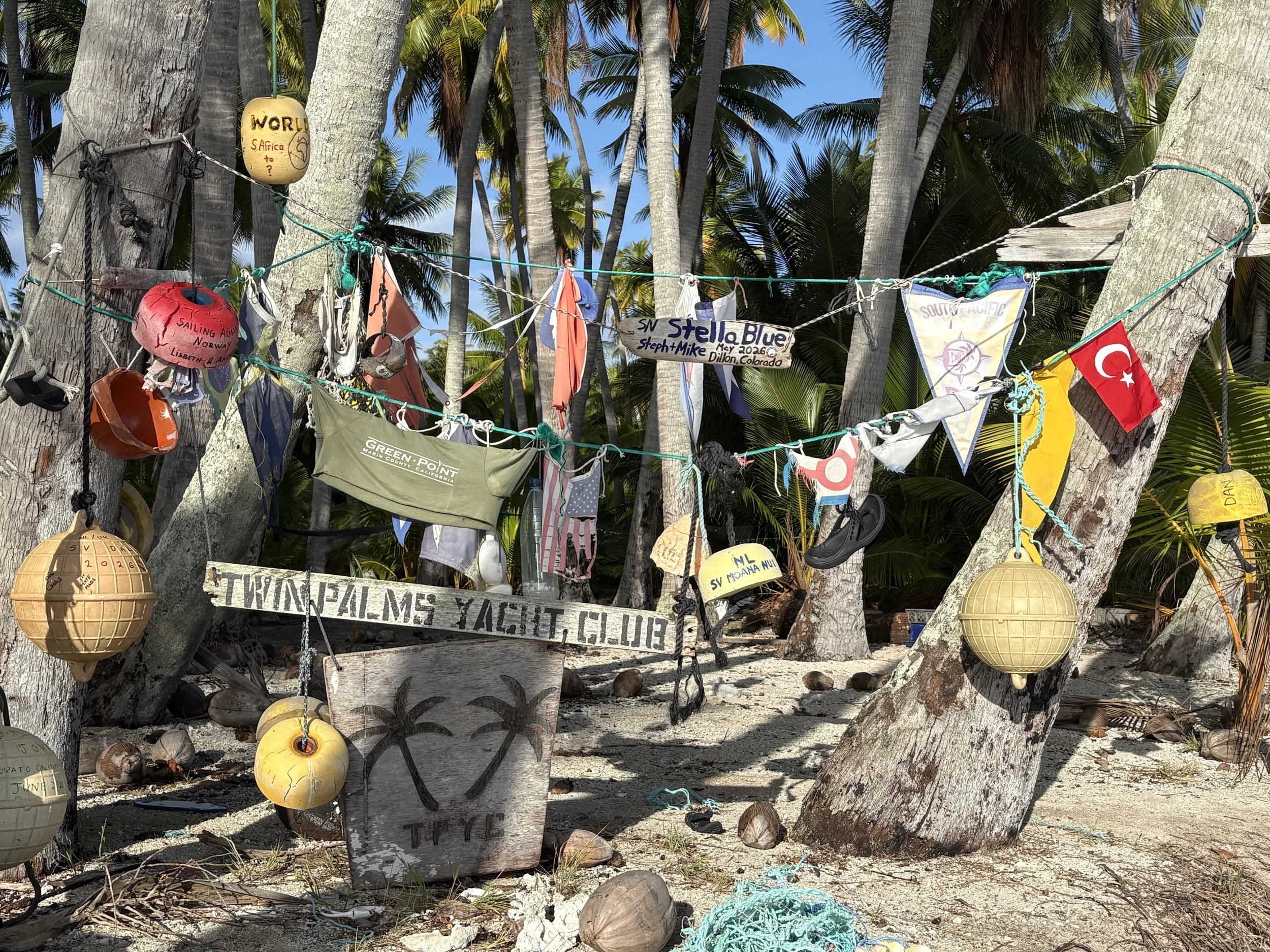
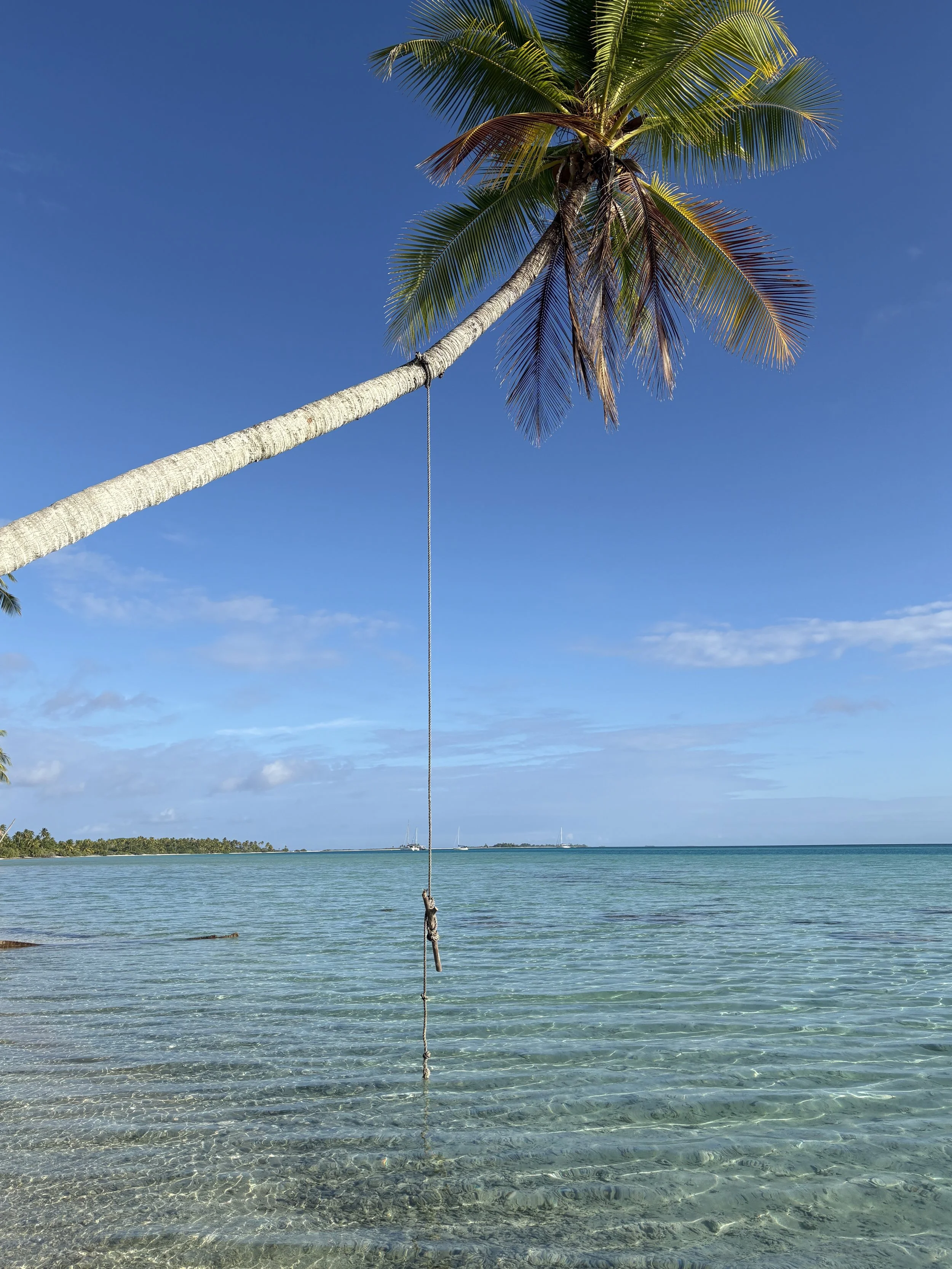
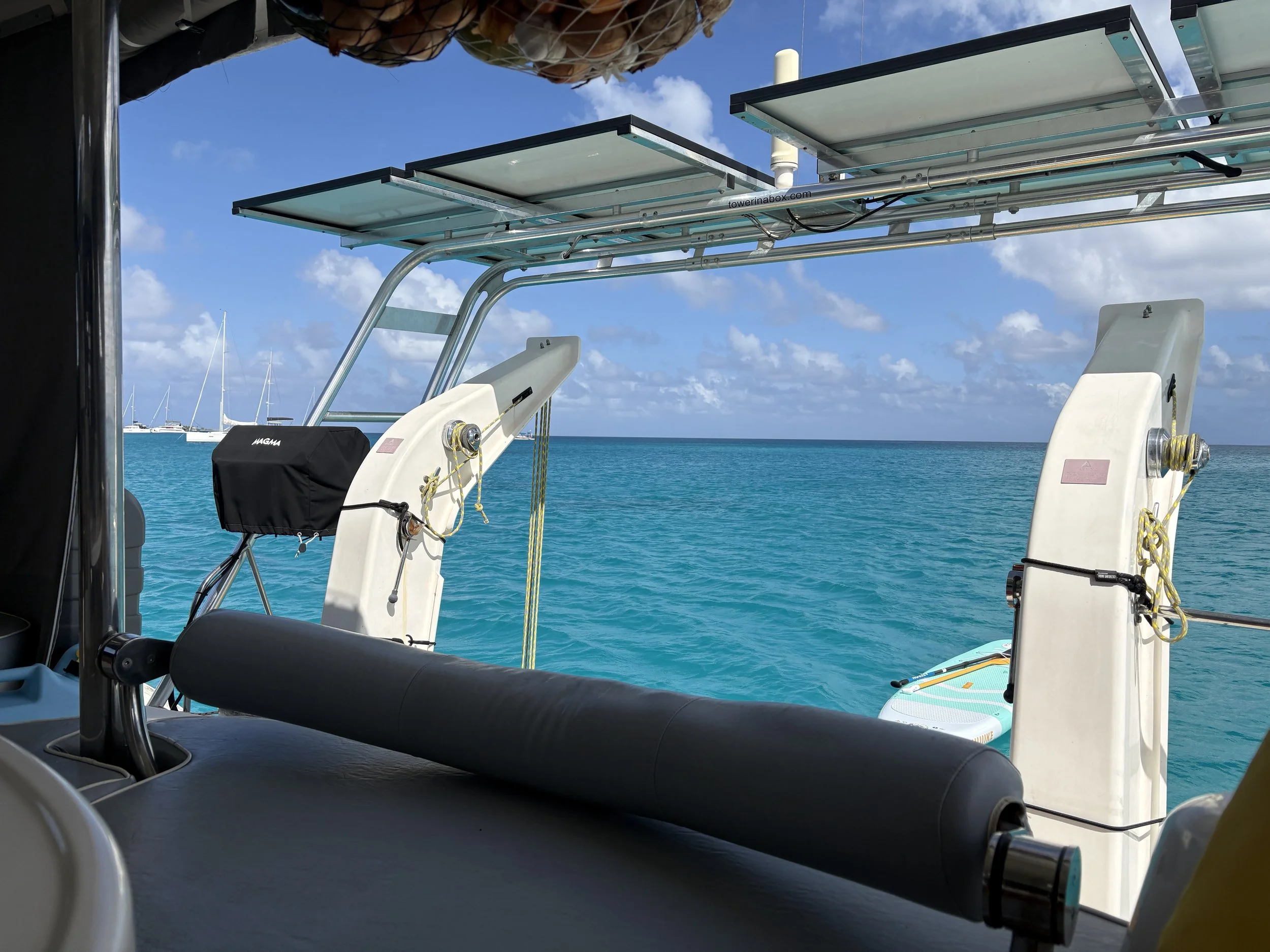
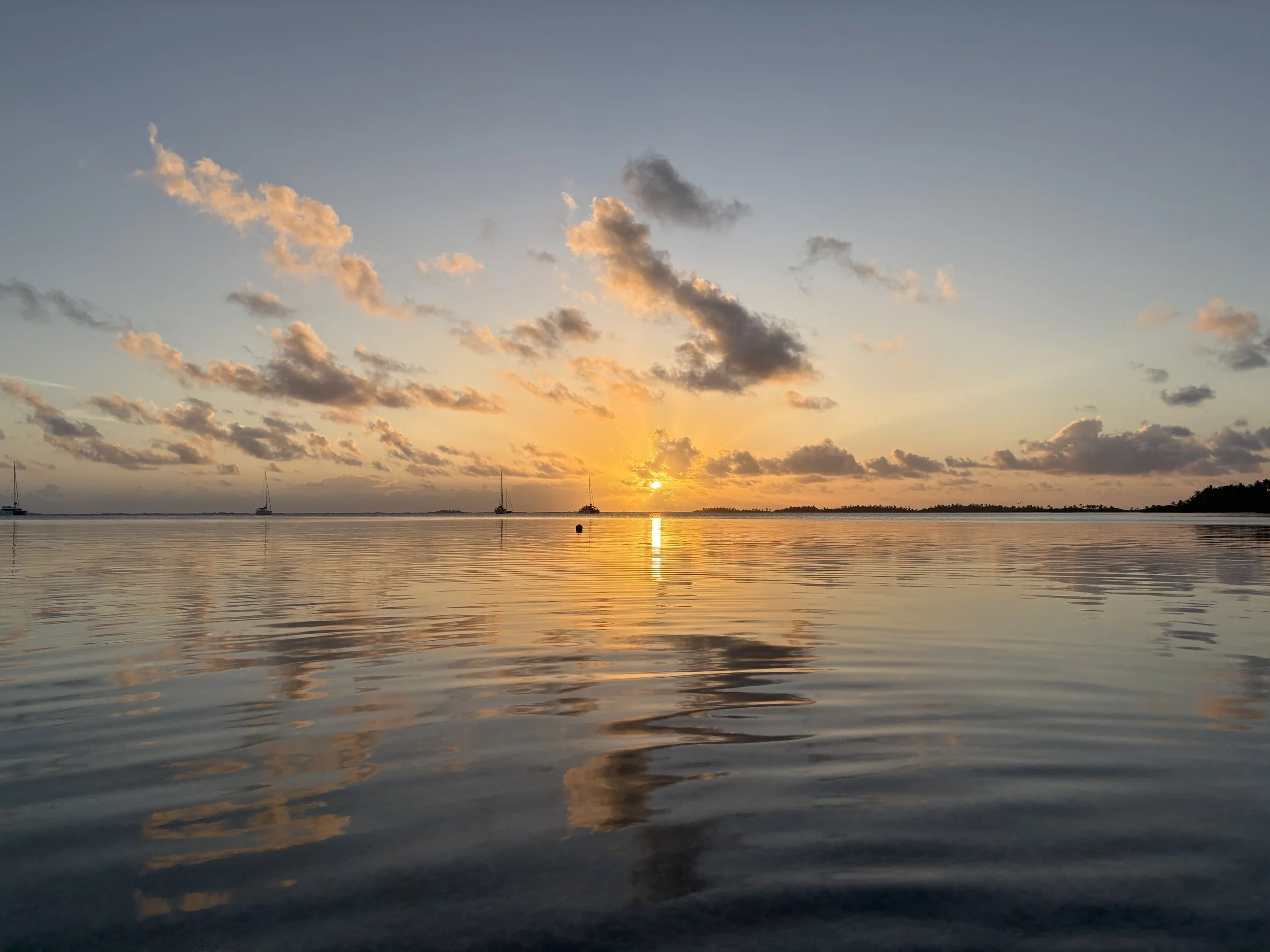
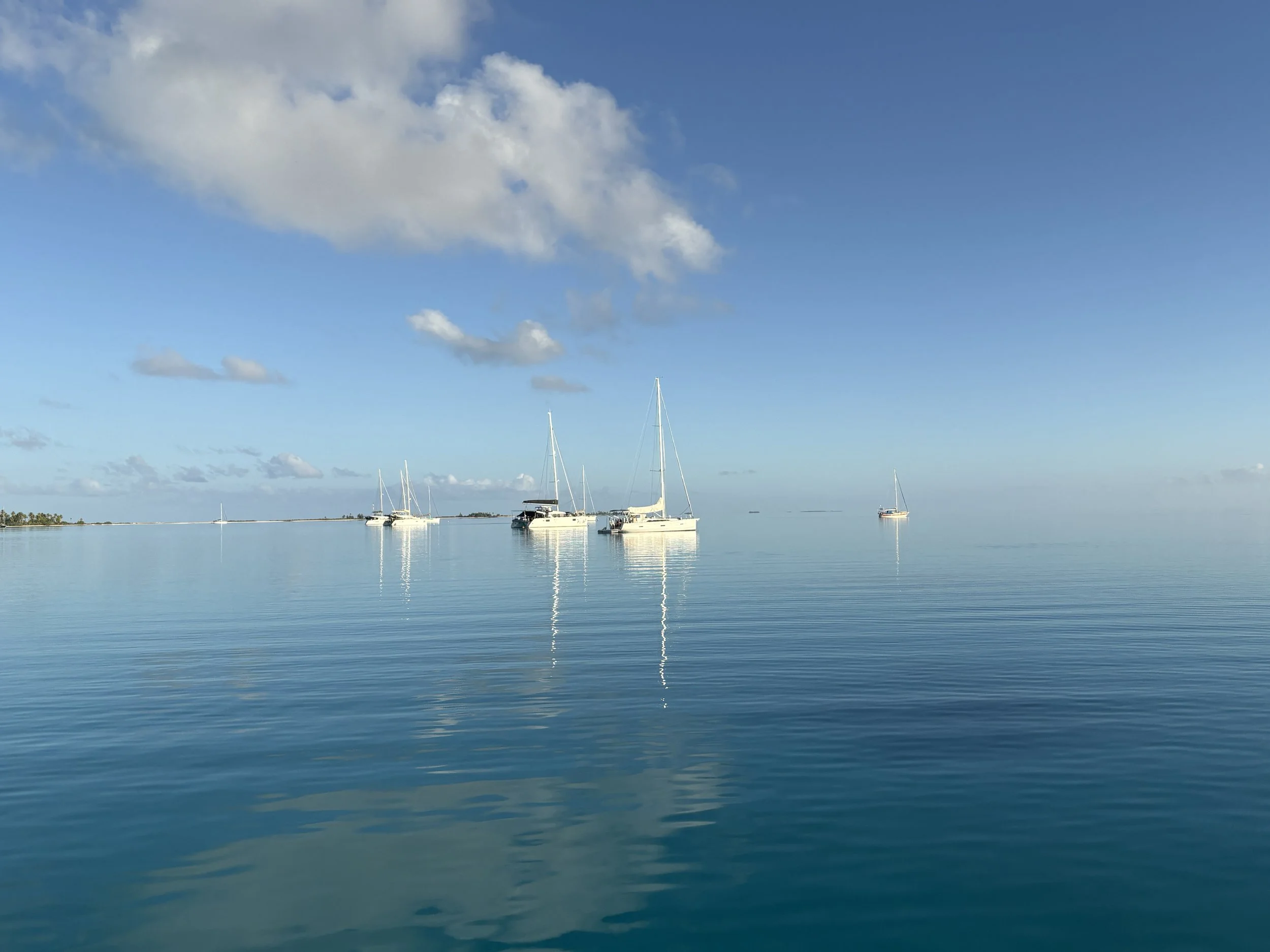
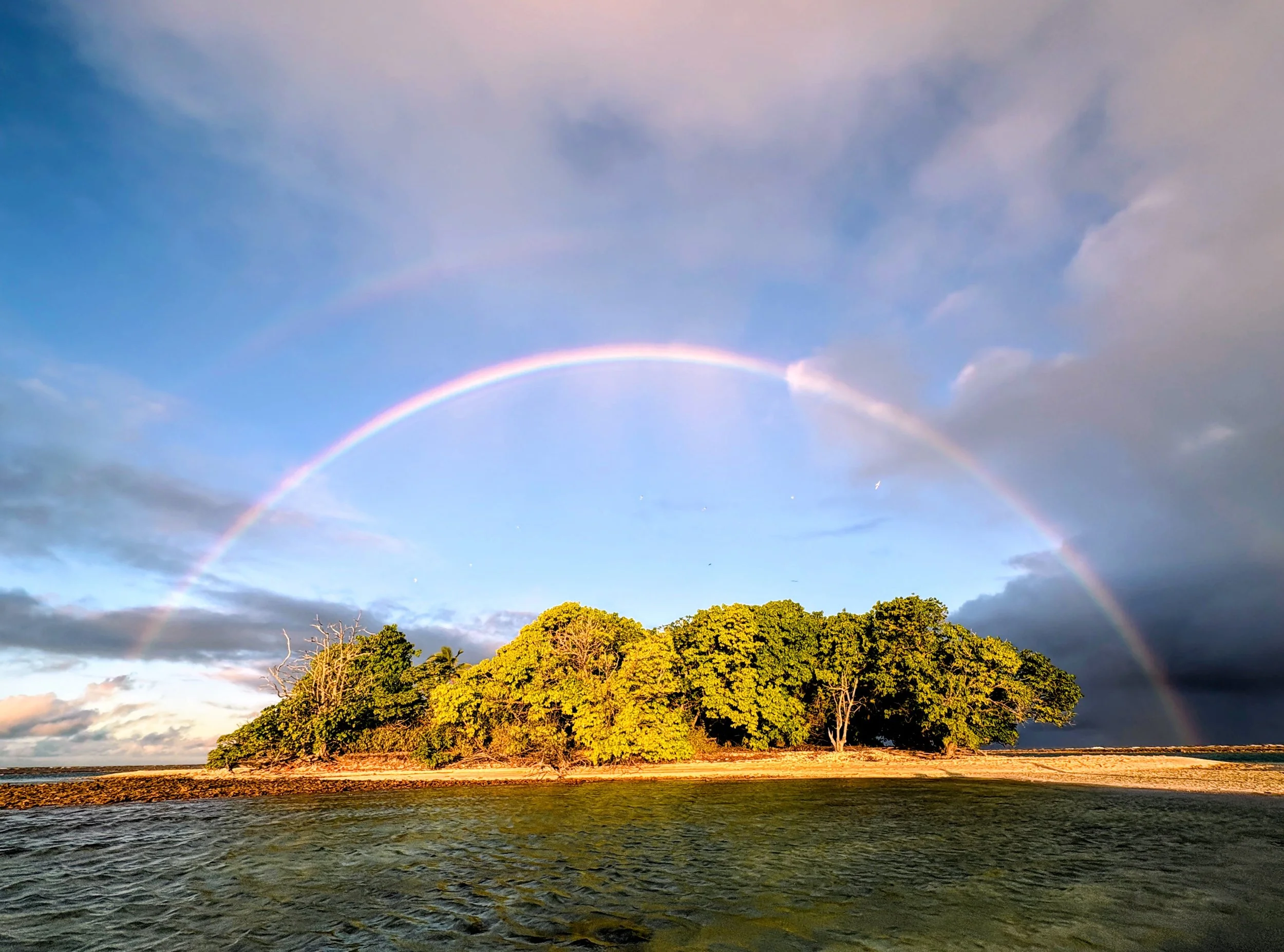
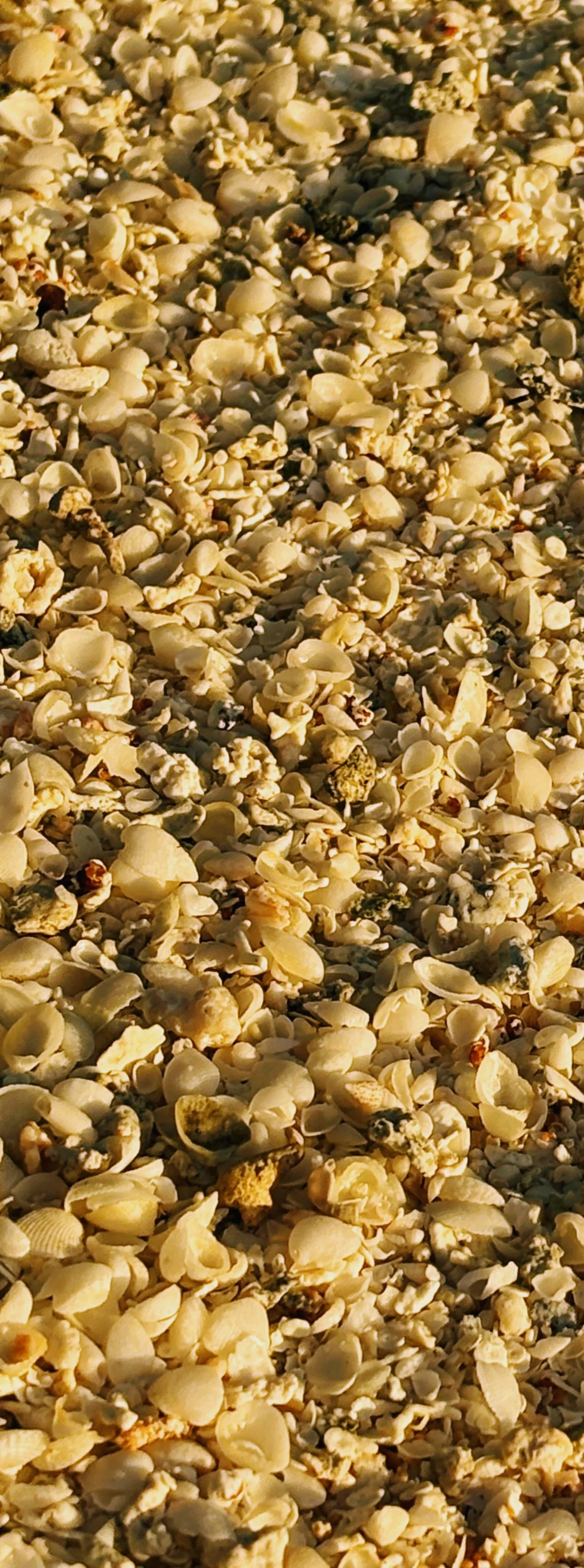
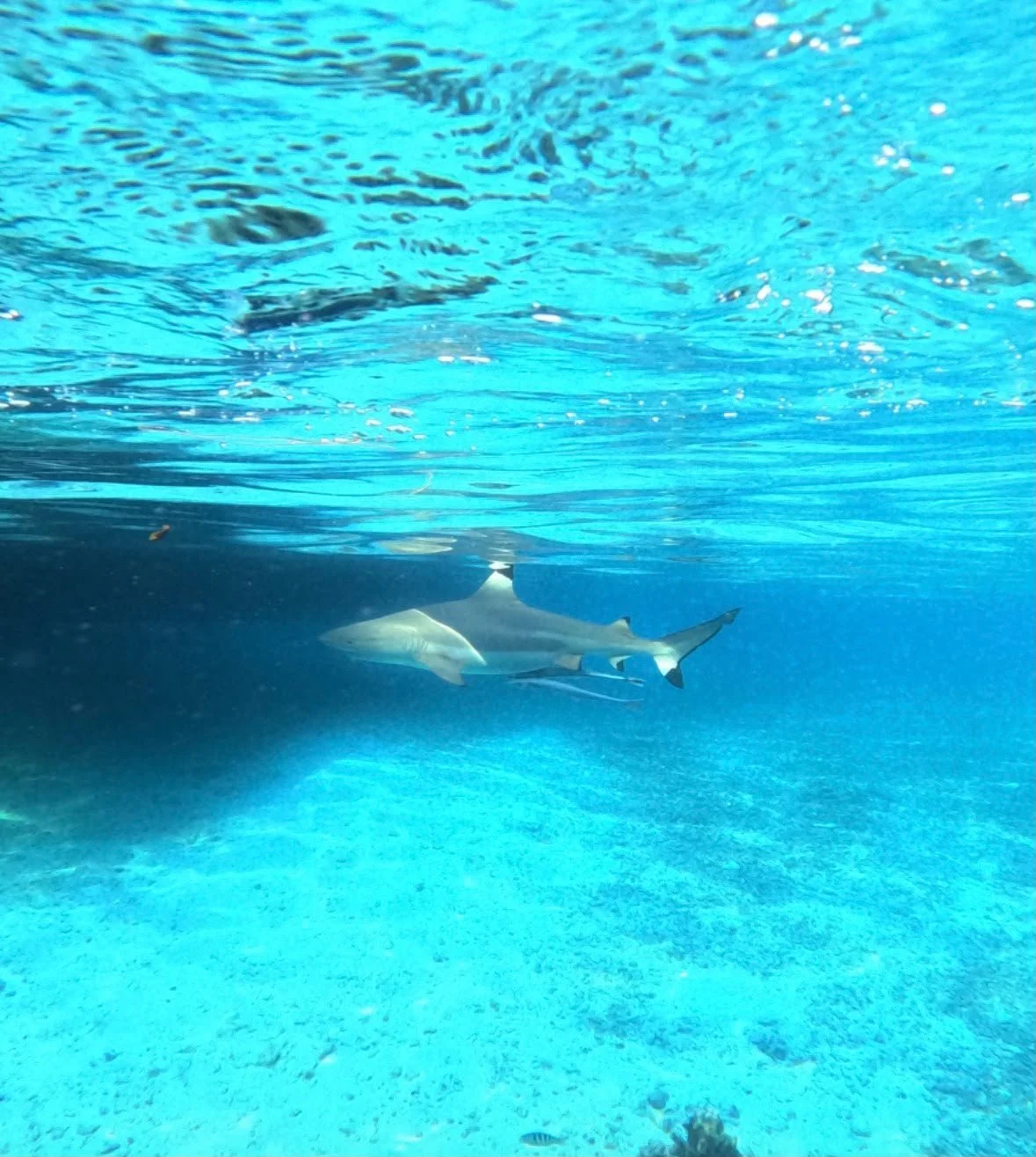
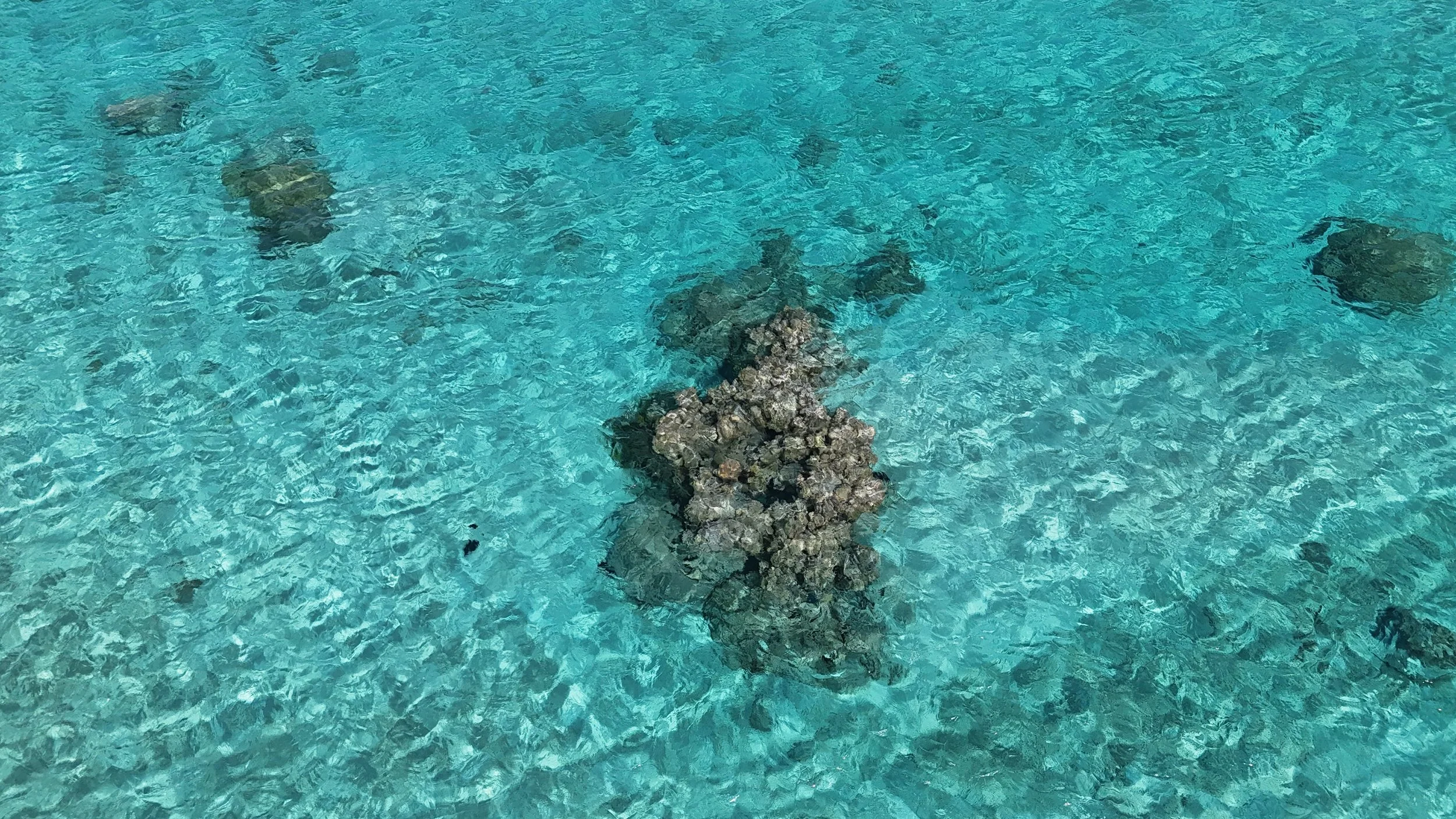
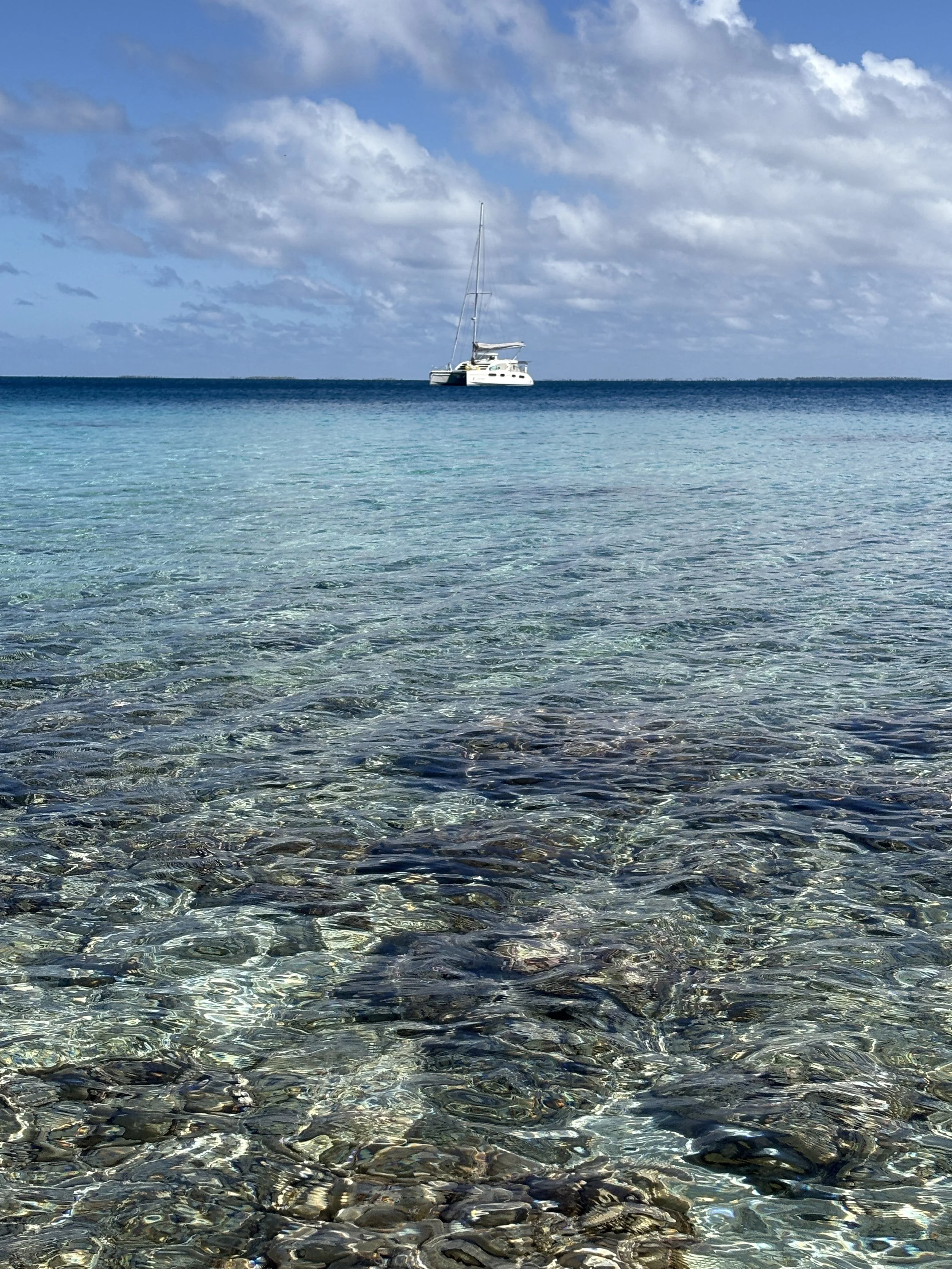
What an arrival. The clearest of clear water, totally impossible to know if what is under you is 20 ft or 2ft. Annabelle, Oscar and Bethan jumped in to check the anchor was set ok and immediately some small black tip reef sharks came up to be nosy. No threat, just different. There is a ‘Yacht Club’ here, where cruisers have left their boat flags, some hammocks and coconut husks and wood for the inevitable beach fire in an evening. Sending the drone up was a joy in itself to capture some of these photos.
The drone following Annabelle in the Tiwal.
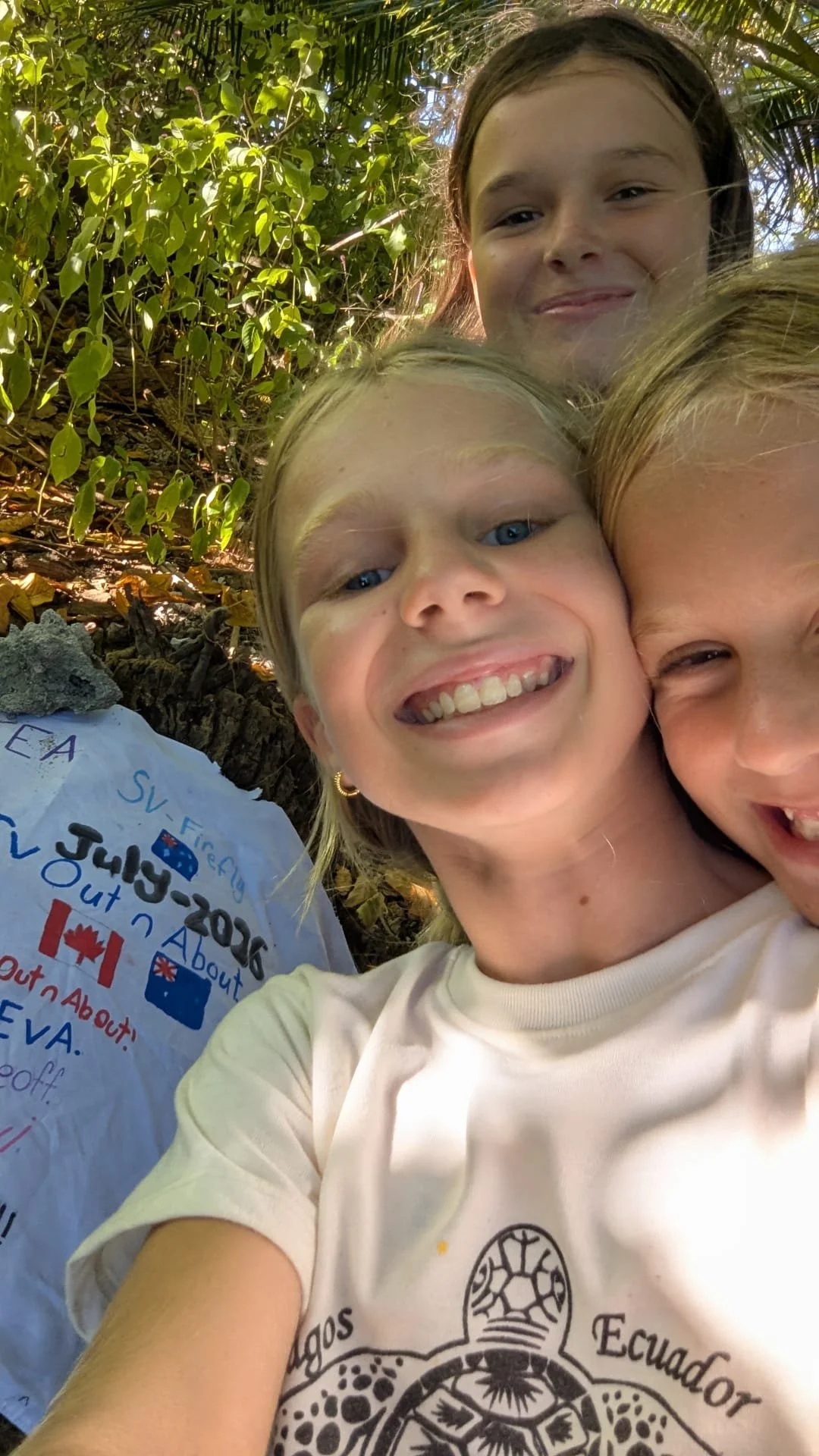
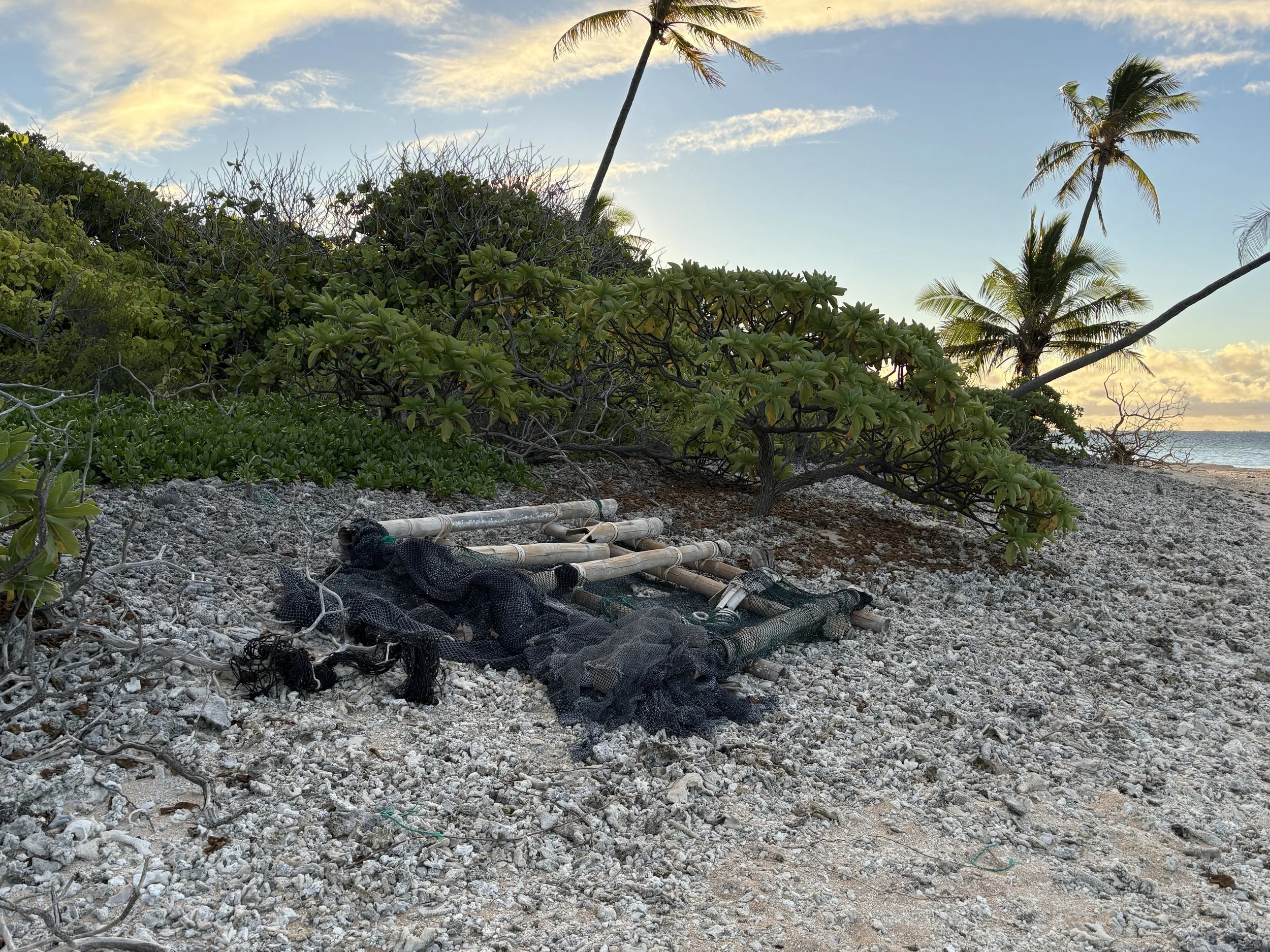
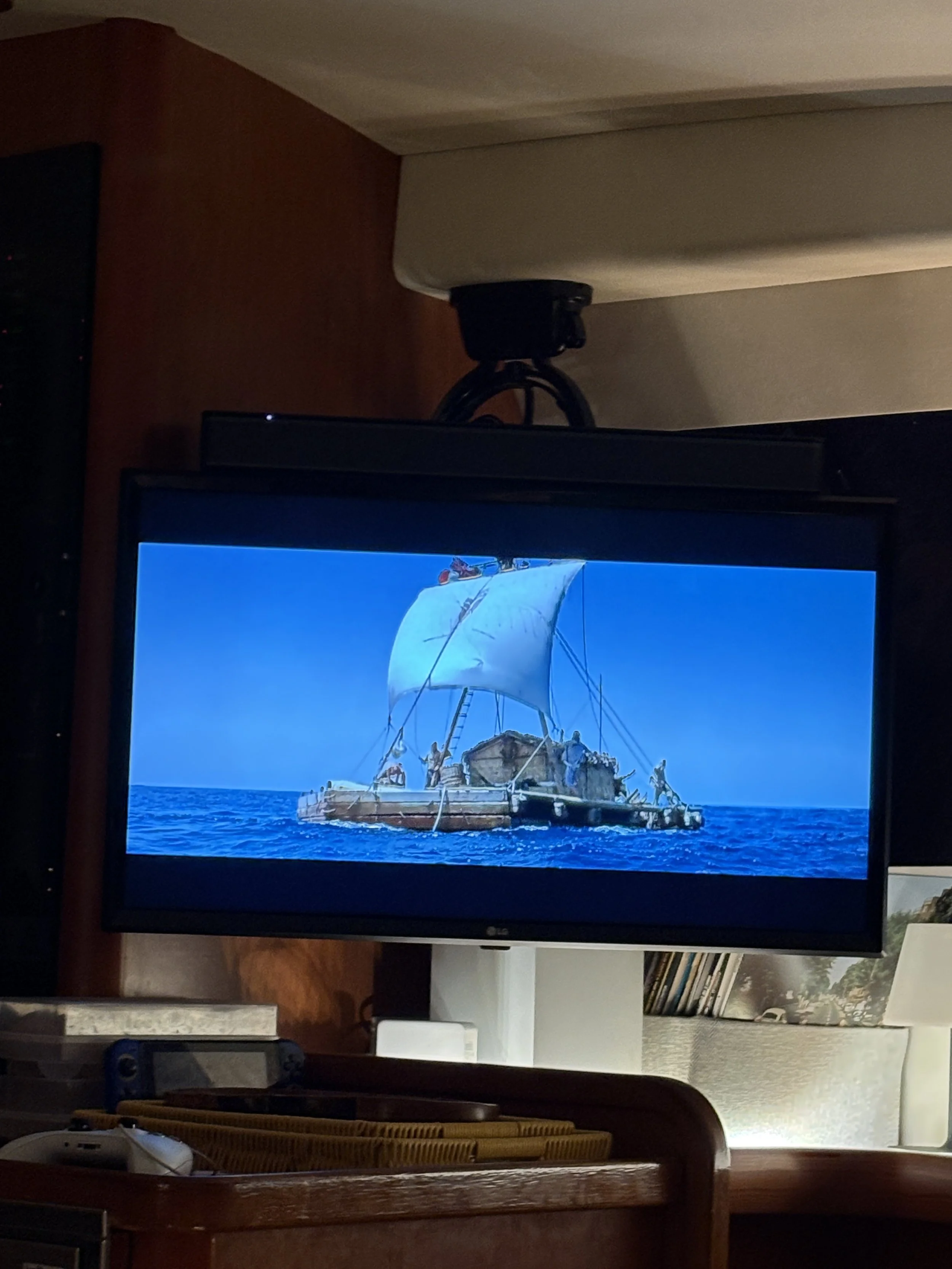
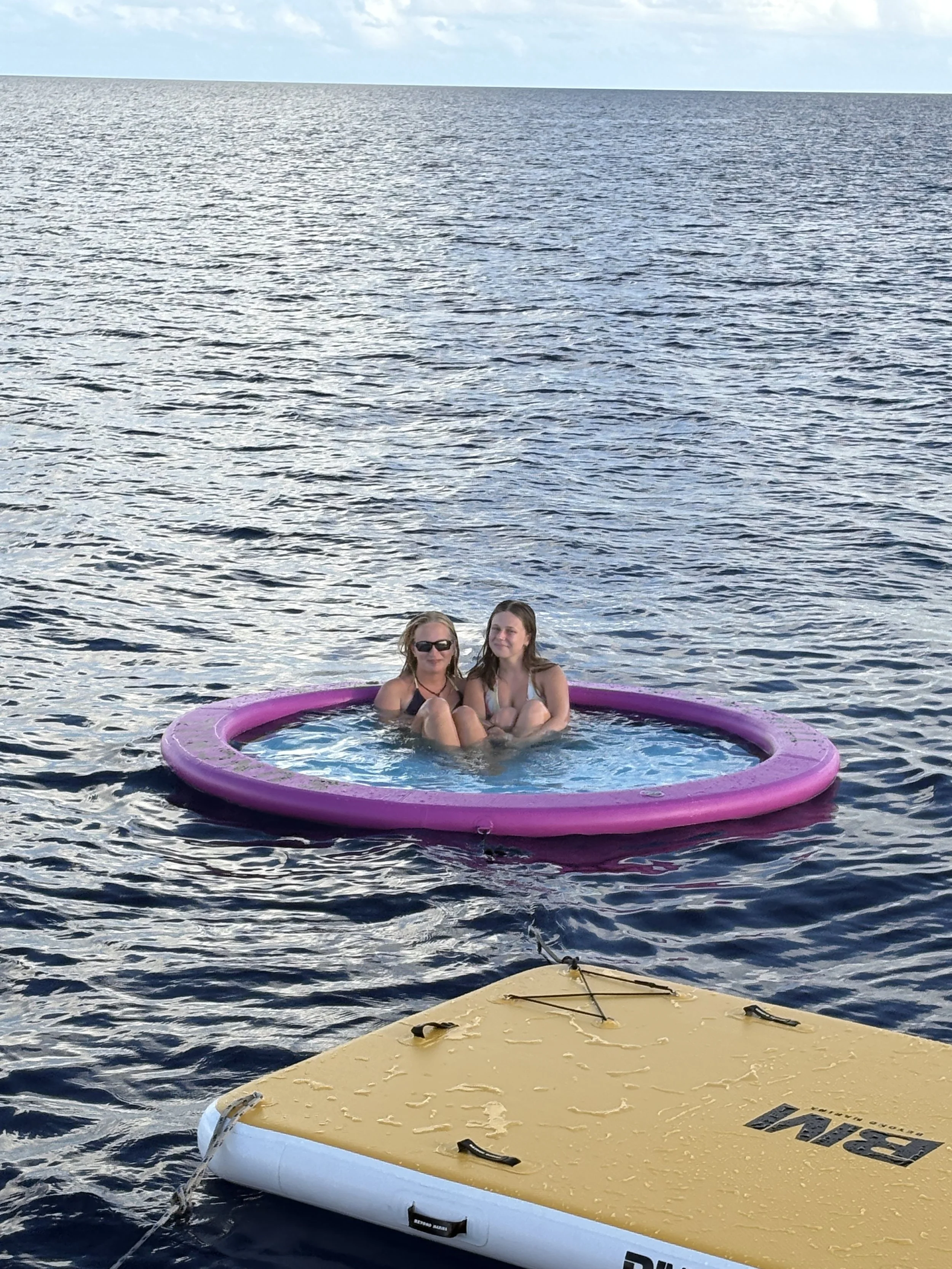
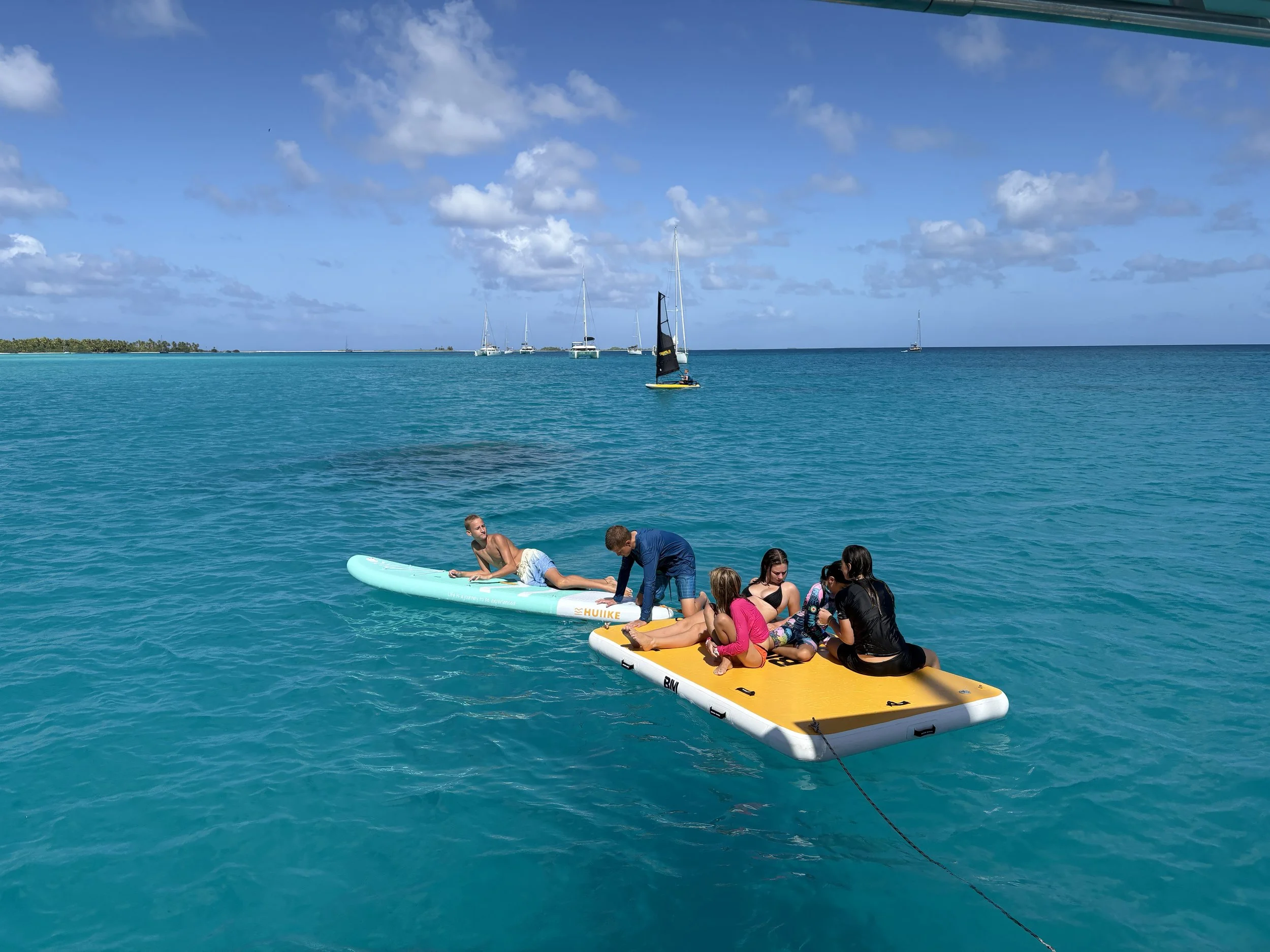
Where the anchorages are, there are no shops, so you are totally reliant on what you have brought with you. The kids spent their days with friends on other kid boats, snorkeling, paddleboarding and playing Robinson Crusoe on the beach. They had a radio strapped to their shorts and we literally didn’t see them from dawn to dusk. It was fab. Later in the week we headed to the south of the atoll to where the KonTiki landed, and spent the evening watching the movie which was pretty special. Clearly someone tried to remake a mini version of the raft, that was left on the beach!
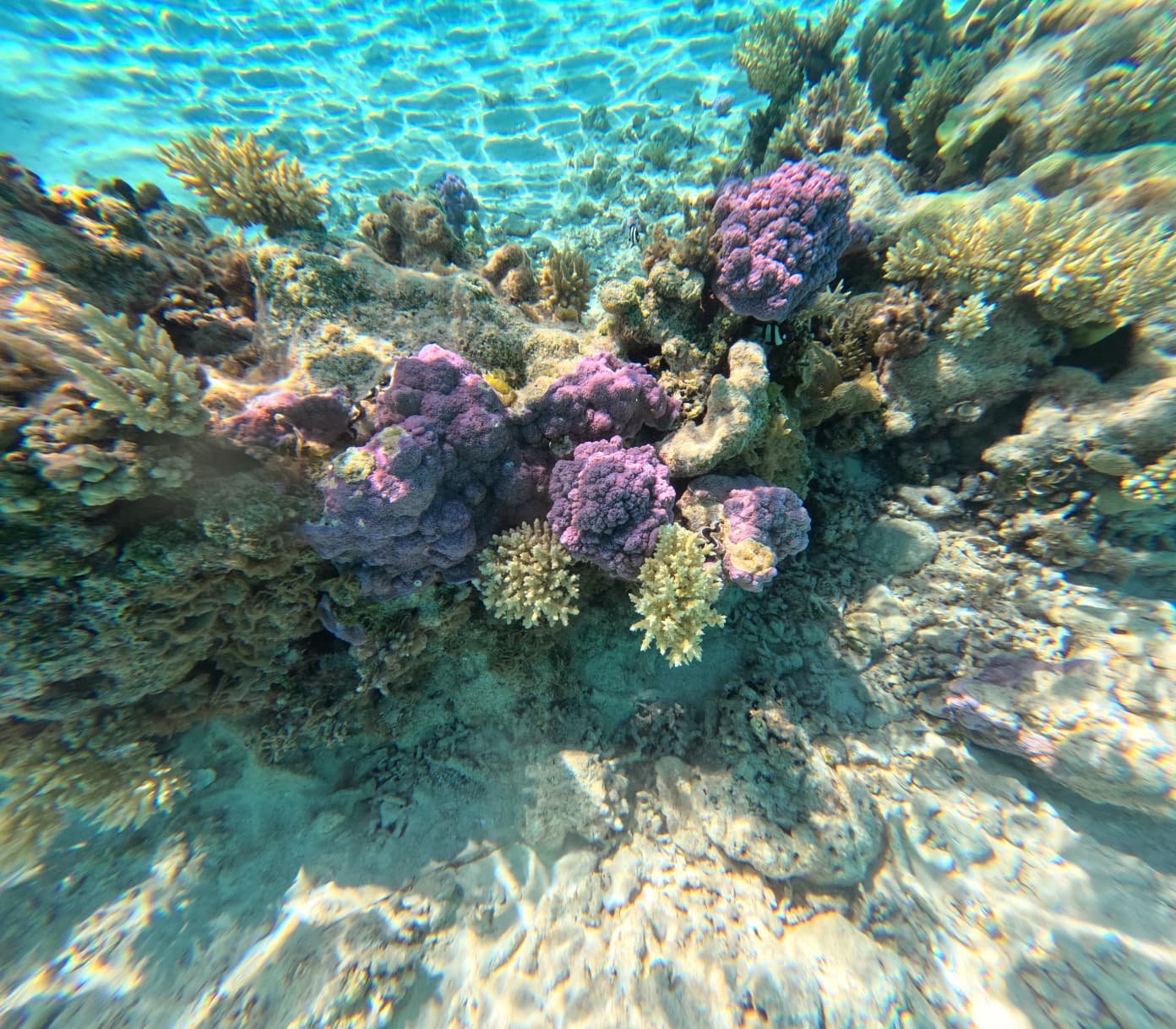
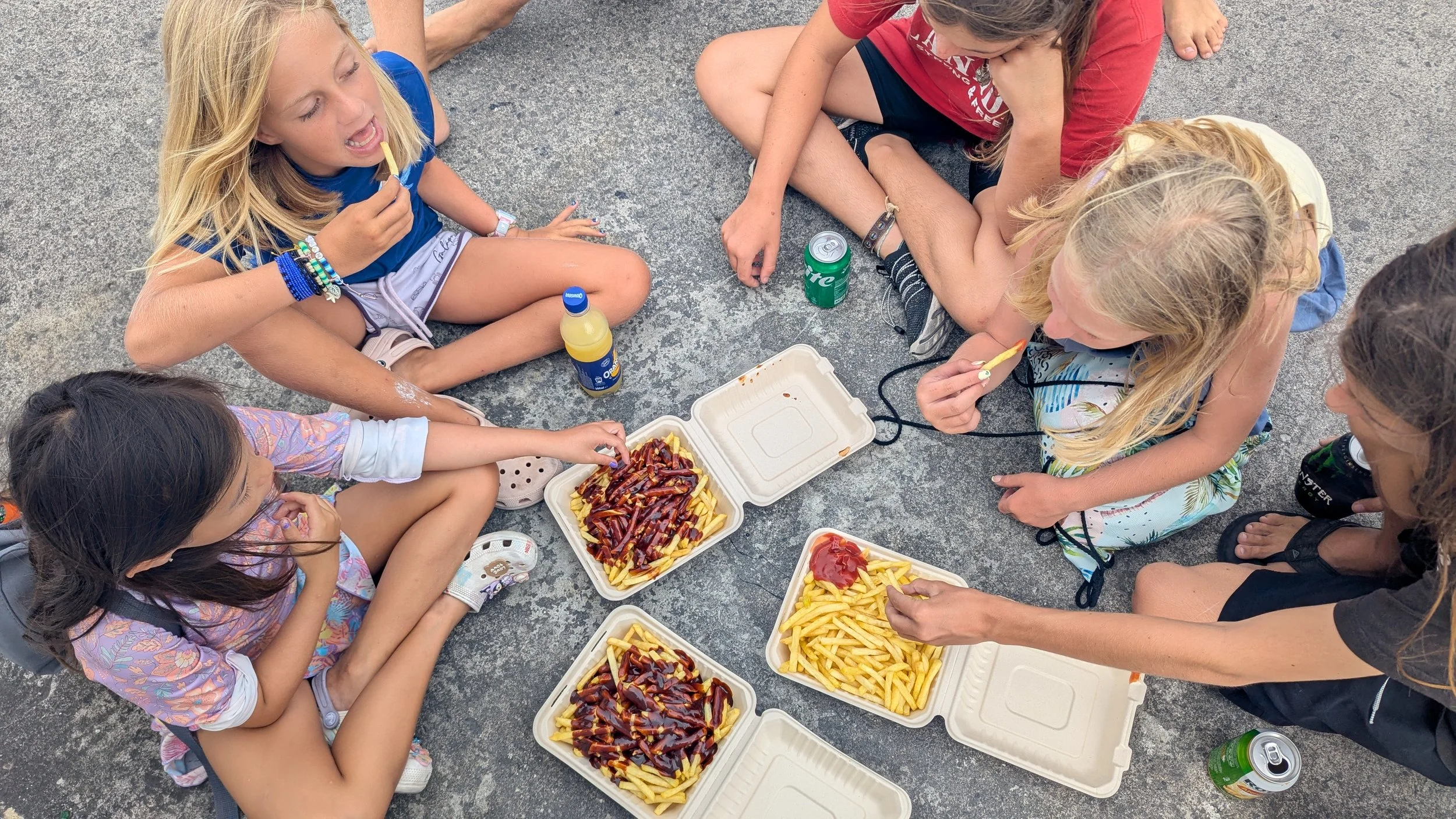
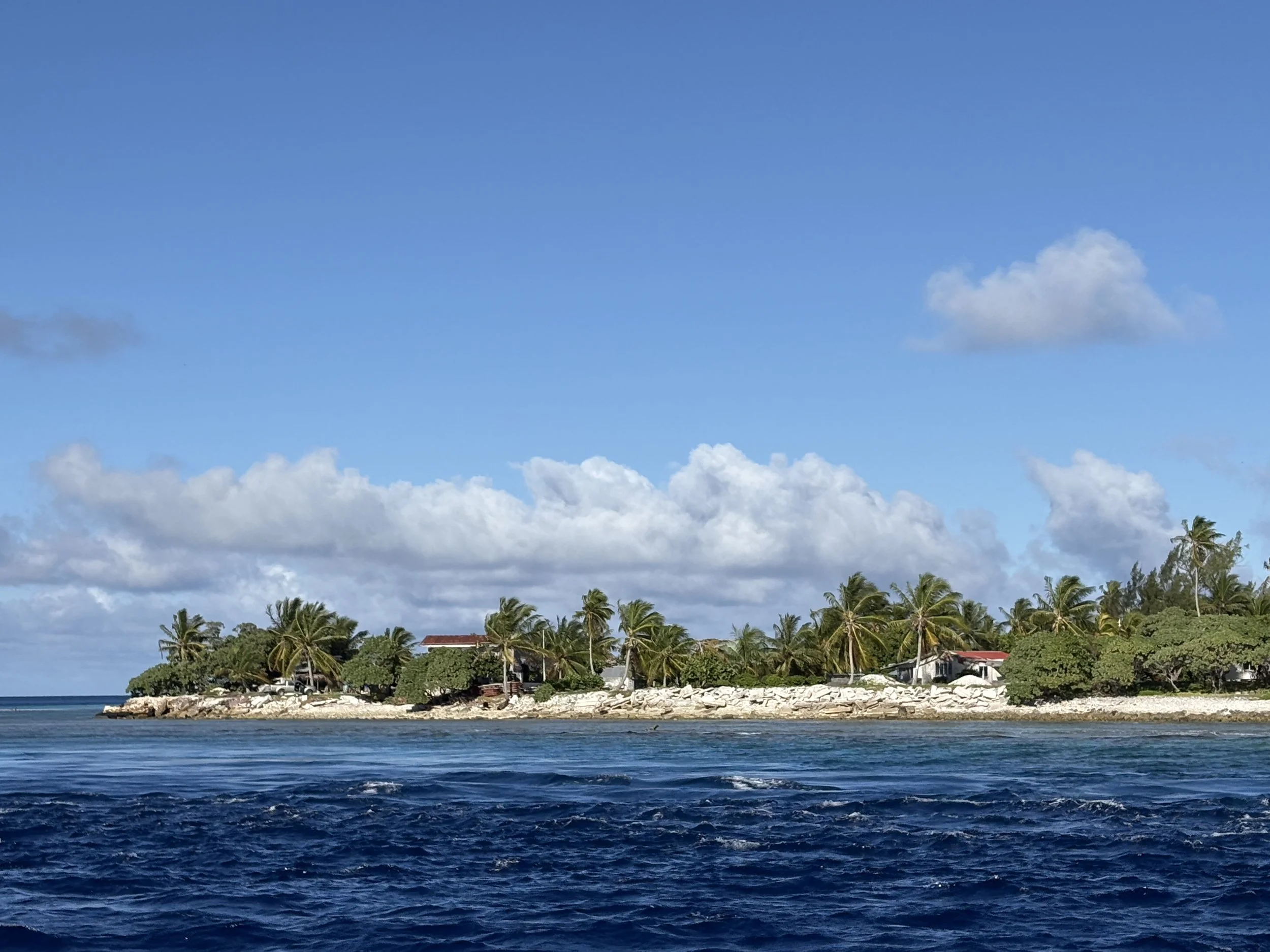
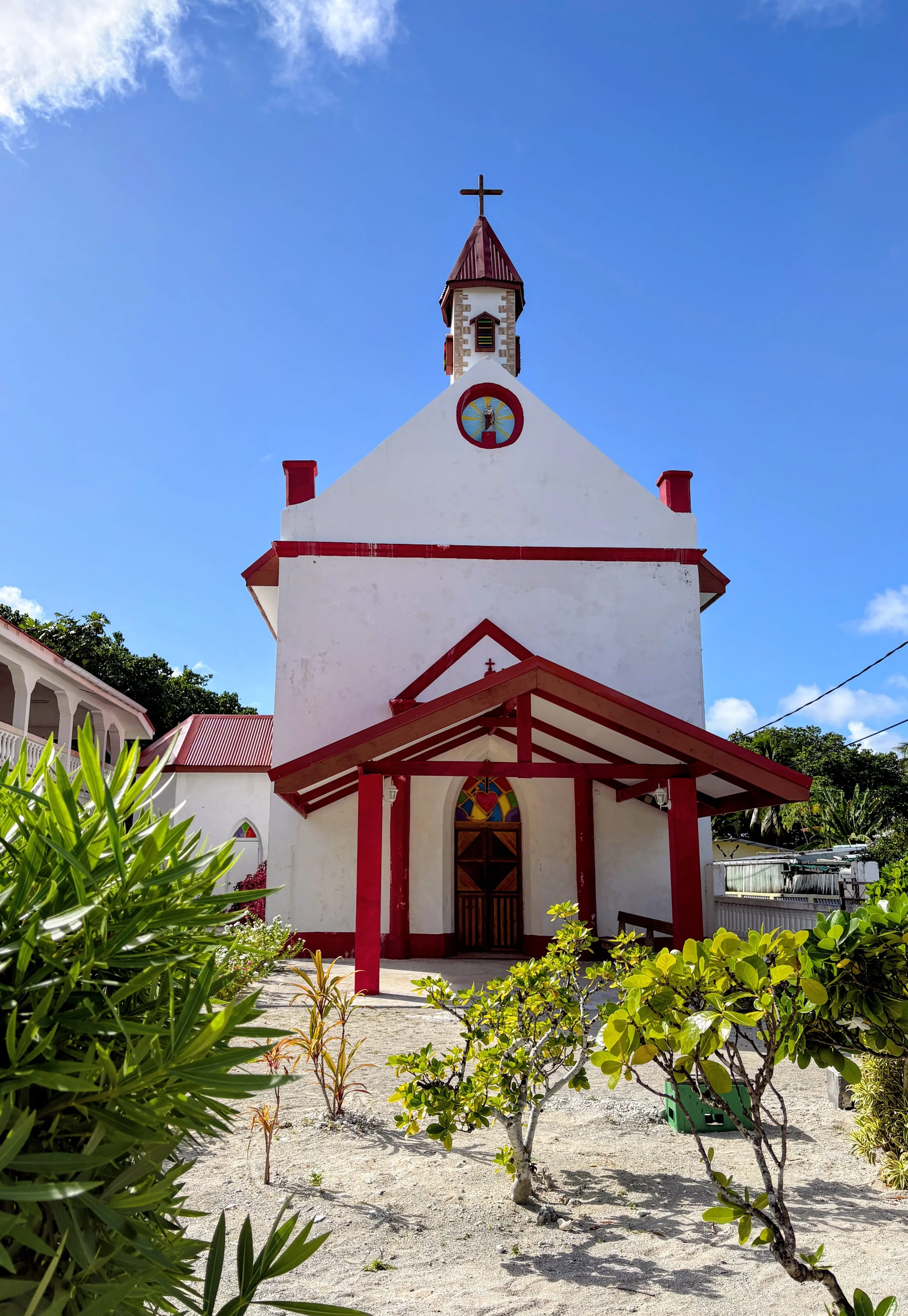
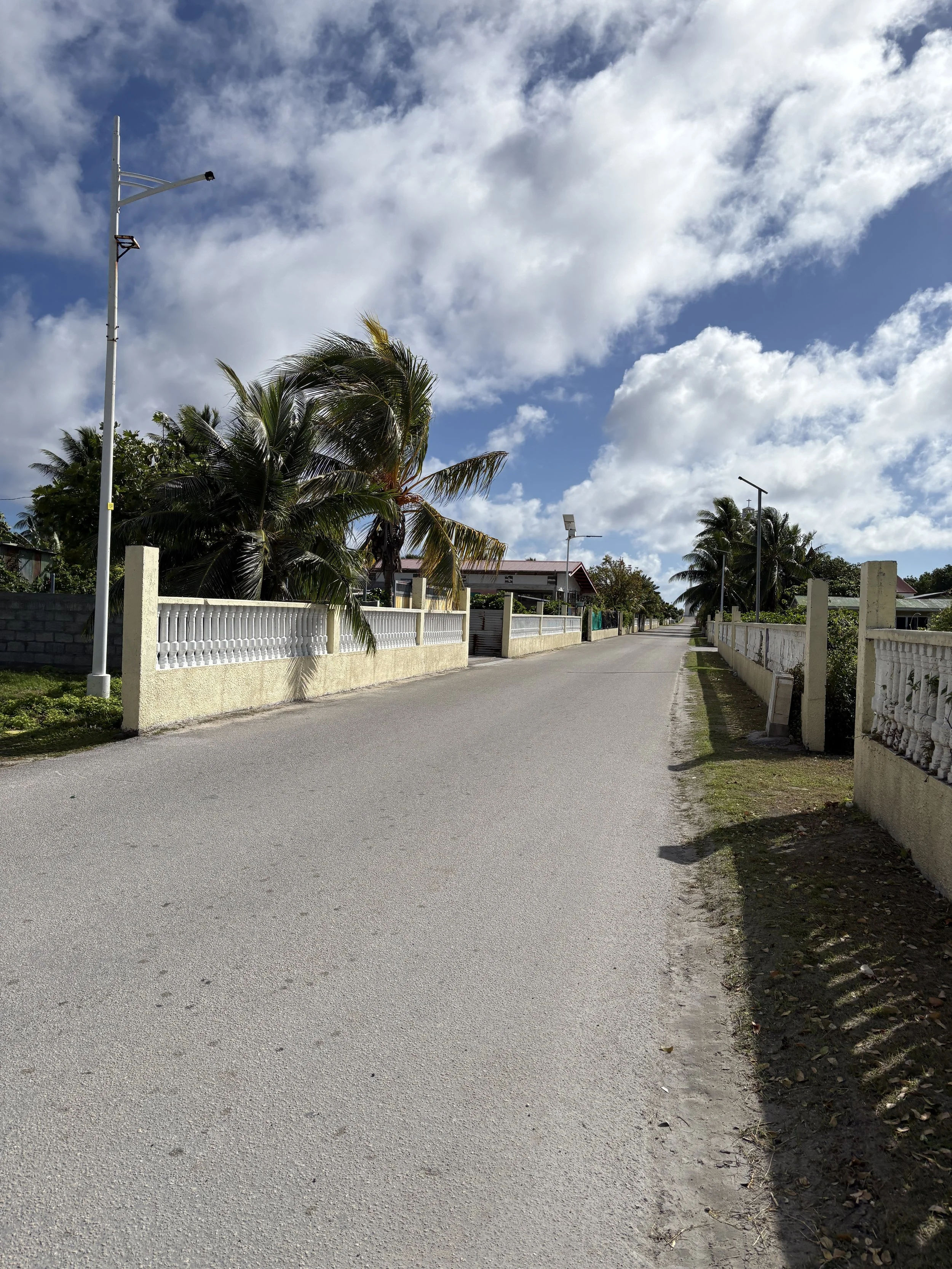
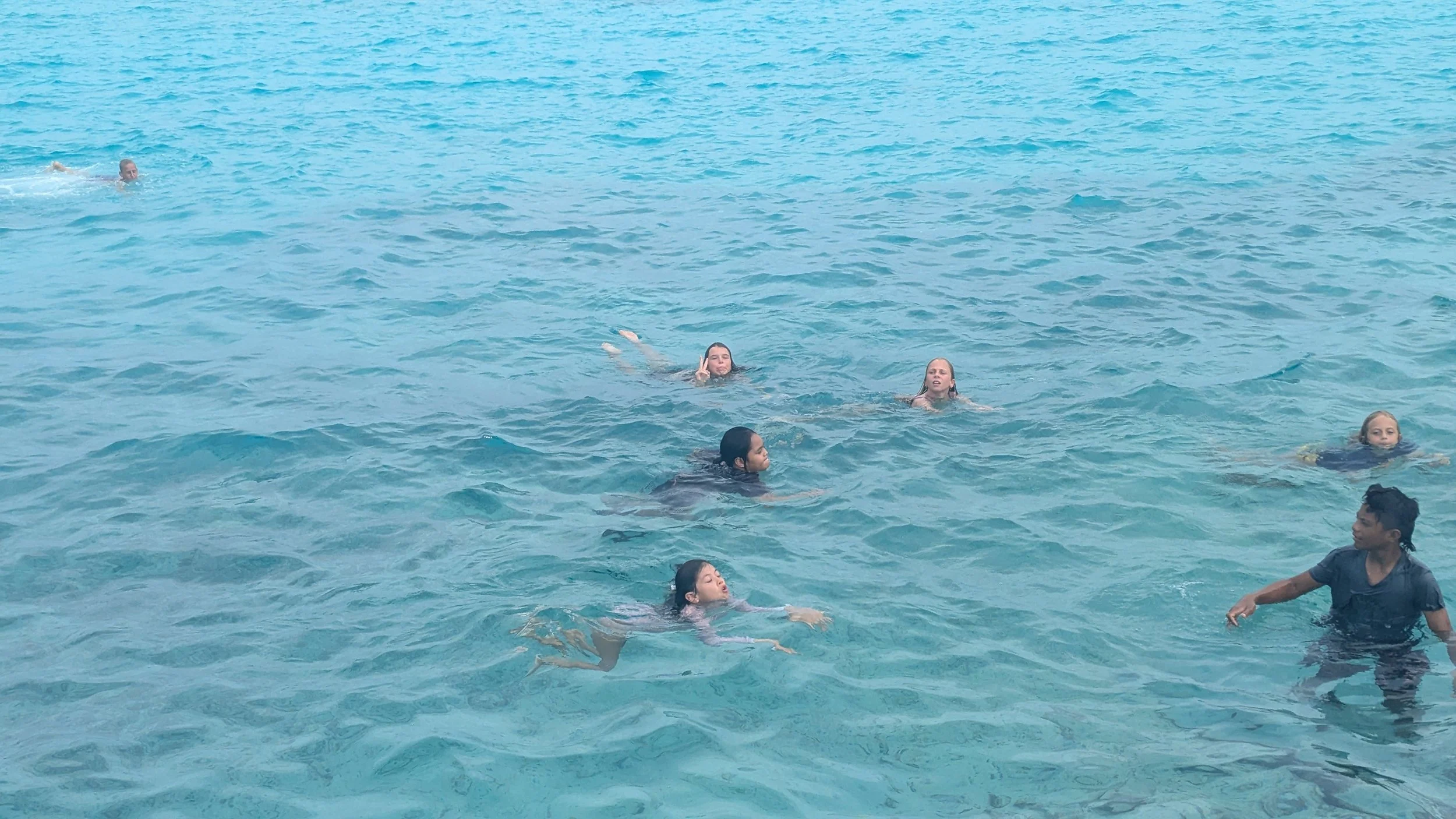
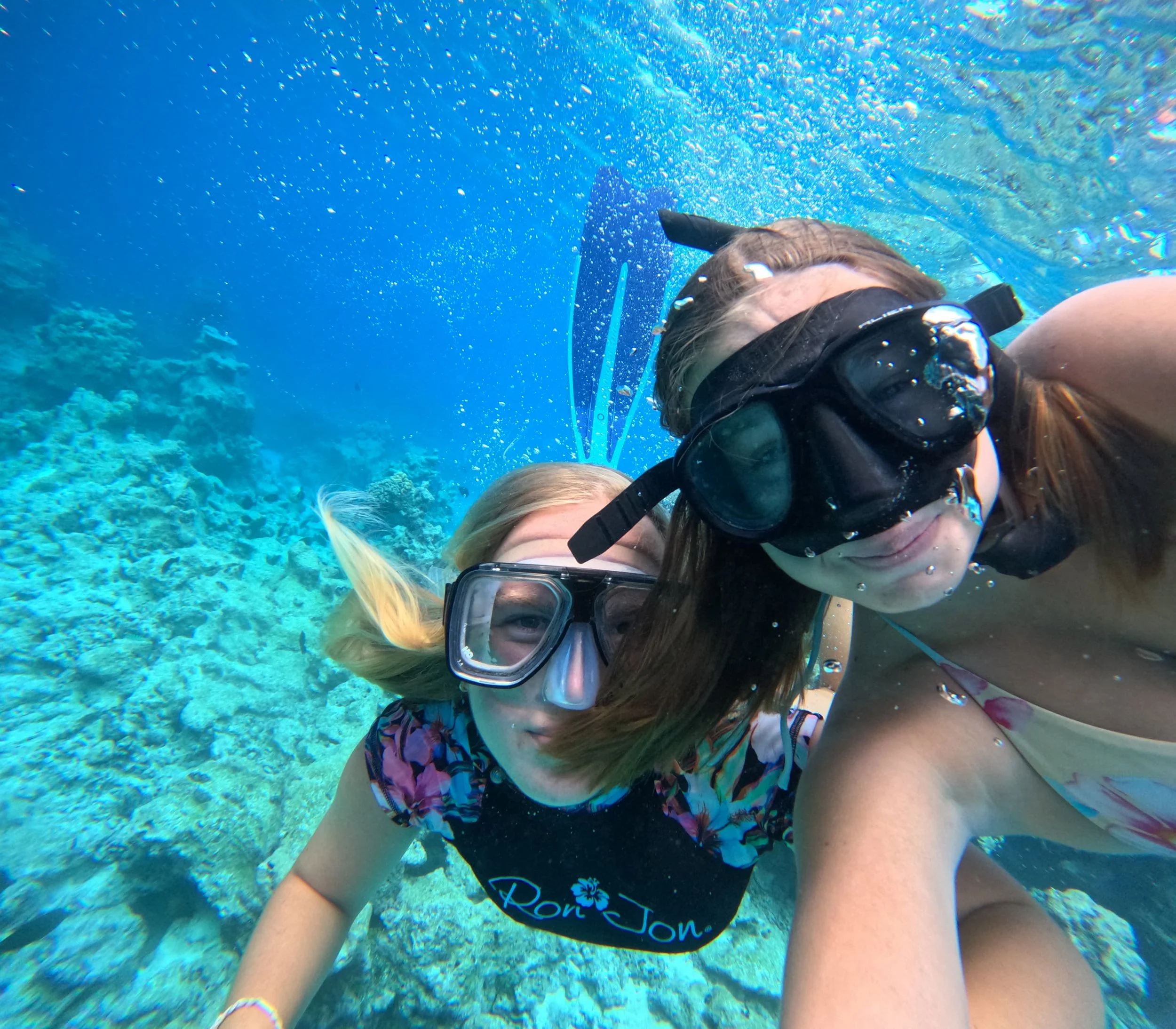
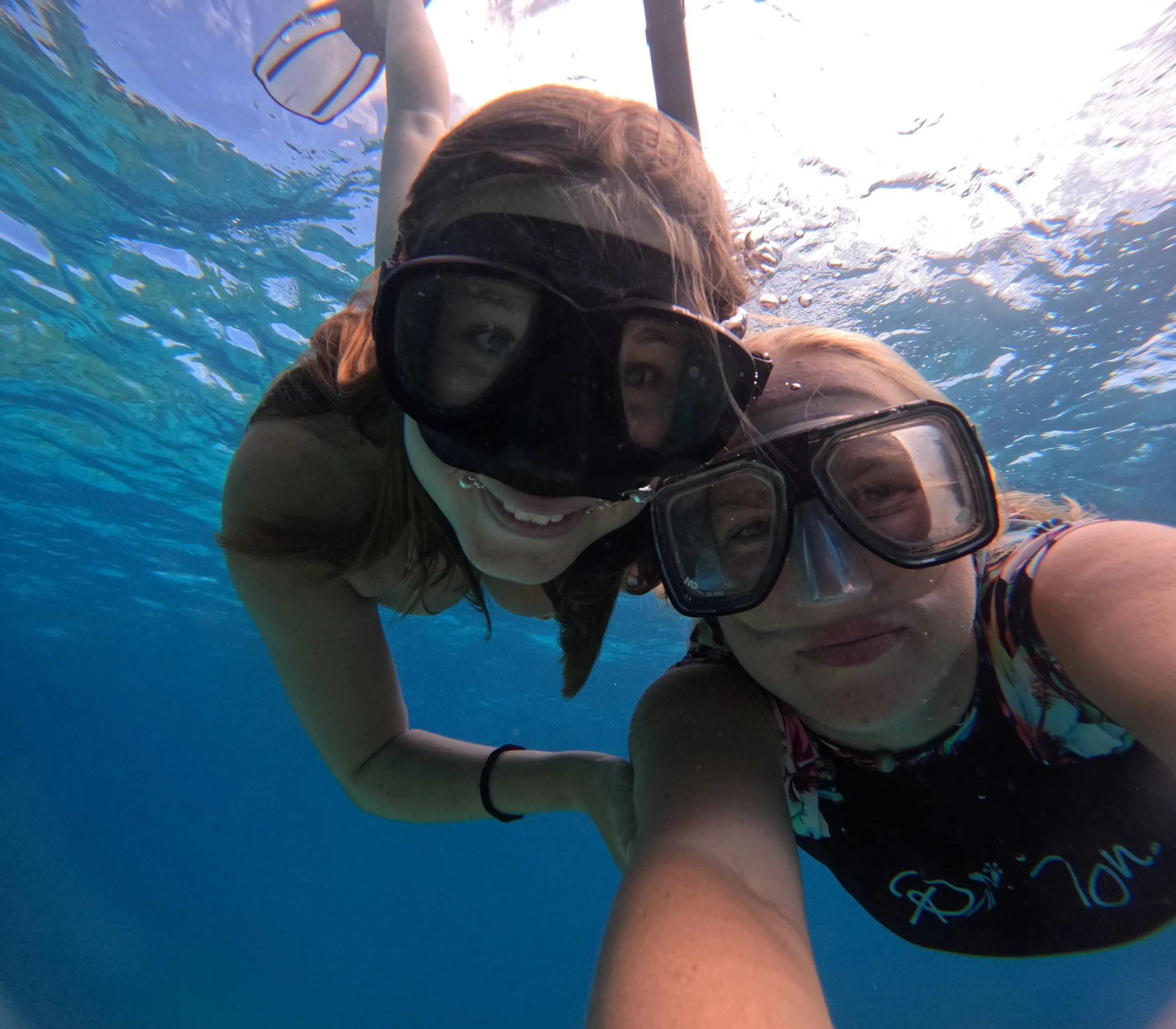
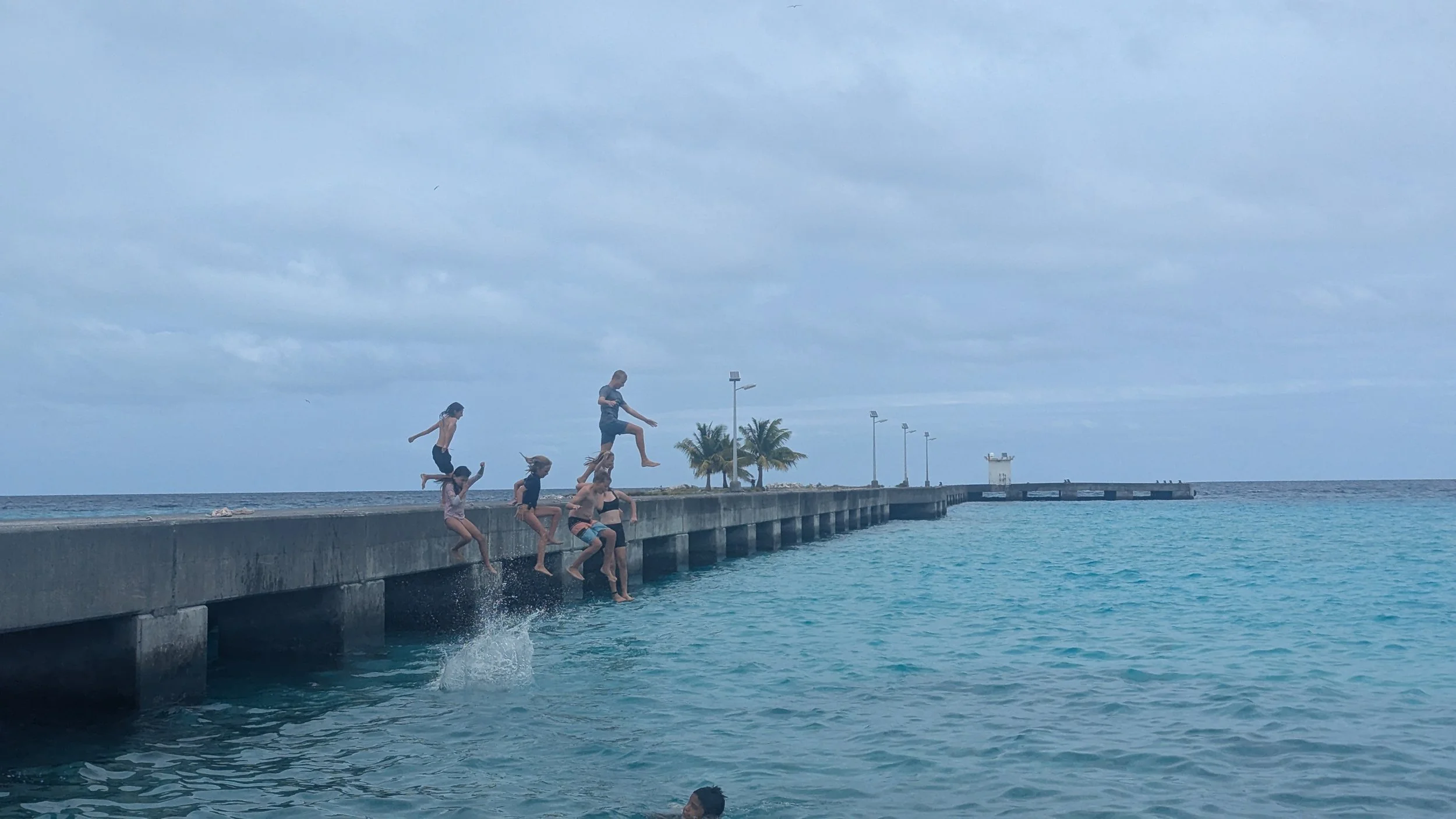
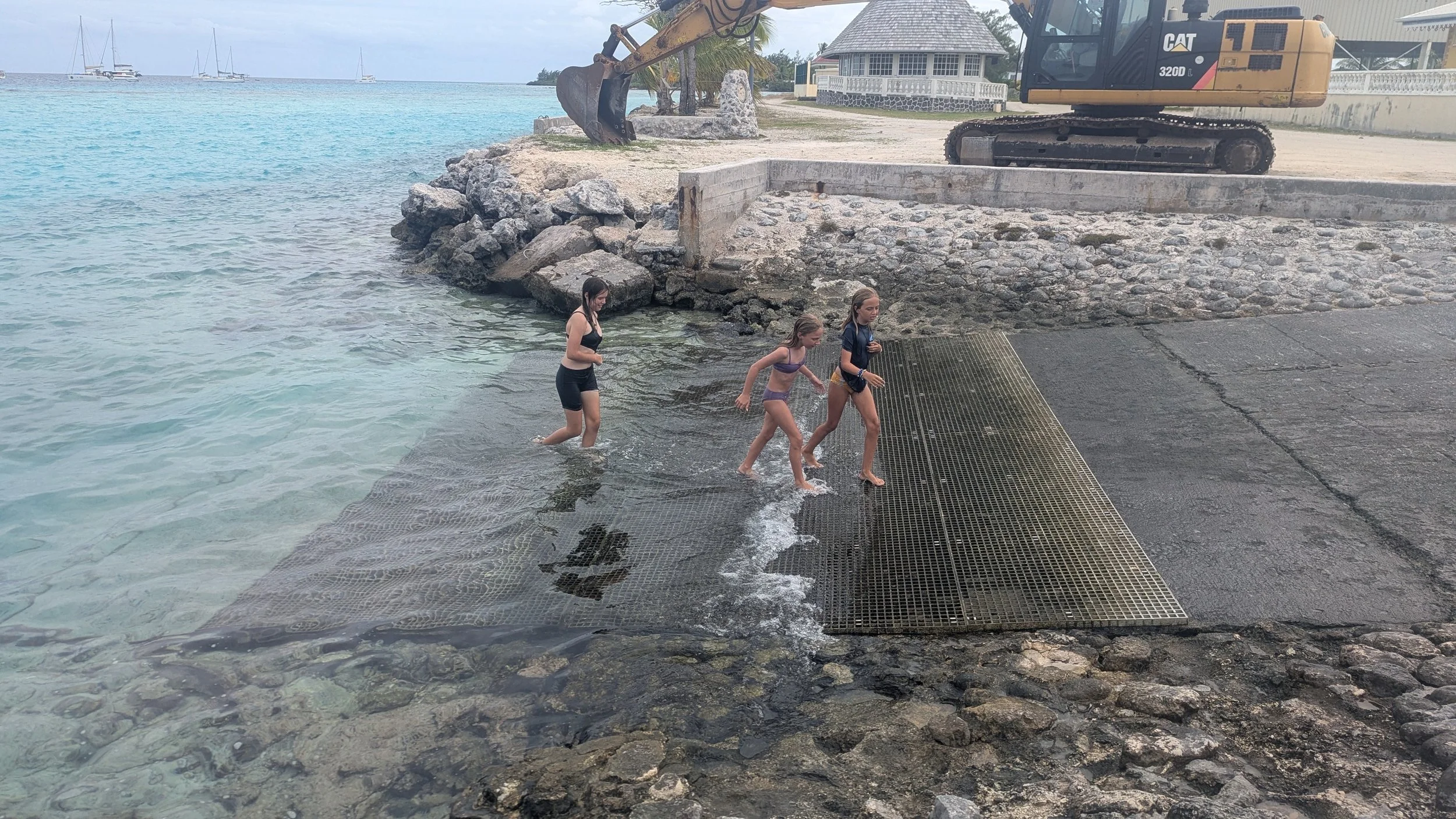
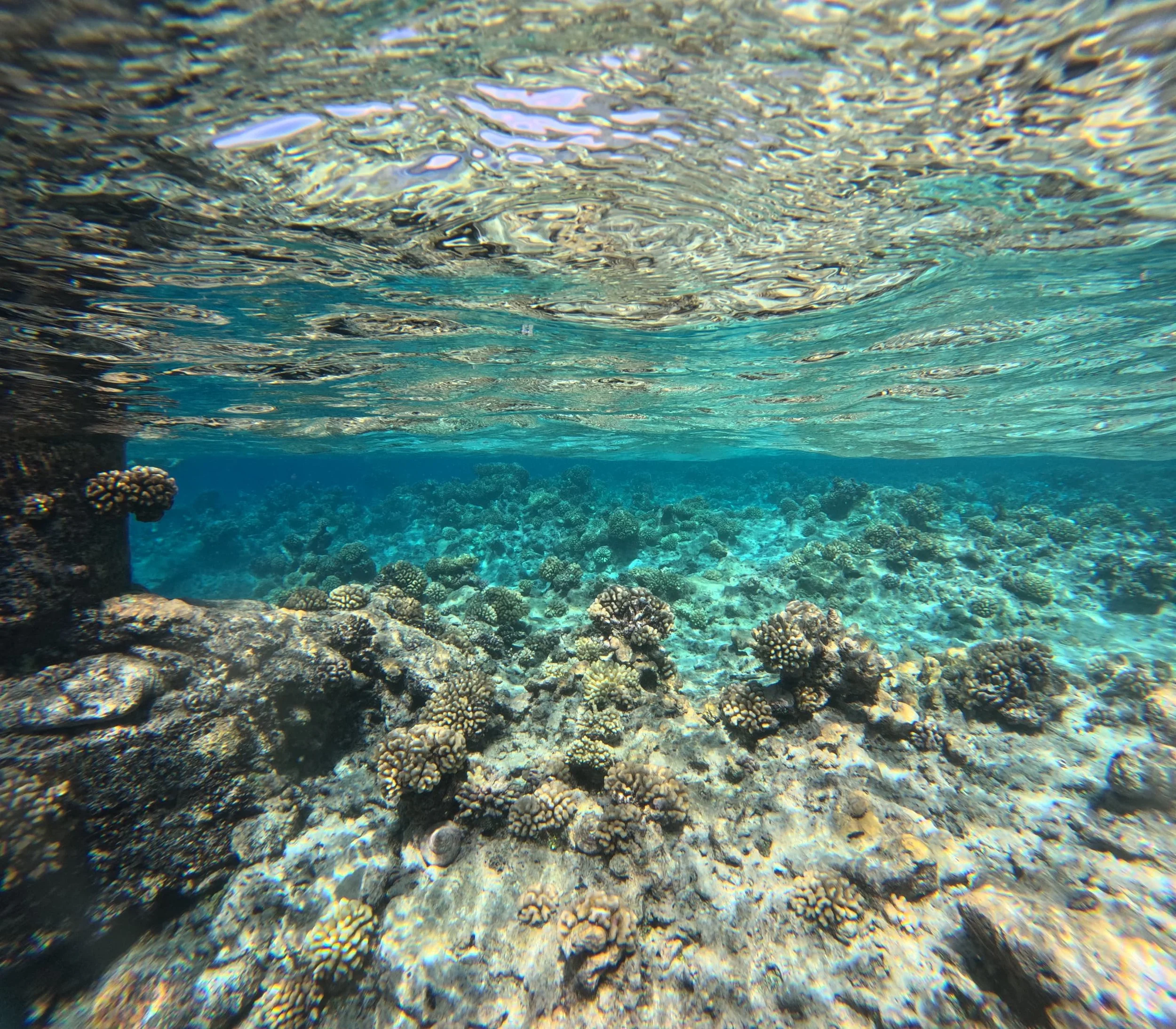
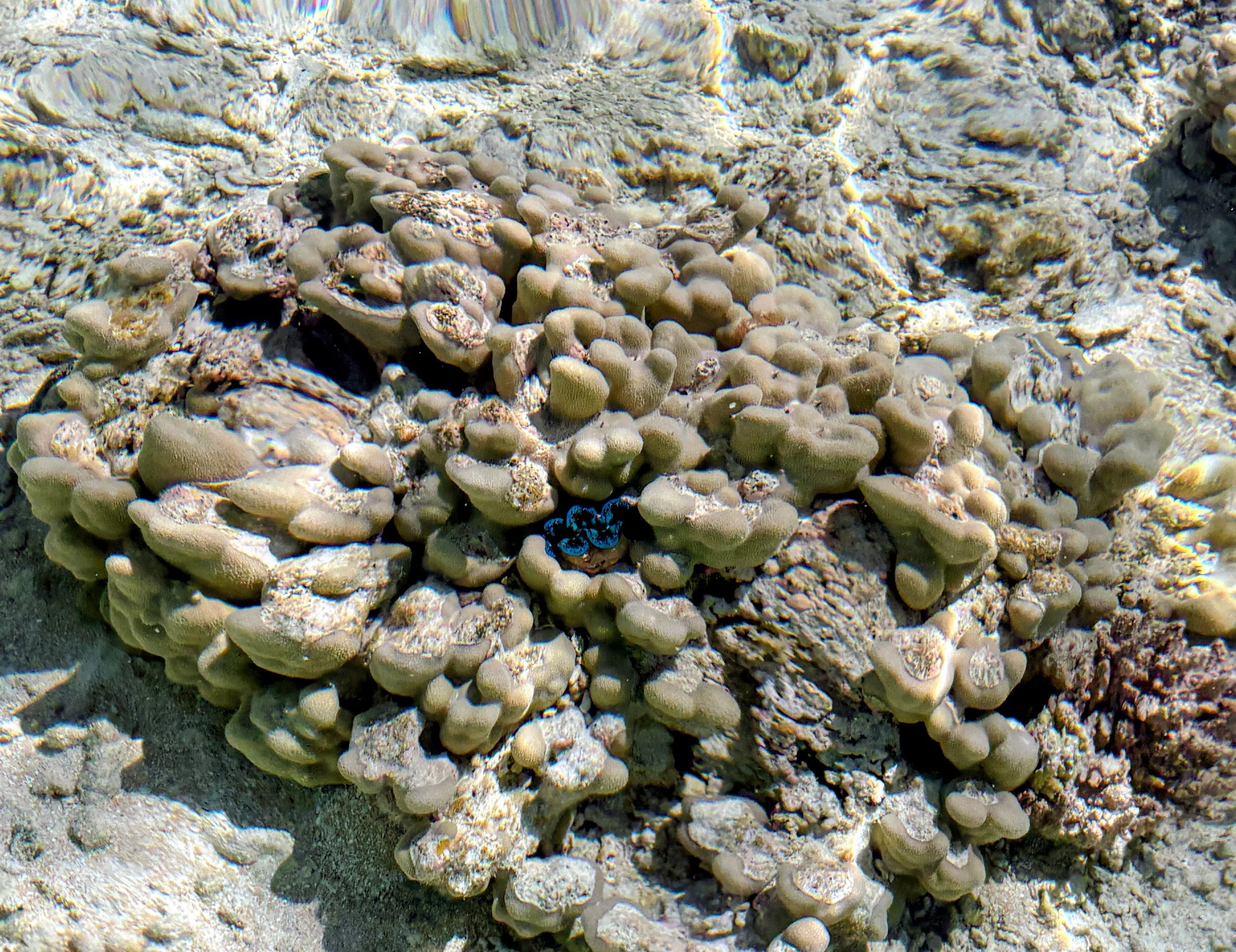
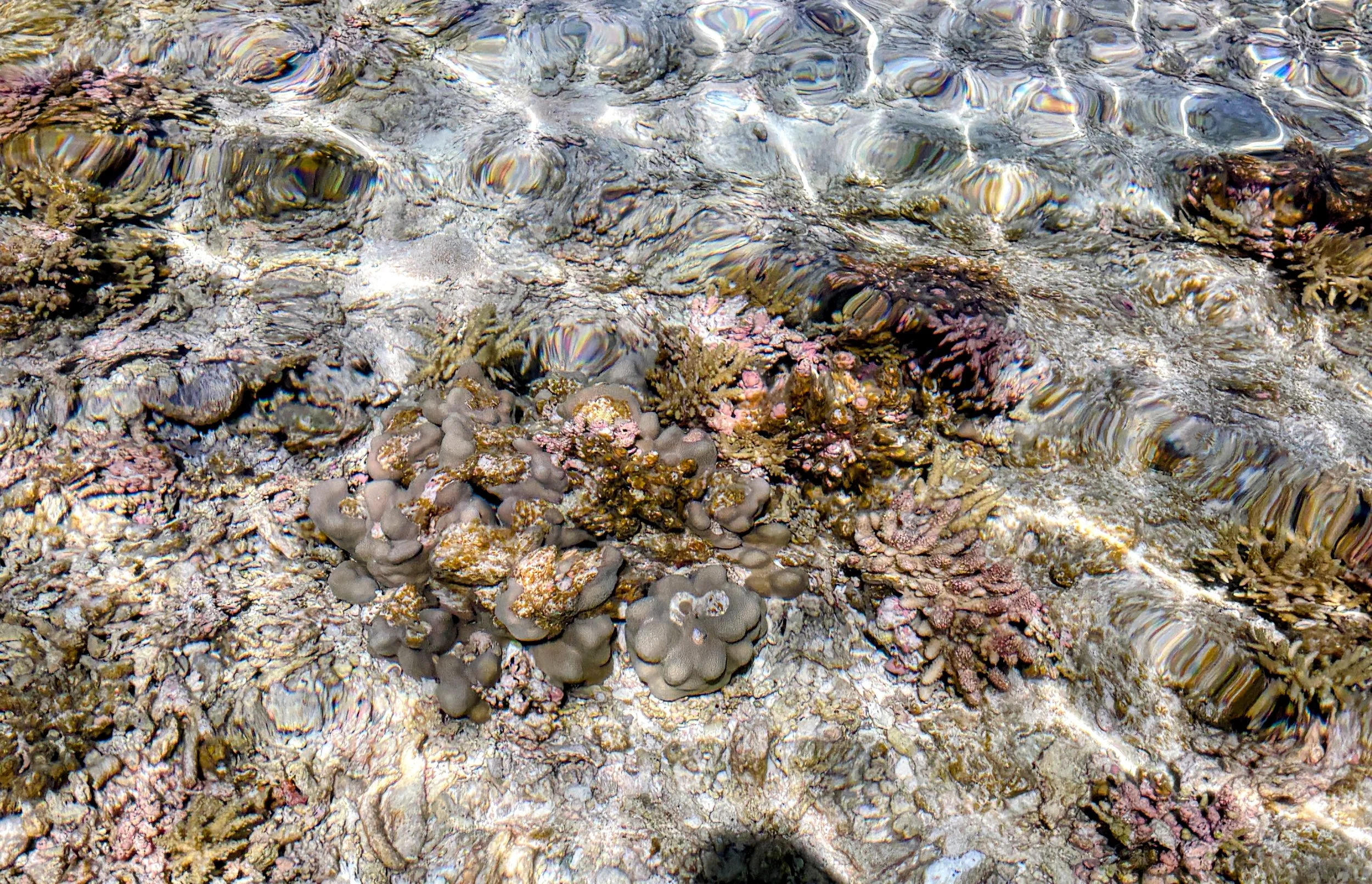
Then, it was on to Makemo for some re-provisioning and a change of atoll. Makemo was more populated, there was a small airport that had a flight once a week flight to Tahiti, and a community that harvested coconuts, and farmed for black pearls. The snorkeling here was again beautiful, even just by the town wharf, with colored corals that we rarely seem to see anymore. The friend boats had moved as a pack, so again the days were filled with adventures in town, swimming and buying ice creams.
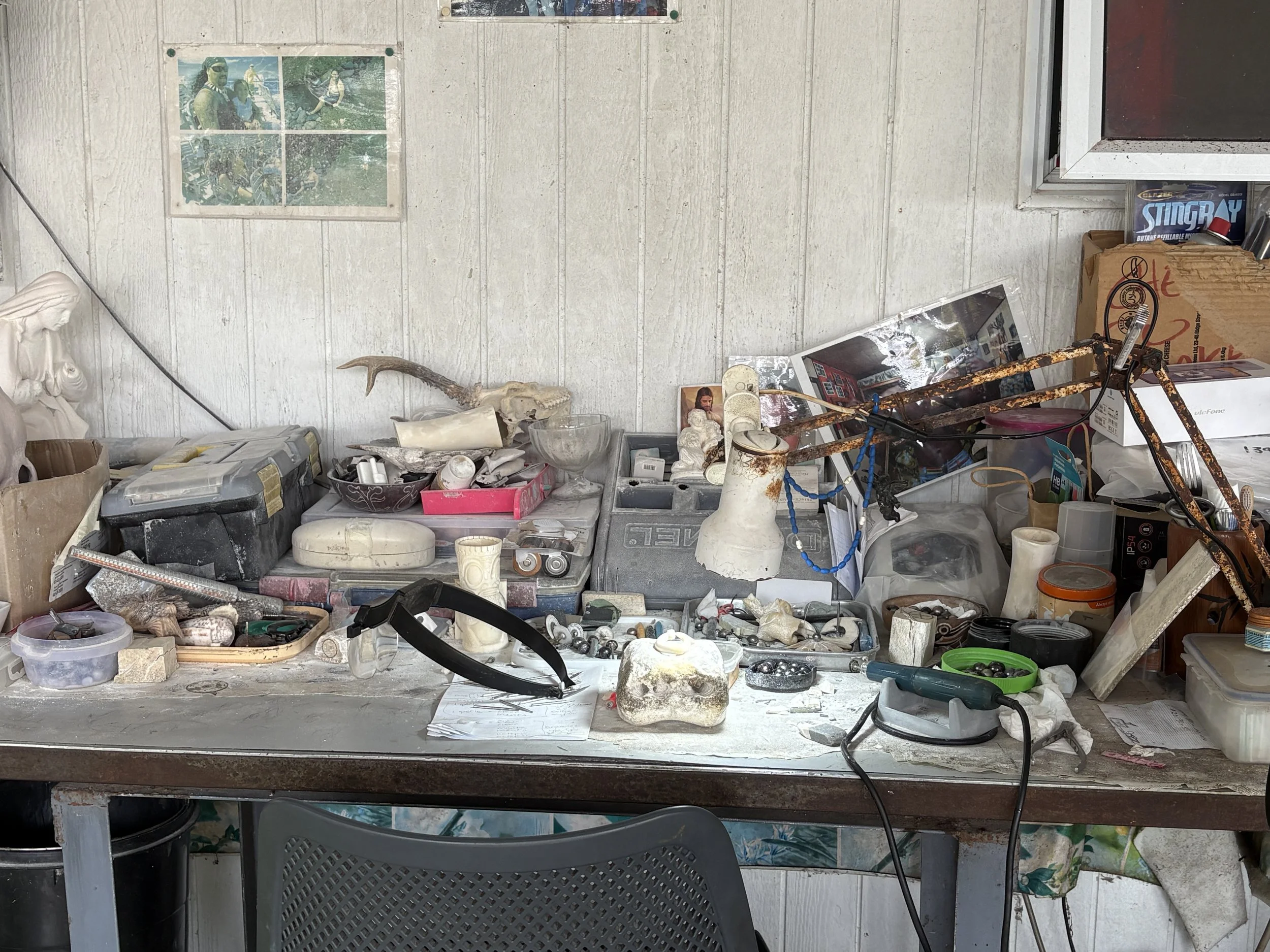
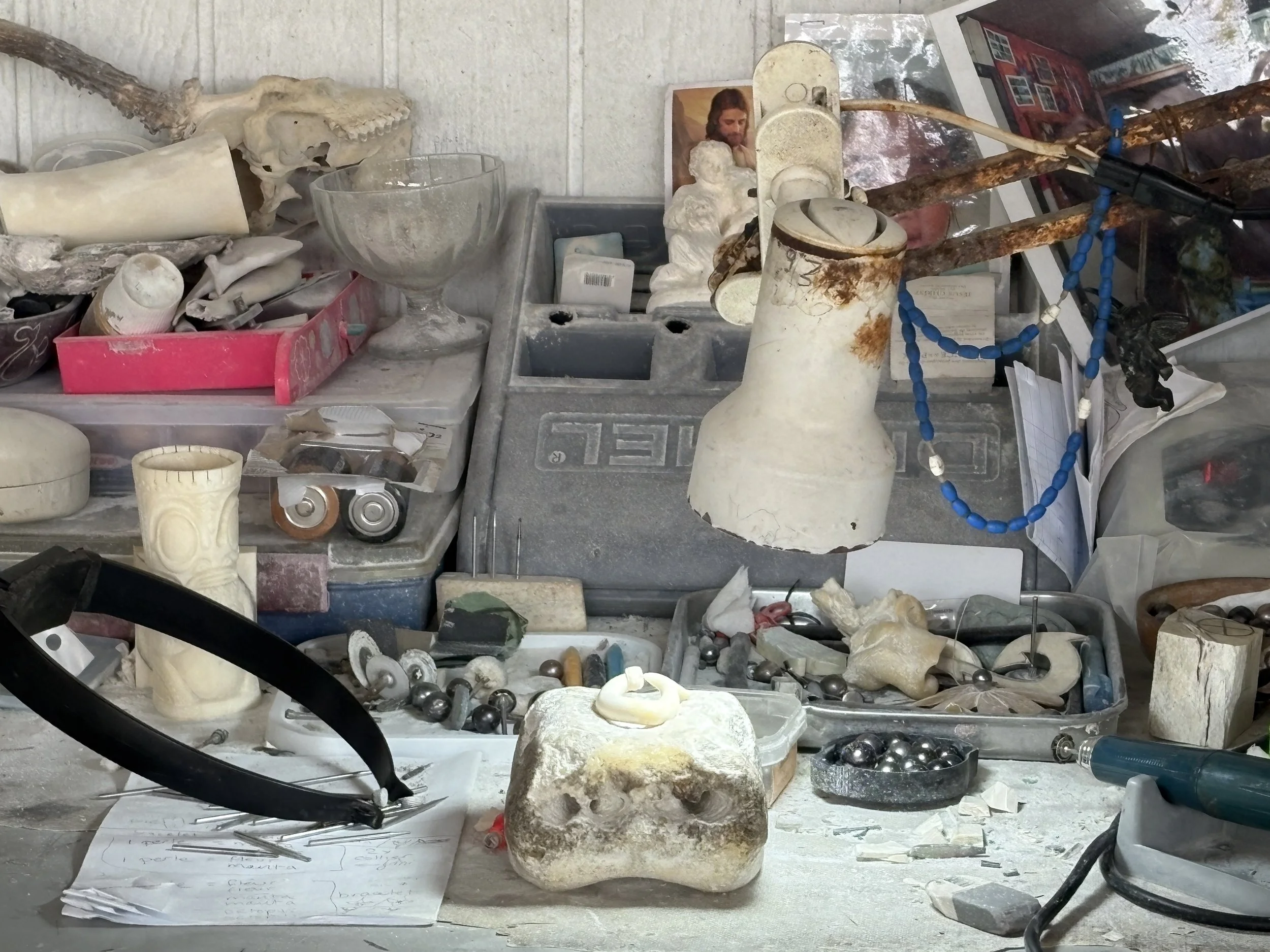
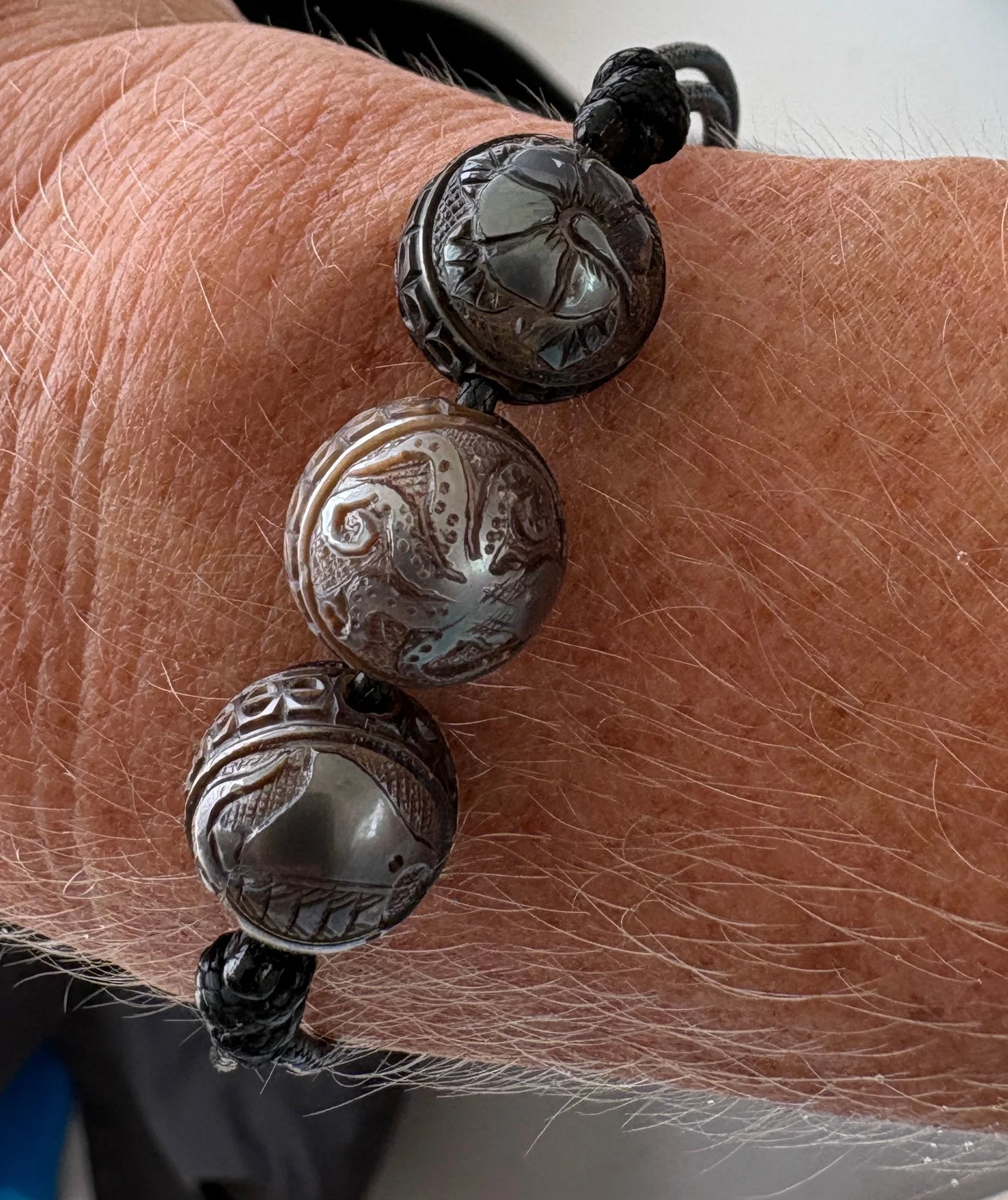
We were then lucky enough to meet Becot, a pearl craftsman, who engraves black pearls using nothing more than a Dremel tool. We put in our order, and the following day I was thrilled to collect three pearls, one with a hibiscus flower, one with an octopus, and one with a manta ray, engraved and threaded onto a bracelet.
Our time in Makemo was also punctuated by the football World Cup, and the anchorage turned into a truly international effort, with cruisers from all over setting up watch parties together. Watching the matches with everyone was really fun.
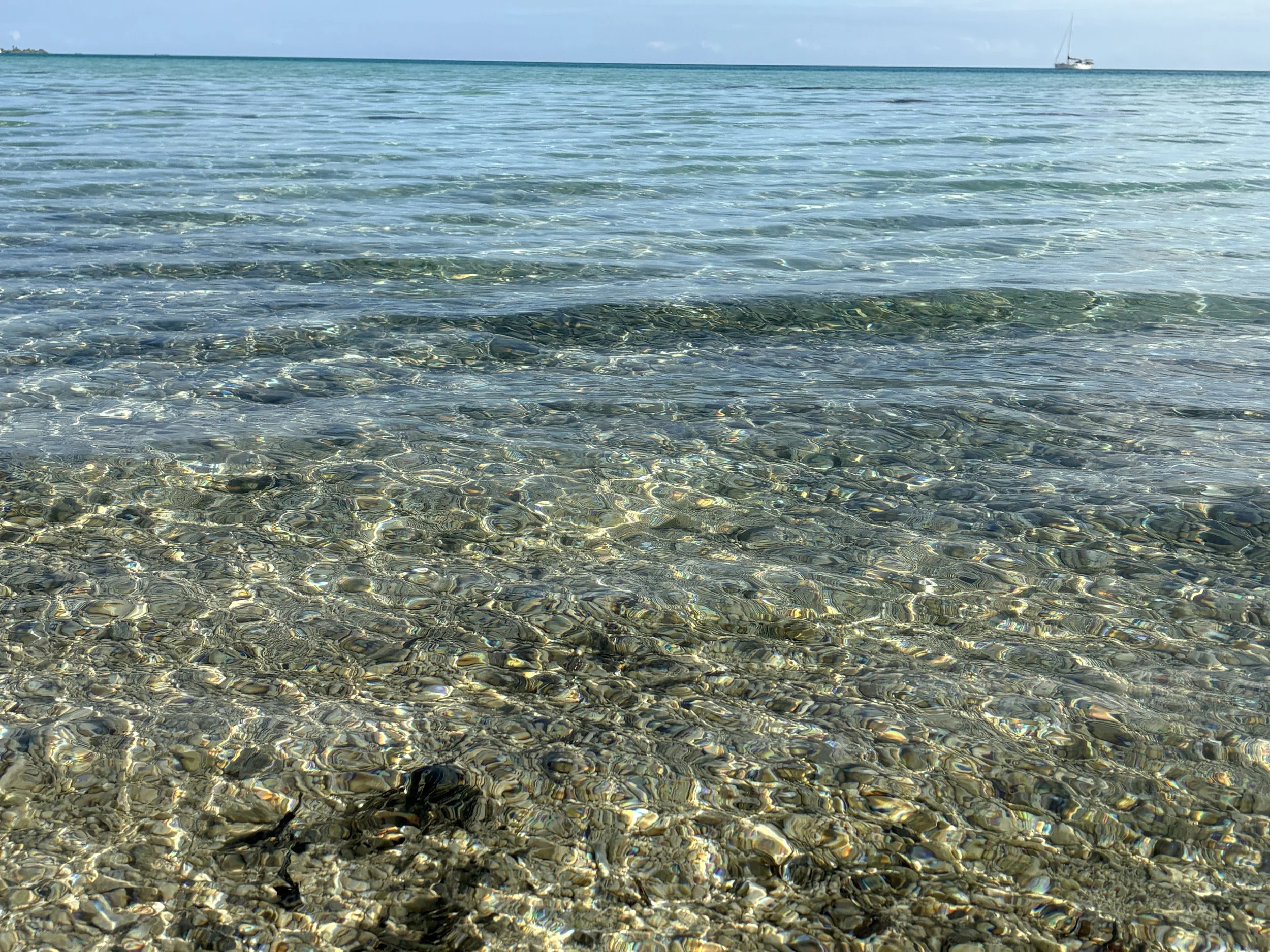
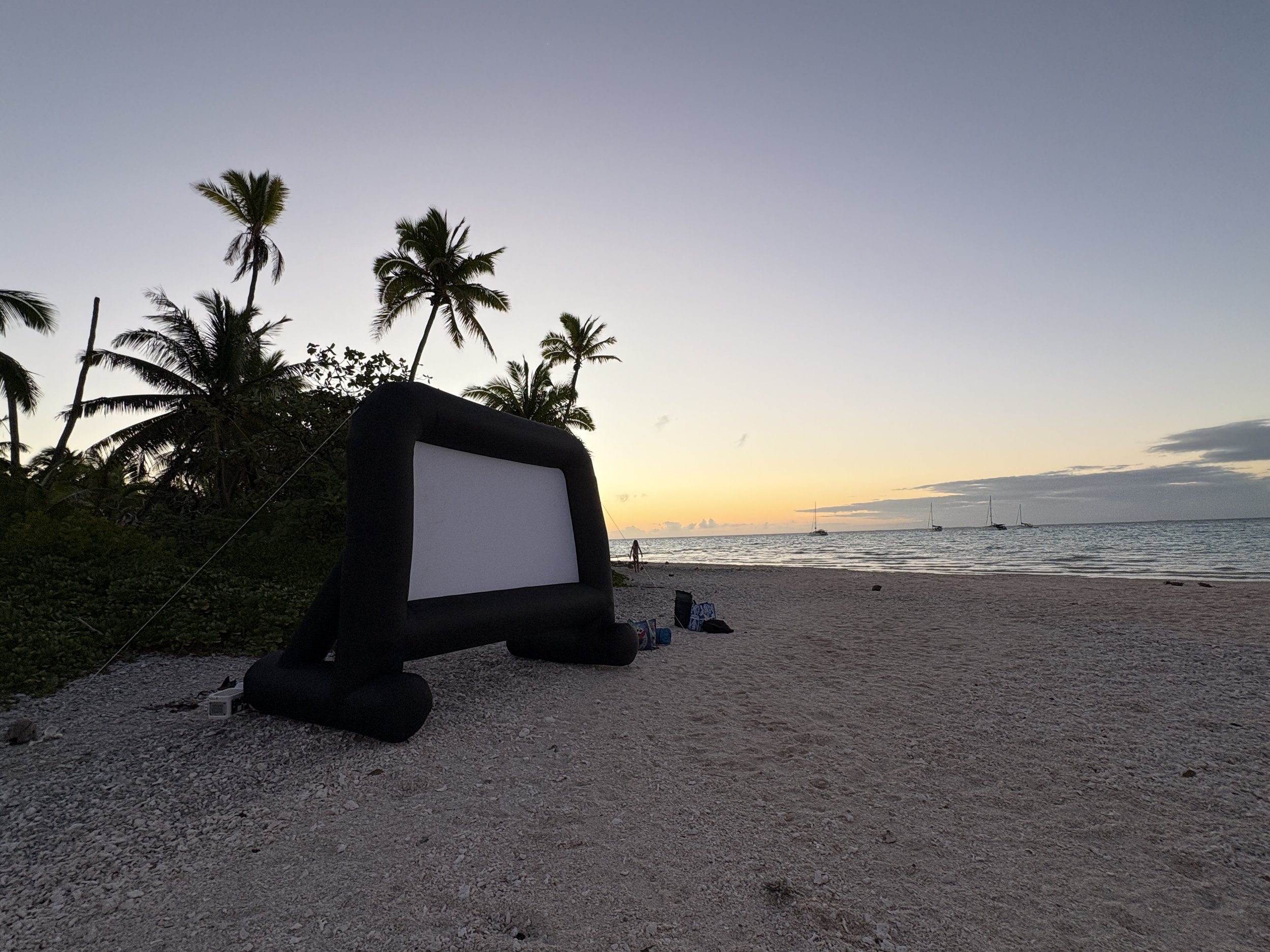
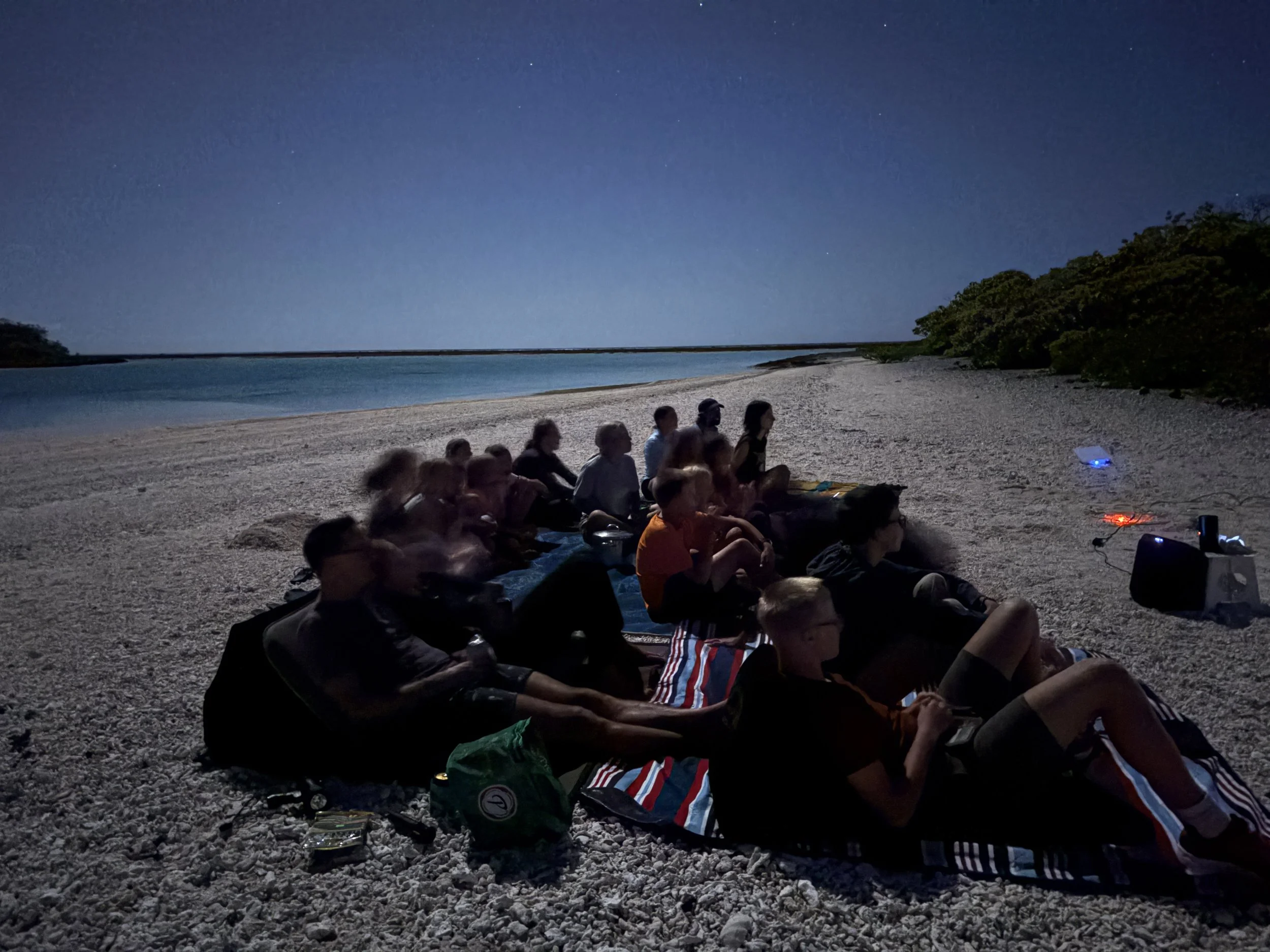
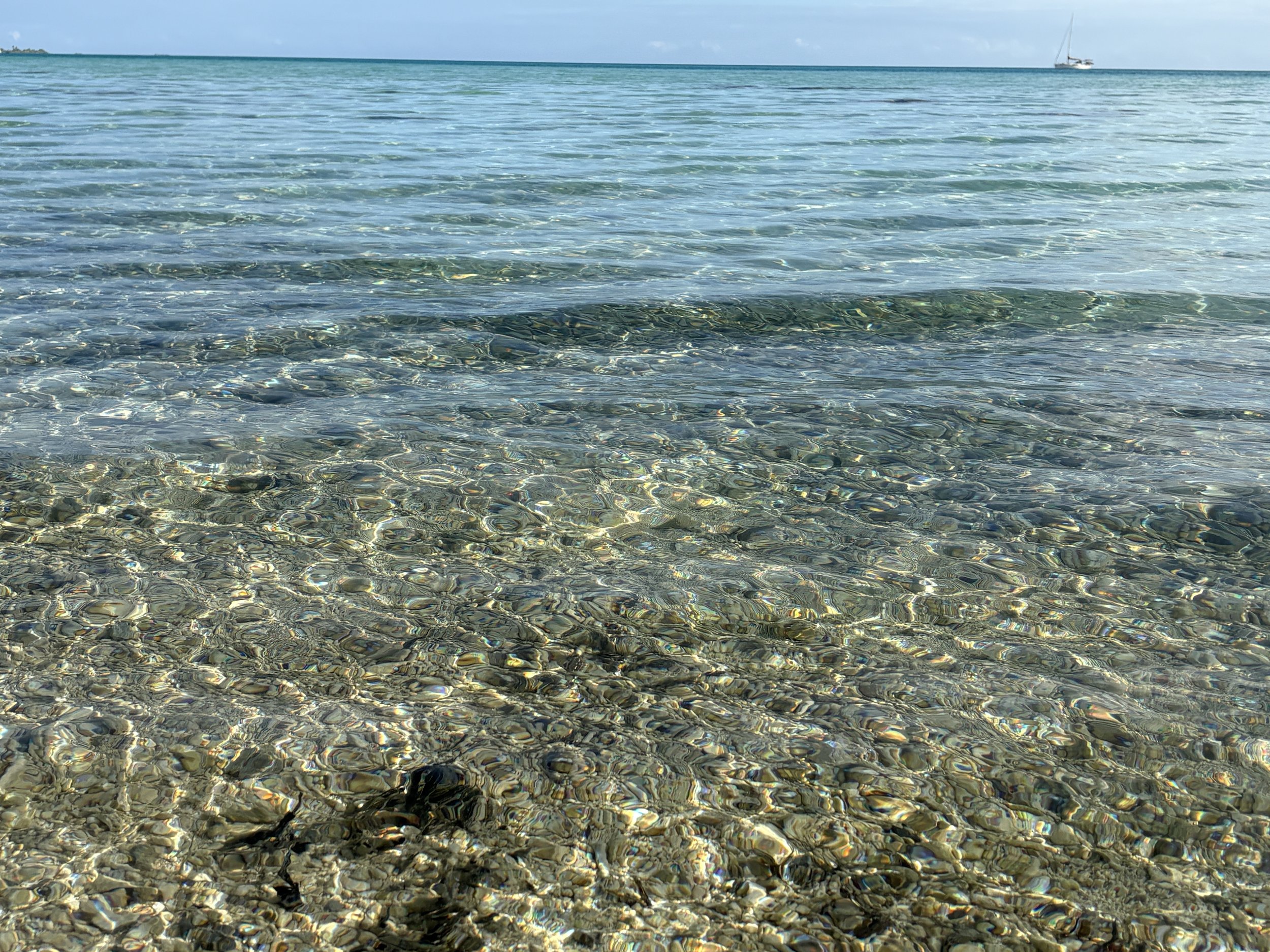
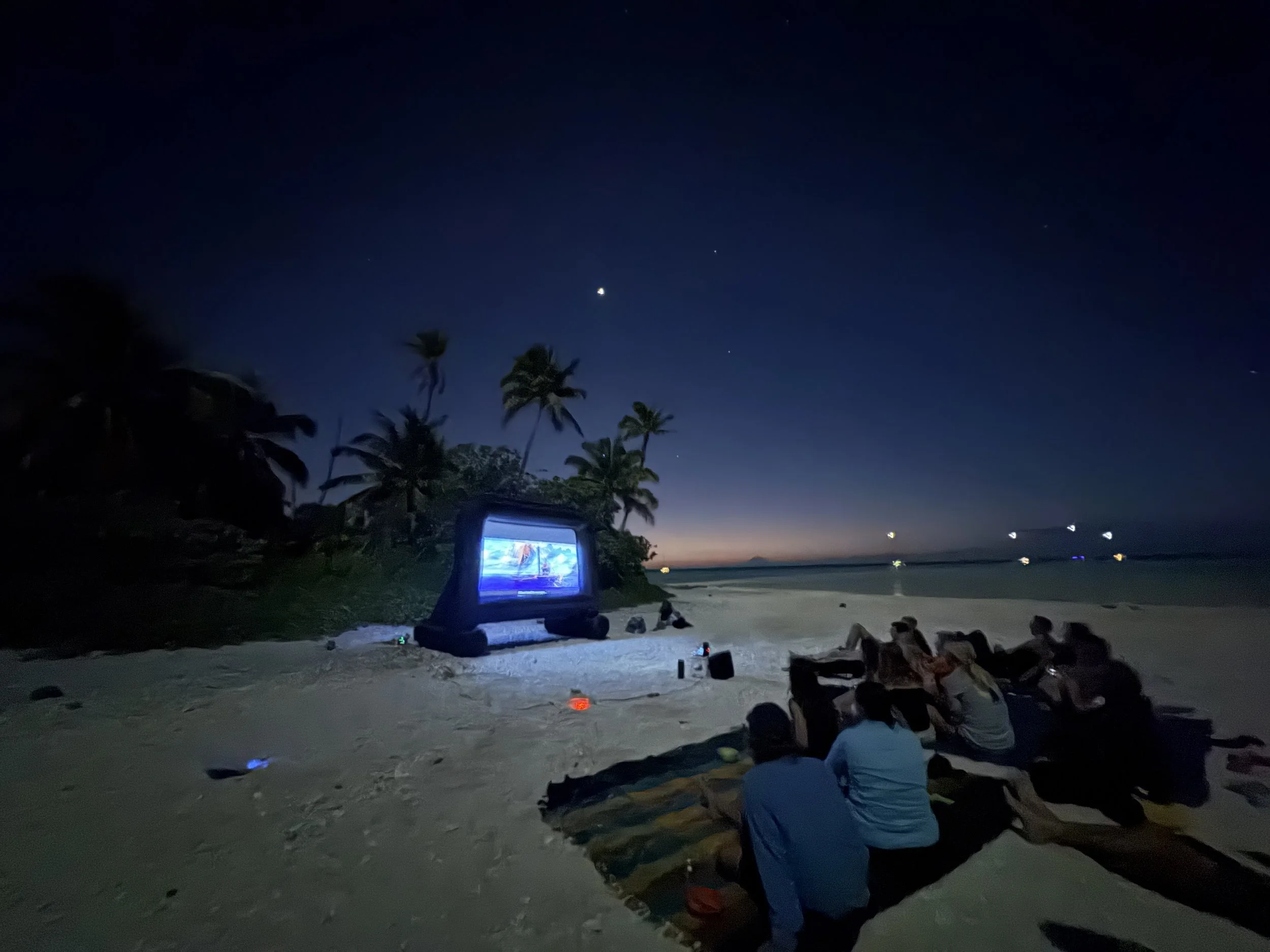
And then it was time to head to our next atoll, the absolutely stunning Tahanea. With no permanent residents (the 2012 census recorded zero), islanders from neighbouring Faaite visit occasionally to harvest copra or fish but it was the epitome of a desert island. The clearest water we've ever seen, and on one particularly windless day it was just out of this world, you could see every gain of sand 30 ft down. Black-tipped reef sharks regularly circled the boat, and the snorkeling was over really pretty colored corals and fish. This was also where we finally broke out the huge inflatable movie screen we'd been carrying around for three years and set up our projector and speakers. We set it up on the beach at sunset, everyone brought blankets, drinks and snacks, and we watched Moana (of course it had to be). It was an absolutely perfect night to remember surrounded by friends under the stars.
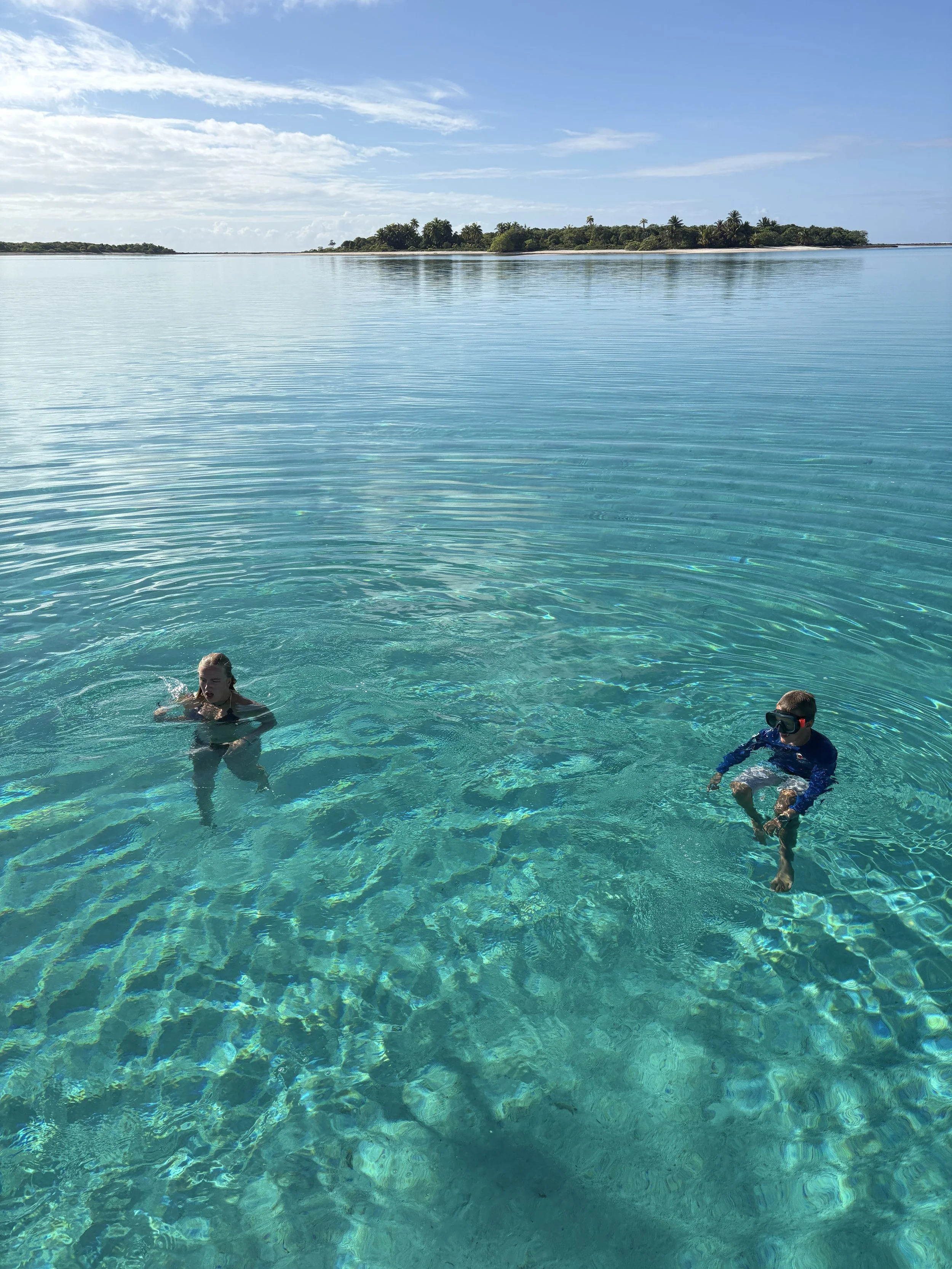
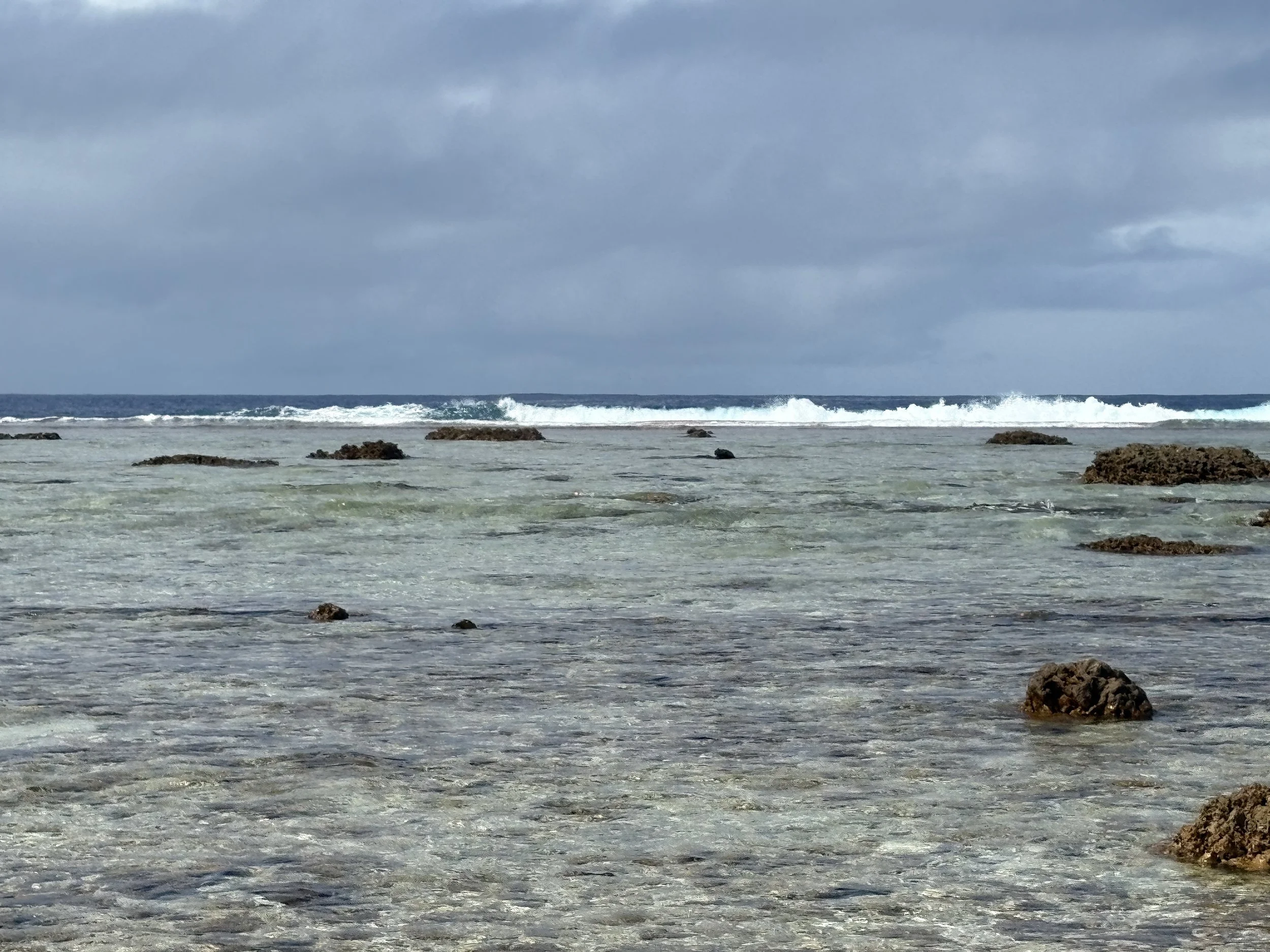
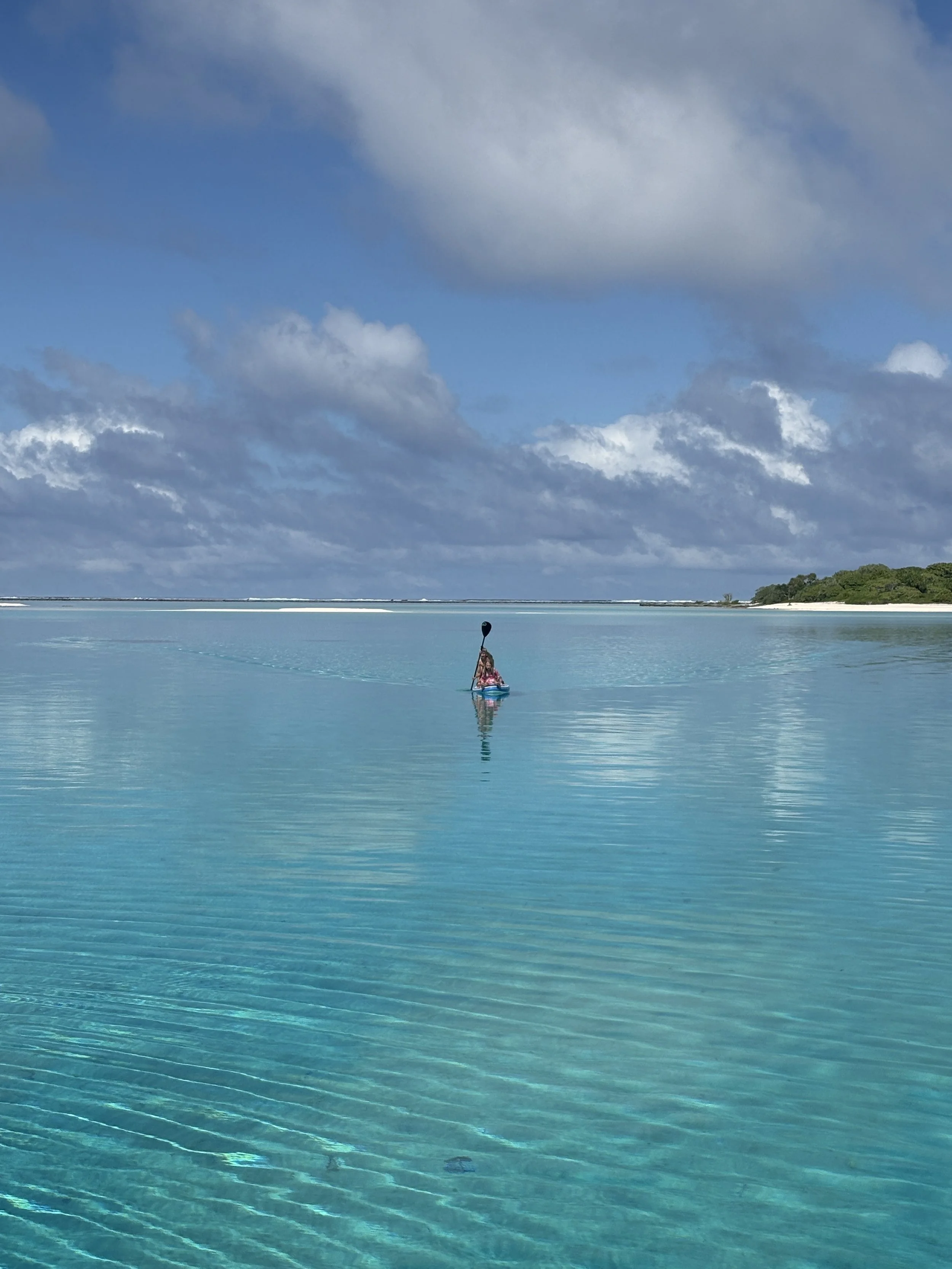
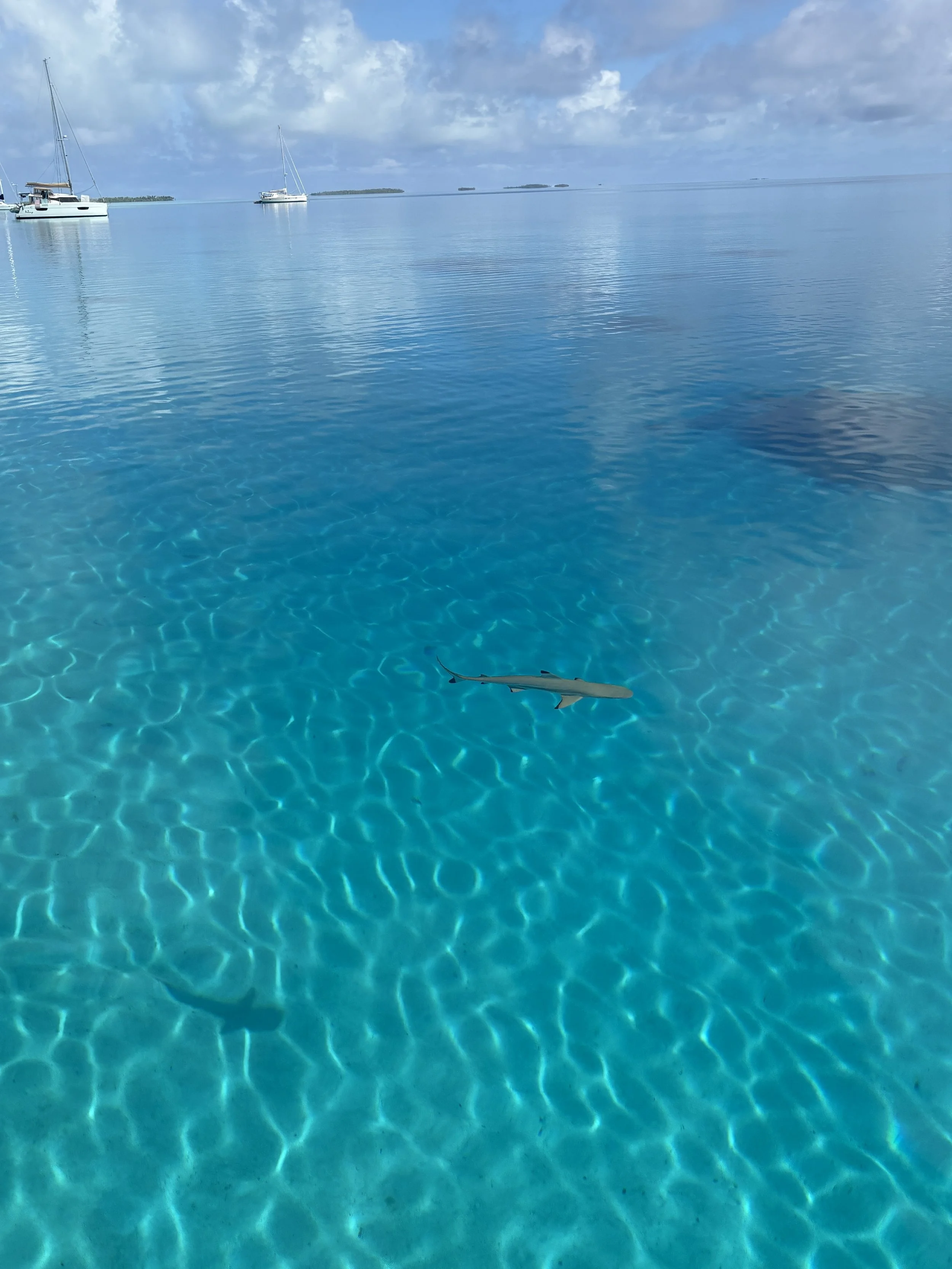
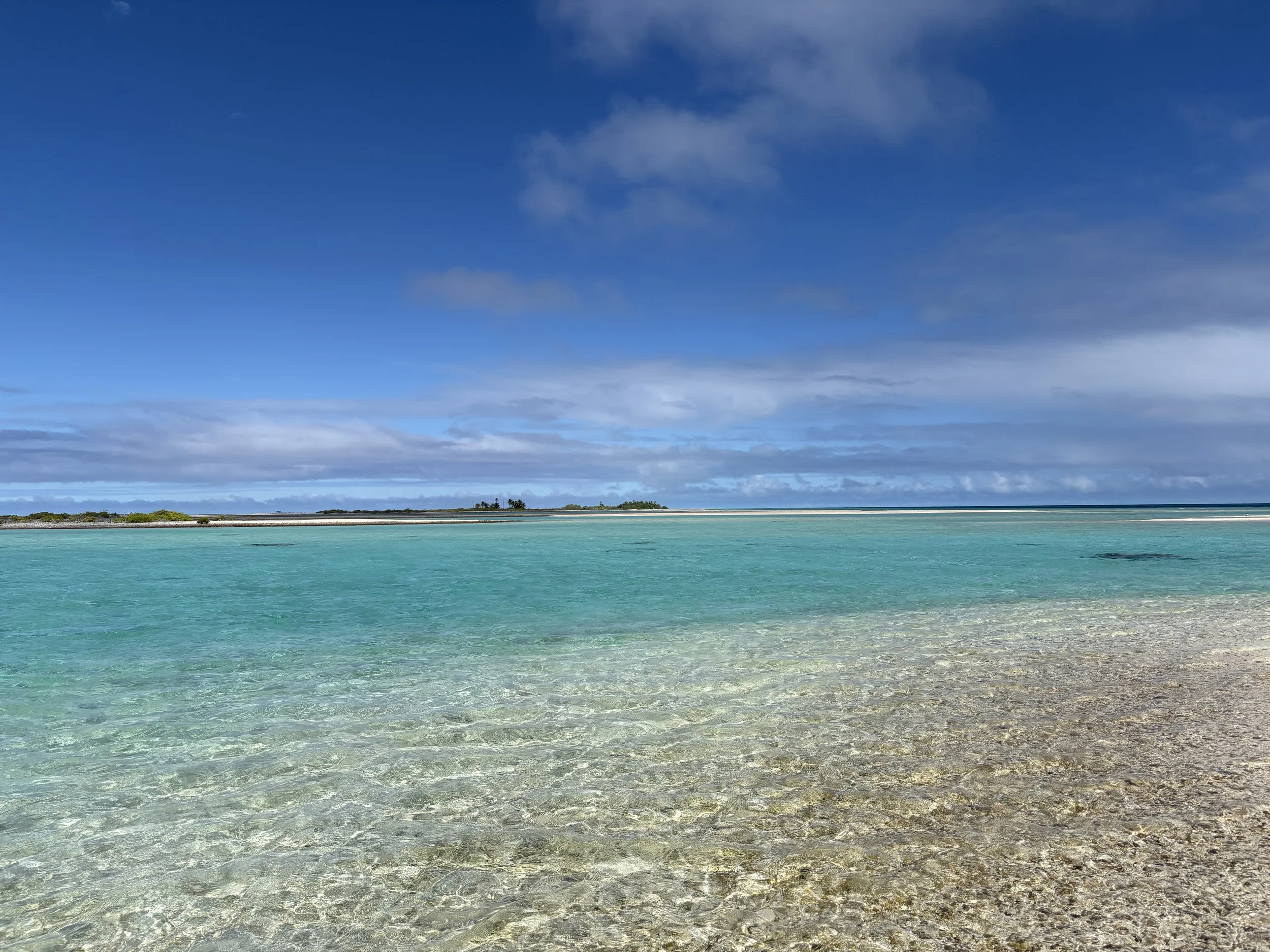
Then, after about a week there, we begrudgingly left the atoll for an overnight sail to Fakarava, the last of the Tuamotu atolls we were planning to visit. We had to do most of these single hops between islands as overnight passages, since they were too long to do in daylight alone. We needed to enter each pass in good light to see the coral on either side, and time the entrances and exits with the incoming or outgoing tide, since the current could run up to 6 knots in some of them. Ideally we'd hit slack water, that brief lull as the tide turns, but when that window didn't line up we'd settle for at least riding a favorable current rather than fighting one head-on.
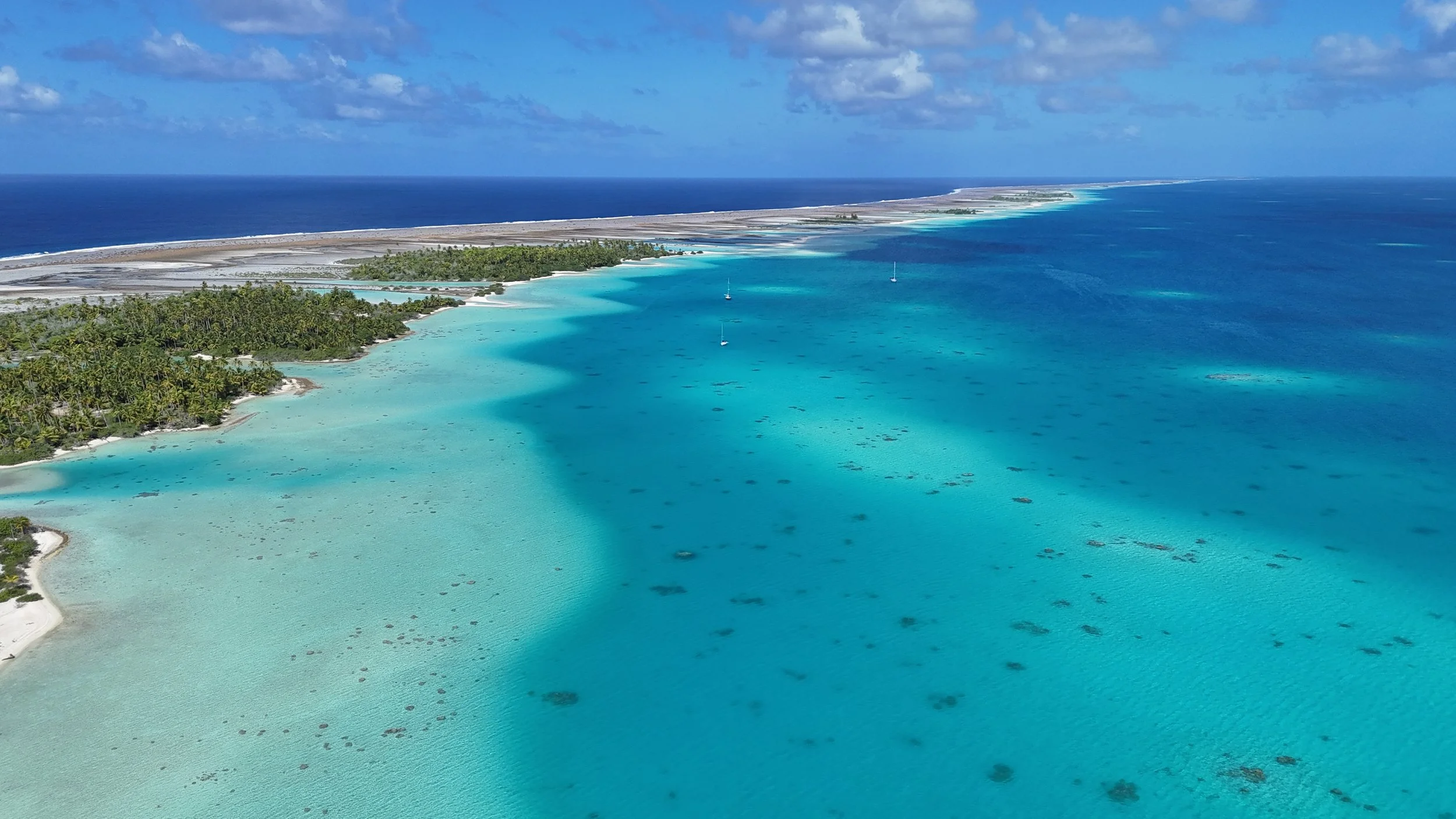
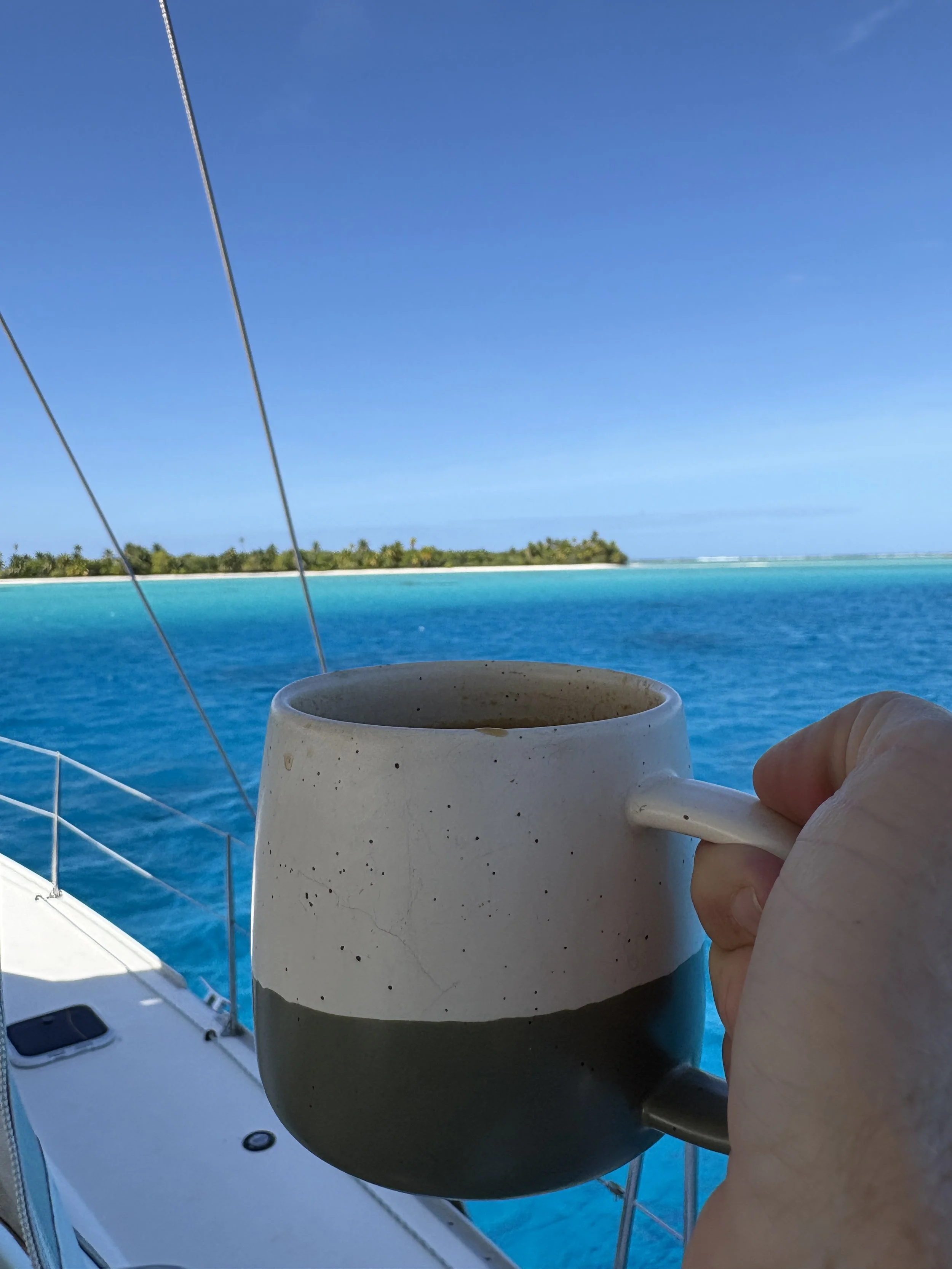
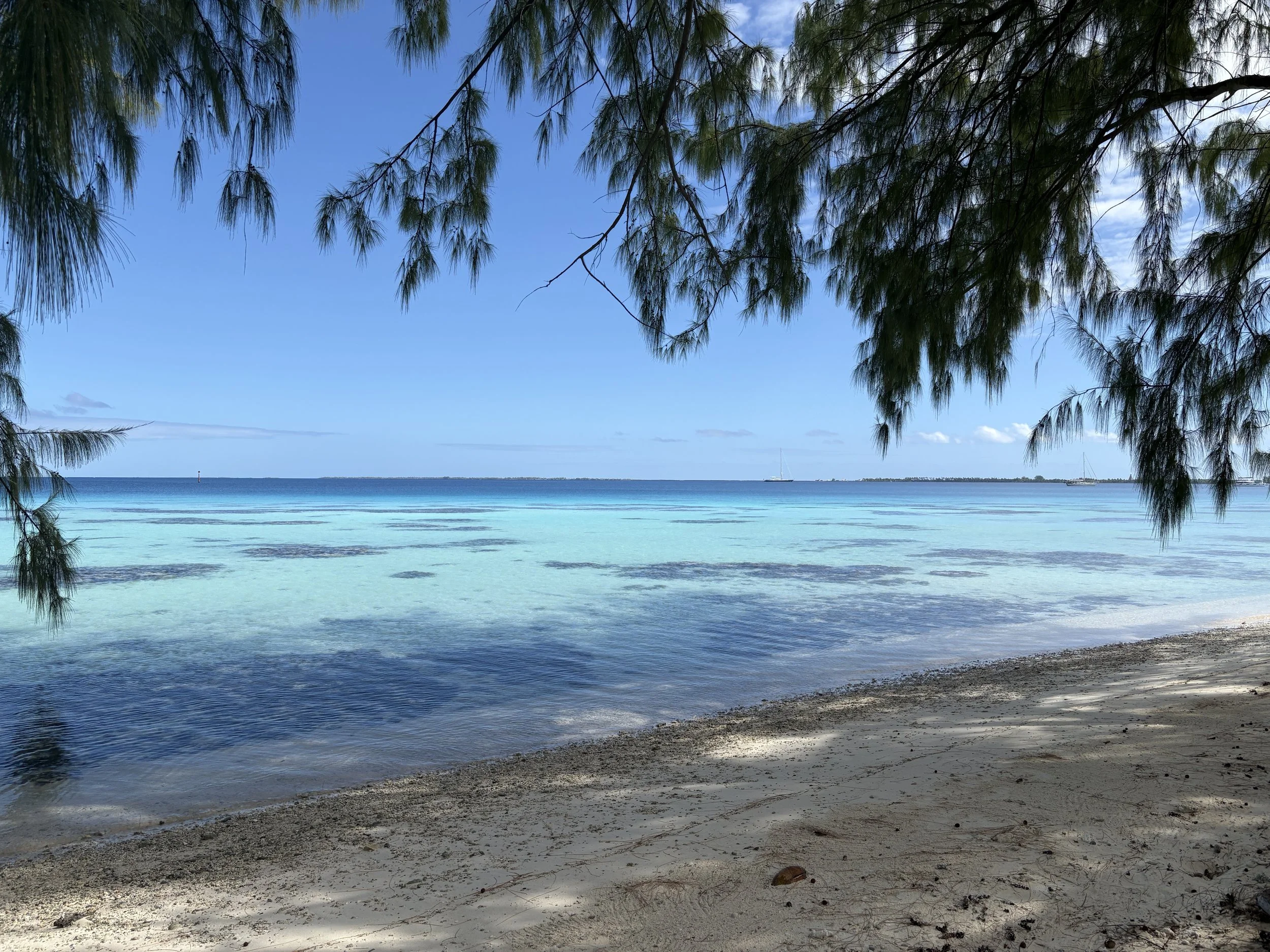
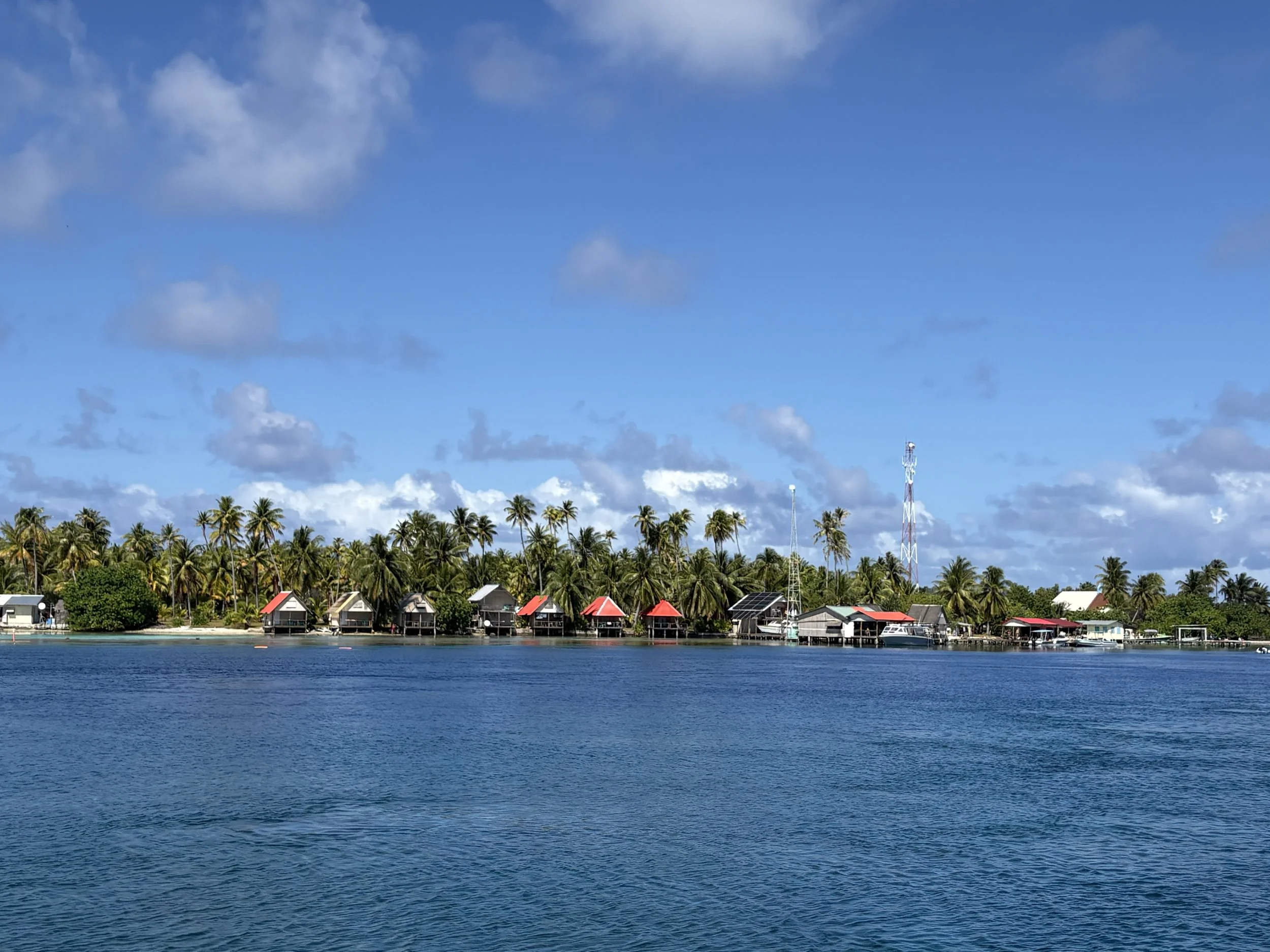
We entered the Fakarava northern pass at first light, and by the time we reached the anchorage with our buddy boat Firefly, our first impressions were not that great. The sky was really grey, the anchorage seemed busy, a local shouted at us from shore not to anchor outside his property, and the supply ship came in just after us to unload the produce and goods for the week's supplies. We eventually found a spot and headed to land to scope out the small town, and in doing so did a bit of a mindset reset, because the sun came out, and when we looked back towards the boats, this was the sight that awaited us. In what other life do you get to pitch up, park your house somewhere new on a Tuesday morning, and have this as your backyard for the next few days? So beautiful, and a real reset for us, that we are very lucky to be here.
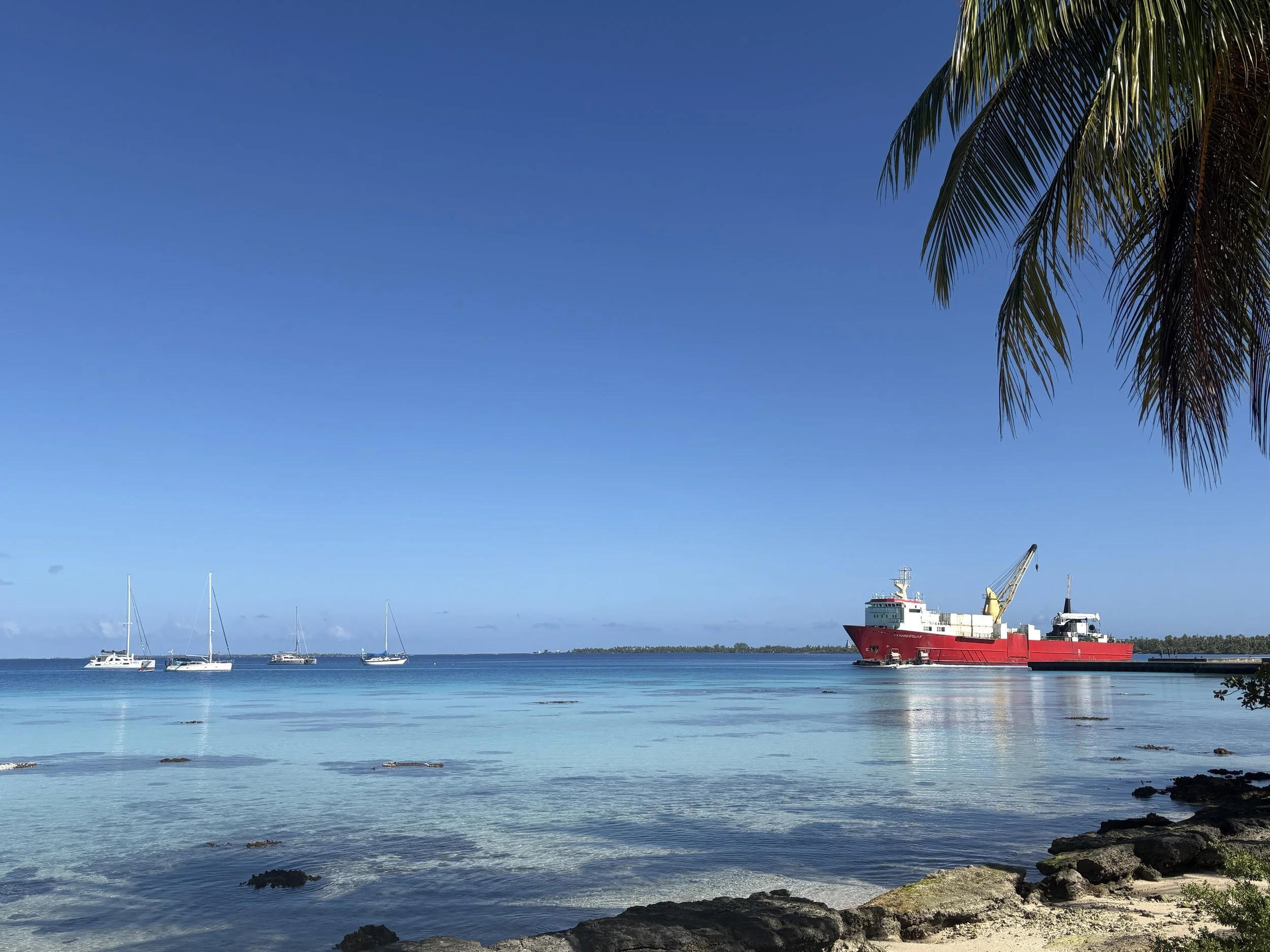
And for the next few days Fakarava North did not disappoint. We got the bikes out and the kids went adventuring along the flat sandy roads; we went and treated ourselves to lunch at a fancy resort where people were paying hundreds of dollars a night for a beachside view. And best of all we visited a Pearl Farm to close the loop on the process that we had so far only seen the end results of with our black pearl purchase in Makemo.
It was fascinating to see just how much work goes into a single black pearl. It starts with the black lipped oyster, which spends its first few weeks as free floating plankton before it's heavy enough to sink and needs something to cling to. Farmers hang collectors in the lagoon to catch these baby oysters, called spat, and then the oysters spend the next two or so years just growing on lines in the water before they're mature enough to work with. Once they're ready, a pearl farmer cracks the oyster open just enough to graft in a small round nucleus, usually cut from the shell of another oyster, along with a tiny piece of mantle tissue from a donor oyster chosen for its color. That graft is what tells the oyster what color to start laying down around the nucleus. The oyster then goes back into the lagoon in baskets or on lines for another year and a half or so, getting cleaned every few months to keep parasites off, before it's finally opened up again and the pearl is carefully extracted. Every oyster can be regrafted and used up to 4 times after that first pearl, though the quality tends to drop a little each time. It's a slow process with plenty that can go wrong along the way, so it's no wonder the good pearls aren't cheap.
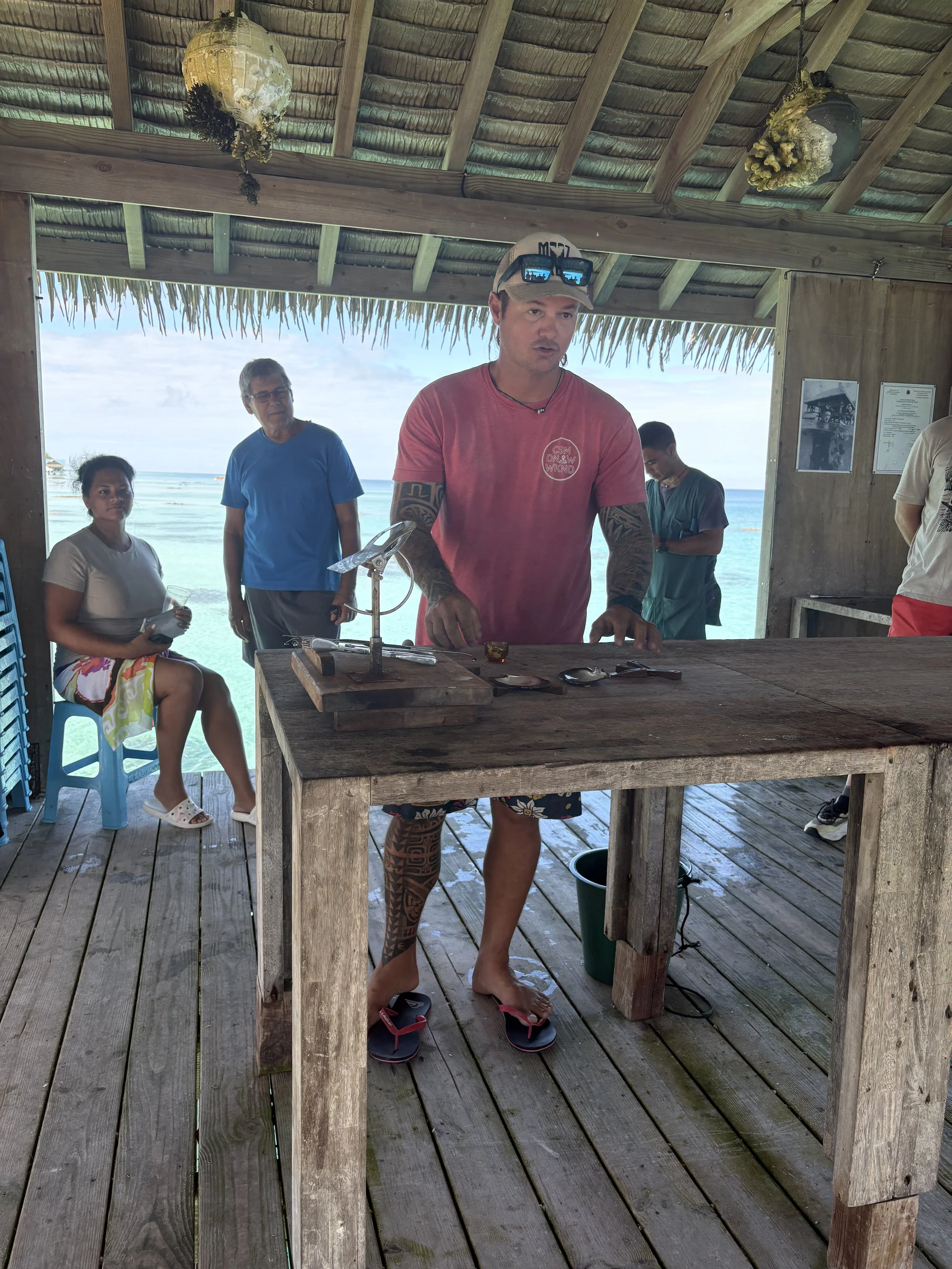
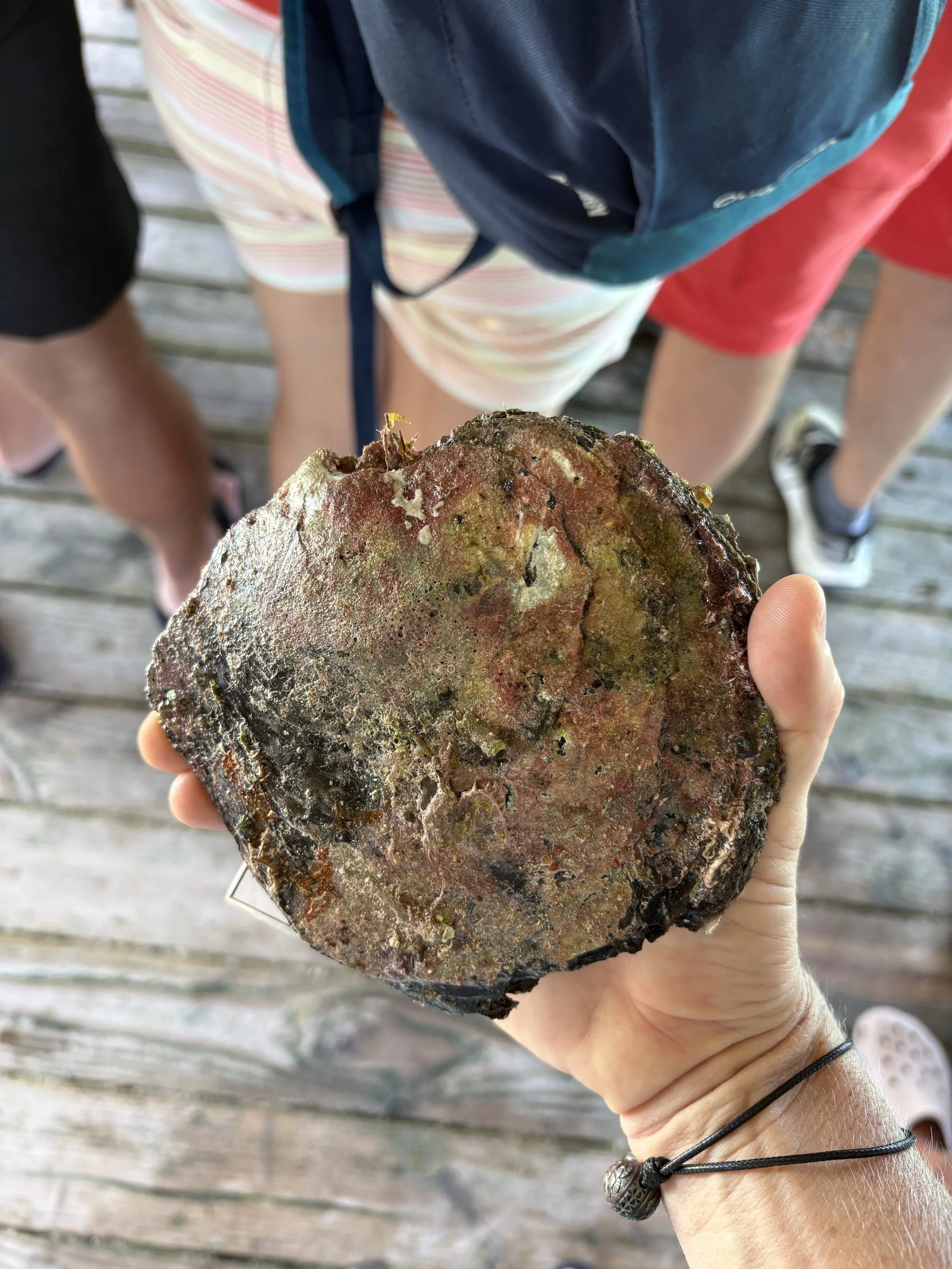
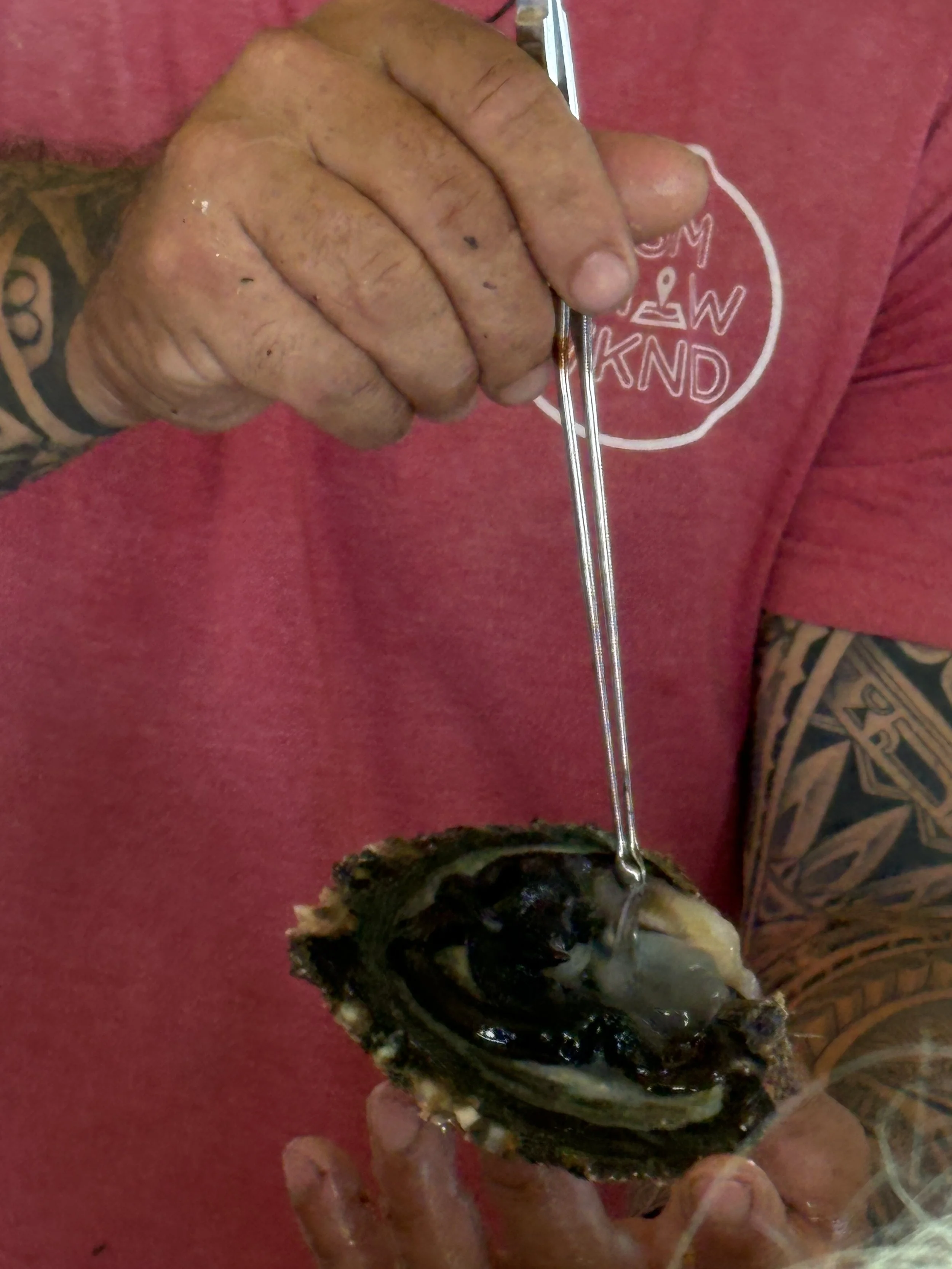
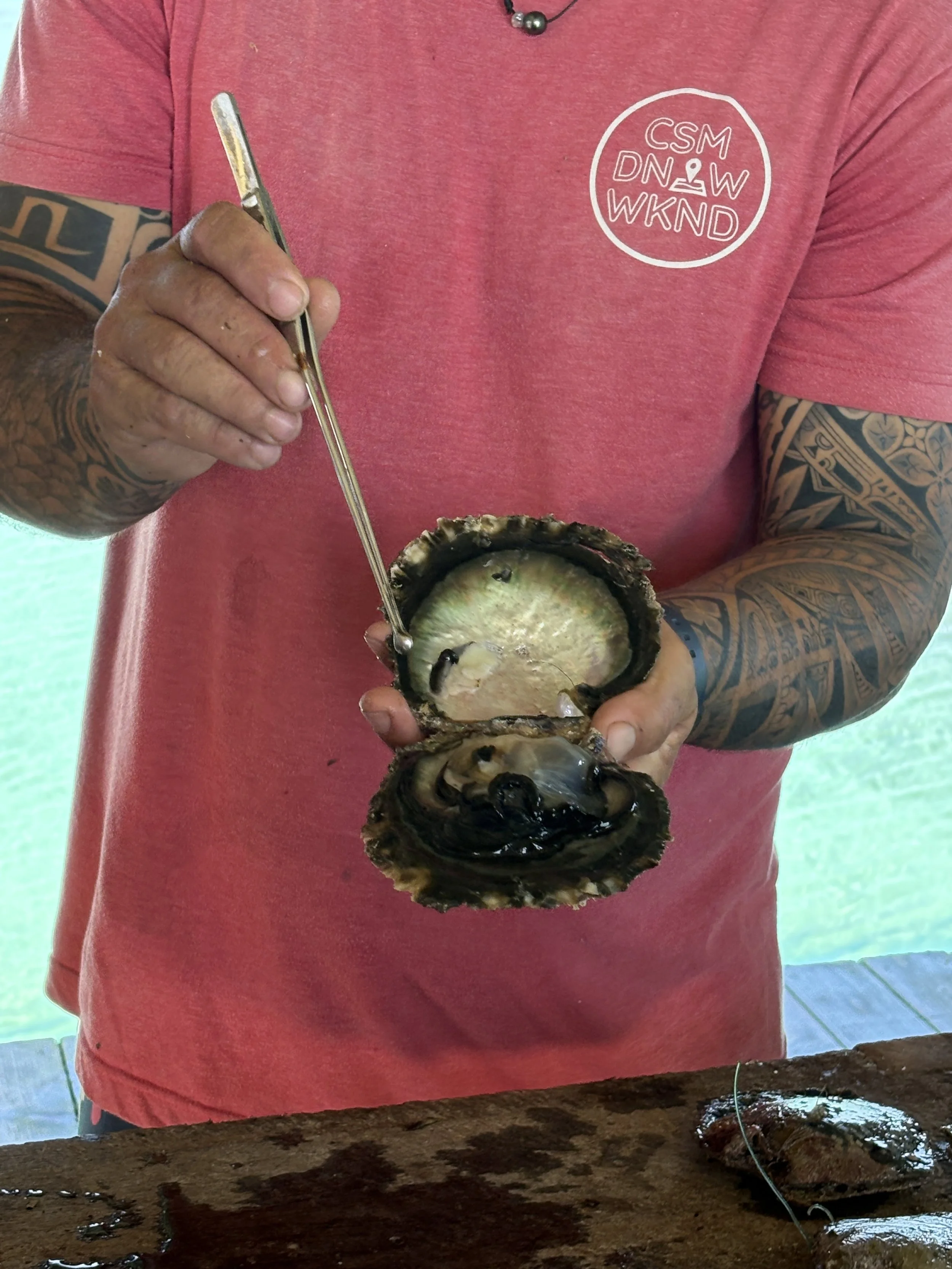
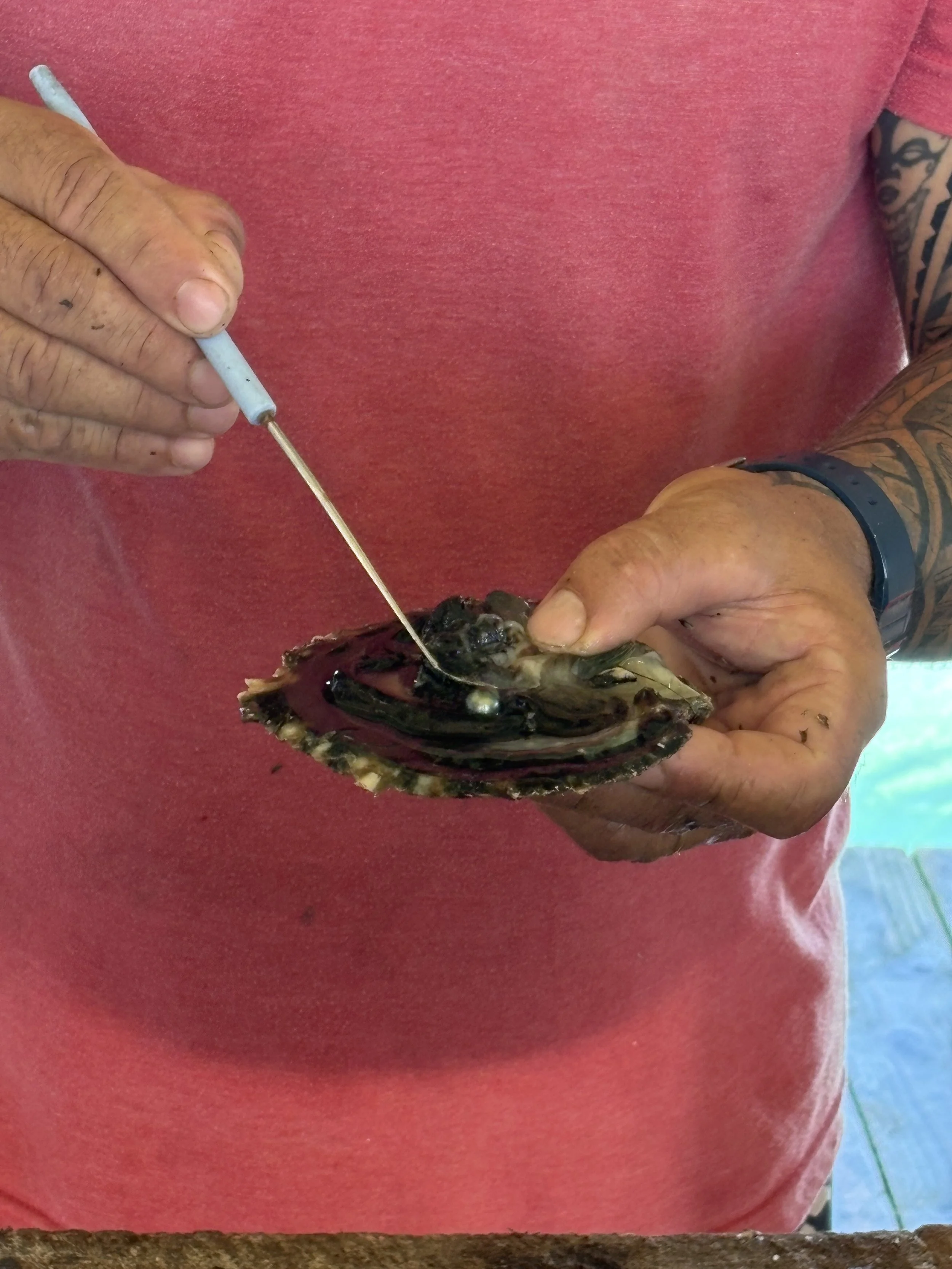
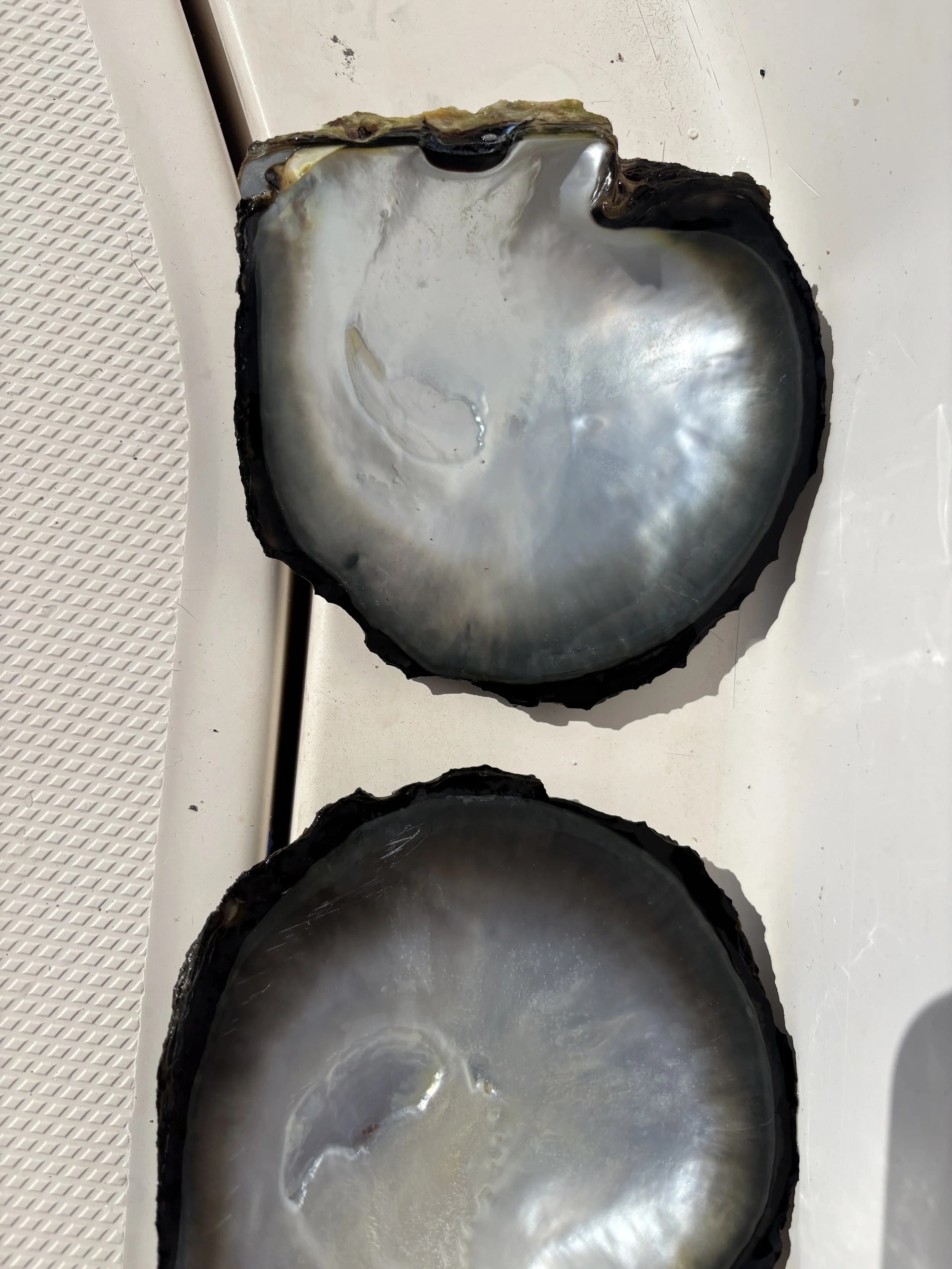
The pearl farmer opening my oyster (you could buy a shell for $30 as part of the tour) to reveal what was inside!
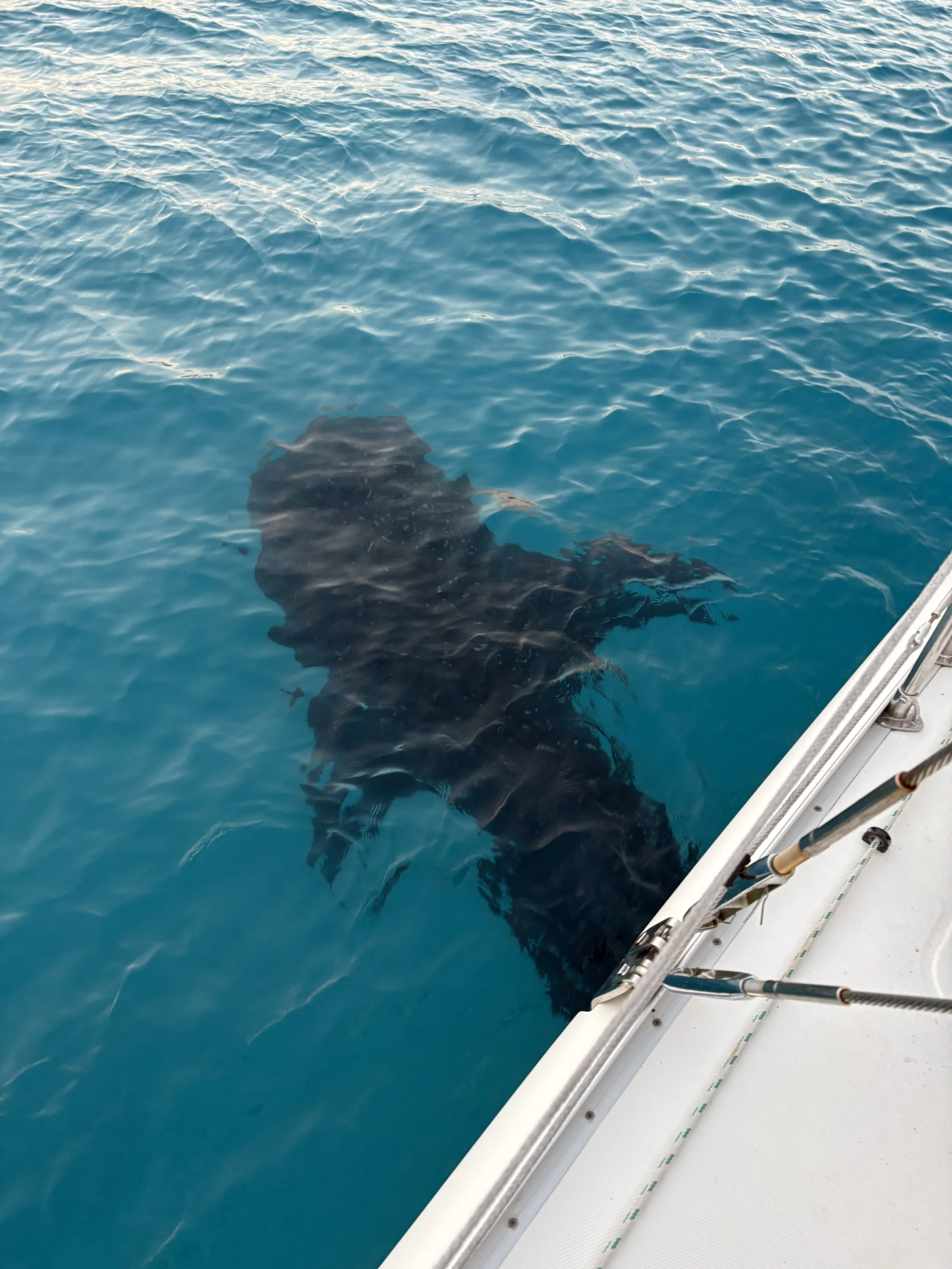
So ended a wonderful stay in Fakarava North, with yet another unique memory to go with it, before we headed down the length of the atoll to another anchorage, where we met up with friends we hadn't seen for well over a year on another kid boat. As we dropped our anchor over the front of the boat, though, a whale shark swam directly underneath us. A panicked moment to throw the engines in neutral and held our breath left us in awe of this massive creature as it glided out the side of the boat, around 4 meters in length (so really just a baby!). We just managed to catch one quick photo as it dived down too deep again. So thrilled to have seen one.
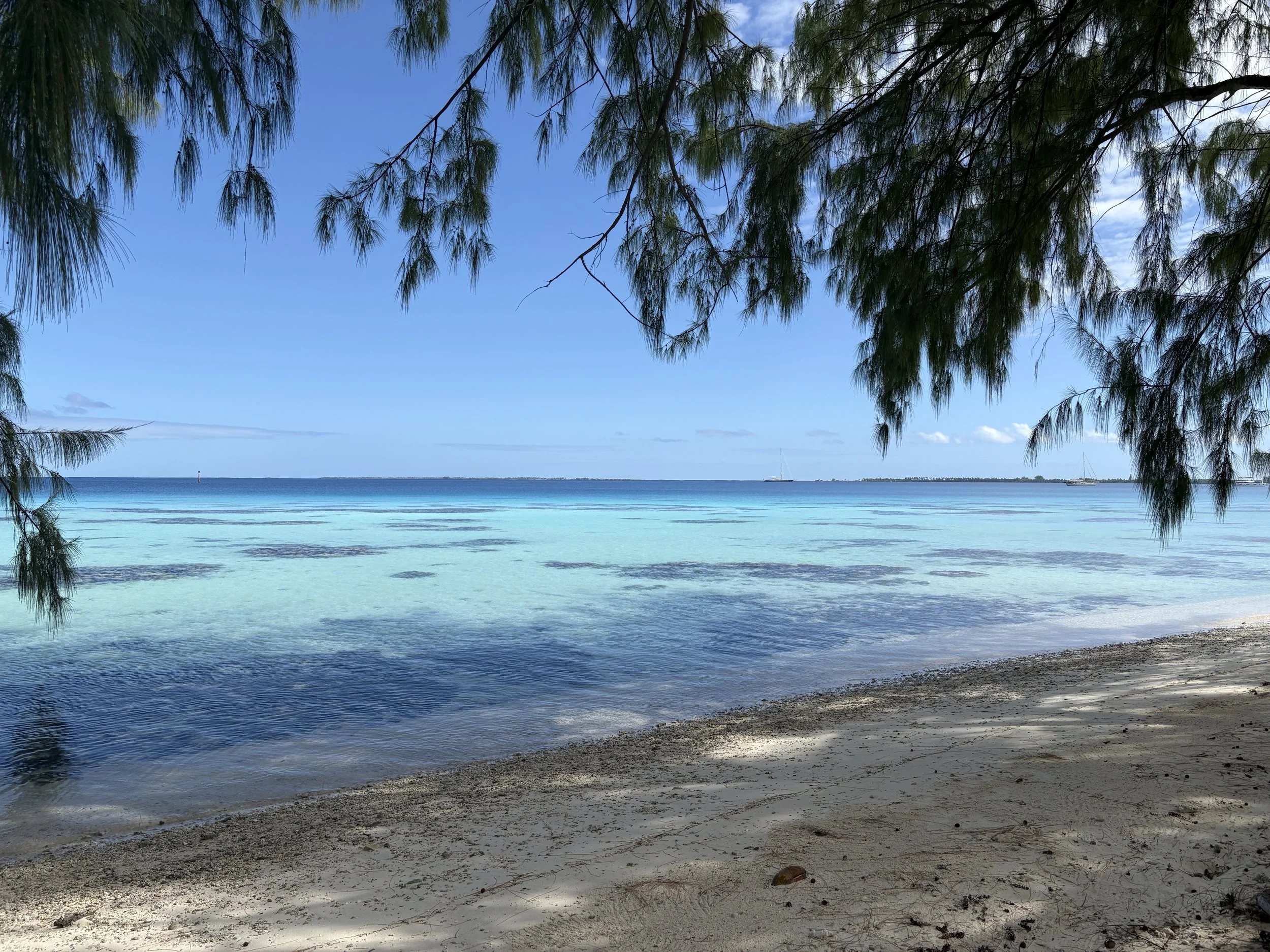
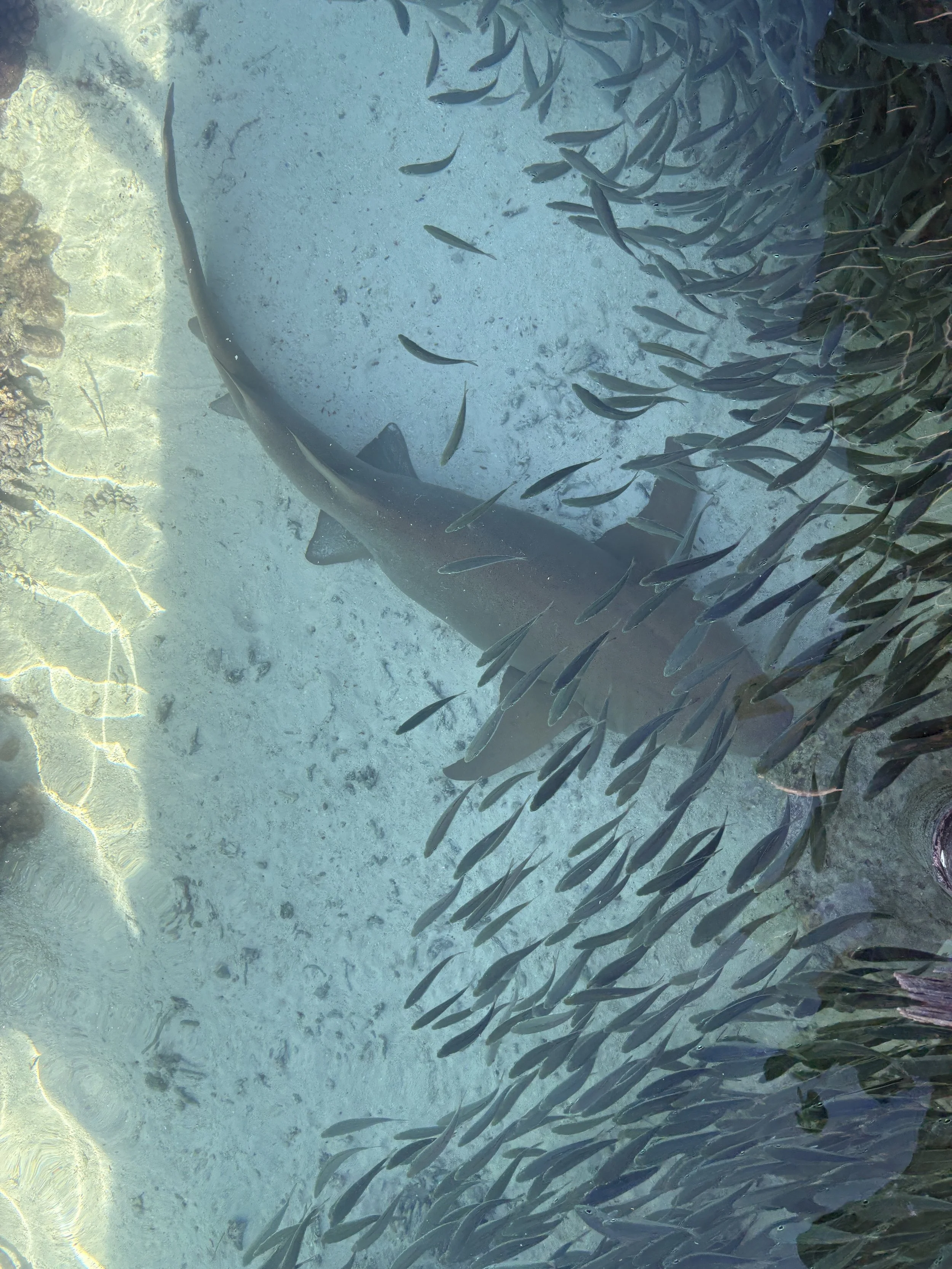
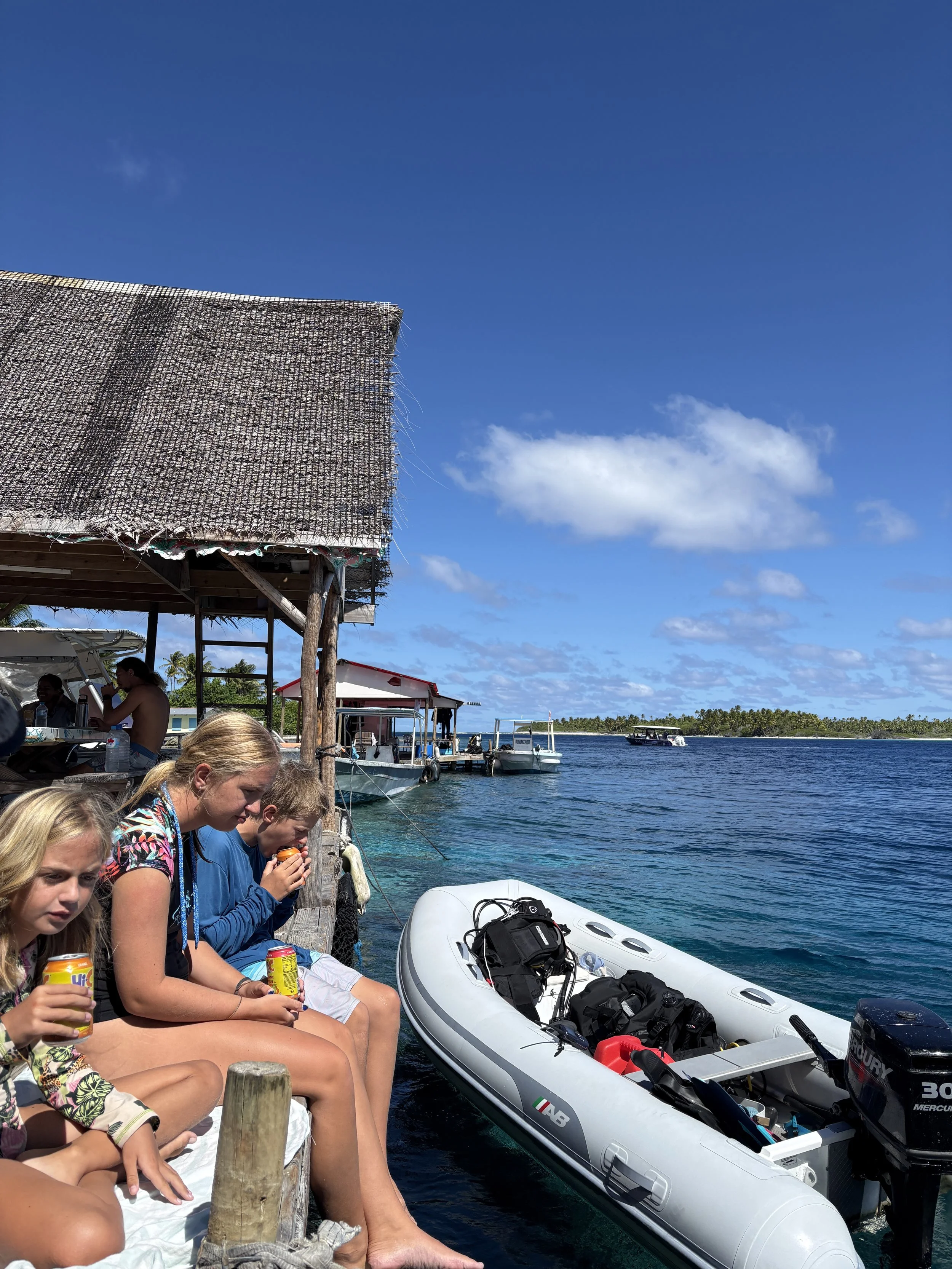
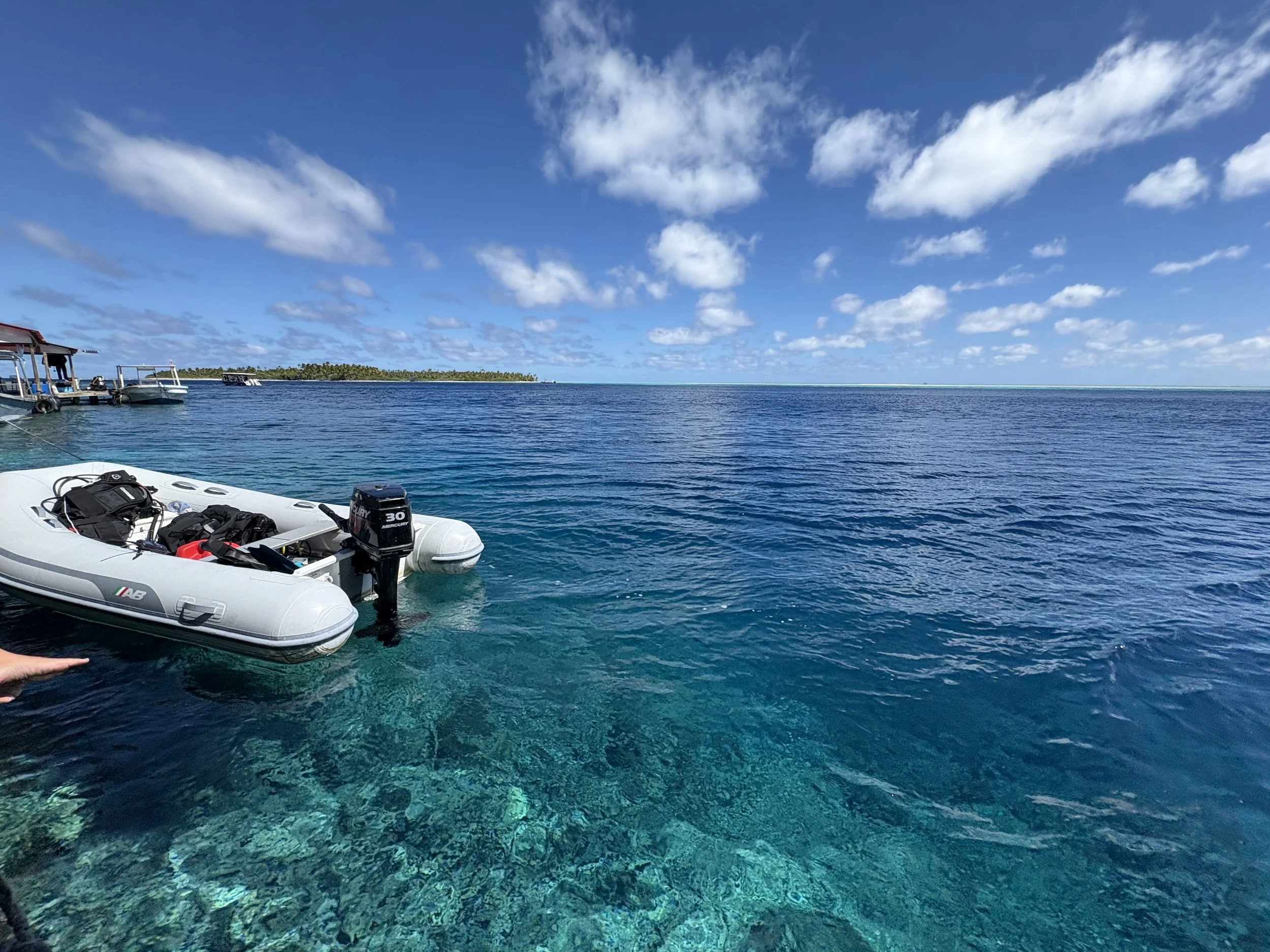
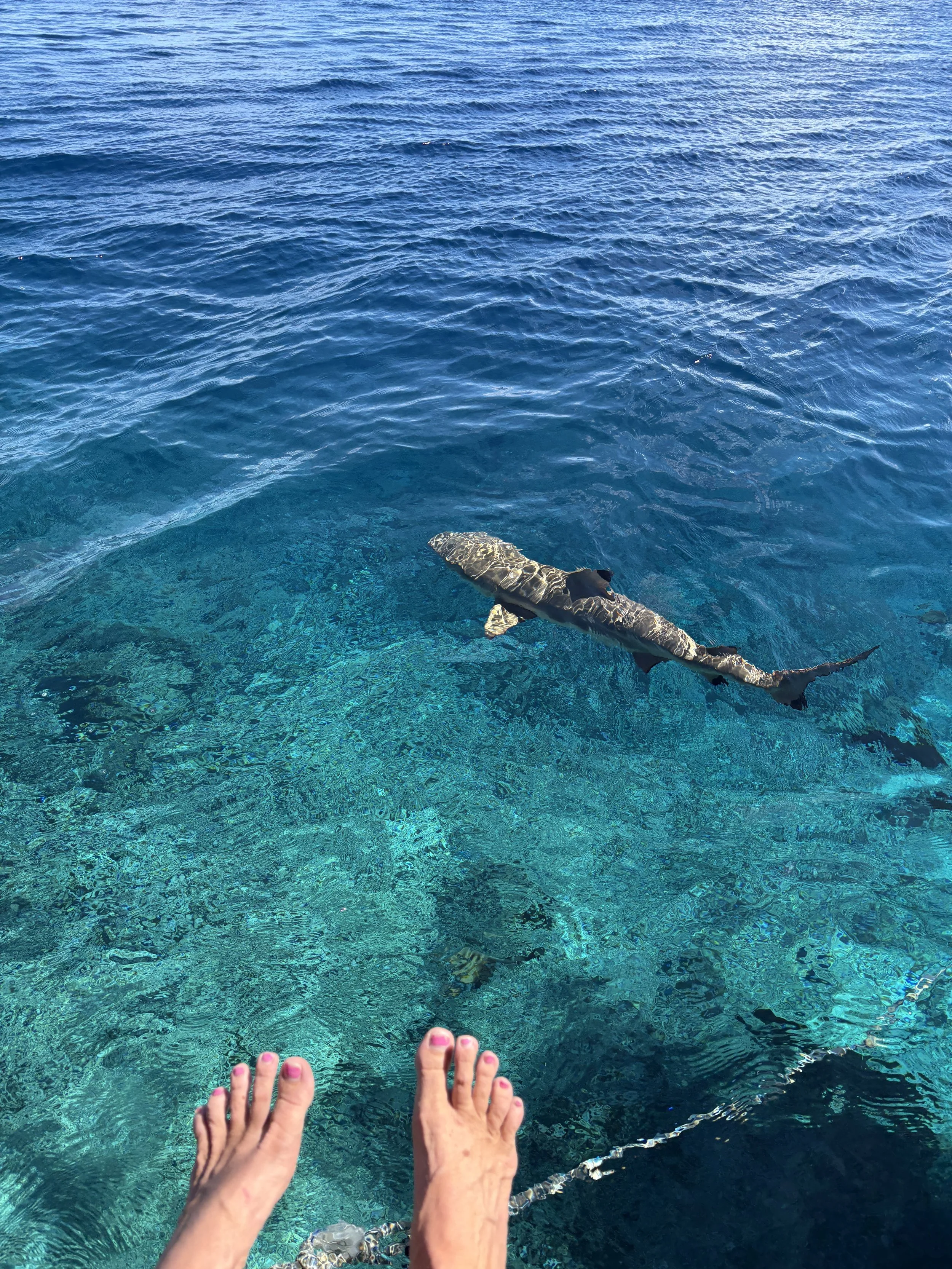
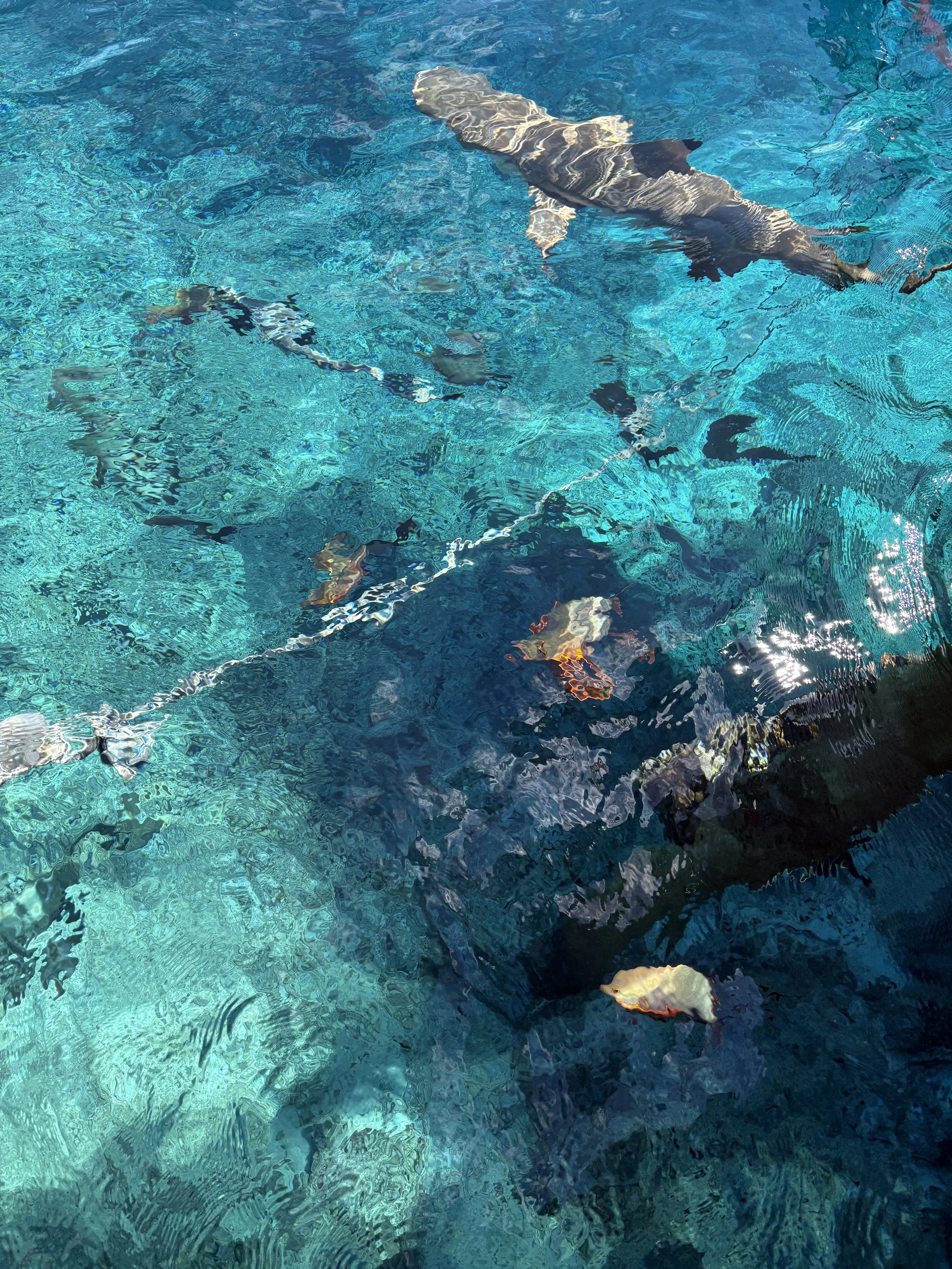
One of the things people had told us not to miss in Fakarava was the Wall of Sharks in the South Pass. It's the narrower of Fakarava's two channels into the lagoon, and is home to one of the densest gatherings of grey reef sharks anywhere on the planet, with counts on a good day running into the hundreds. We arrived about a month after the grouper spawning, when the real mass of sharks can be seen there, but it still didn't disappoint. The whole atoll is actually a UNESCO Biosphere Reserve, one of only a handful in French Polynesia, which is a big part of why the marine life here is so undisturbed and the sharks are able to gather in such numbers. We got to experience the pass three times: twice we snorkelled it, and once, Annabelle, Oscar and I got our scuba gear out and dived the pass while Bethan snorkeled overhead with friends. We jumped in and drifted with the current, sharks stretching from the reef floor almost to the surface, all facing into the flow. Snorkelling through the middle of that many sharks should probably have felt terrifying, but somehow it didn't. They were completely uninterested in us, more focused on holding their spot in the current than in the strange creatures floating overhead, and we came away thinking it was one of the best things we've done on this whole trip.Afterwards, we sat having our dive tanks refilled with air at a local dive shop and marveled at the colors of the water below our feet!
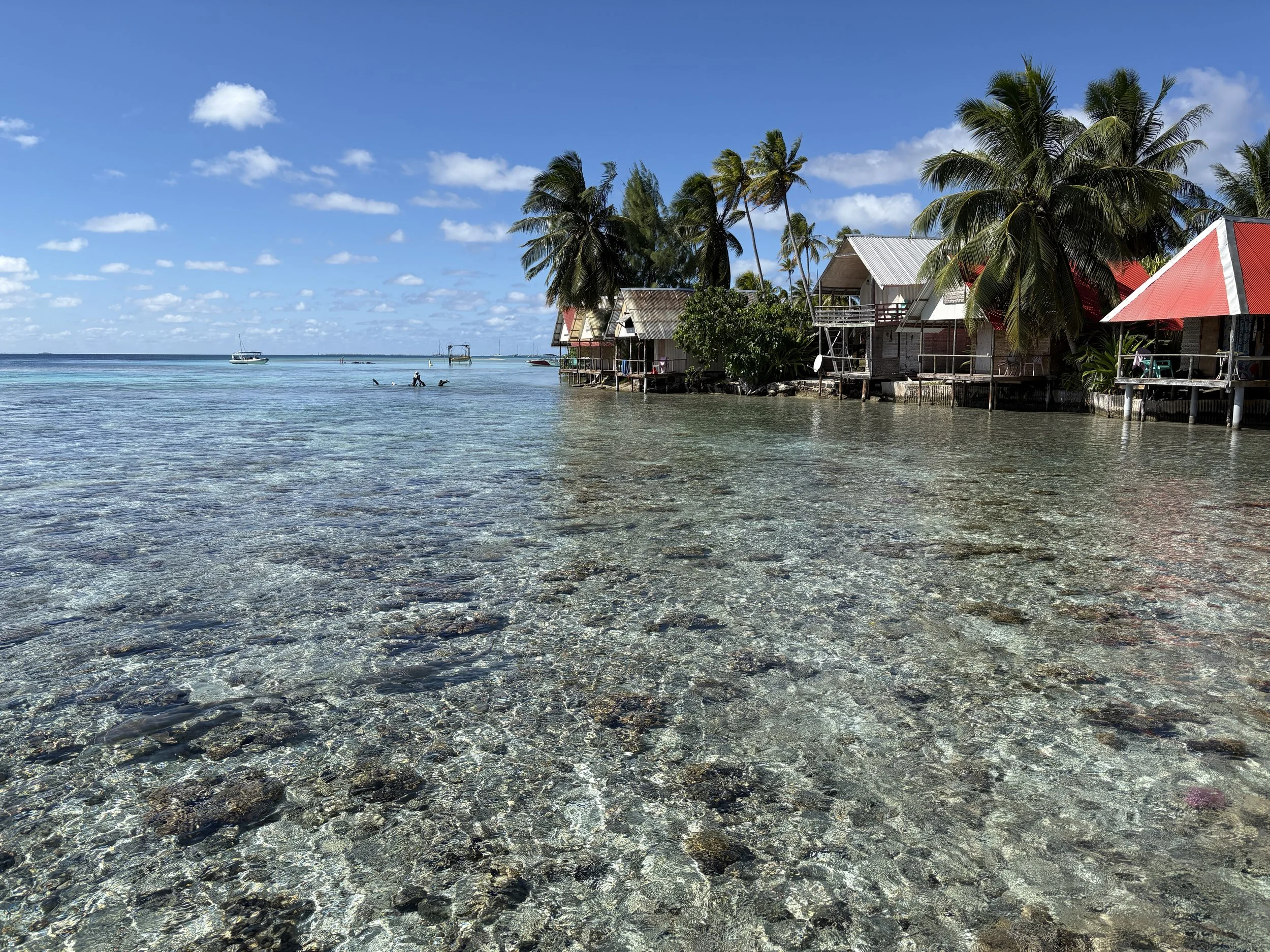
It was a pretty wonderful way to end our time in this set of islands. Now, an overnight passage to Tahiti and the start of the Society Islands beckoned!