We crossed the Pacific Ocean!!
It's strange. Six months of preparation, and now that we've crossed the Pacific, it feels like a lifetime ago—and those 20 days just merged into one another.
With Annabelle needing to return to the US for her AP exams in May, we decided to take a chance on bringing Kevin, a friend of a friend and a new potential crewmate, on board. An American, who'd spent the past 10 years running and building businesses in the Galápagos, he wanted to experience ocean sailing. We met for a few hours in a bar, felt we clicked, and decided to try it. A week later, he moved aboard for a 48 hour live-aboard trial, whilst we were still in the Galapagos. Kevin deserves huge credit; a genuinely nice guy with limited big-boat sailing experience who stepped into our tight-knit family environment (which is no small ask, I know!) and simply became part of it all. He was eager, asked loads of questions, and learnt quickly. After those first few days, both sides knew we were ready for a 20 ish -day adventure together. We said goodbye to Annabelle as she headed back to the US via Ecuador, New York, and San Francisco, where she'd spend the month studying for her exams with her aunt and uncle Ali & Luis, and her cousins Bea & Oliver.
The morning before we were due to check out with Immigration, we learned that our friends' boat, FireFly, had suffered a catastrophic rigging failure 300 miles beyond the Galápagos—their forestay broke. They had to limp back to the Galapagos, getting special visa permissions as they did so to enter, with ropes supporting the mast. Short on diesel, they reached out to the Ecuadorian Coast Guard; however three boats, us included, who were about to depart the Galapagos for French Polynesia rallied instead, to prepare fuel for a mid-ocean rendezvous. Getting those extra cans filled wasn't straightforward. As boaters, we needed special permits from the authorities to carry extra diesel—there's a history of fuel being intercepted by drug smugglers off these coasts. Fortunately, because the authorities were tracking FireFly via AIS and knew the situation, we got permission to take on last-minute fuel.
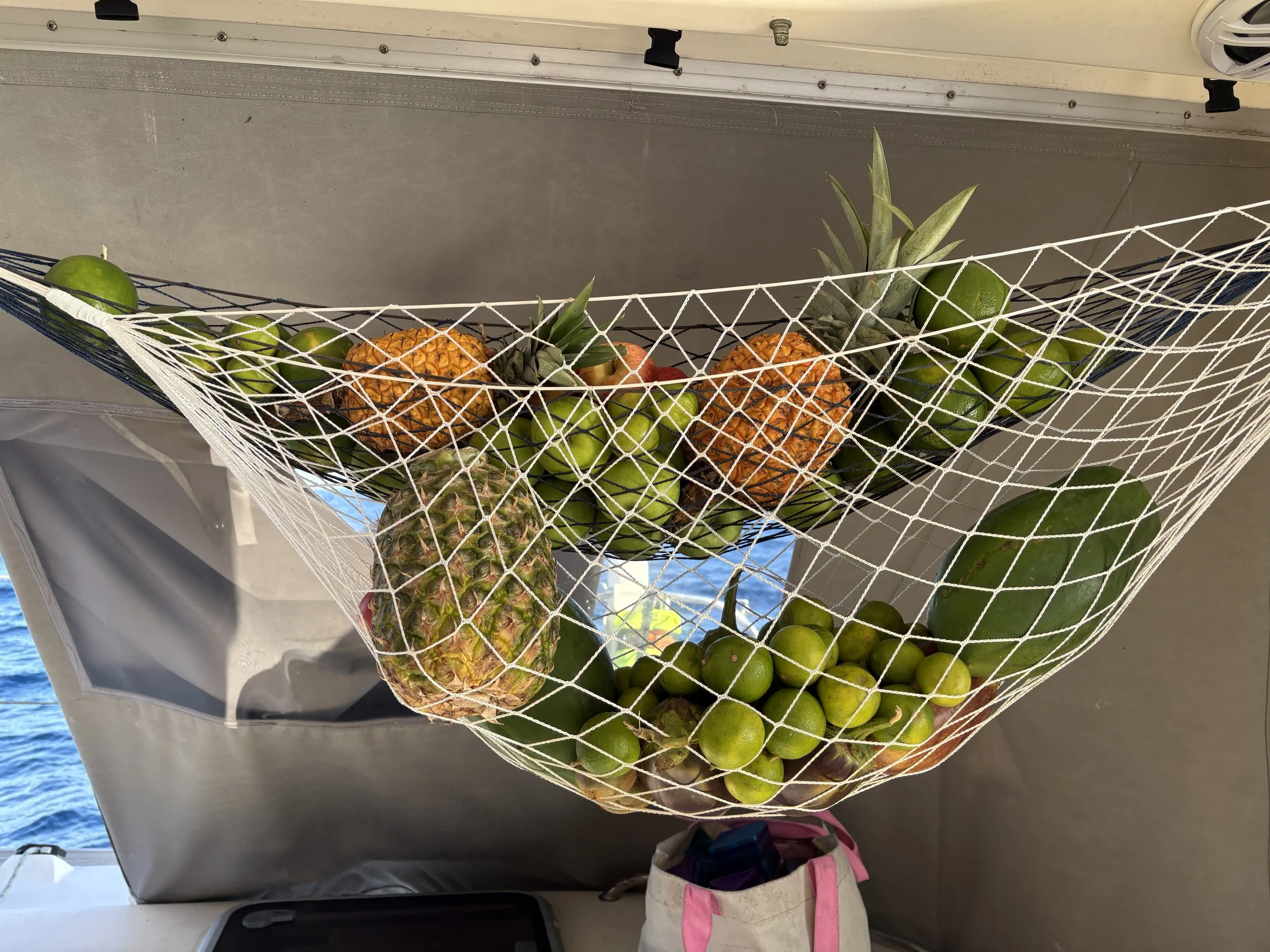
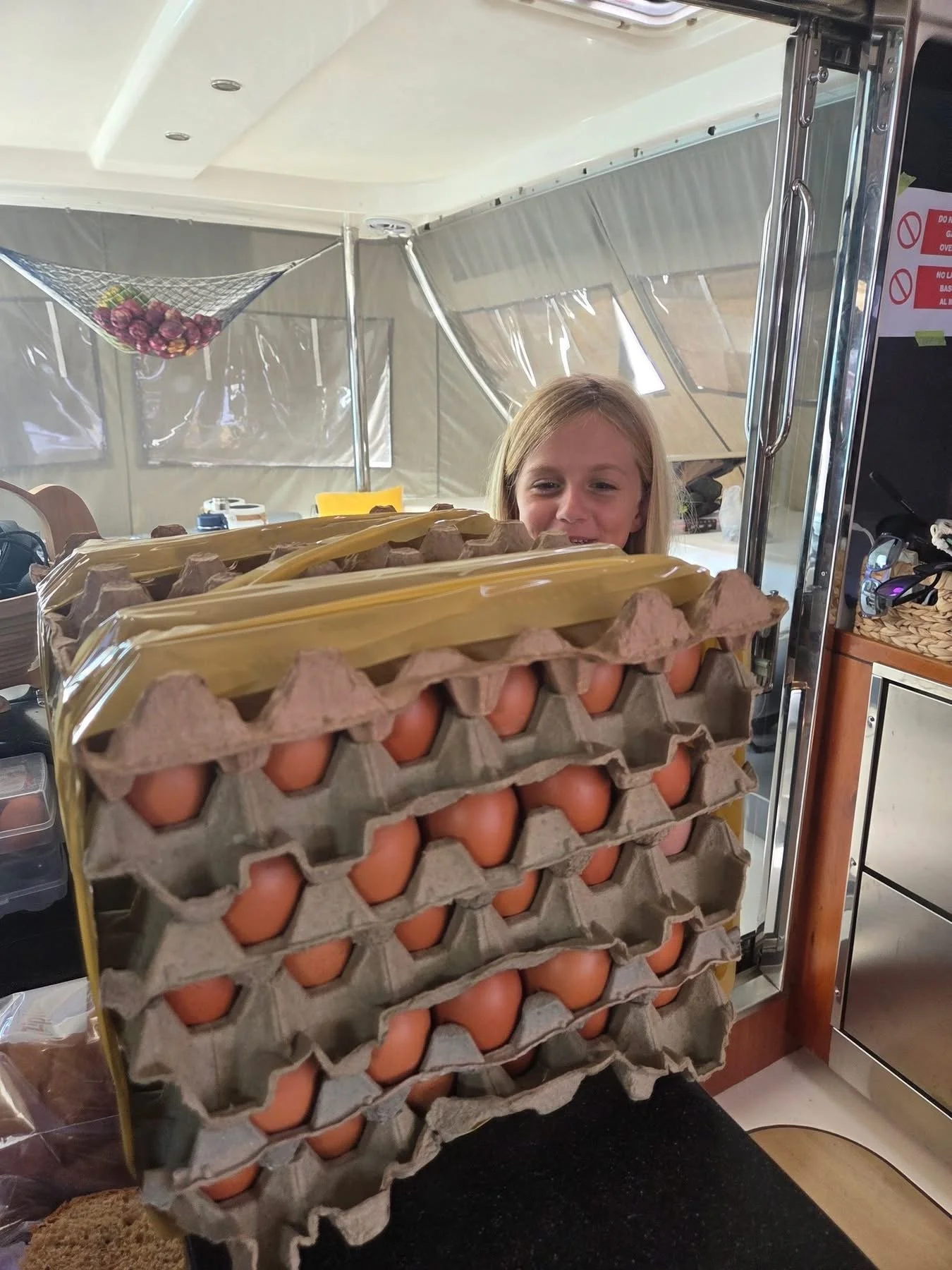
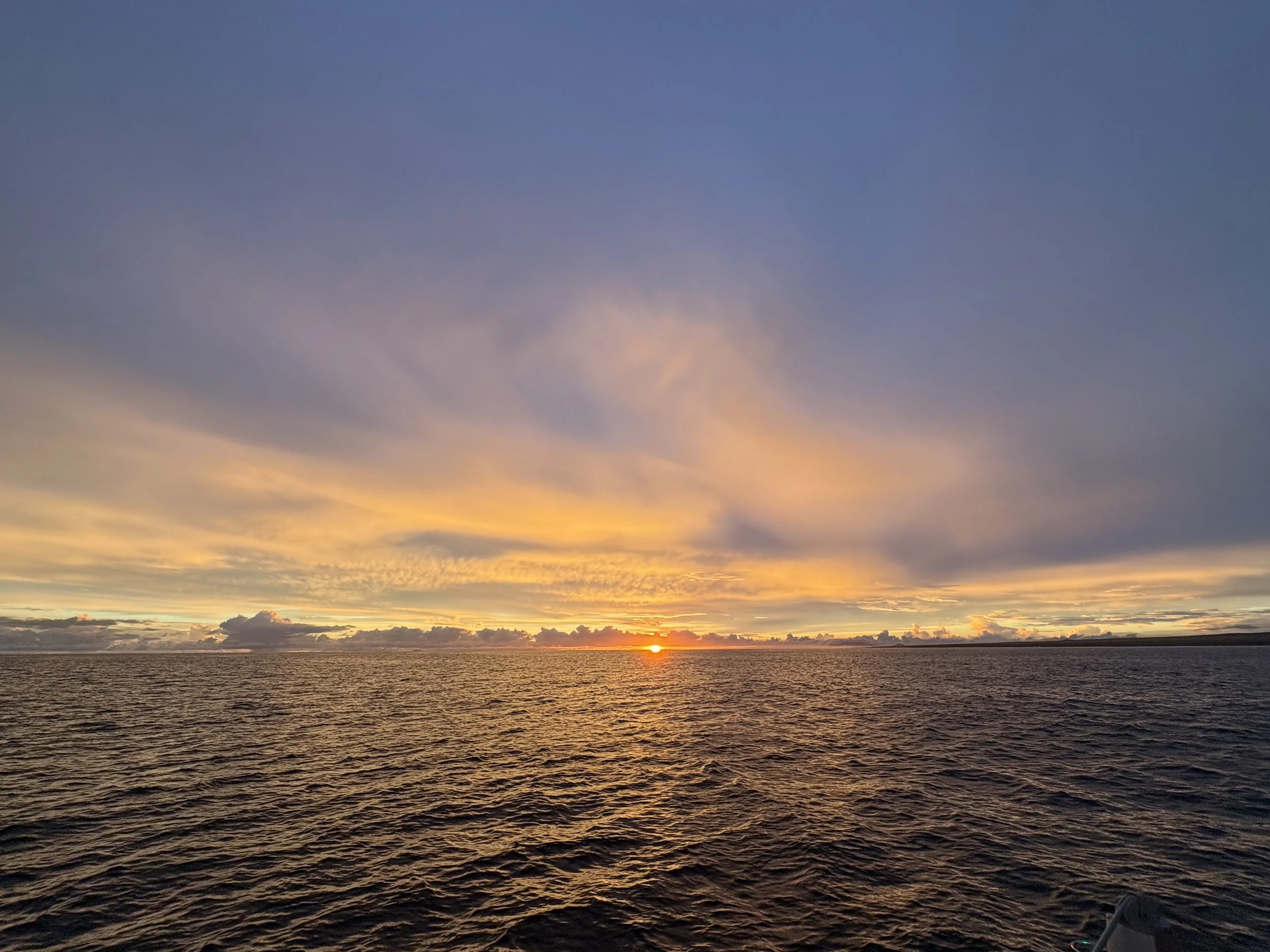
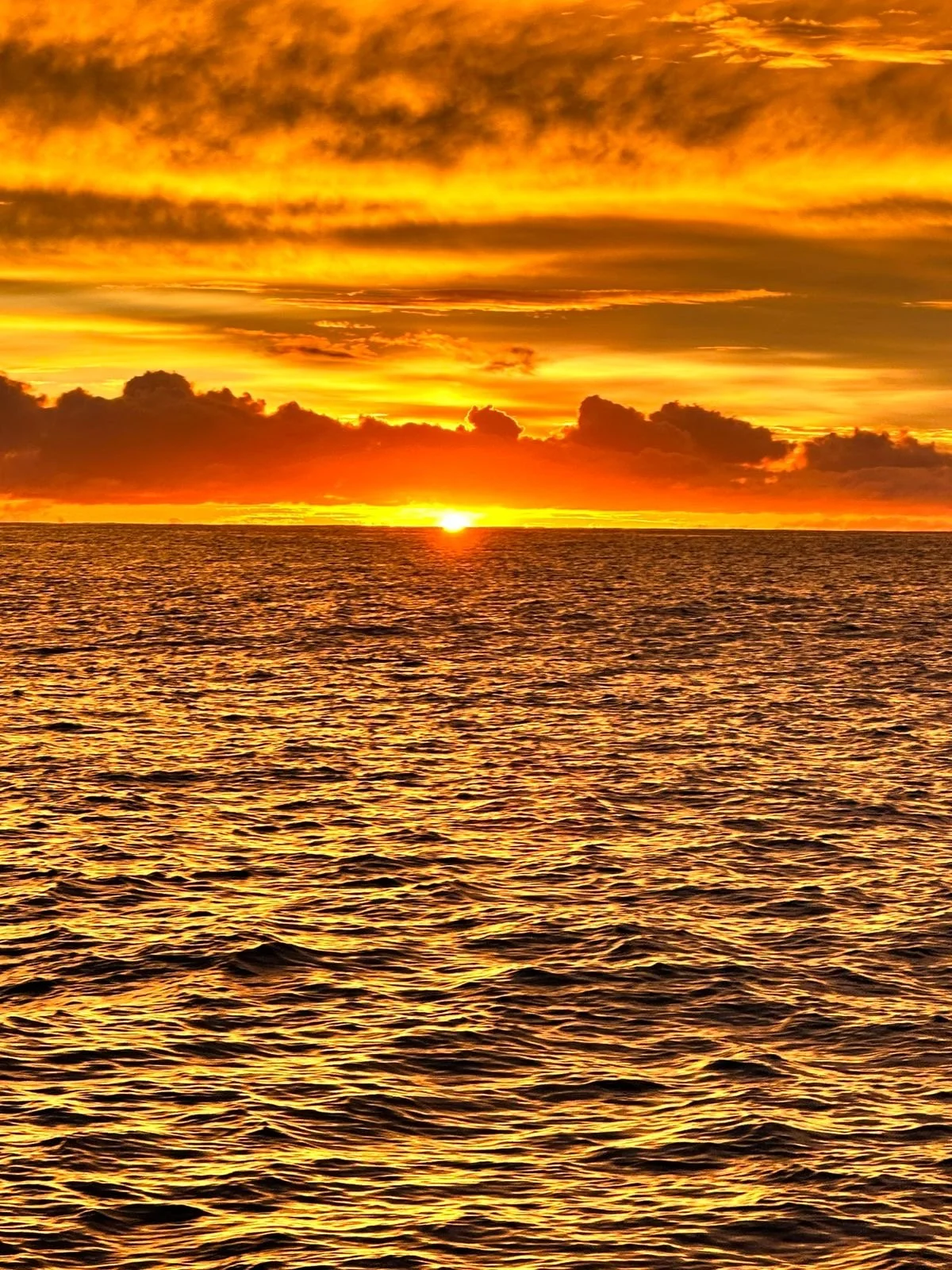
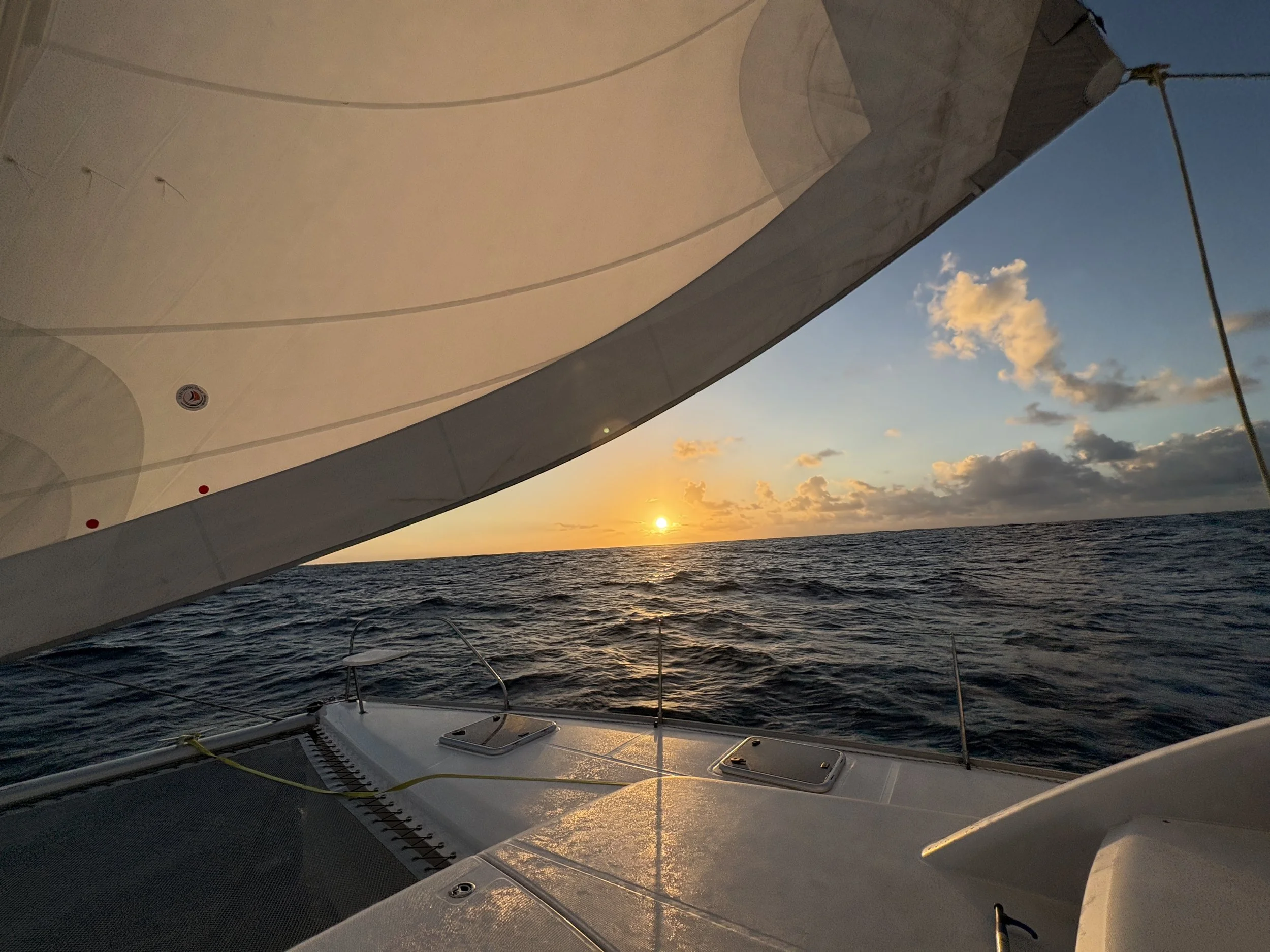
We checked out late afternoon, fully provisioned from the excellent Santa Cruz market, with fresh produce, eggs (150 eggs for just $30!) and headed out toward a magnificent first sunset.
So began a 20-day passage like nothing we'd ever experienced. We kept in contact with FireFly as the other two sailing boats who'd left before us successfully made their drops, adjusting course to intercept them. Luckily, the waves were light and the sky clear as we finally spotted them on the horizon. We slowed to idle, they came up behind us, and one by one, we floated the yellow jerry cans off the back of our sugar scoops (back of the boat) into the ocean toward them on a long line. They scooped them out of the water and onto their deck—mission accomplished! We wished we could have stayed to give them all a hug; they looked pretty downbeat and obviously extremely stressed and worried, with about 150 miles still to travel in the wrong direction. Still, we were thrilled to have helped them in our small way. (And as I write this, we're sitting next to them at anchor in French Polynesia after their rigging was fixed in the Galápagos, and all the kids are back together playing!)
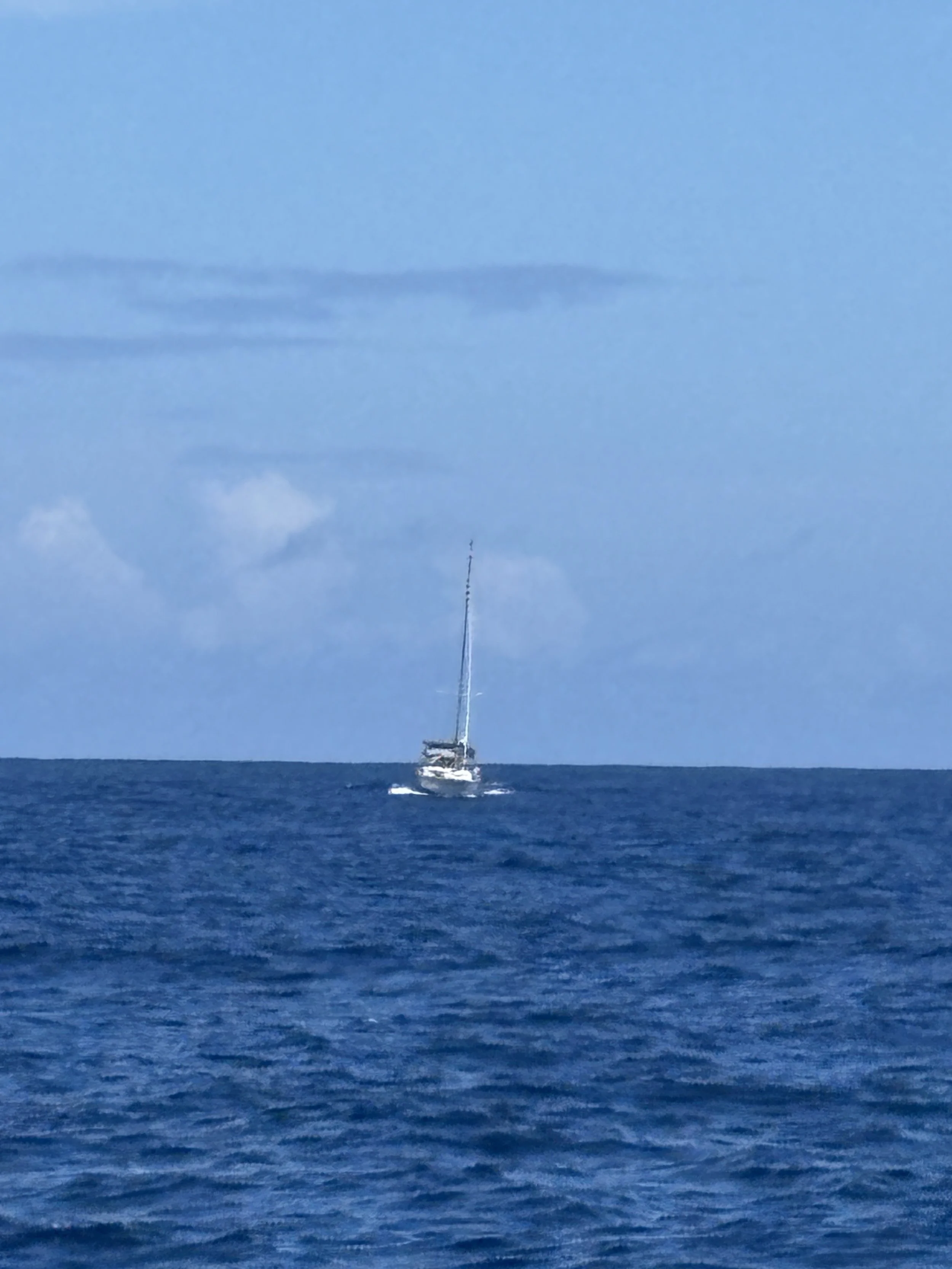
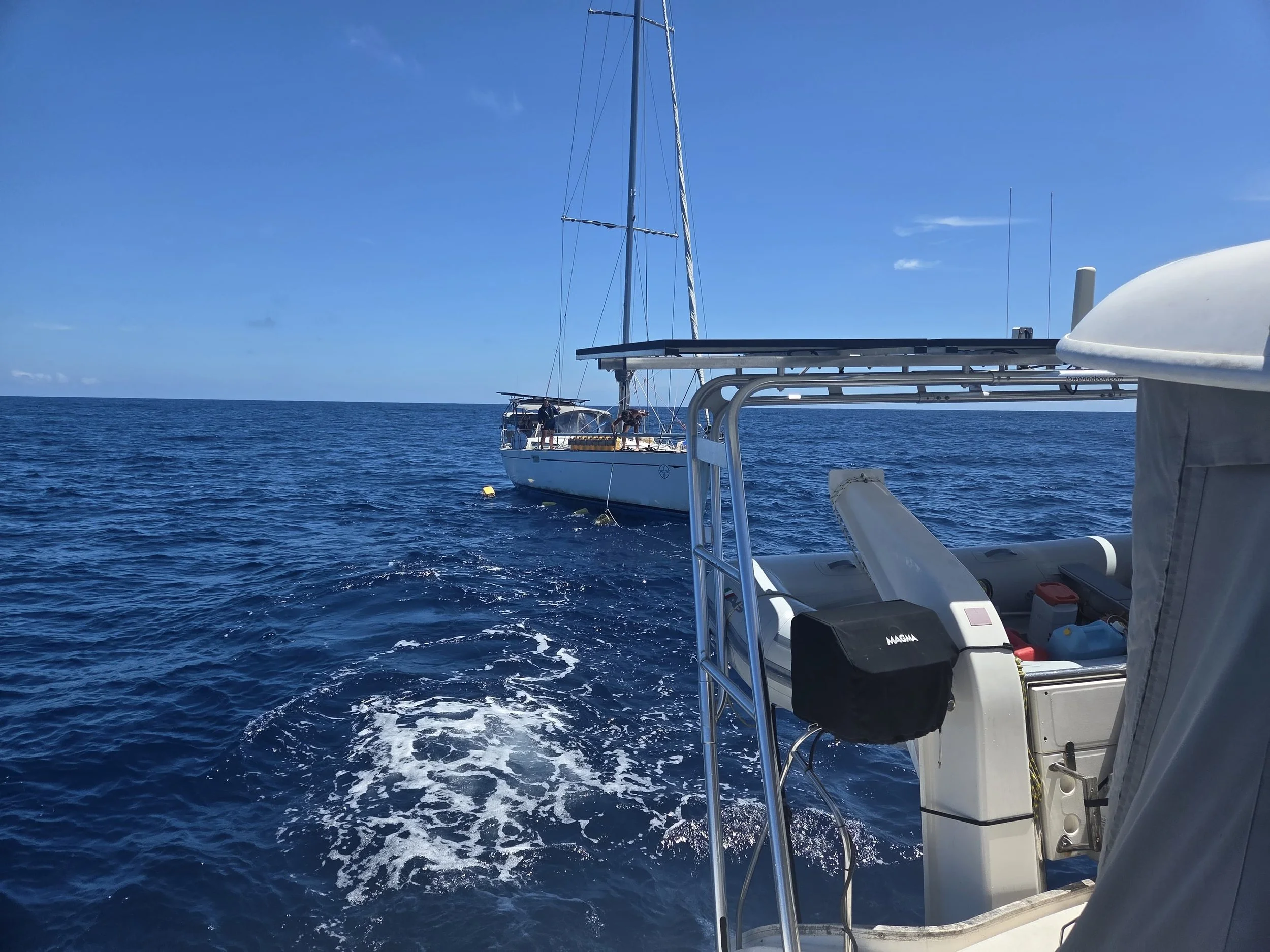
Above, as we head off again on LunaSea, FireFly got all the new diesel cans on board successfully from the drop!
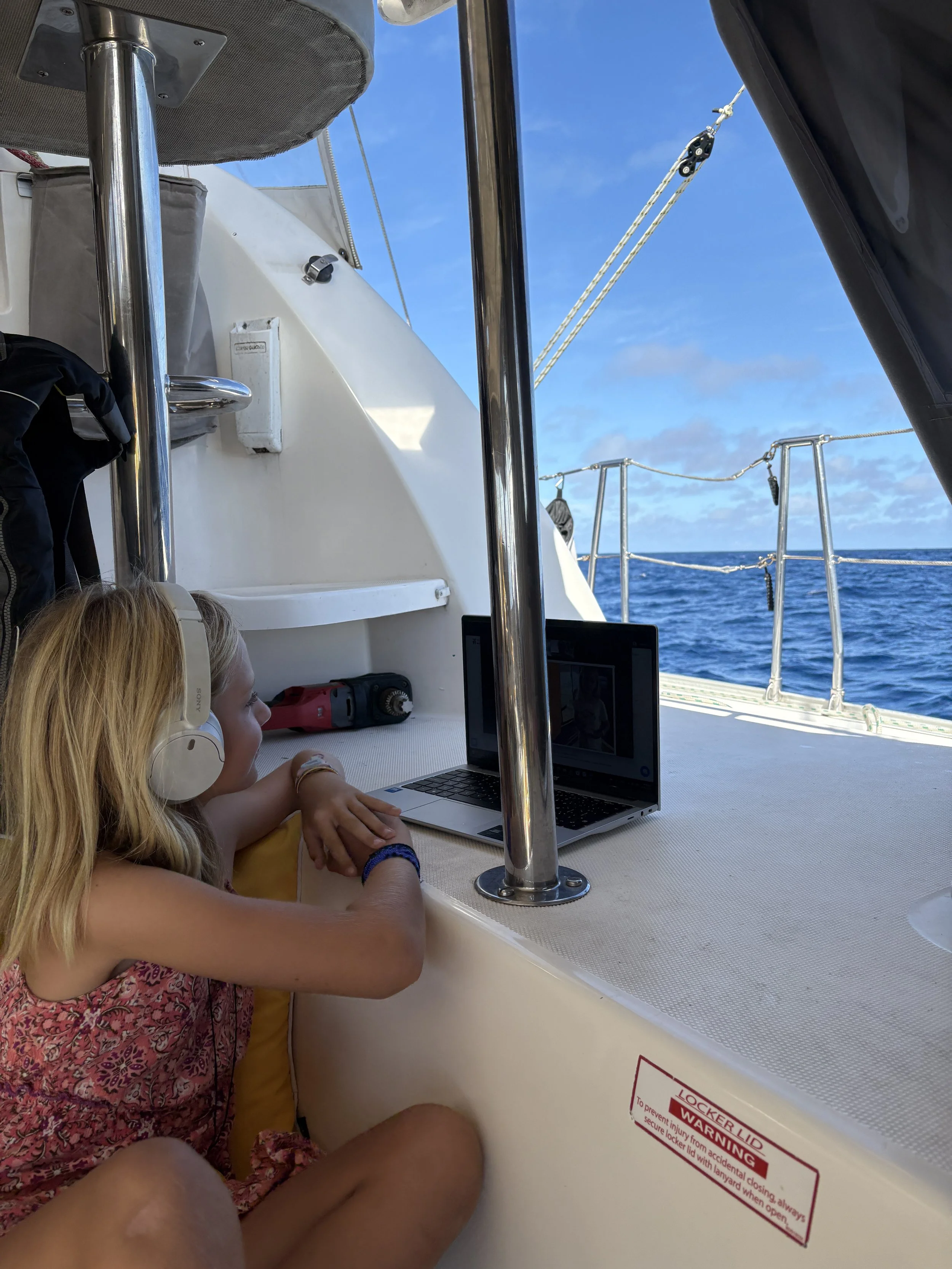
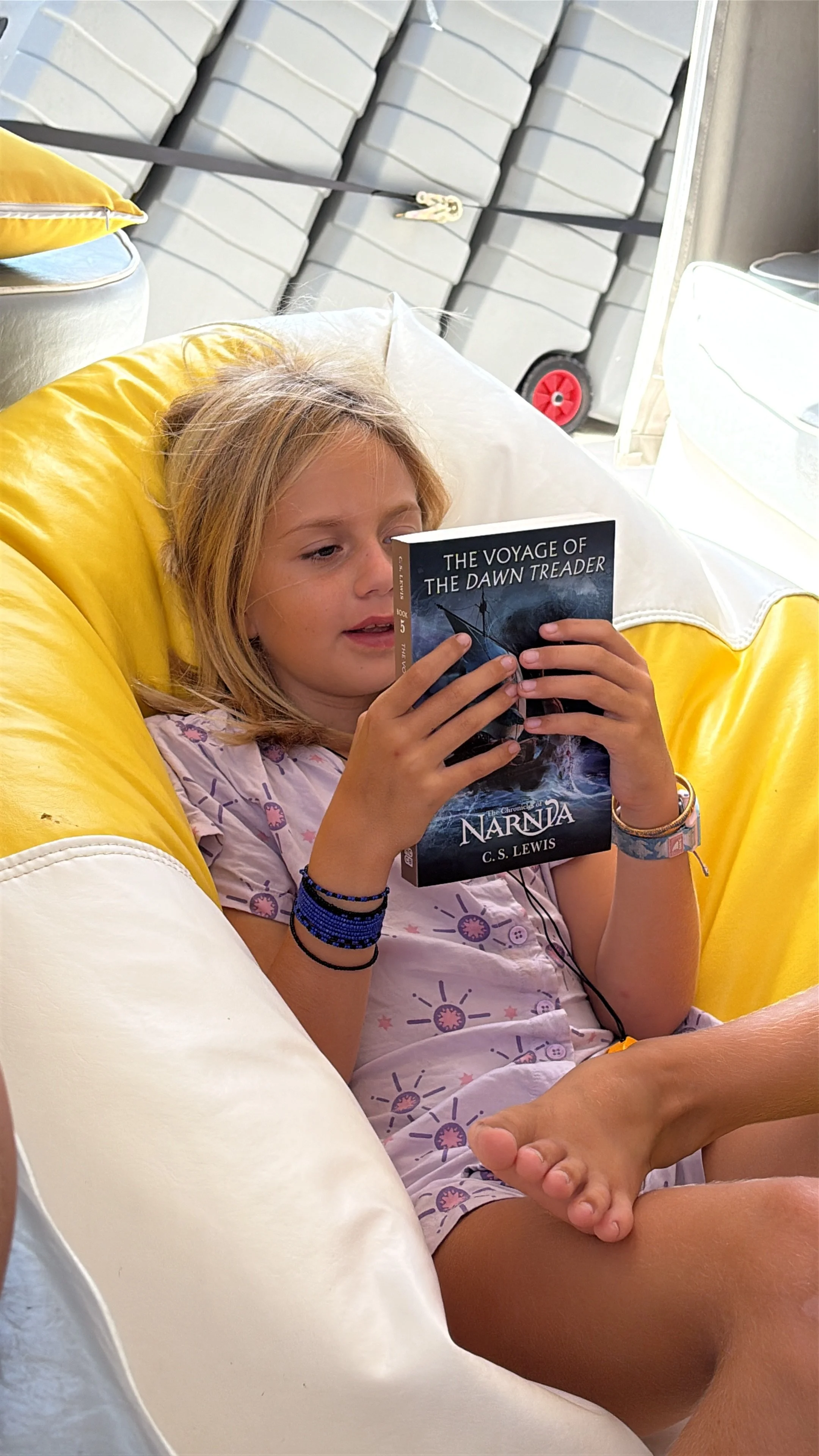
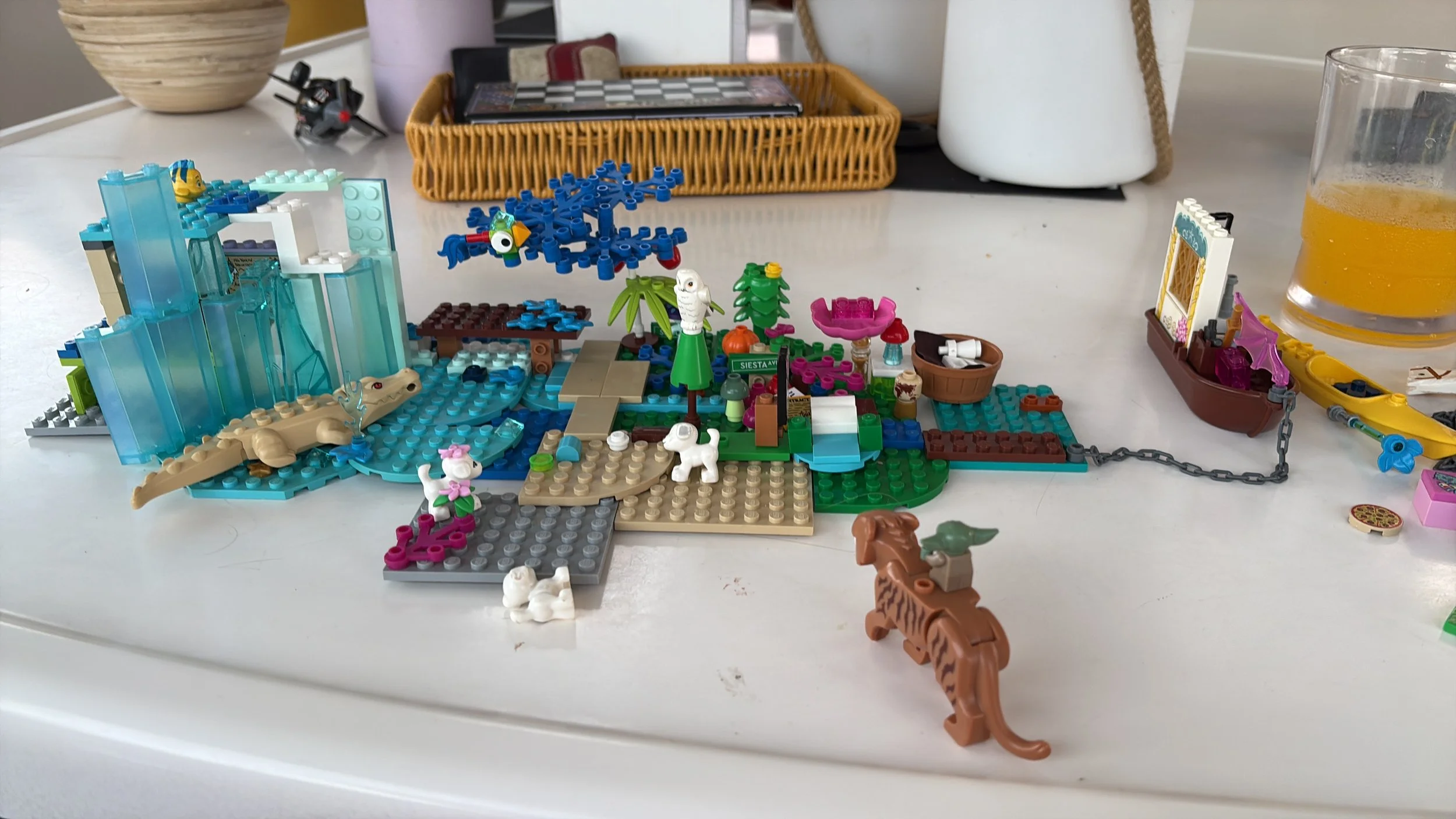
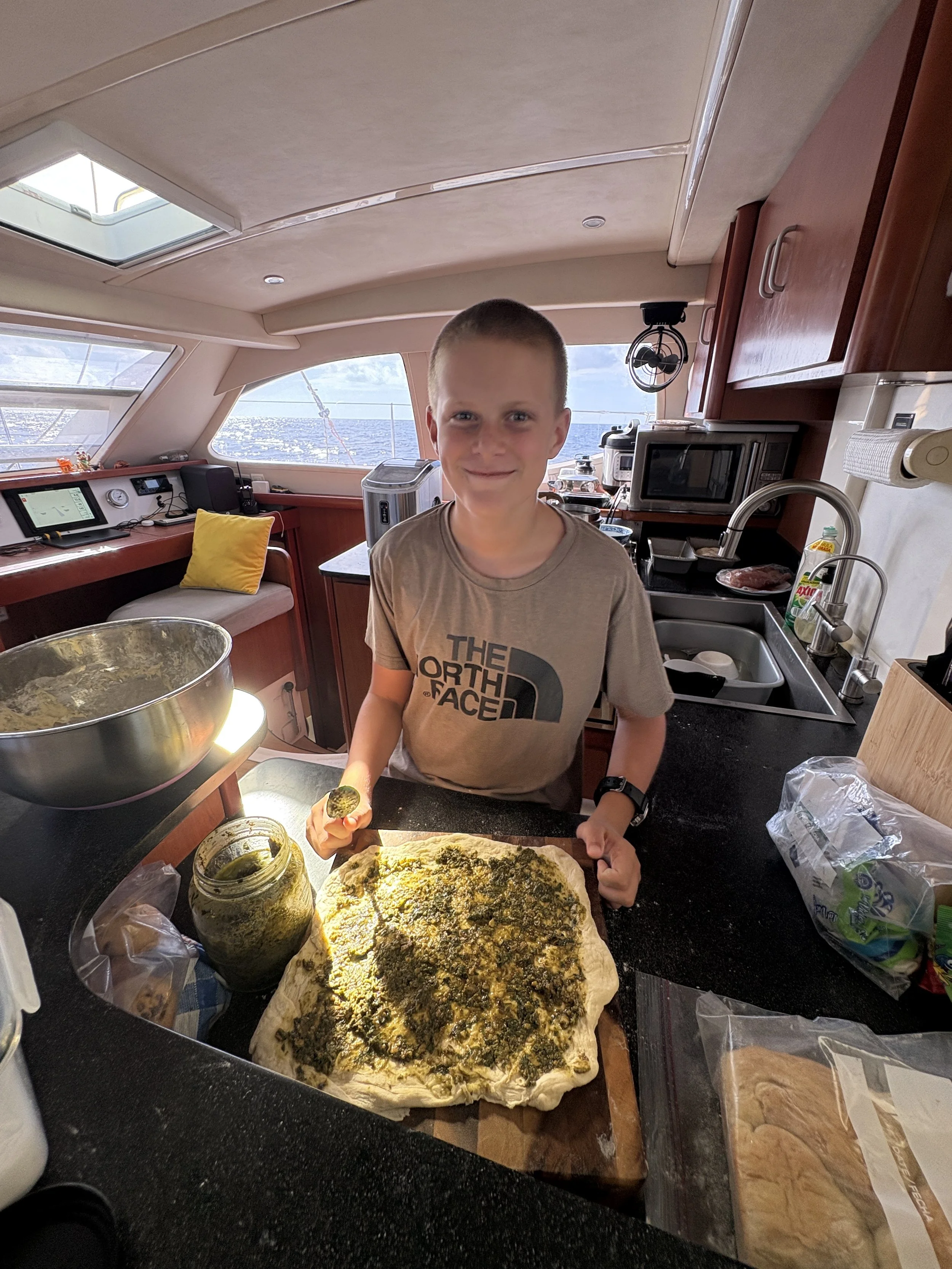
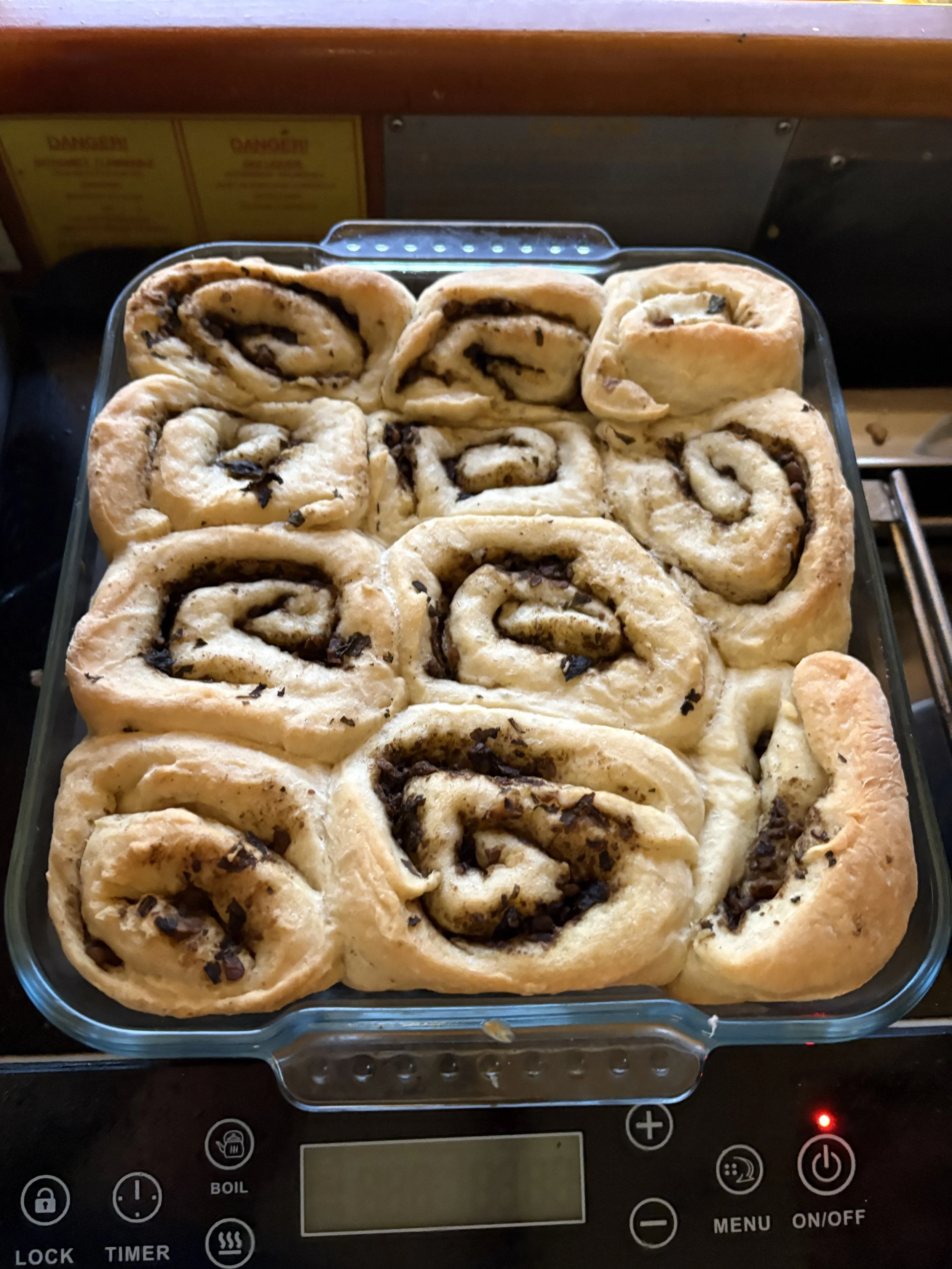
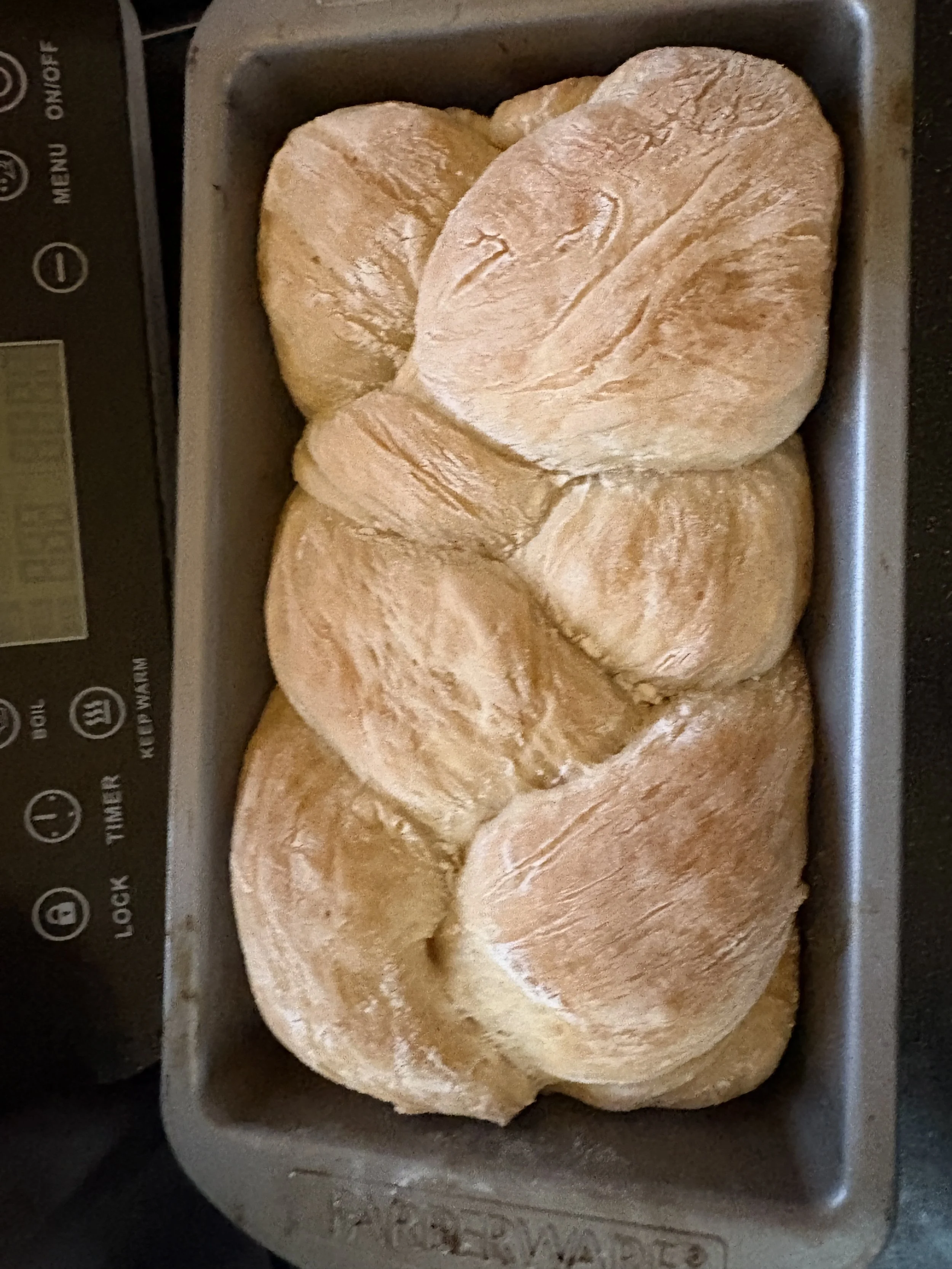
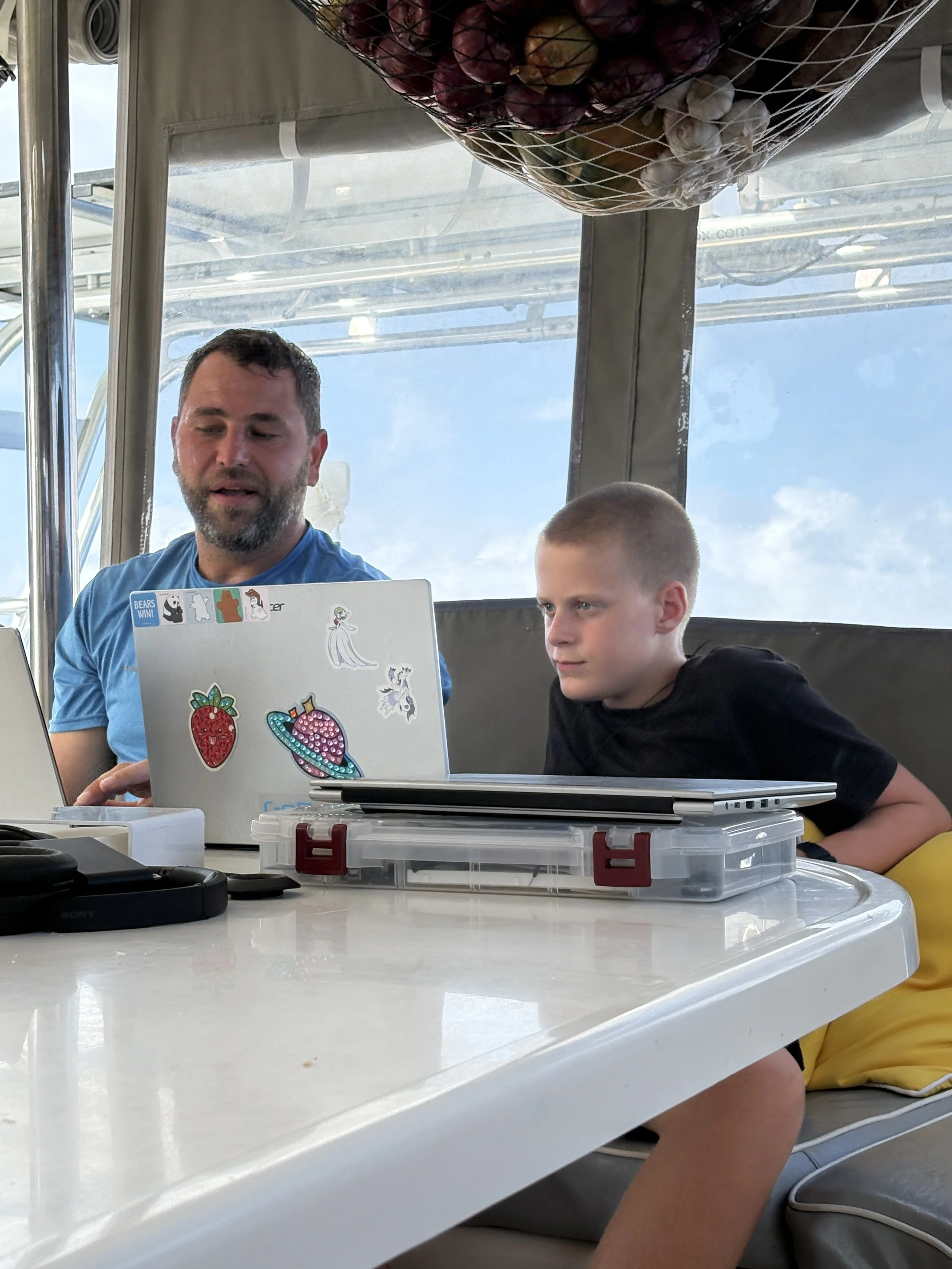
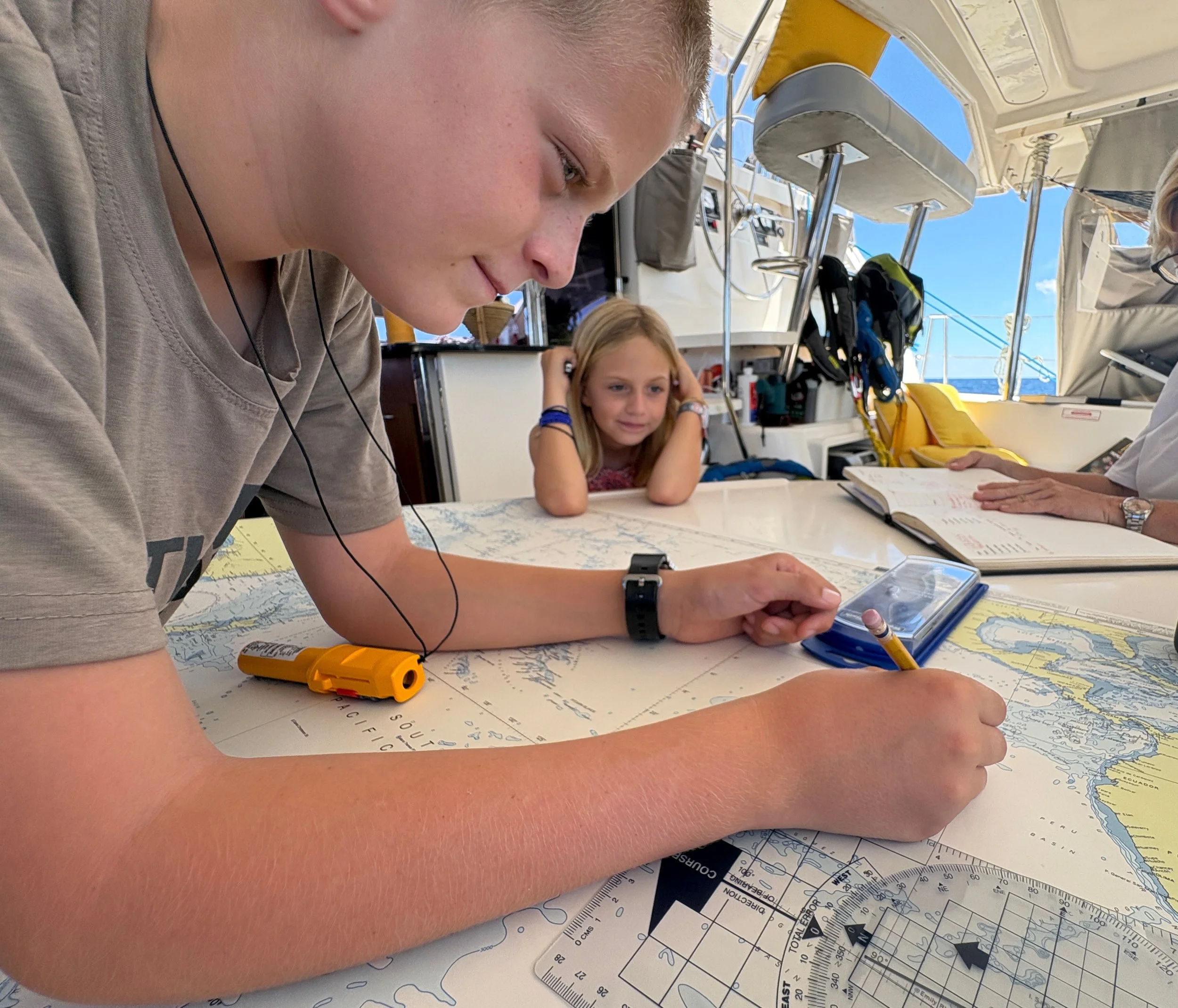
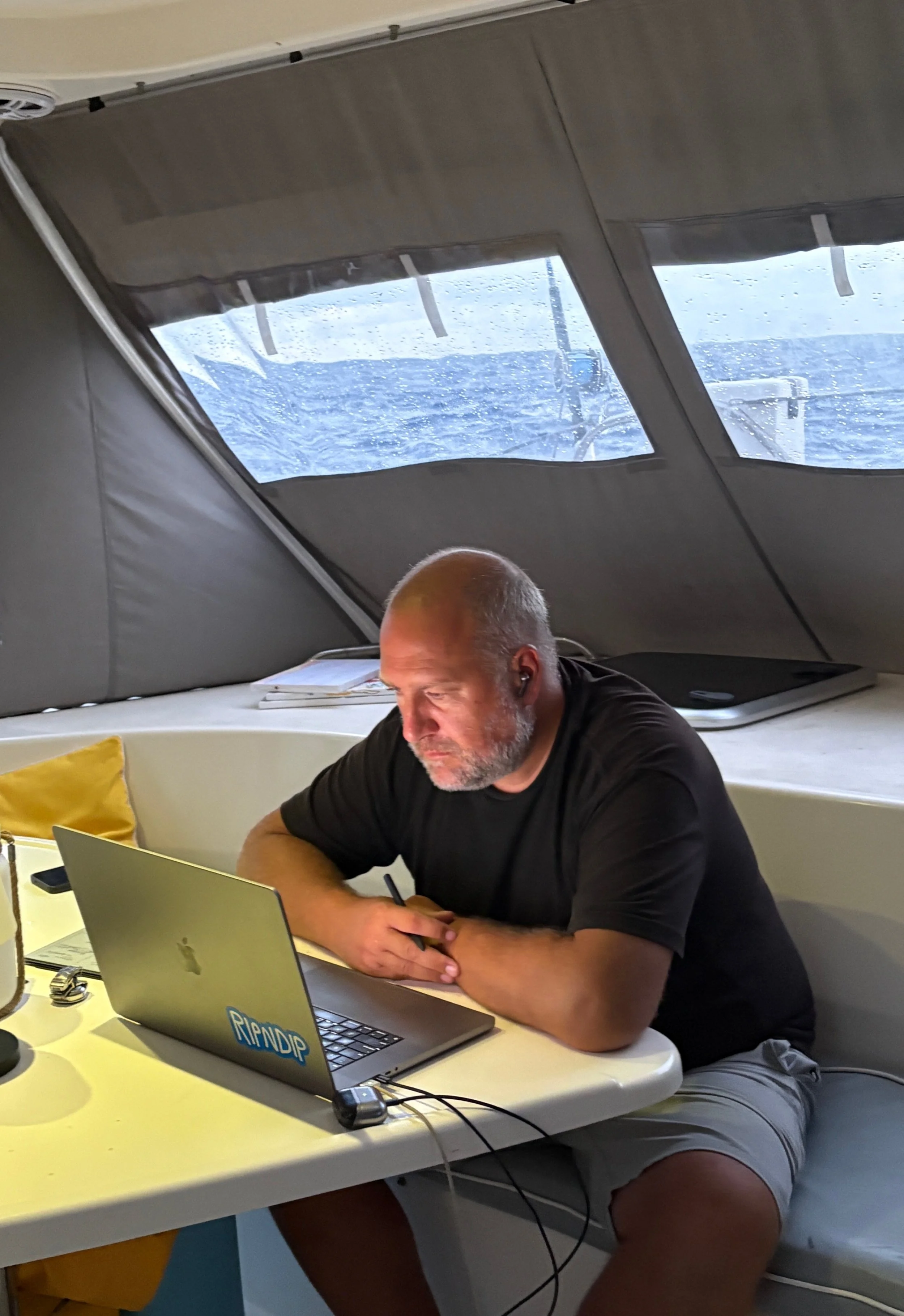
After the first 36 hours of excitement, we settled into a routine. The weather window was perfect—PredictWind updated its forecast every 12 hours, which we fed into our navigation software to optimize our course for the best currents, wind, and conditions. We filled our days with work, school, Lego, crafts and painting, reading, Kevin and Oscar's constant fishing efforts, as well as them online coding as they worked together on a sailing game and website. We also turned a lot to cooking, baking bread and treats as our provisions dwindled, which was a real morale boost each day!
It usually takes a few days to establish shift patterns. Week one saw Oscar on watch from 6 to 9 p.m., Kevin from 9 p.m. to midnight, Pete from midnight to 3 a.m., and Heather from 3 to 6 a.m., before Oscar returned for 6 to 9 a.m. During the day, we roughly maintained the same schedule, with Bethan taking occasional watches and the rest of us covering for each other during work calls, cooking shifts, or when someone needed a break.
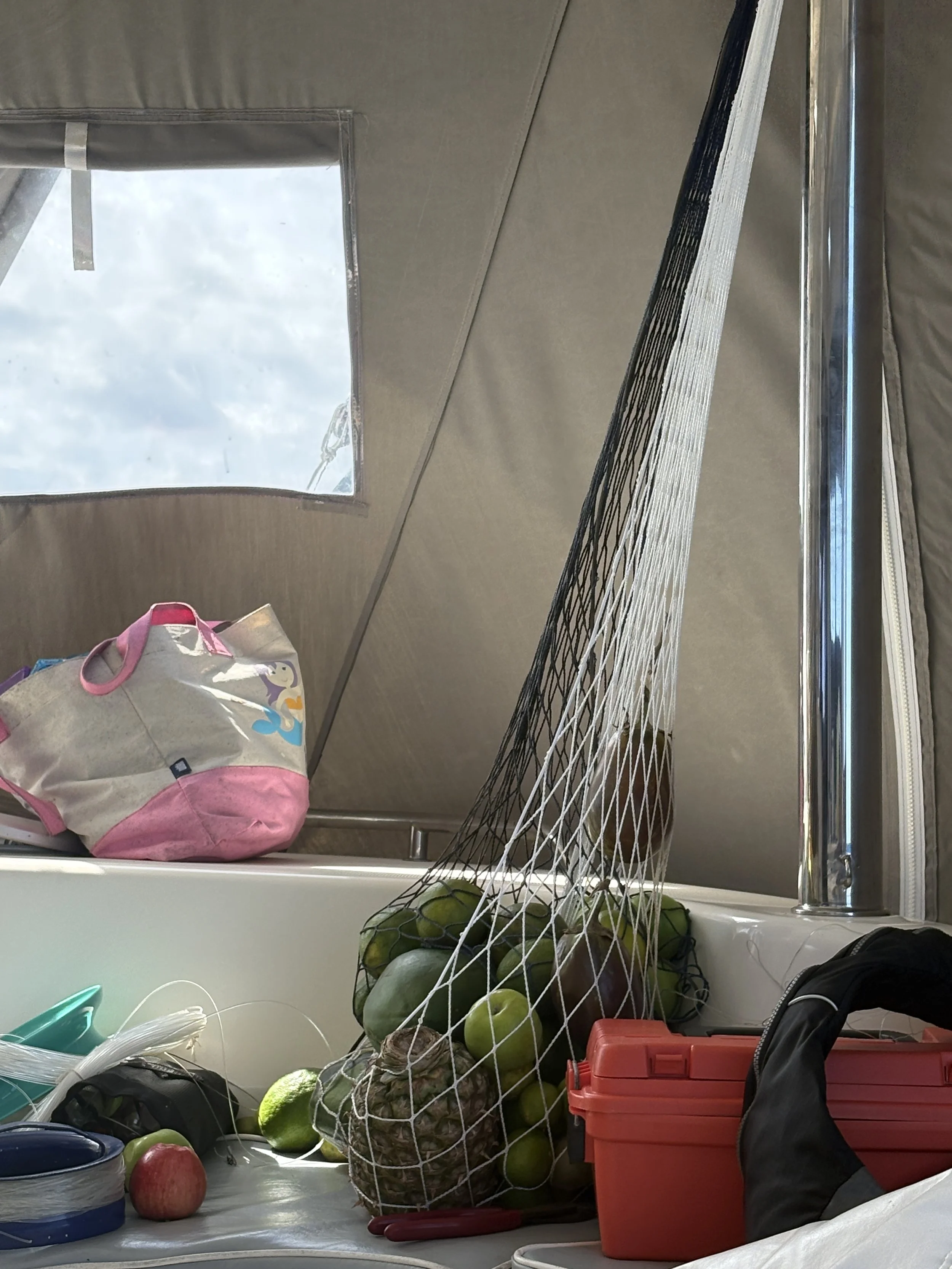
We found that having each person make their own large breakfast (with a tremendous amount of scrambled eggs and bacon or French toast consumed during those 20 days, thanks to our egg supply!) and snacking through the day meant we could have one substantial late lunch or early dinner, which was ample for us. Everyone took shifts for dinner preparation, washing up, and general boat cleaning. We ate exceptionally well, never repeating a meal throughout the entire passage.
The conditions were technically described as "washing machiney" for the first few days due to the turbulent currents as we left the Galápagos's protection—not unexpected, but uncomfortable nonetheless.
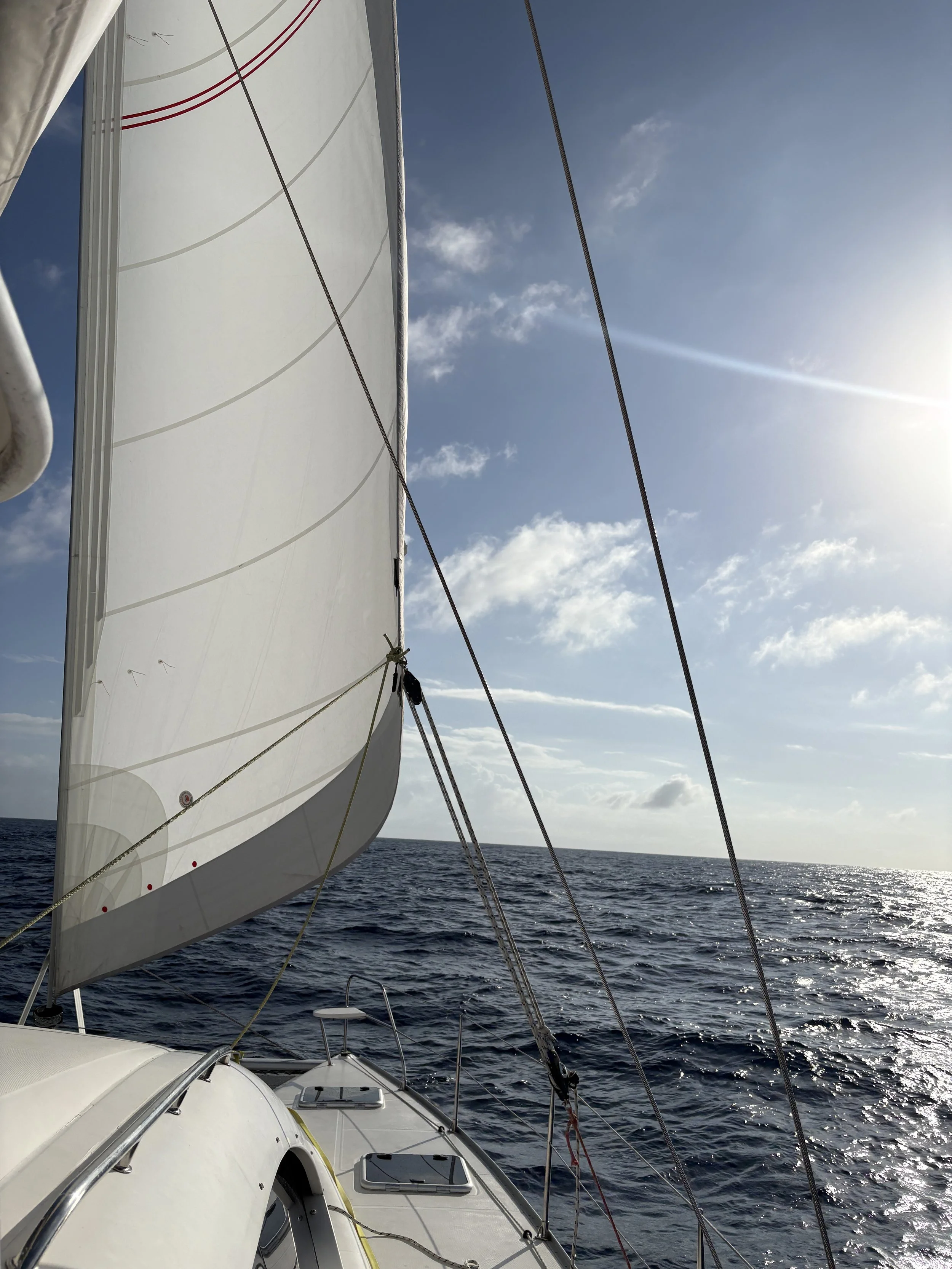
The winds for most of it were pretty consistent really, meaning we didn’t have to do a load of constant sail changes as we had read about on other sailor’s passages. We sailed fairly conservatively - usually with 2 reefs in the main at night (and we found that even if we shook the reefs out it never really made us go much faster) and one in the headsail as it was more controllable from the helm station for one person.
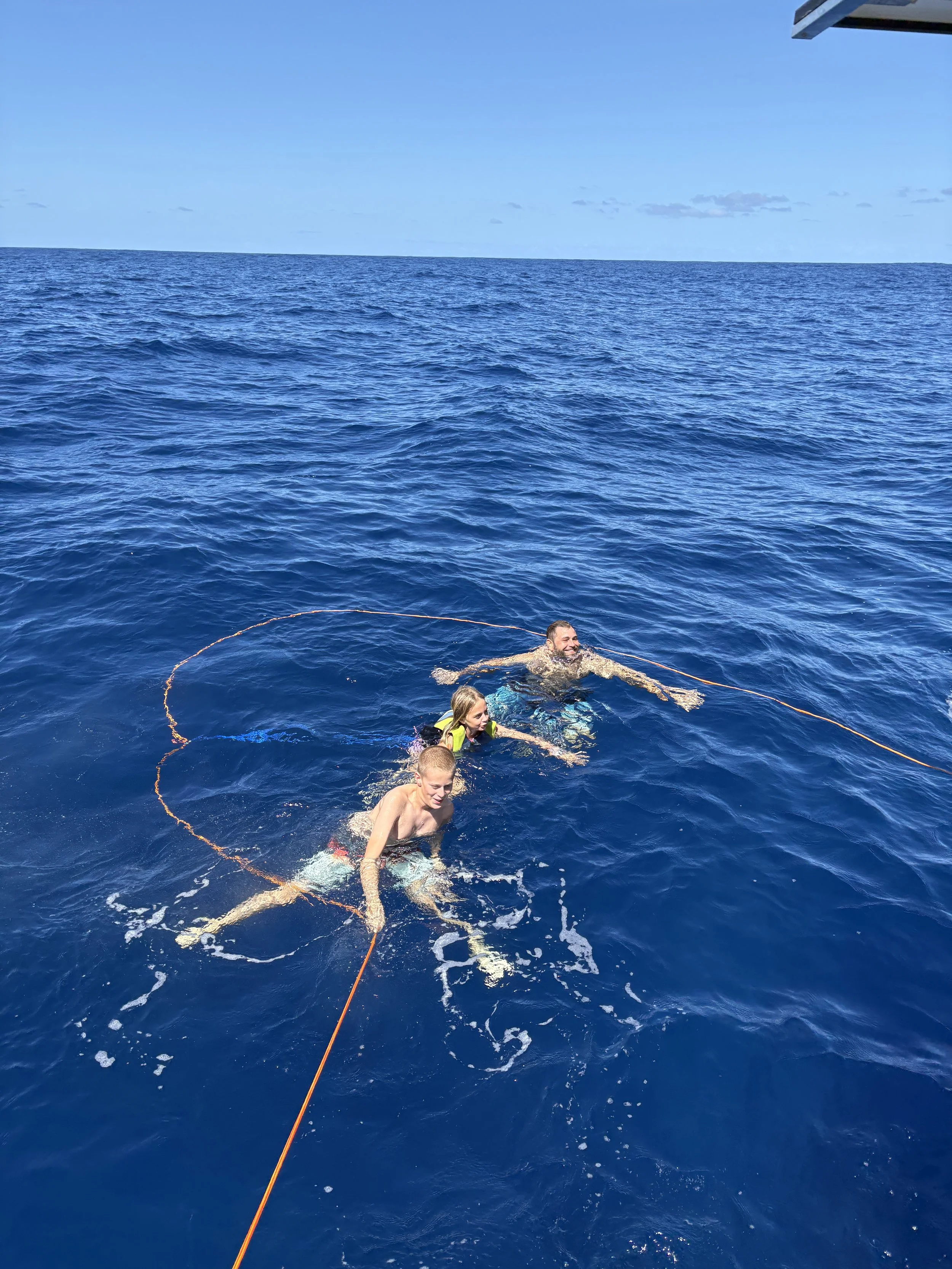
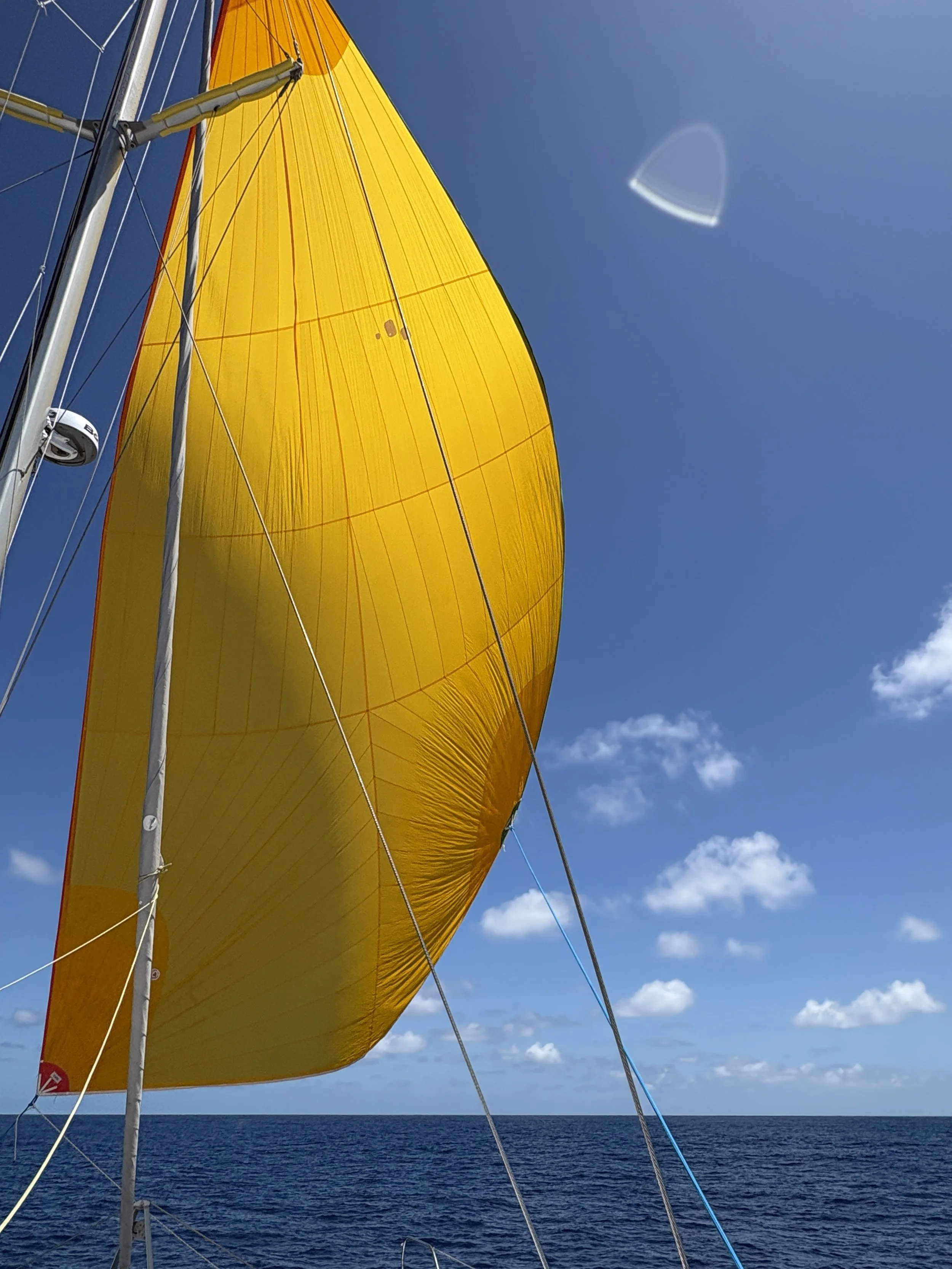
Around day 14, the waves were particularly calm and Kevin, Oscar and Bethan jumped in the blue ocean with over 10,000ft of water below them to cool down. We had our spinnaker up for the whole of that day and it was glorious!
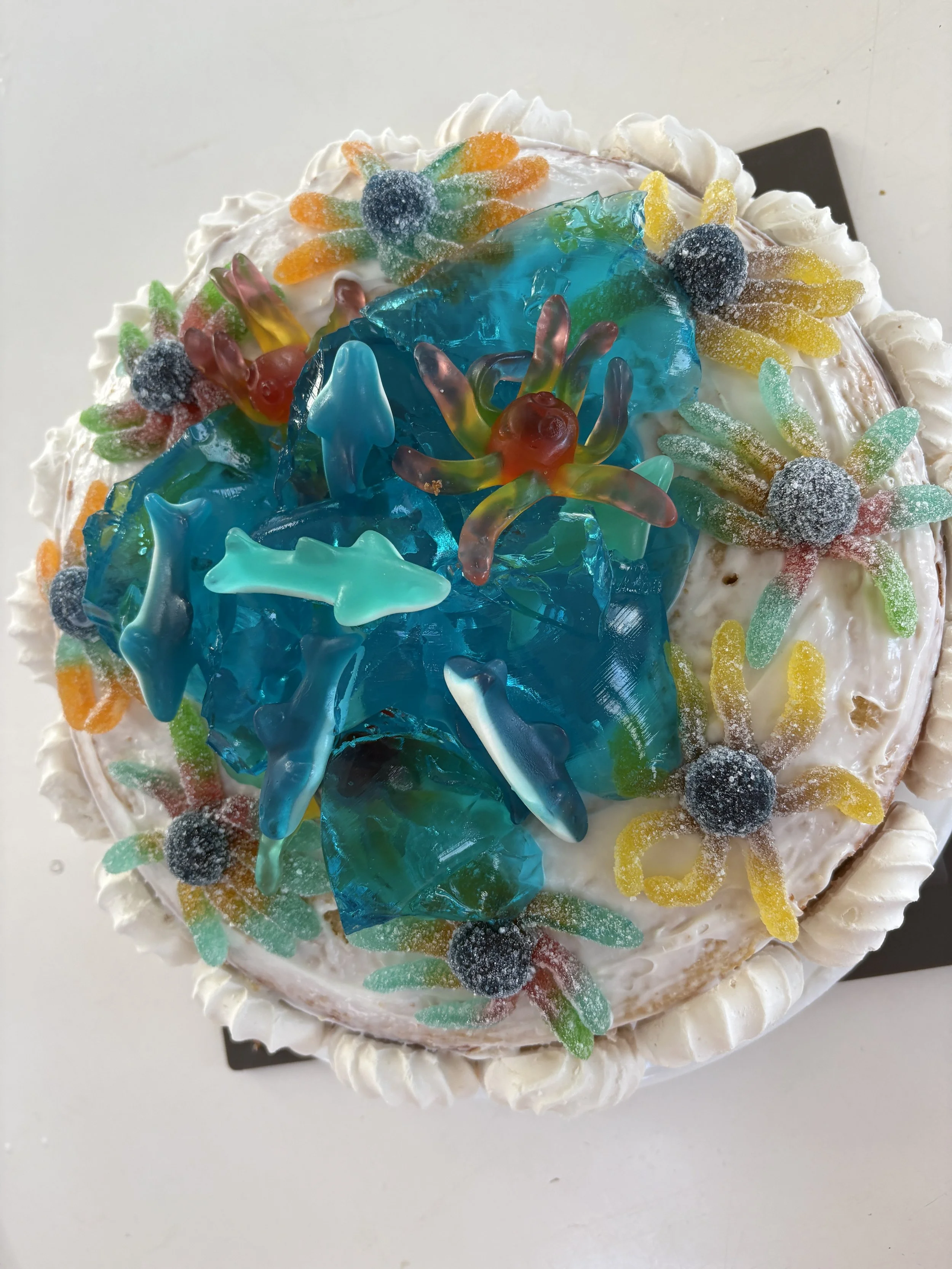
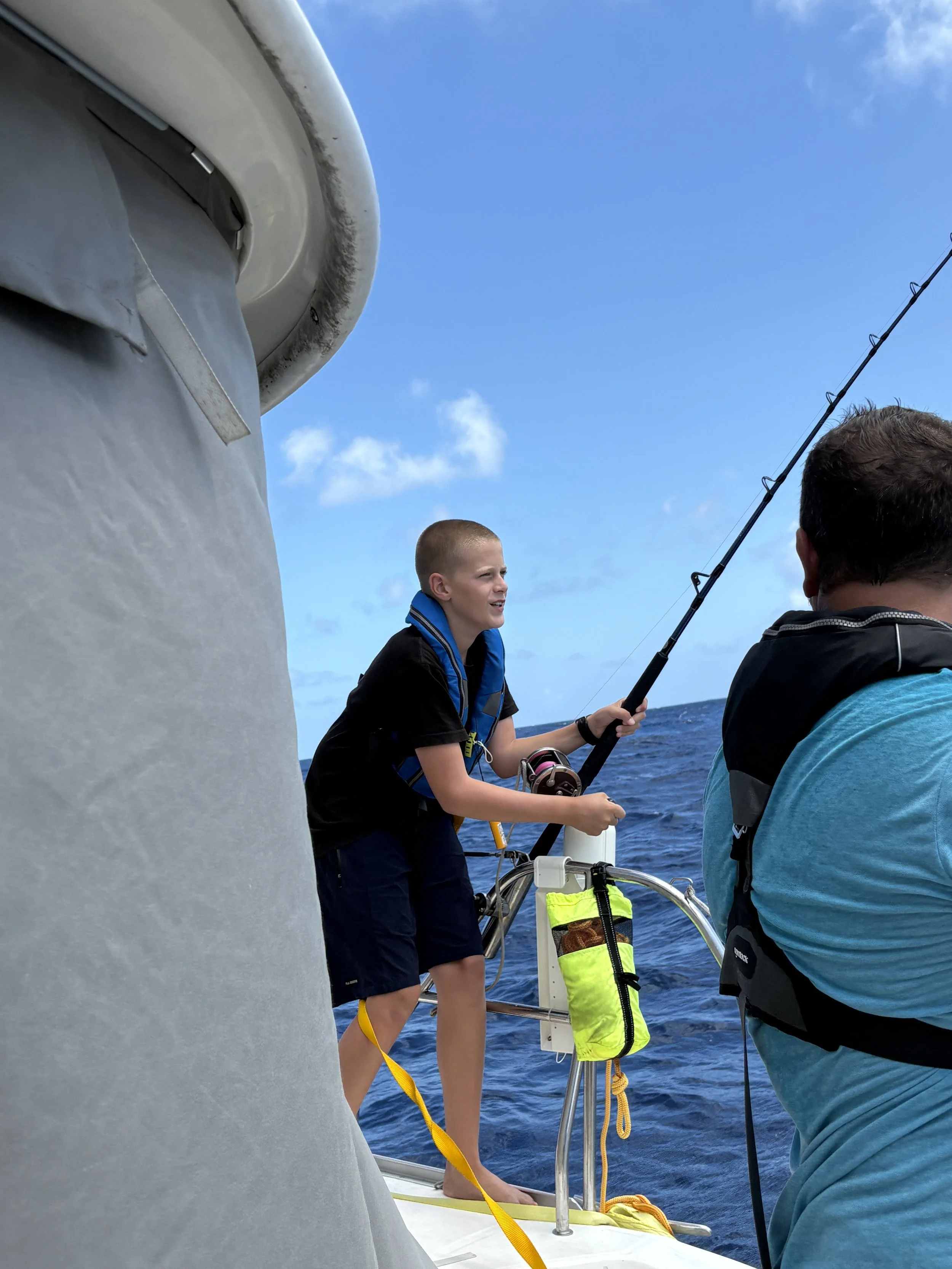
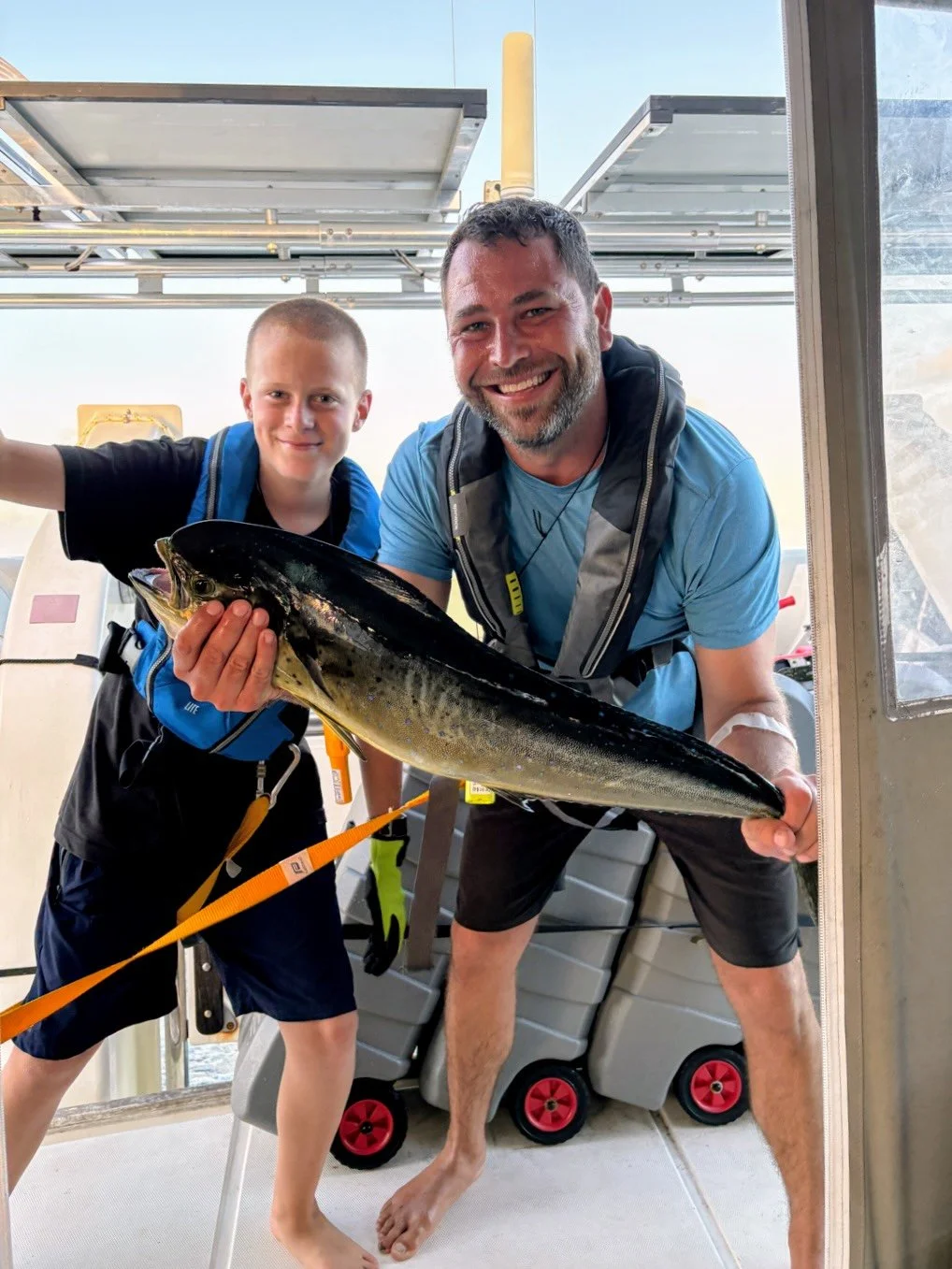
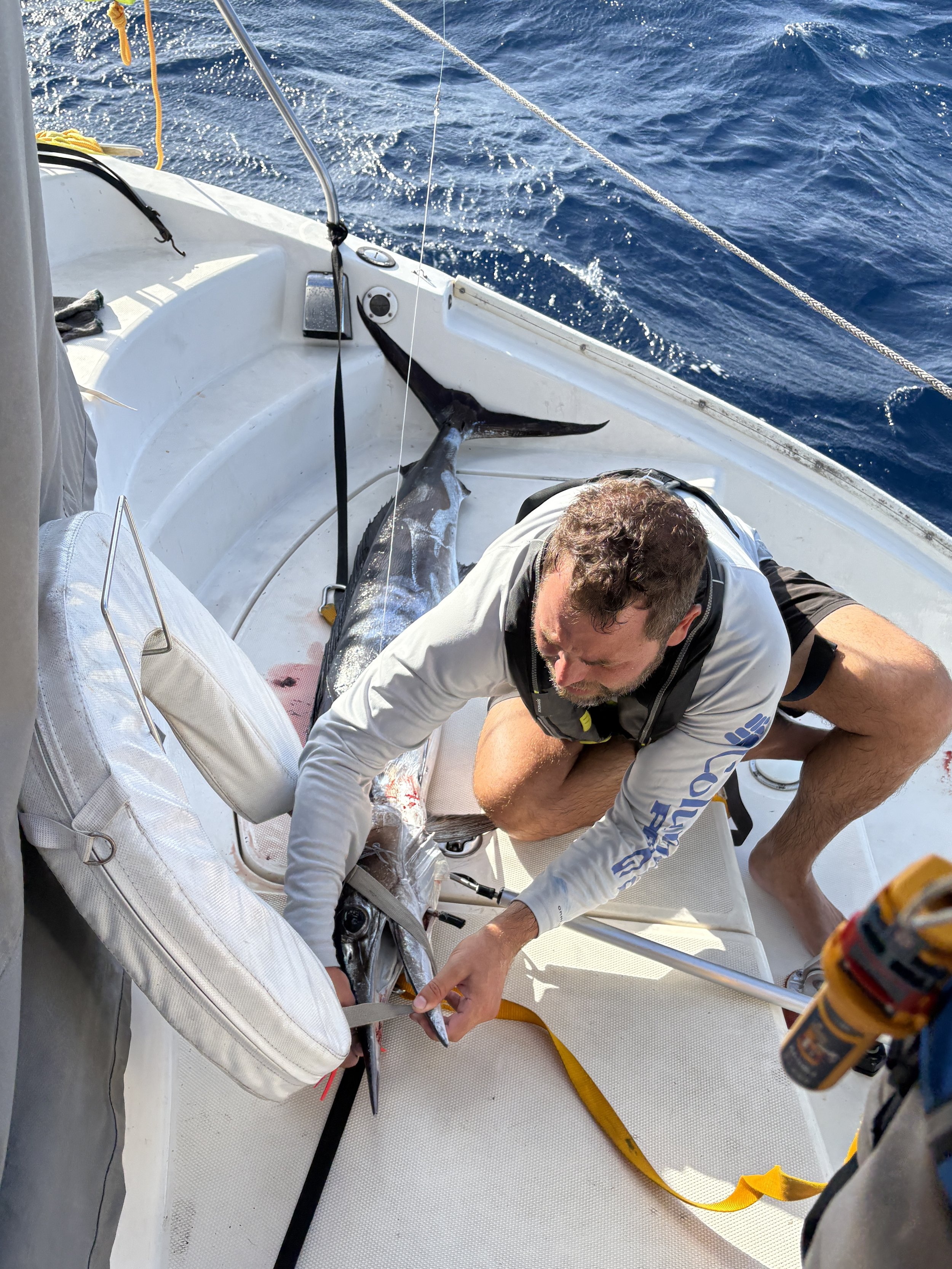
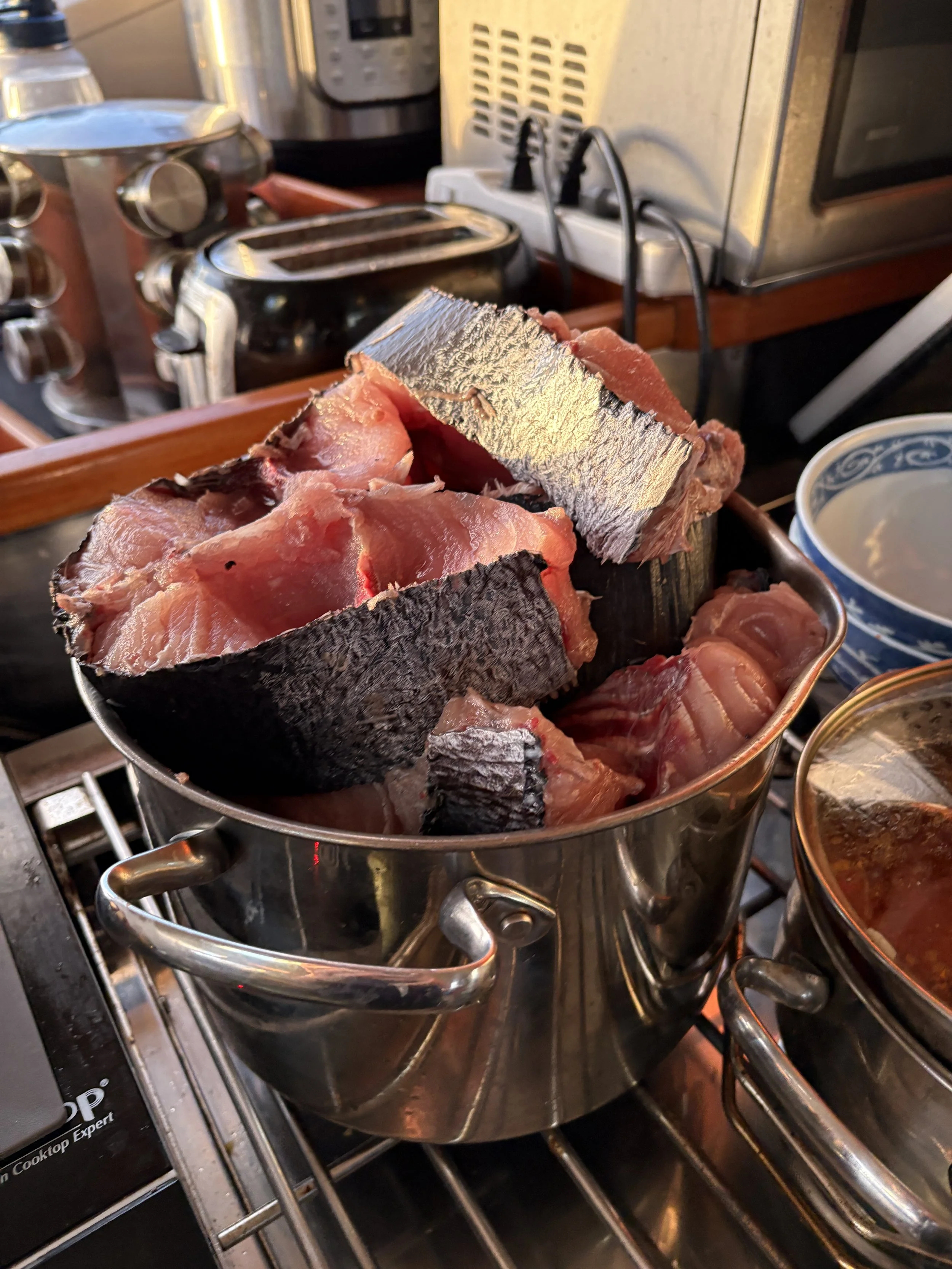
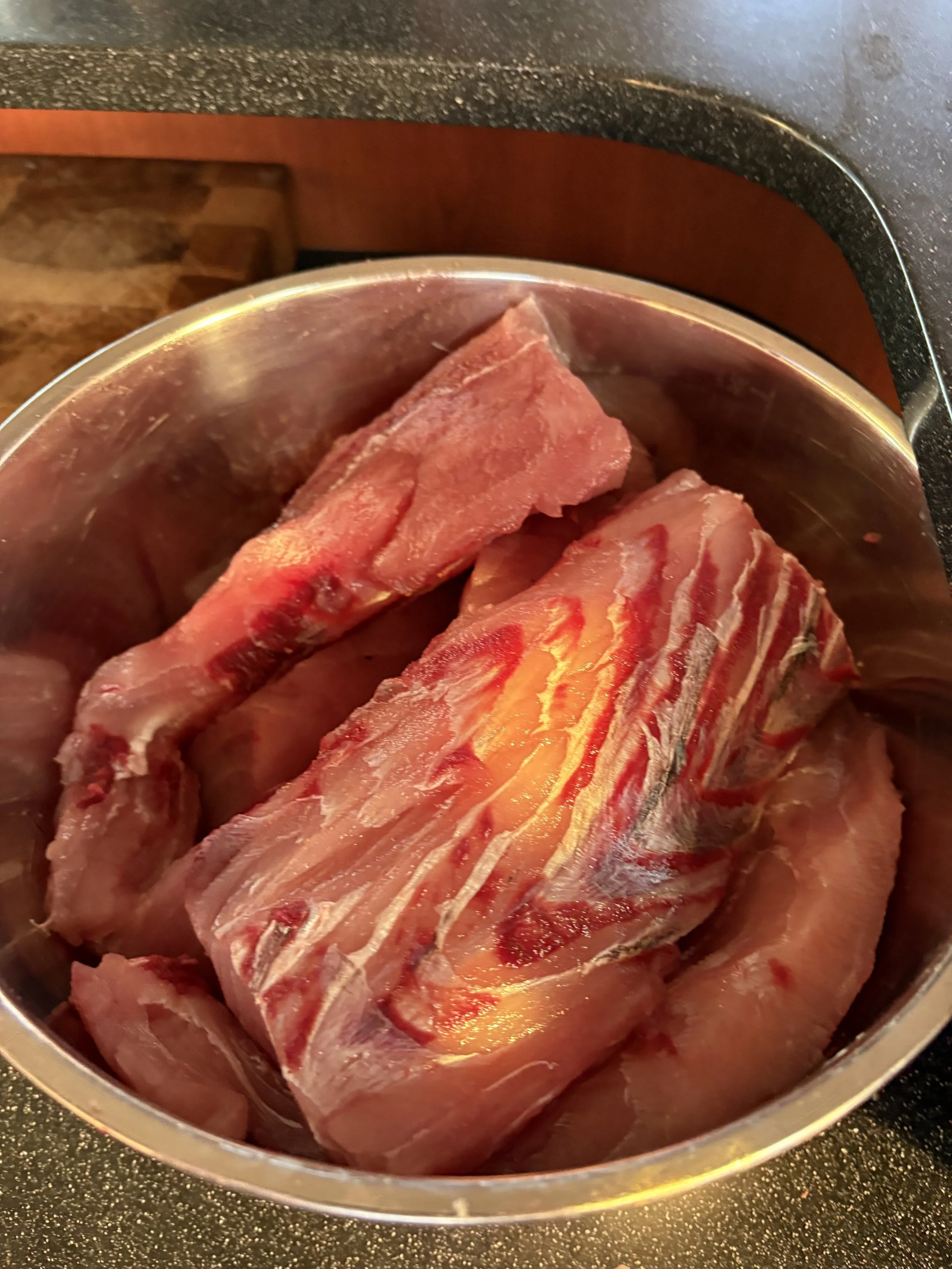
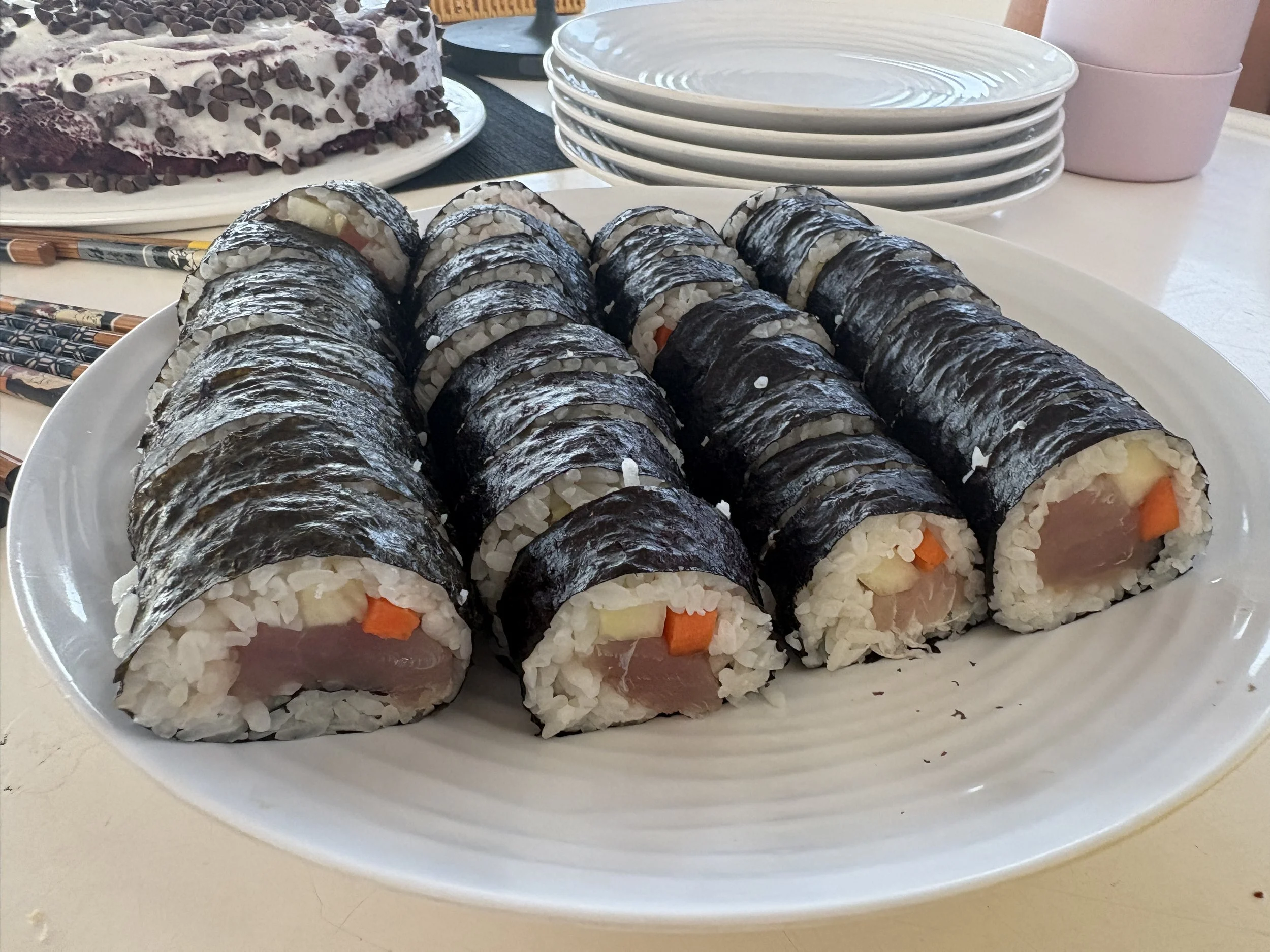
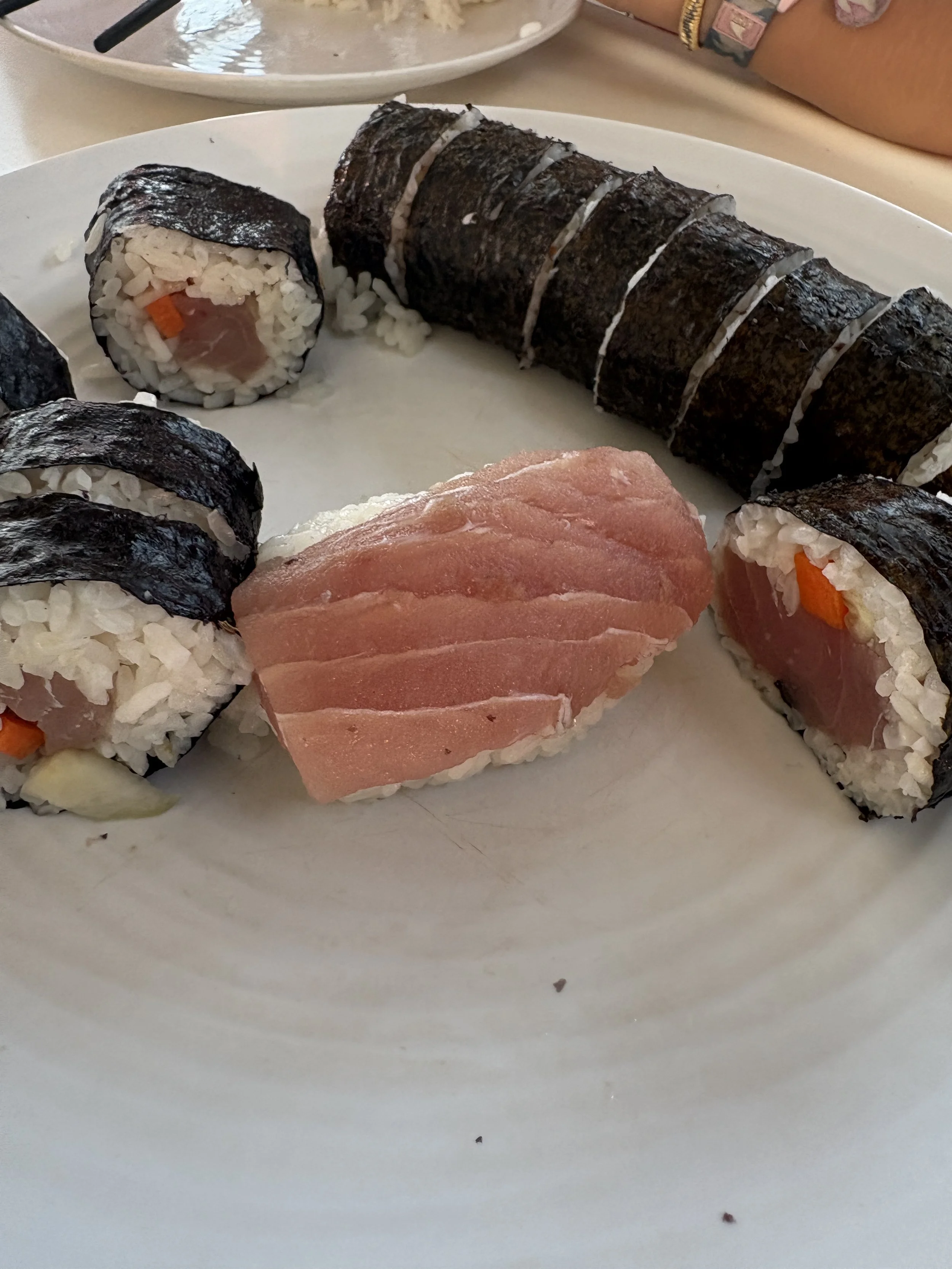
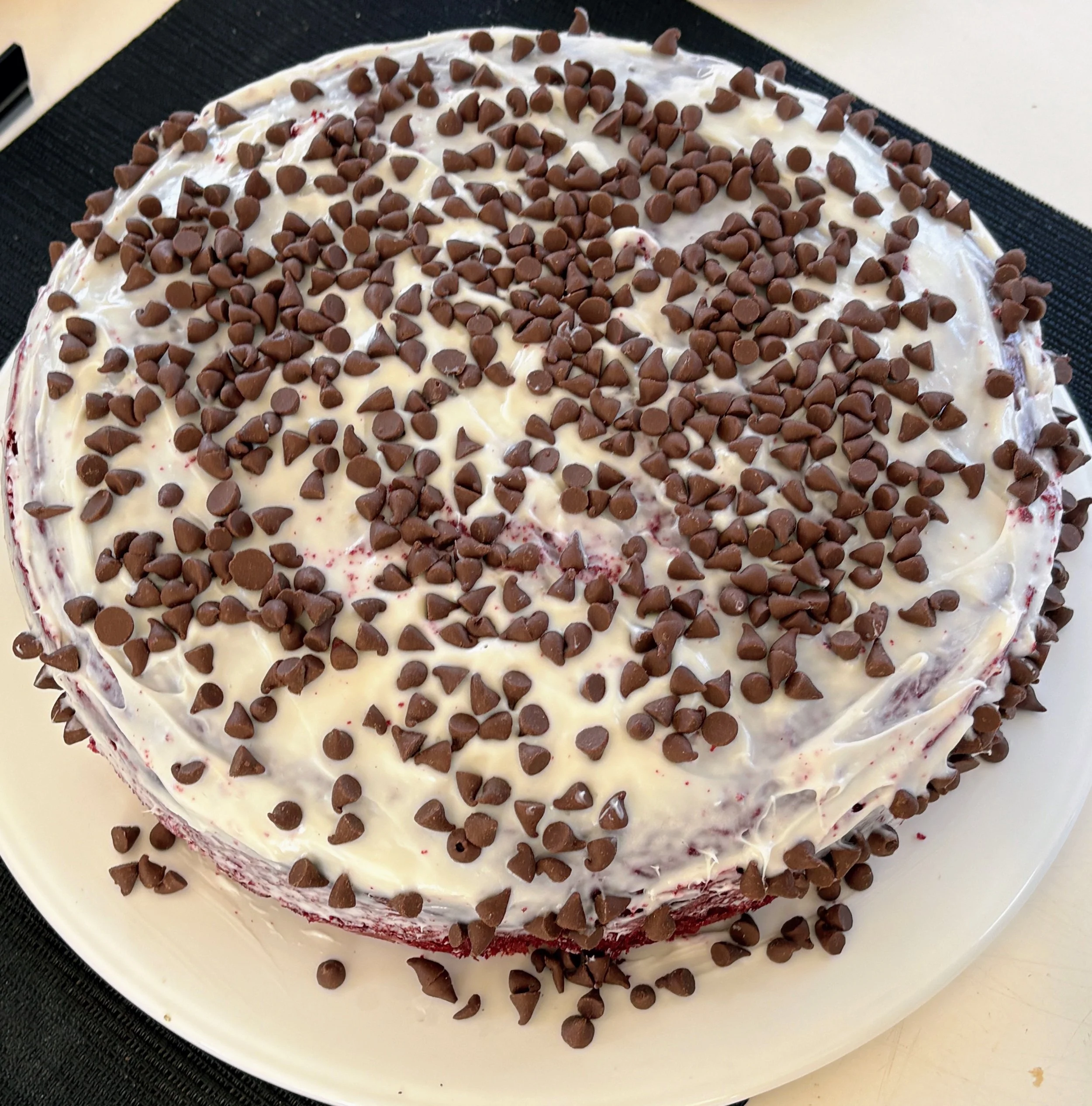
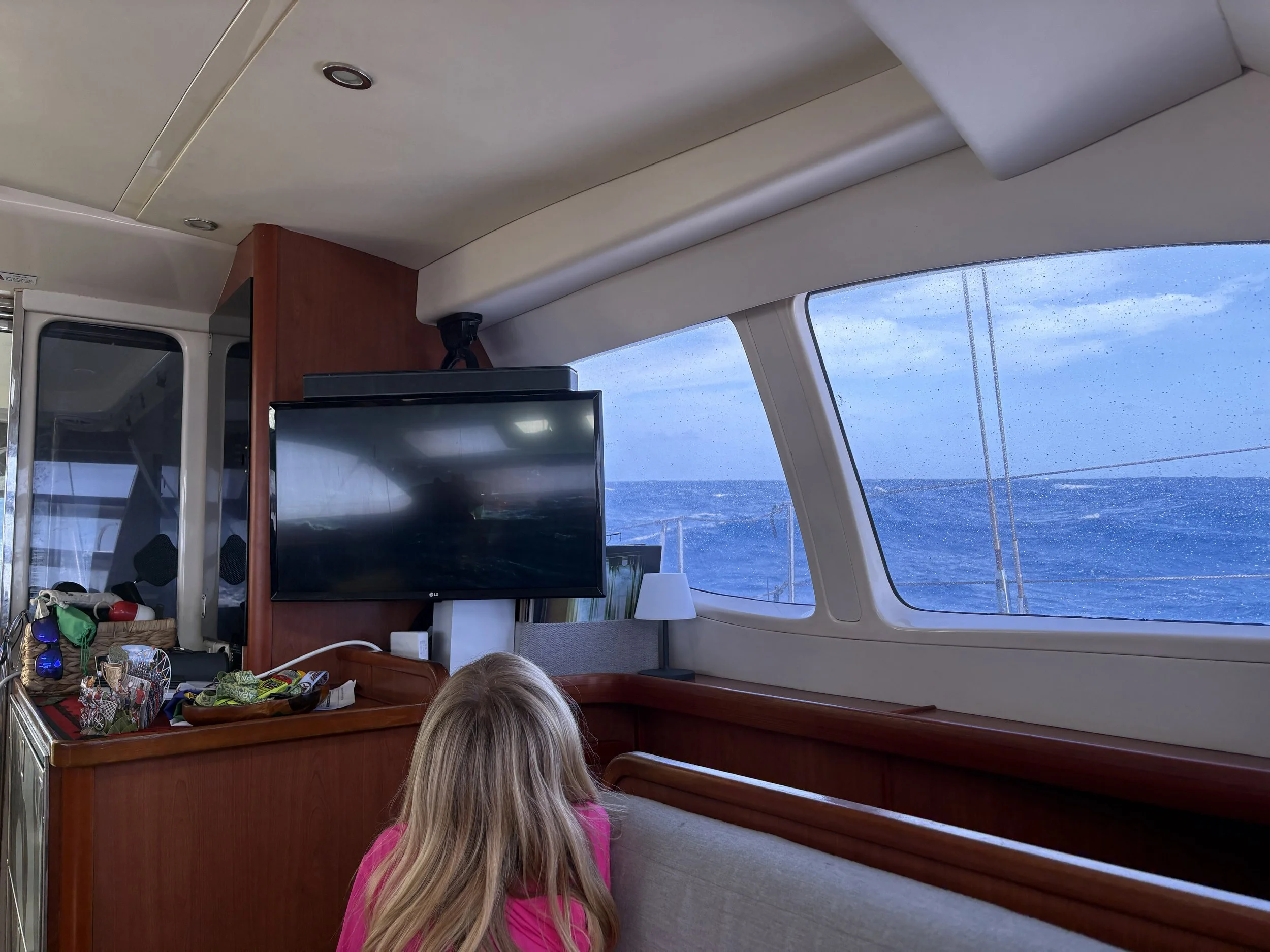
Kevin and Oscar caught a huge 5ft Short Billed Spearfish which took well over an hour to reel in and then another 2 hours for Kevin to fillet and prepare it into steaks, chunks for poke bowls or sushi, and we vacuumed it all to freeze. Both Bethan and Oscar had birthday’s on the passage and as we were unable to provide friends on tap for the occasion, we had a load of fun making their birthday cakes. David Attenborough also had a birthday, he turned 100 whilst we were on passage so we celebrated him by watching one of his amazing programs about the Pacific Ocean and French Polynesia.
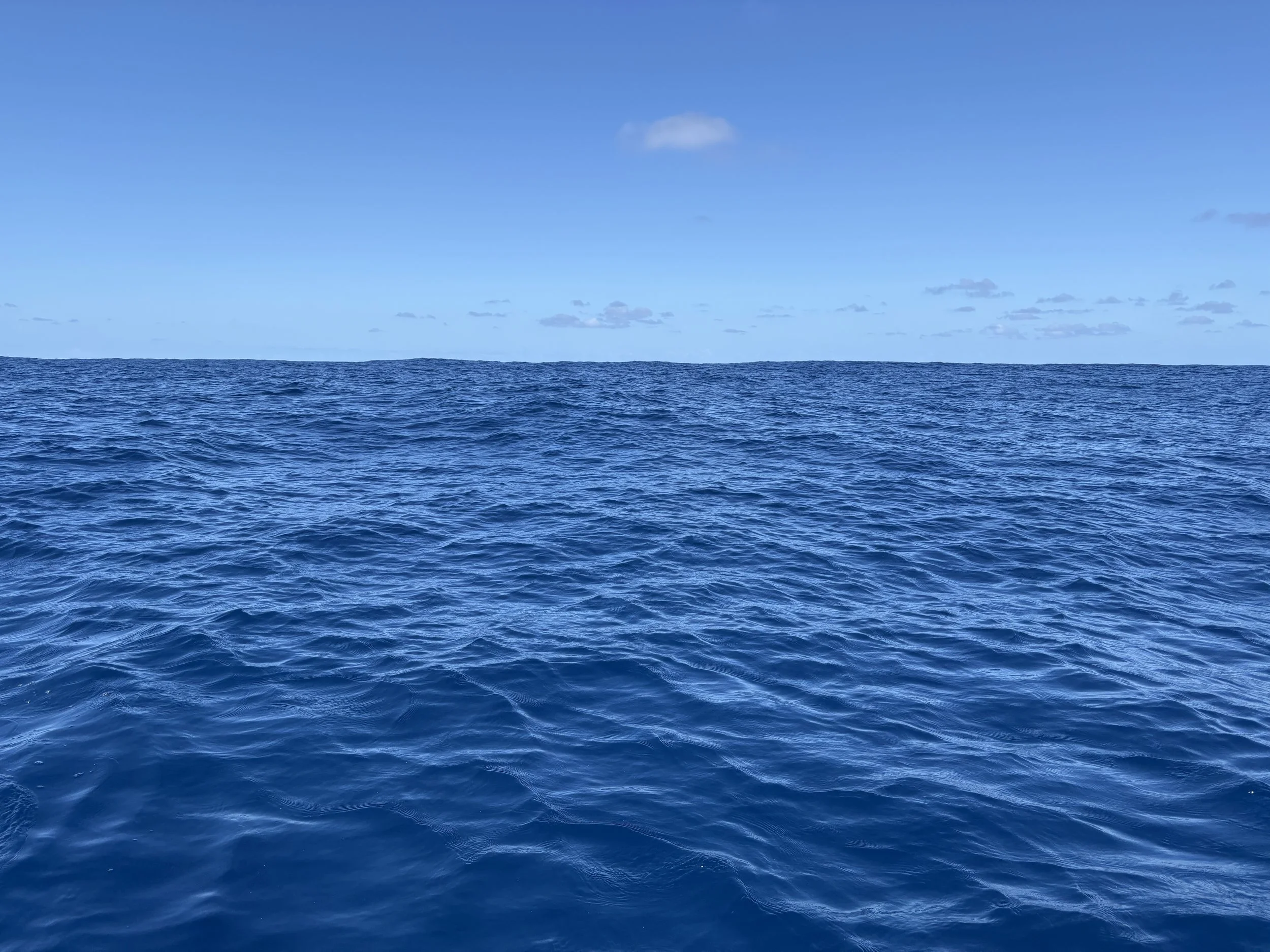
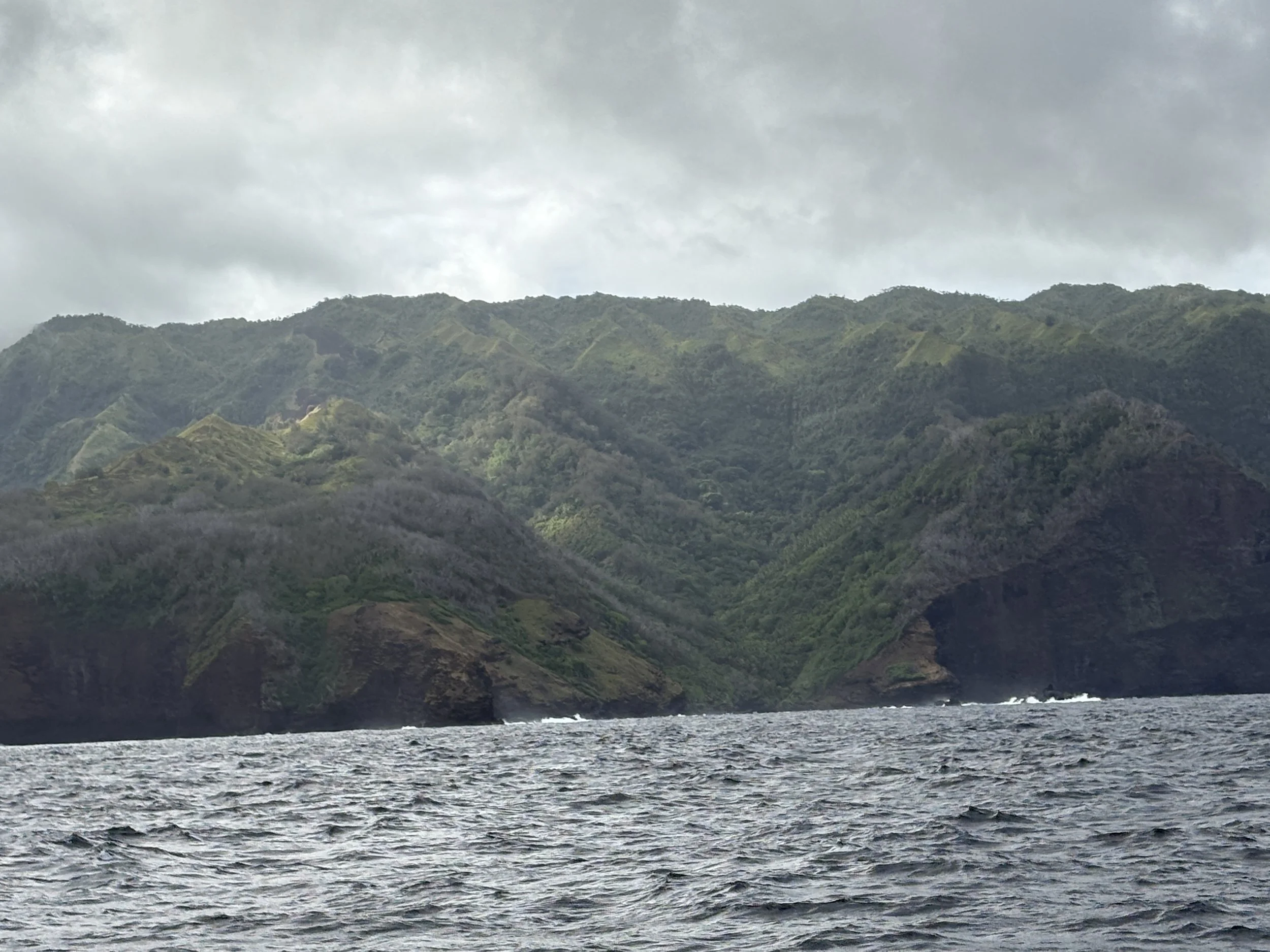
And then finally, on Day 20 there was a cry of ‘Land Ho’!!! Slowly, over the next several hours, the imposing mountains of Hiva Oa became larger and larger. As always, that final few hours feels like eternity. We spent the time tidying the boat, washing her down and putting away some of the kit that needed to be out on passage, and by the time we pulled into the anchorage we were ready for celebrating.
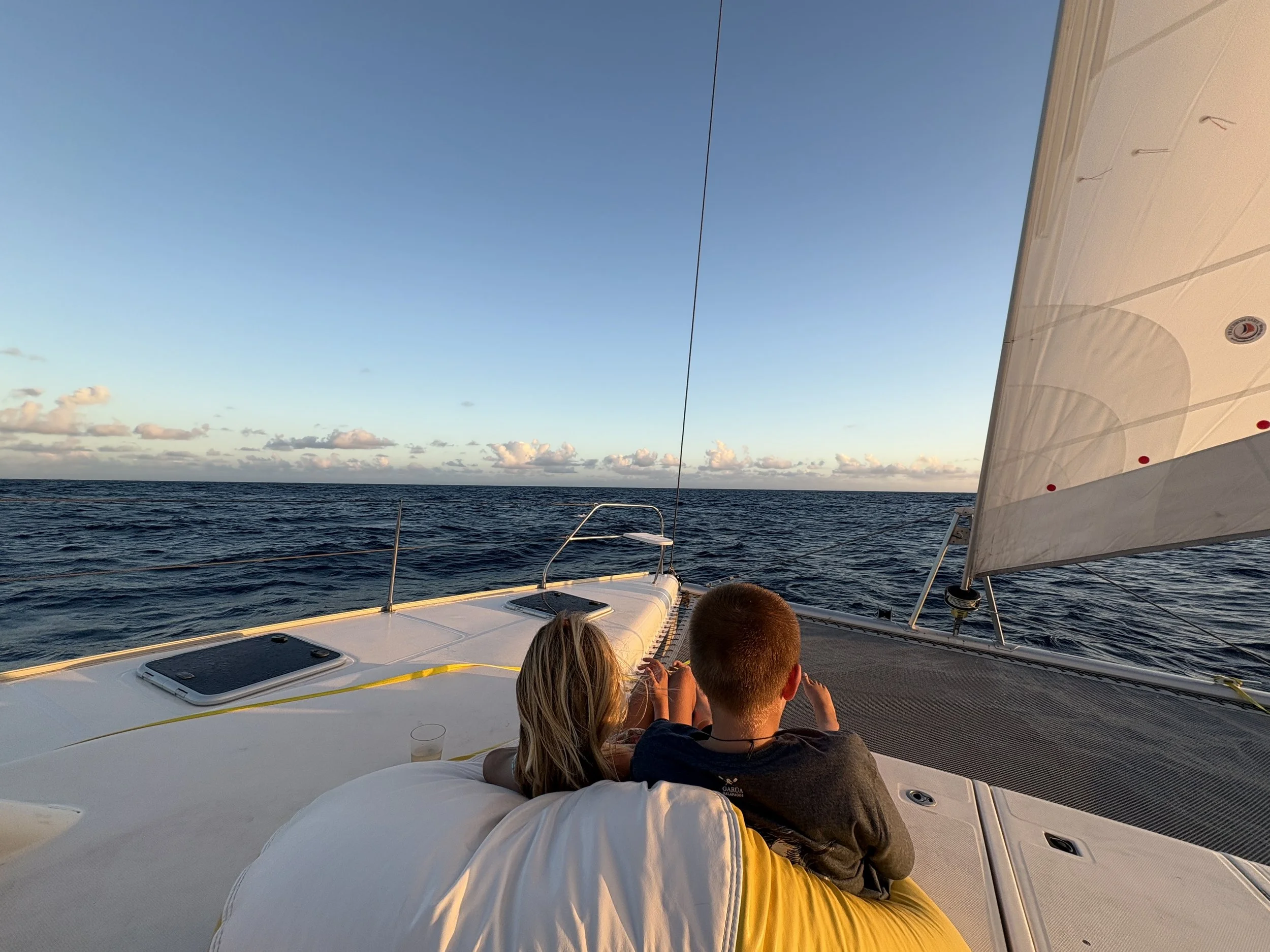
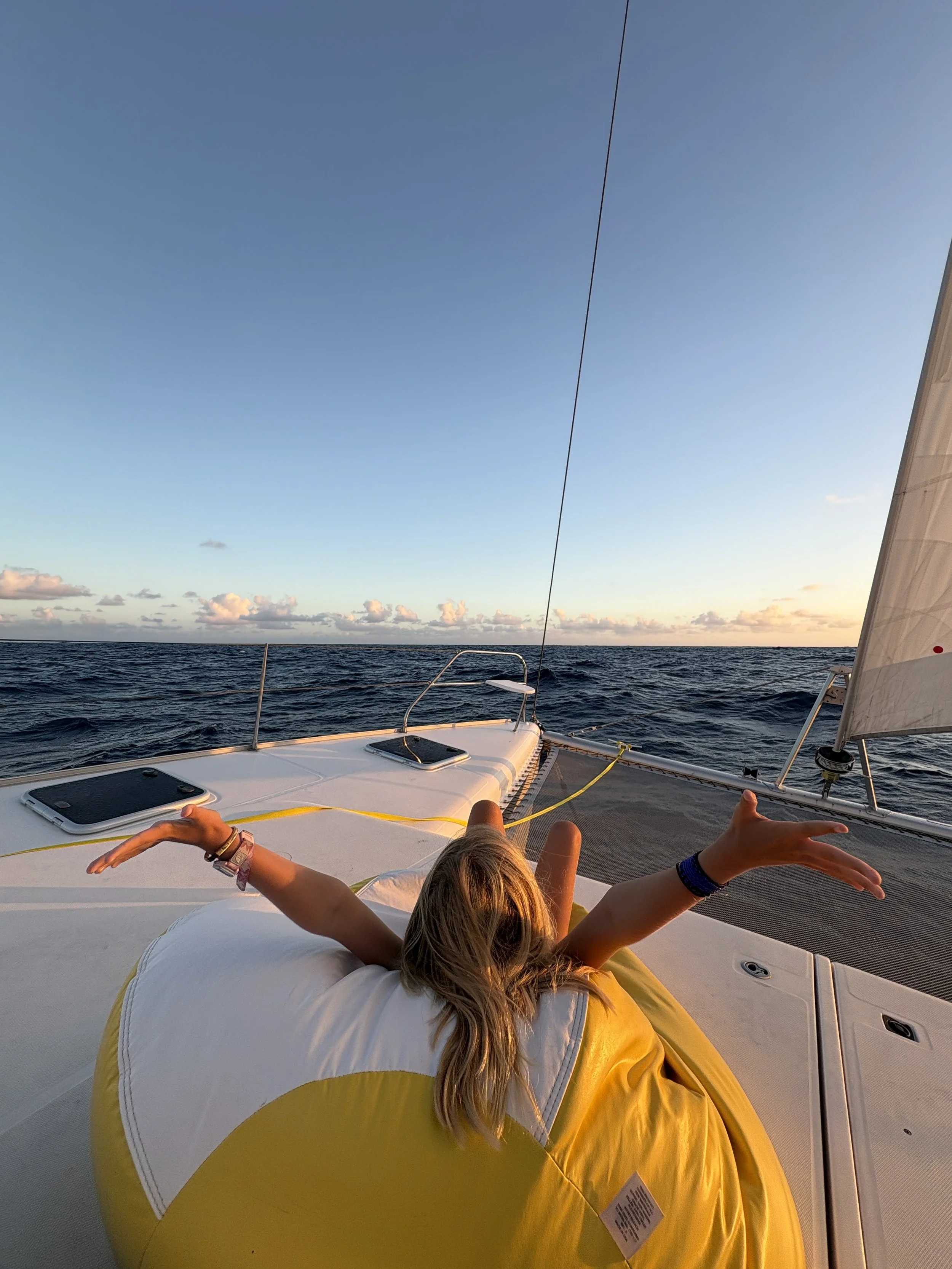
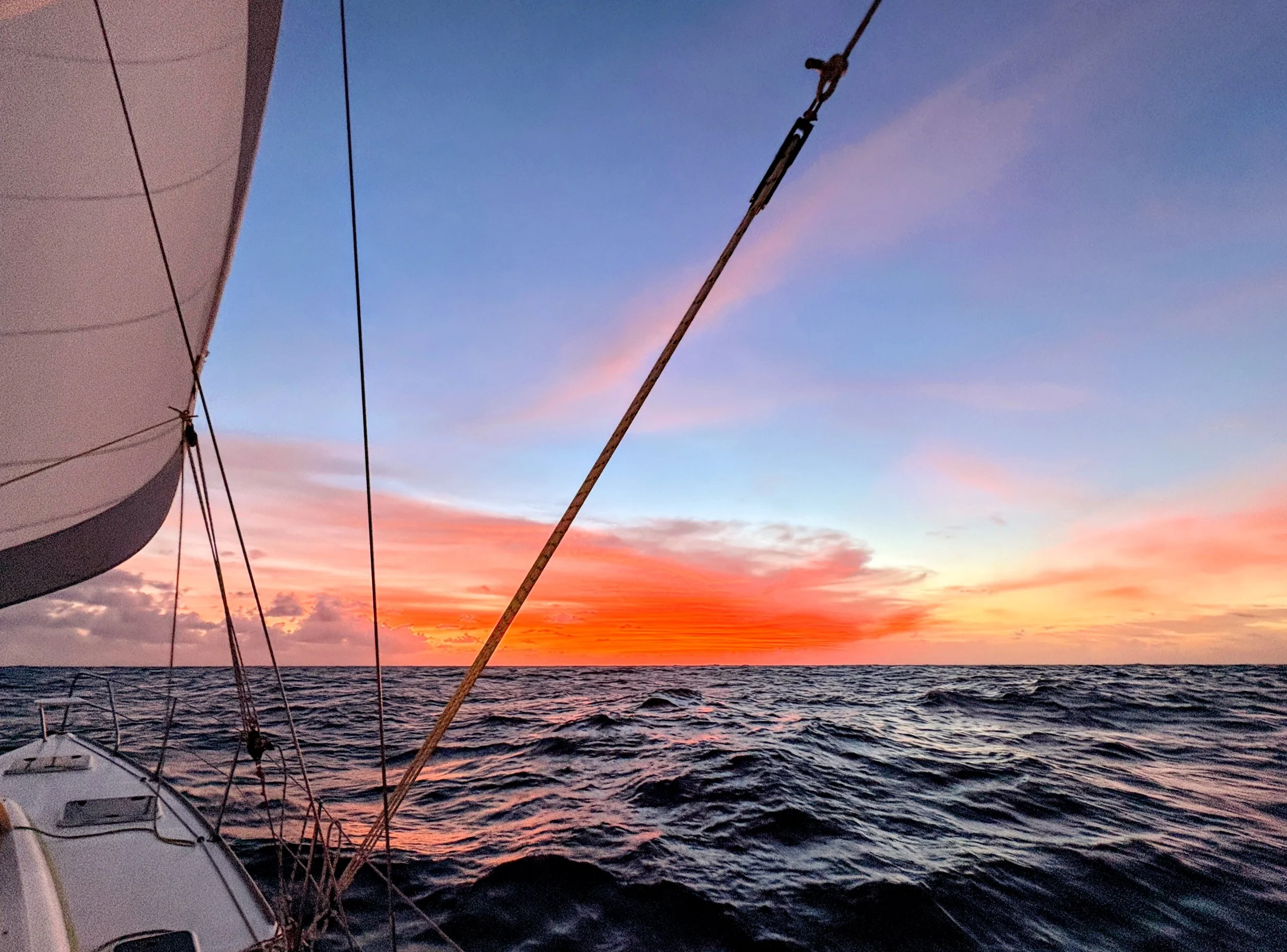
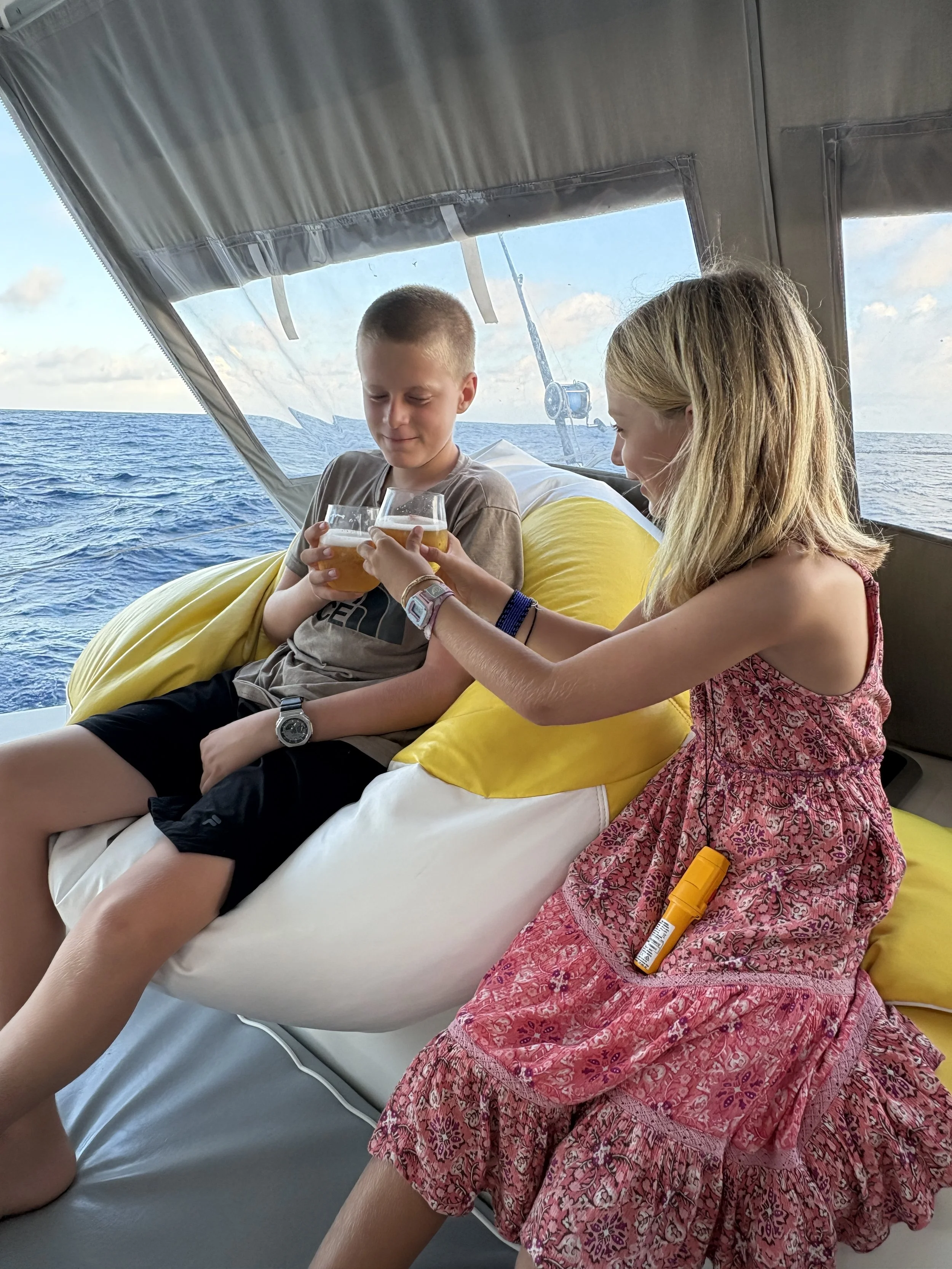
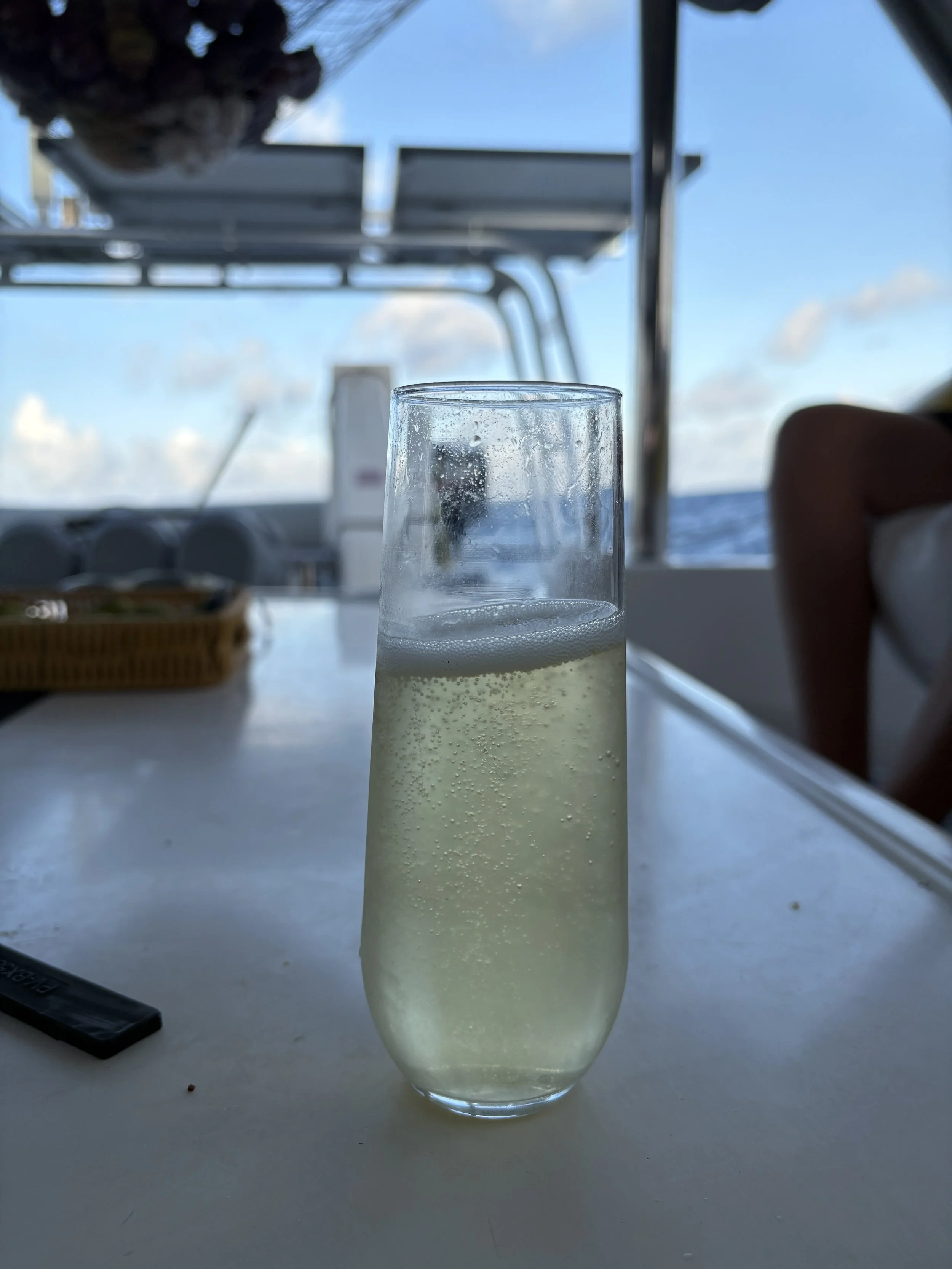
We couldn't celebrate too early, though. While putting our anchor down in the rough outer anchorage in Hiva Oa, we managed to snag the anchor chain of the boat next to us and got tangled together. A first time for everything, but of course it happened after 20 days at sea when we just wanted to set foot on land! Kevin bravely jumped in the water to figure out what was happening. He managed to tie a line to their anchor chain, lift it up to free our anchor, and get clear of them, successfully re-anchoring without any tangling this time. The other boat was extremely gracious about the mistake and invited Kevin aboard for a shower while he waited for us to get sorted.
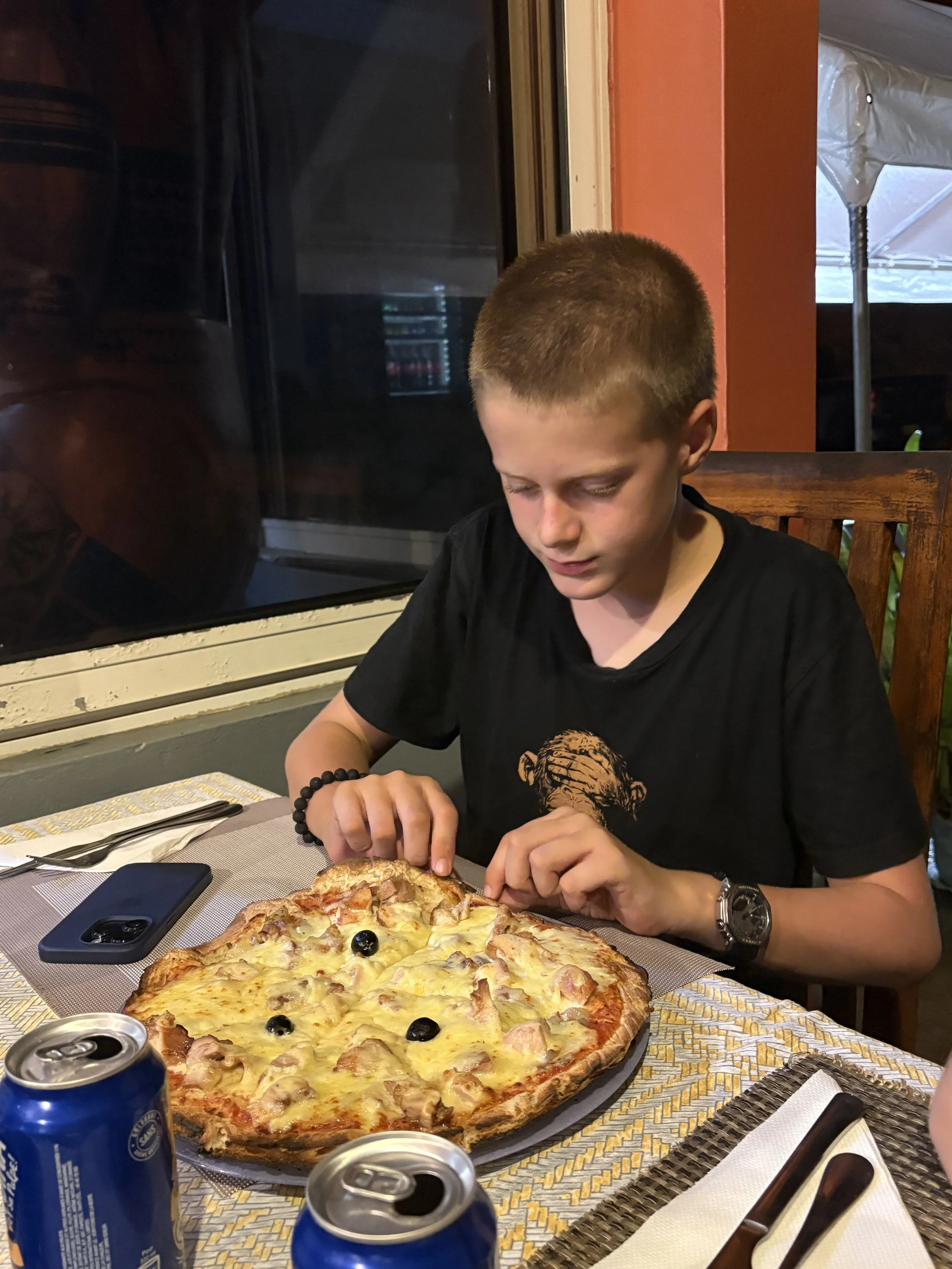
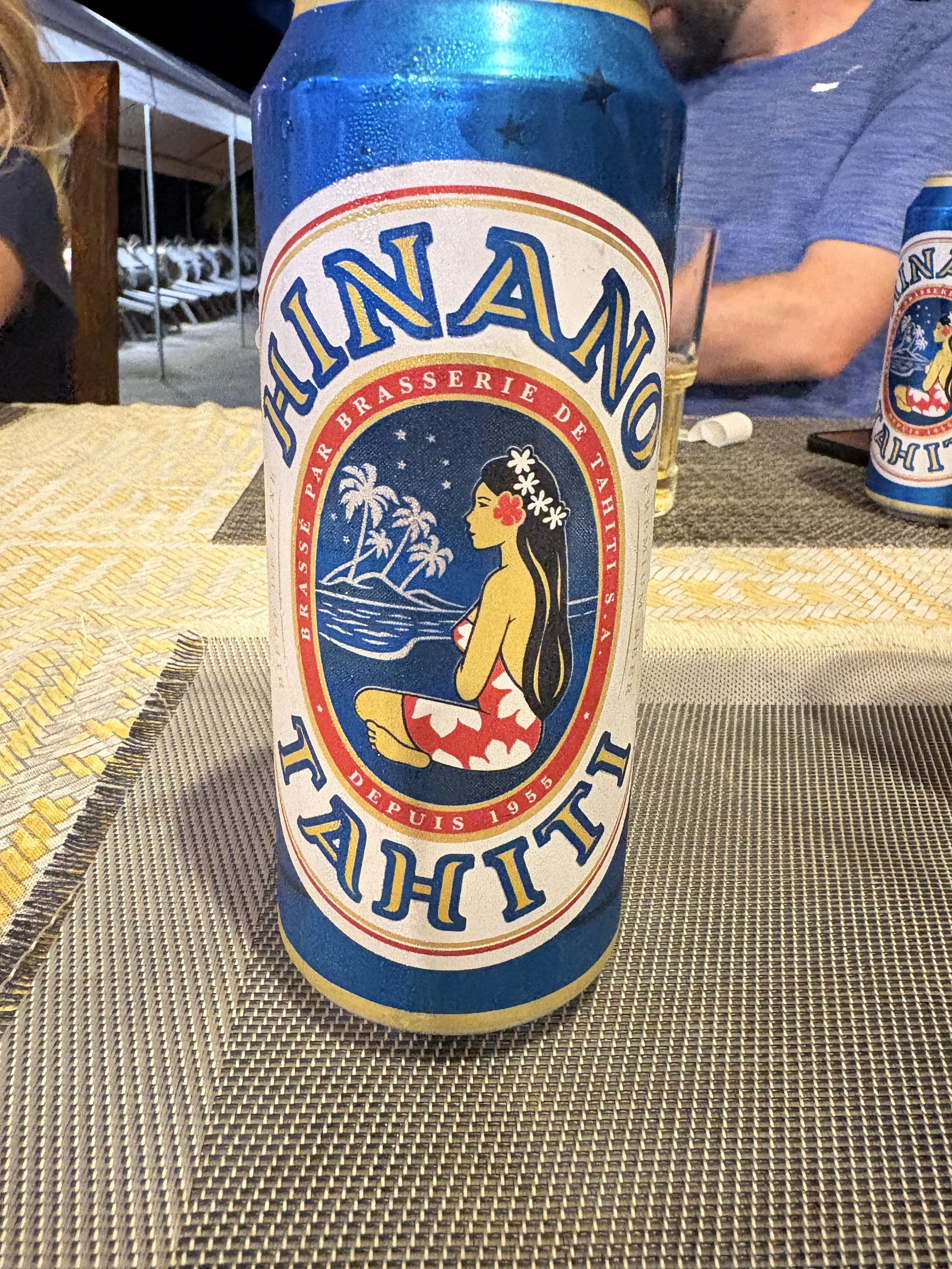
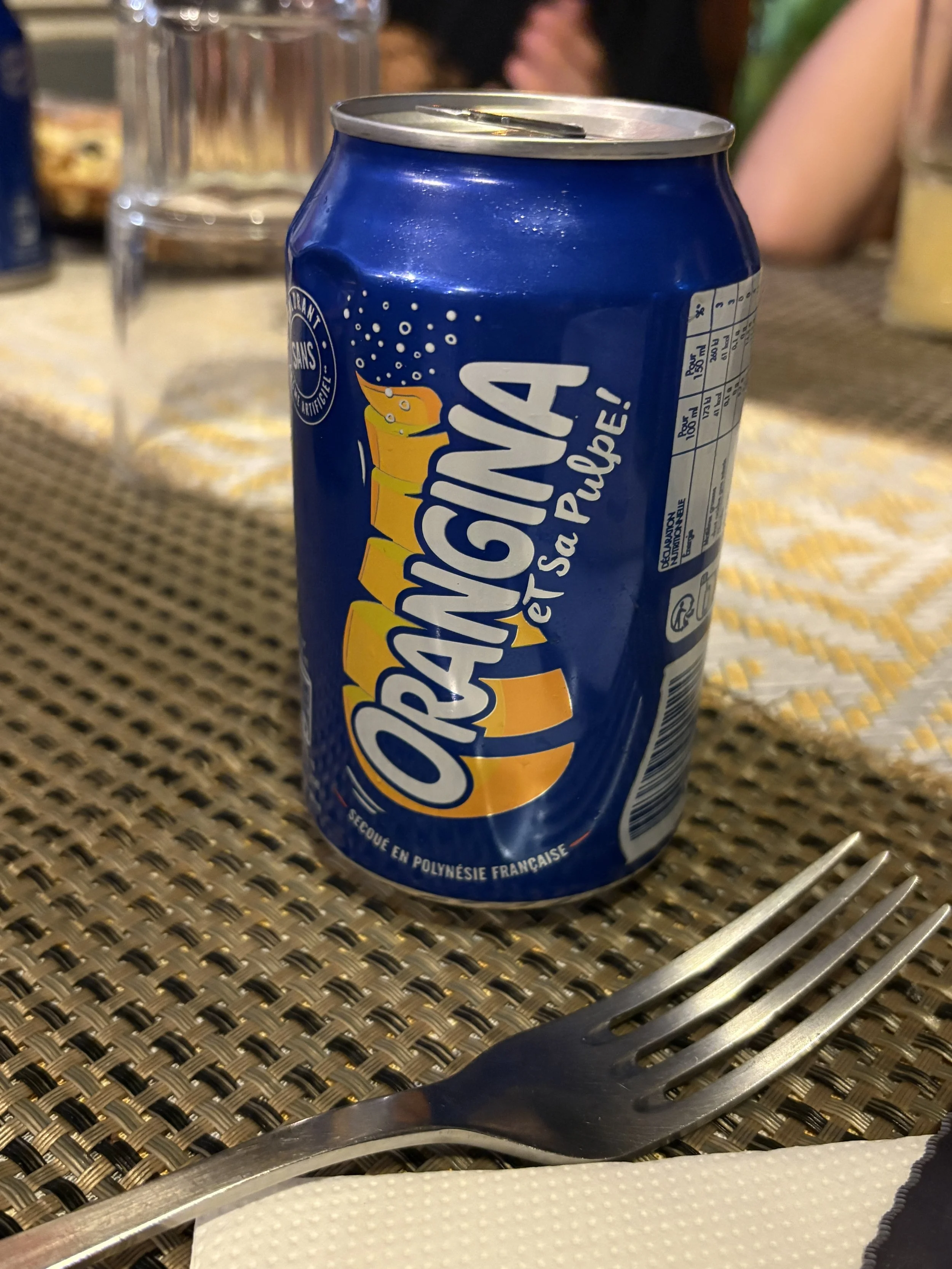
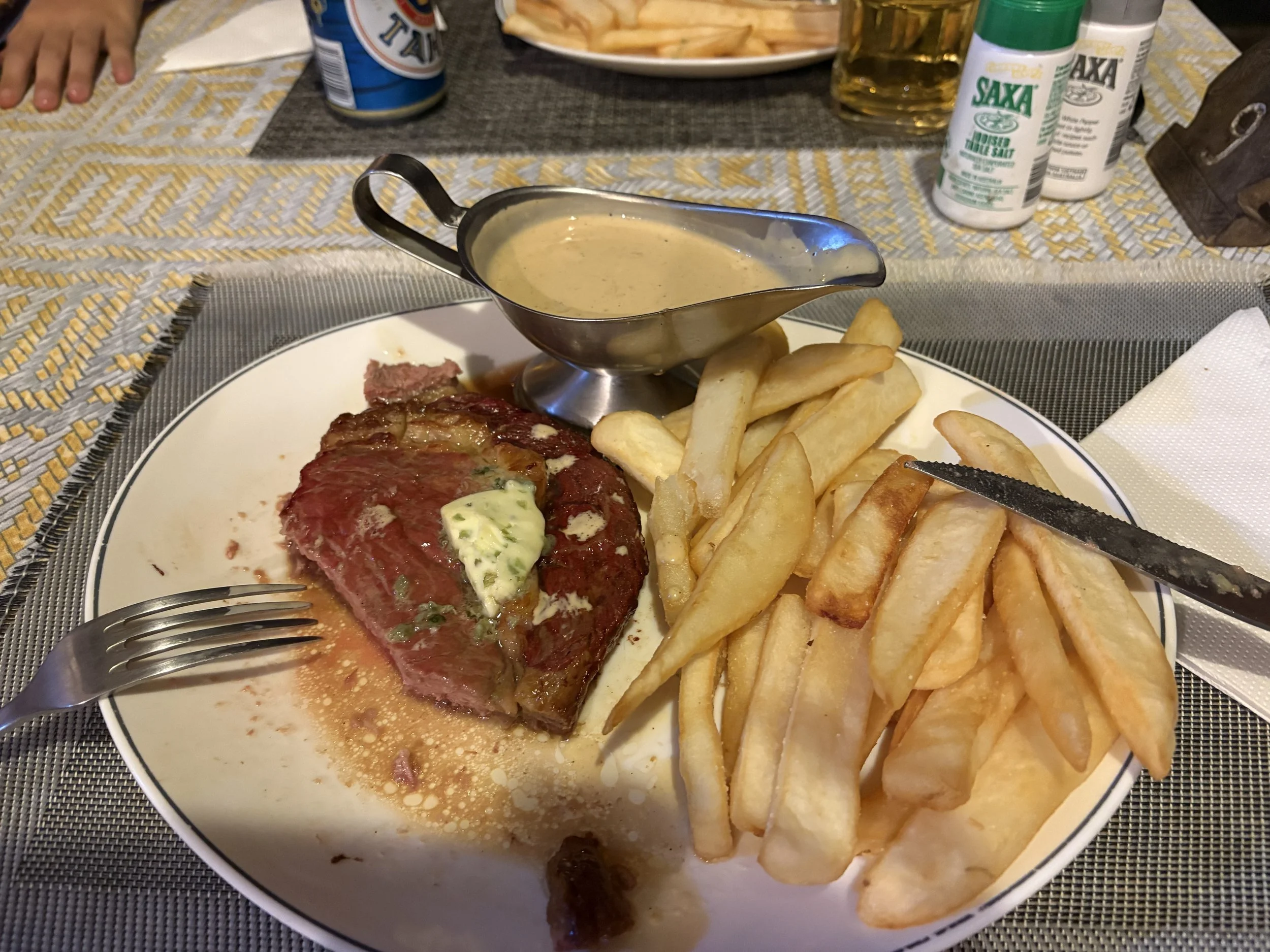
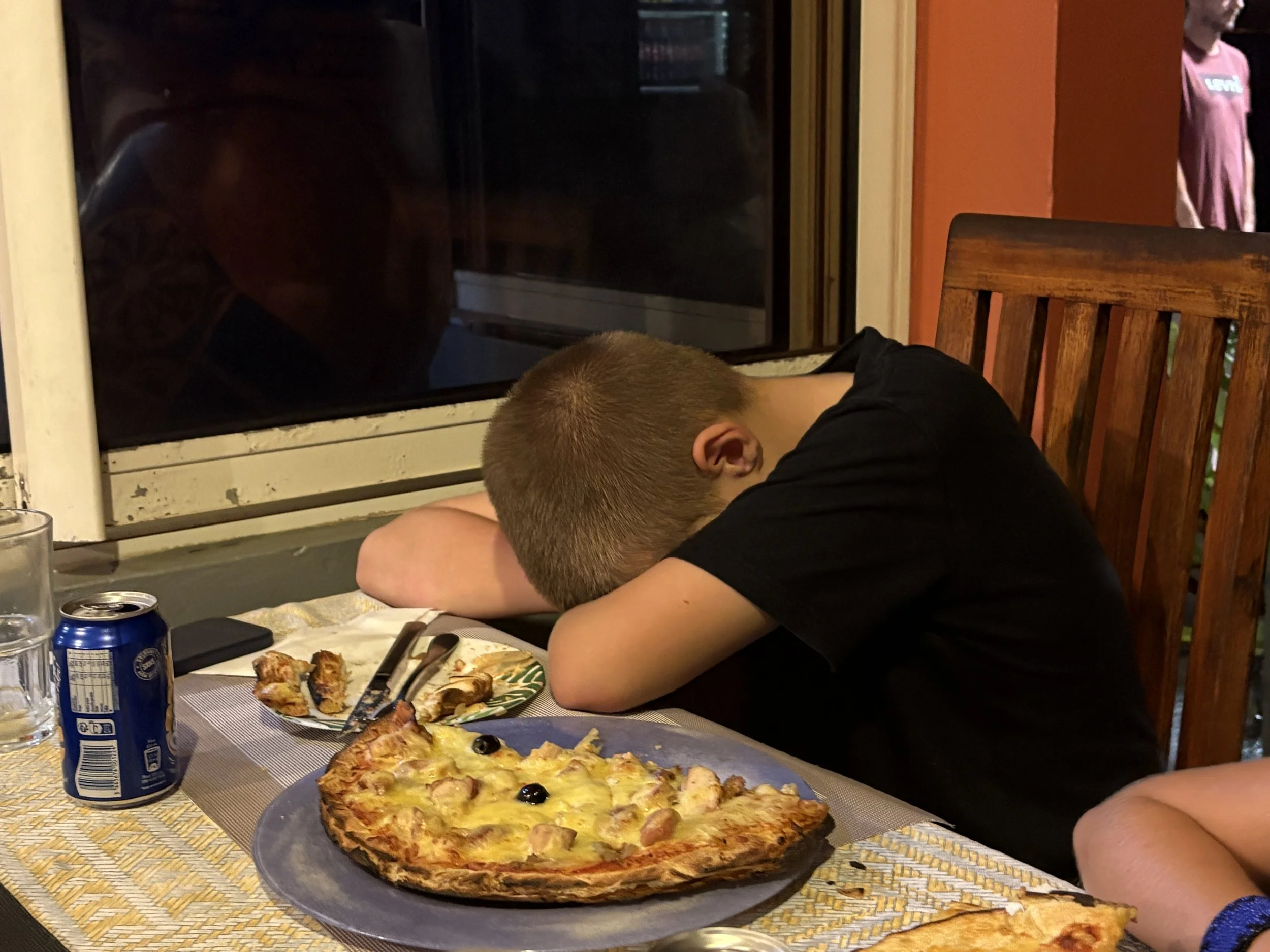
We dropped the dinghy and headed to shore for the first time in 20 days. I was surprised that none of us experienced sea legs once we touched land. We immediately met a lovely local who flagged down a car to take us to a nearby restaurant. We marveled at the local specialties—Hinano beer, Orangina (a particular family favorite), and epic steak frites and pizza. Then the kids started to crash hard with exhaustion; the restaurant gave us a lift back to the dinghy dock, and we celebrated with chilled Prosecco well into the night before we too succumbed to tiredness.
The whole family has yet to stop ribbing Annabelle about the fact that she missed the passage, with comments like ‘Oh you’d know that about the boat if you had crossed that massive ocean with us’, but sadly the AP exam schedule wouldn’t flex for anyone or anything, not even an ocean crossing.
But we'd made it—we crossed 3,000 miles of the Pacific Ocean in one piece, from the Galápagos to French Polynesia!
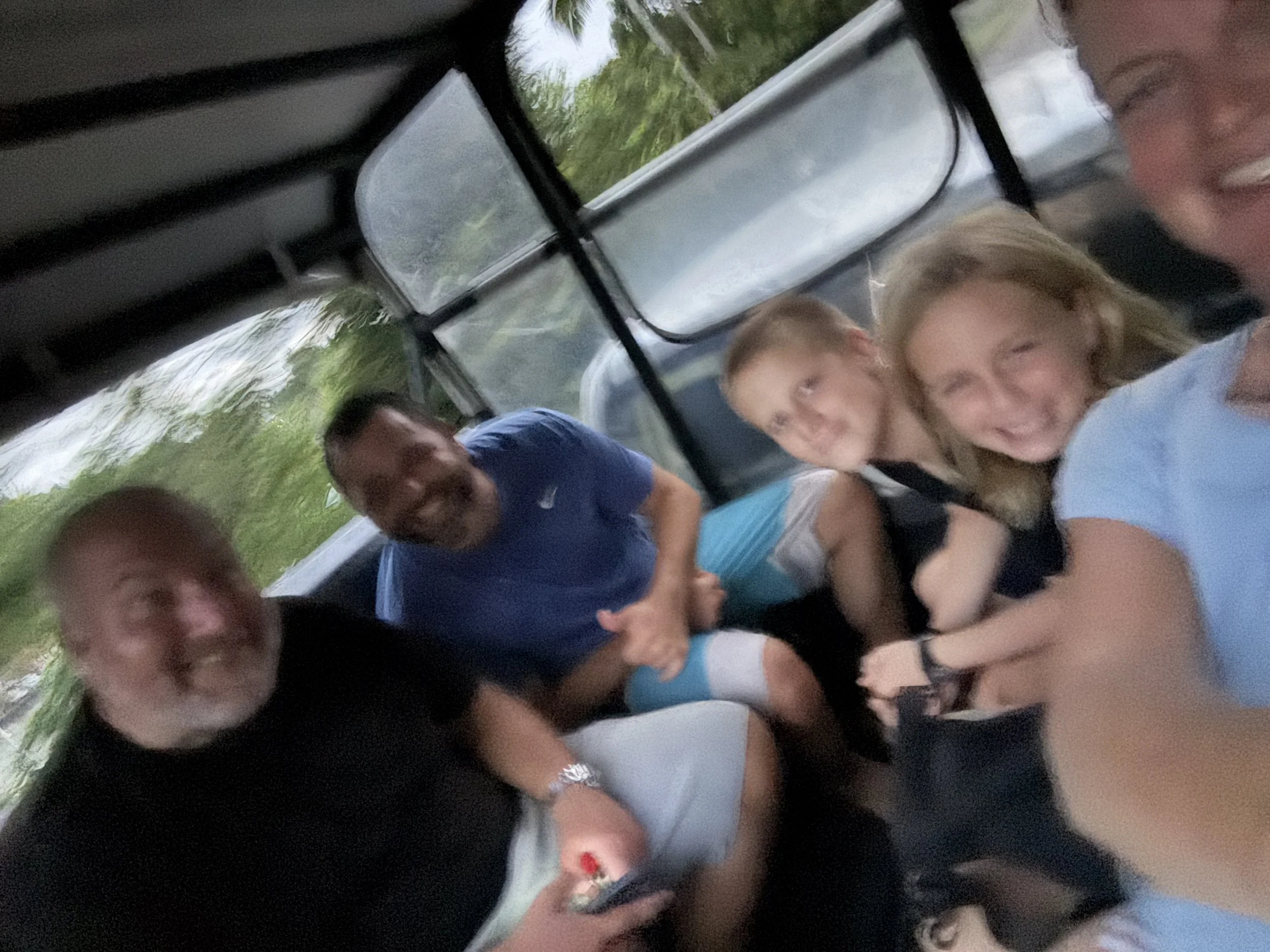
I asked everyone to write a brief reflection of their Pacific Crossing:
BETHAN
The best bit of our passage was when a huge pod of dolphins came on day 13 - they were surfing down the waves next to us, and they would do one wave and then circle back ready for another go! Also, my birthday on passage was amazing - we had a French vanilla cake and in the middle was blue jelly with shark gummies and some octopus! So, it looked like a reef!
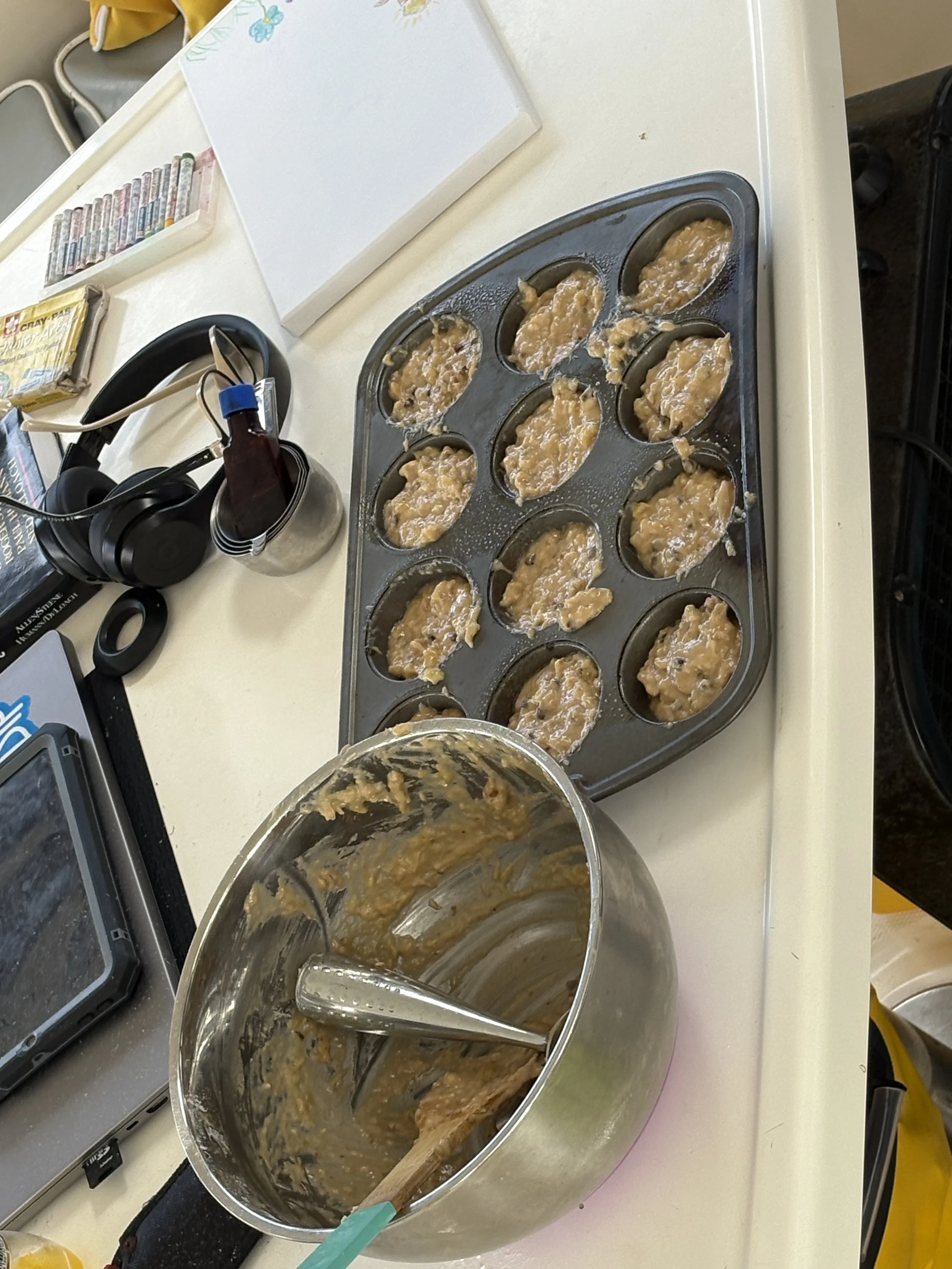
Also, when we caught our Short-Billed Spear fish! It was massive - 5 foot long! Then on Oscar’s birthday we had sushi ( with the short – billed spear fish ) and red velvet cake! We had an entertaining passage and when I made banana walnut muffins ( with chocolate chips! ) they were great! So, all in all I would go back and do it again!
KEVIN
The best part of the crossing for me was finally completing a lifelong dream. Something I thought was nearly impossible ended up being one of the smoothest and most enjoyable experiences of my life. I ate well, slept well, learned new skills, and shared it all with a wonderful family who treated me like one of their own.
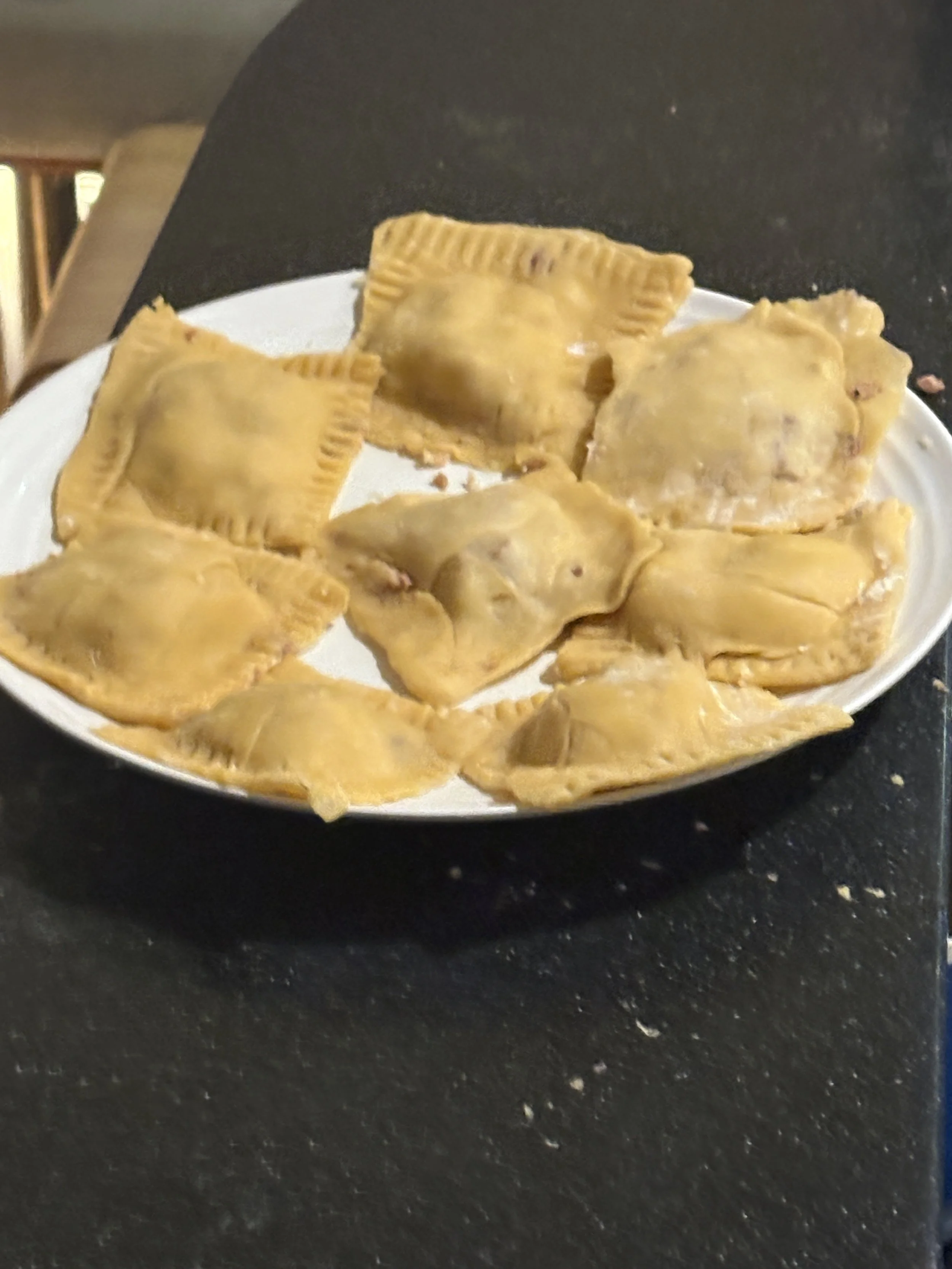
My biggest personal struggle during passage was making homemade raviolis from scratch. We hit a wave and my gooey egg / flour mixture escaped and started oozing all over the kitchen. Every step was 20 times harder on a rocking boat, but we all eventually got to enjoy a delicious ravioli dinner.
If I had to pick an "ugly" moment, it was attempting to anchor after 20 days at sea. We ended up hooking another boat's chain and started dragging them around. I hopped in the water and eventually freed the tangled chains, but pulling on hundreds of pounds of twisted metal in bumpy seas was a good reminder not to celebrate until the job is complete.
Overall, I'm extremely grateful to the Wootton family for everything they did to ensure a safe and enjoyable passage, and for taking me on board and treating me like one of their own.
OSCAR
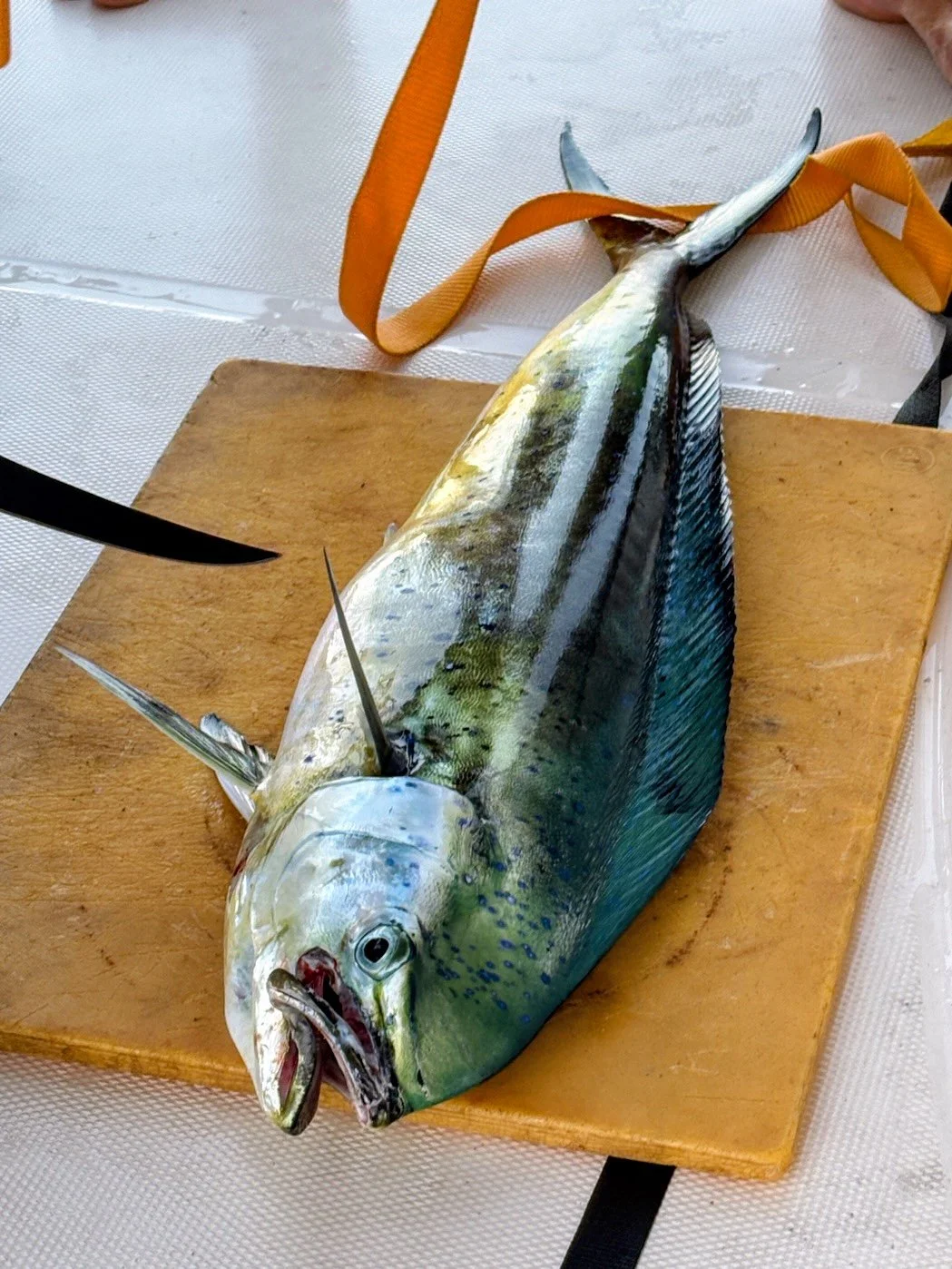
I think the passage was great – tiring – but definitely an experience to remember, here are a few of the exciting things that happened! I think the best part of the passage was the fishing, we caught a mahi-mahi and also a Short Billed Spearfish and are still eating it! It was about 5ft long and took about 2 hours to reel in but definitely worth it! In fact, we are having sushi with the same fish again tonight! (As of Wed Jul 1) Another great thing that happened to me was my birthday, I had red velvet cake! One more event that I thought was very awesome was arriving there, to beautiful mountains and lots of French food to fill us up.
Overall I believe the passage was definitely something for us to remember (Except for Annabelle) and reflect on for future passages.
PETE
The good:
There are often debates about what makes a “blue water cruising boat” with the usual yammering on about this boat design or that boat design. Catamaran or Mono, skeg keels, rigging etc. etc. What is often missed out in all this is crew. Crew and skipper determine whether the boat gets across the ocean safely. And when you think about crew it isn’t just the ability to sail a boat - anyone can learn and do that. It’s about the preparation, making the right decisions, executing those decisions, and remaining as one unit with a shared goal. You can sail a bathtub across an ocean if you have those components (look it up, you literally can). For this passage across the largest expanse of water on earth we made good decisions and executed all the way. Good decisions in preparing the boat, investing in the standing and running rigging, time spent creating redundancy in every single fail point such as the steering, Kevin coming on board, all of the planning which stretched over 9 months prior to the passage. Good decisions on weather routing – not just taking the path of least resistance in terms of direction, but actually learning and analyzing the weather appropriately. Running our shifts competently, looking after each other with meals, popcorn (thanks Kevin!), and fishing. Observing our rules on safety and always being aware of our surroundings. So, the good, in conclusion was the unity of our crew, with every one contributing in their own way, and making life as a skipper the easiest it could be.
The bad:
Ellen MacArthur once said that she was never scared of being in a storm in the middle of the ocean, it was coming into port she was most bothered by. I’d like to put it down to exhaustion and the mild elation at crossing a large part of the pacific, but plopping your anchor down on top of someone else and then almost dragging them and you into the rocks was a bit of a disaster. We were very lucky that the couple on the other boat were helpful, and huge credit to Kevin who in a moment of quick thinking jumped in and freed us, but that wasn’t my finest skippering moment. Along with that came the indignity of a rolling anchorage after 20 days at sea. That said, the local beer and steak frites that evening tasted so damn good, I soon forgot about it all!
The ugly:
About 7 days into the passage you start to realize what a precarious position you are in. You’re essentially out of reach from rescue and you become hyper aware of your vulnerabilities. Any twinge on the right side of your abdomen becomes alarming because of the risk you could develop an appendicitis (high-risk open surgery without anesthetic anyone?). You check the rudder stock constantly, noting down any movement or potential for rudder loss – something that happened to a sister ship, Happy Days, halfway through their passage. You start pacing the boat, listening to every single sound like it’s a hull falling off. During this time we had some pretty sporty weather. Big 3 – 3.5 meter seas crashing near the stern and 25-30 knots of wind making the skipper even more paranoid. But then again, I come back to the good – we’d done our planning, we knew what to expect, the boat took everything in her stride (I’ve now formed a meaningful relationship with her and we’re looking to buy a place and move in together), and we got through it. In some ways there was a simplicity and beauty to “the lost middle”. Life becomes pretty easy in these situations, and the bullshit of our corporate, safe, home life rapidly dissipates. So while it was ugly for a bit, I wouldn’t have had it any other way…
ANNABELLE (not on the 20 day Pacific Crossing with us from the Galapagos to French Polynesia, but back in the US for exams during this month).
The planning that went into this trip was immense and, to its credit, ensured that LunaSea and her crew crossed safely, comfortably, and quickly, with little damage or need for intervention. Certain tasks are far harder when placed in the context of living on a boat. One of these—and arguably the most time-consuming over the past six months—has been food provisioning and sorting. We had to leave the boat, drive to the nearest store, buy enough food to feed several mouths for several months while preventing scurvy and nutritional deficiencies, load the shopping into the car/taxi, drive back, unload, carry the bags to the boat, and unpack. This process then included labeling, organizing, and implementing bug-prevention methods to guarantee that the food stores remain fresh throughout the ocean crossing and the months beyond. Overall, it's a tiring but necessary undertaking, essential to maintaining varied and healthy meals.
As an outsider looking in, I felt immense concern for the crew during their crossing and even greater pride when they successfully made landfall in French Polynesia.
HEATHER
When I look back at the passage we completed about six weeks ago, it feels as though months have passed since we arrived. There was so much preparation, expense, mental energy and endless "what if?" planning over the months beforehand that, by comparison, the 20-day passage seemed to fly by.
Thanks to all of that preparation, along with conservative weather routing and careful passage planning, we completed the crossing without a single breakage. Nothing went wrong and, most importantly, we arrived safely. From talking to other sailors here, we know that having no breakages at all actually puts us in the minority.
One of my biggest surprises was that we never got bored. We quickly settled into a routine of watch rotations, fitting in school, work and boat jobs, and before we knew it, it was 3 or 4 p.m. and whoever was on cooking duty was starting the dinner shift.
When Pete and I think back to when we first started talking about living this lifestyle, we didn't even dare believe that crossing the Pacific Ocean while keeping up with work and school commitments would be possible. That's why we're so proud of ourselves for simply getting on with it and challenging ourselves to make it happen.
I'm especially proud of Captain Pete. It was his sailing experience, calm decision-making and thoughtful planning that made it all possible. Combined with the fantastic crew we had on board, with everyone pulling their own weight, it really was a dream passage. Although, unlike Bethan, I'm not sure I'll be signing up to do it again anytime soon…